Close Menu
  • Home
  • UNSUBSCRIBE
  • News
  • Lifestyle
  • Tech
  • Entertainment
  • Sports
  • Travel
Facebook X (Twitter) WhatsApp
Trending
  • Trump stands over man who fainted in ‘SNL’ skit
  • Cleaning lady shot and killed after arriving at wrong Indiana address
  • Best Fitbit Sense 2 deal: Save $70 at Amazon
  • Toto Japan Classic: Nasa Hataoka wins a playoff hole in rain-shortened final day to claim seventh LPGA Tour title | Golf News
  • Inside Nick Lachey and Vanessa Lachey’s Epic Love Story
  • Researchers find massive spider web in cave
  • South Carolina teacher charged after allegedly trying to run over baby’s father
  • Kohl’s Black Friday ad 2025: Top deals you can shop online
Facebook X (Twitter) WhatsApp
Baynard Media
  • Home
  • UNSUBSCRIBE
  • News
  • Lifestyle
  • Tech
  • Entertainment
  • Sports
  • Travel
Baynard Media
Home»Lifestyle»Powerful Mother’s Day geomagnetic storm created radio-disrupting bubbles in Earth’s upper atmosphere
Lifestyle

Powerful Mother’s Day geomagnetic storm created radio-disrupting bubbles in Earth’s upper atmosphere

EditorBy EditorMay 26, 2025No Comments3 Mins Read
Share Facebook Twitter Pinterest LinkedIn Tumblr Reddit Telegram Email
Share
Facebook Twitter LinkedIn Pinterest Email

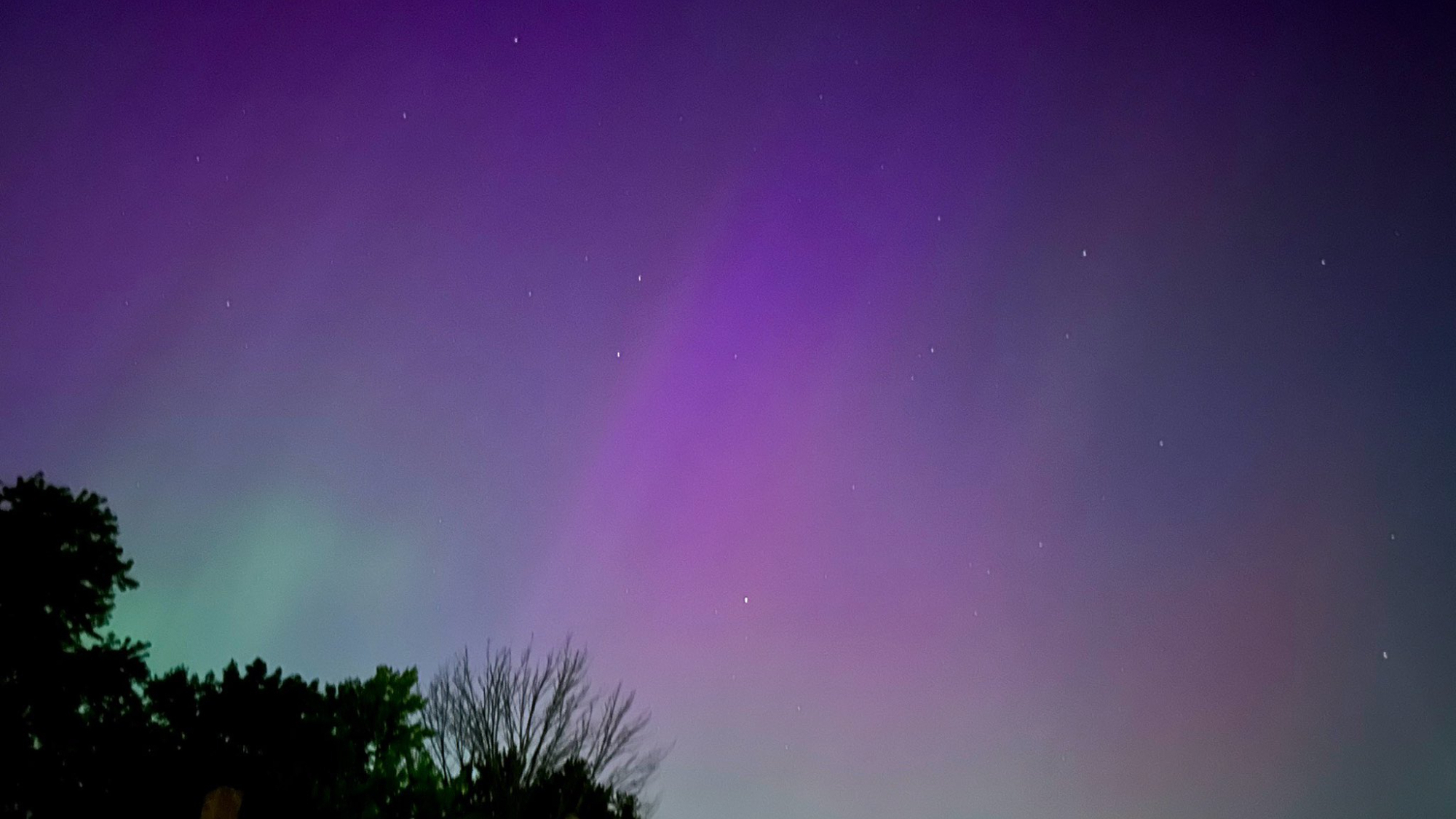
Researchers from Kyushu University in Japan have provided some new insights about the powerful geomagnetic storm that flared up last Mother’s Day, after a big solar storm hit Earth.

The work focuses on the storm’s activity in a region of Earth’s ionosphere called the E layer, which sits in the upper atmosphere about 56 miles to 75 miles (90 to 120 kilometers) above sea level.

“The sporadic E layer hasn’t been studied very much during the storm because it appeared unaffected by solar storms,” study leader Huixin Liu said in a statement.


You may like

diagram of earth's atmosphere at night, showing a greenish-yellow sphere representing a disruption caused by a solar storm

Visualization of Earth’s magnetosphere being hit by the Mother’s Day geomagnetic storm on May 10-11, 2024. This is a screen shot from NASA’s Scientific Visualization Studio. (Image credit: NASA’s Scientific Visualization Studio and NASA DRIVE Science Center for Geospace Storms)

“But we wanted to see if something as powerful as the Mother’s Day geomagnetic storm did anything to the E layer,” Liu added. “What we found was very interesting.”

The E layer was significantly enhanced during the storm, the team found; thin patches of high ionization density — known as sporadic E layers, or sporadic Es for short — suddenly appeared in the ionosphere.

To gather data on the phenomena, the team relied on a combination of sources from space and on the ground.

Using the joint U.S.-Taiwanese COSMIC-2 satellite network, as well as 37 ground-based radars called ionosodes, the team gathered a massive amount of information during and after the solar storm to get a global map of sporadic E layer activity.

Get the world’s most fascinating discoveries delivered straight to your inbox.

Related: The US isn’t prepared for a big solar storm, exercise finds

“This large amount of data was critical for both detecting the presence of sporadic Es and tracking where they formed as time went by,” Liu said.

“In our analysis, we found that sporadic Es formed after the main phase of the solar storm, during what we call the recovery phase,” Liu added.

First, the team detected sporadic Es at higher latitudes, around the poles. The phenomena slowly extended toward the equator over time. “This propagation characteristic from high to low latitudes suggests that sporadic E layers are most likely caused by the disturbed neutral winds in the E region,” Liu said.

The researchers want to understand this phenomena because it can disrupt HF (high frequency) and VHF (very high frequency) bands of radio communication, which have important uses in areas such as navigation.

With greater insight into activity in the E layer during a geomagnetic storm, the researchers hope to find ways to work around the disruptions.

The new paper was published last month in the journal Geophysical Research Letters.

This article was originally published on Space.com.

Source link

Share. Facebook Twitter Pinterest LinkedIn Tumblr Email
Previous Article‘The Martian’ predicts human colonies on Mars by 2035. How close are we?
Next Article ‘Trash’ found deep inside a Mexican cave turns out to be 500-year-old artifacts from a little-known culture
Editor
  • Website

Related Posts

Lifestyle

Latest science news: Comet 3I/ATLAS glows green | Roman roads | Bear attacks

November 8, 2025
Lifestyle

Watch “Kingdom” — Streaming details for David Attenborough series

November 8, 2025
Lifestyle

Some people love AI, others hate it. Here’s why.

November 8, 2025
Add A Comment

Comments are closed.

Categories
  • Entertainment
  • Lifestyle
  • News
  • Sports
  • Tech
  • Travel
Recent Posts
  • Trump stands over man who fainted in ‘SNL’ skit
  • Cleaning lady shot and killed after arriving at wrong Indiana address
  • Best Fitbit Sense 2 deal: Save $70 at Amazon
  • Toto Japan Classic: Nasa Hataoka wins a playoff hole in rain-shortened final day to claim seventh LPGA Tour title | Golf News
  • Inside Nick Lachey and Vanessa Lachey’s Epic Love Story
calendar
November 2025
M T W T F S S
 12
3456789
10111213141516
17181920212223
24252627282930
« Oct    
Recent Posts
  • Trump stands over man who fainted in ‘SNL’ skit
  • Cleaning lady shot and killed after arriving at wrong Indiana address
  • Best Fitbit Sense 2 deal: Save $70 at Amazon
About

Welcome to Baynard Media, your trusted source for a diverse range of news and insights. We are committed to delivering timely, reliable, and thought-provoking content that keeps you informed
and inspired

Categories
  • Entertainment
  • Lifestyle
  • News
  • Sports
  • Tech
  • Travel
Facebook X (Twitter) Pinterest WhatsApp
  • Contact Us
  • About Us
  • Privacy Policy
  • Disclaimer
  • UNSUBSCRIBE
© 2025 copyrights reserved

Type above and press Enter to search. Press Esc to cancel.