Close Menu
  • Home
  • UNSUBSCRIBE
  • News
  • Lifestyle
  • Tech
  • Entertainment
  • Sports
  • Travel
Facebook X (Twitter) WhatsApp
Trending
  • Cleaning lady shot and killed after arriving at wrong Indiana address
  • Best Fitbit Sense 2 deal: Save $70 at Amazon
  • Toto Japan Classic: Nasa Hataoka wins a playoff hole in rain-shortened final day to claim seventh LPGA Tour title | Golf News
  • Inside Nick Lachey and Vanessa Lachey’s Epic Love Story
  • Researchers find massive spider web in cave
  • South Carolina teacher charged after allegedly trying to run over baby’s father
  • Kohl’s Black Friday ad 2025: Top deals you can shop online
  • Anthony Joshua? Francis Ngannou? Who will Jake Paul fight now after Gervonta Davis cancellation | Boxing News
Facebook X (Twitter) WhatsApp
Baynard Media
  • Home
  • UNSUBSCRIBE
  • News
  • Lifestyle
  • Tech
  • Entertainment
  • Sports
  • Travel
Baynard Media
Home»Lifestyle»Ram in the Thicket: A 4,500-year-old gold statue from the royal cemetery at Ur representing an ancient sunrise ritual
Lifestyle

Ram in the Thicket: A 4,500-year-old gold statue from the royal cemetery at Ur representing an ancient sunrise ritual

EditorBy EditorMay 26, 2025No Comments3 Mins Read
Share Facebook Twitter Pinterest LinkedIn Tumblr Reddit Telegram Email
Share
Facebook Twitter LinkedIn Pinterest Email

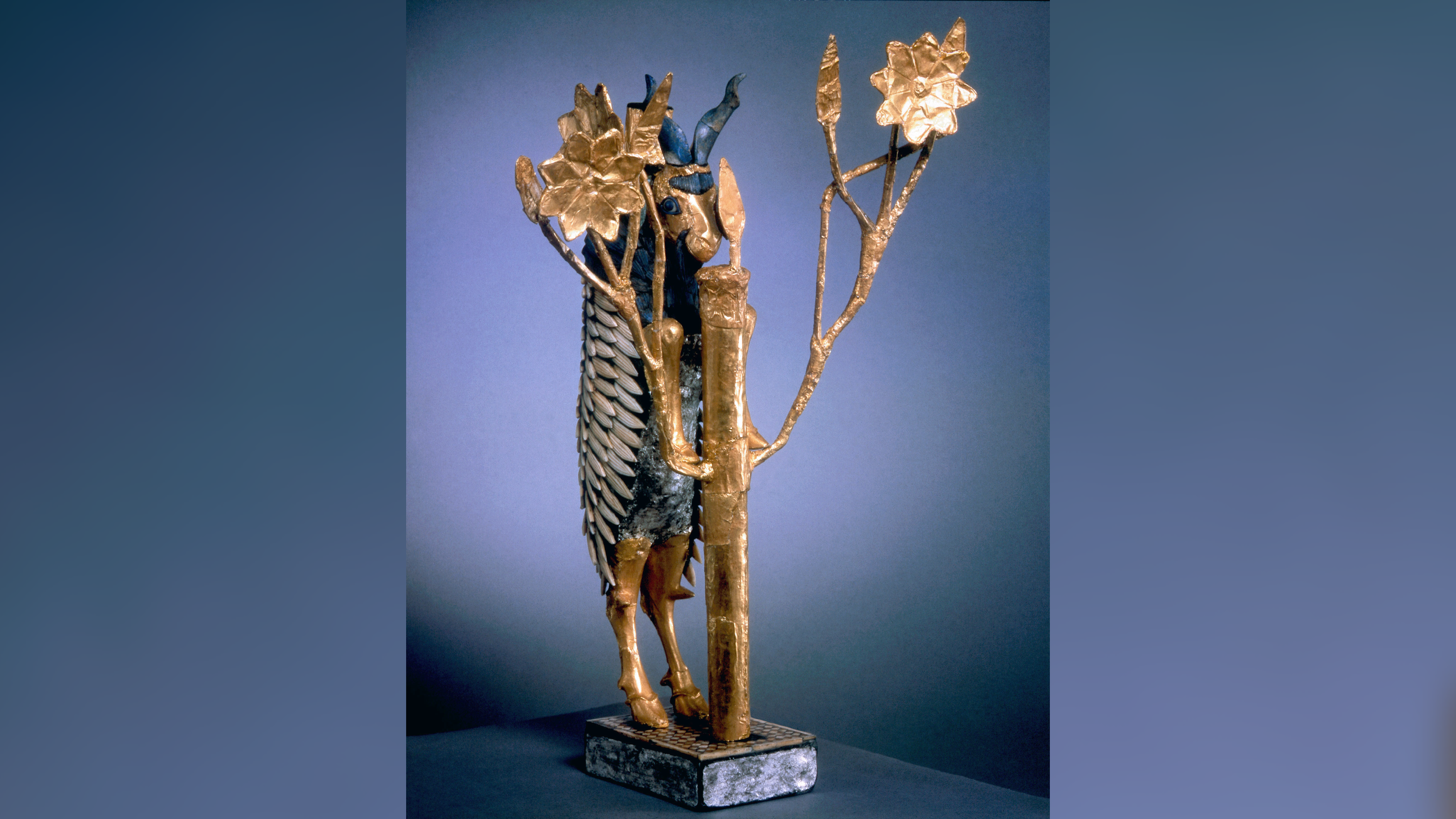
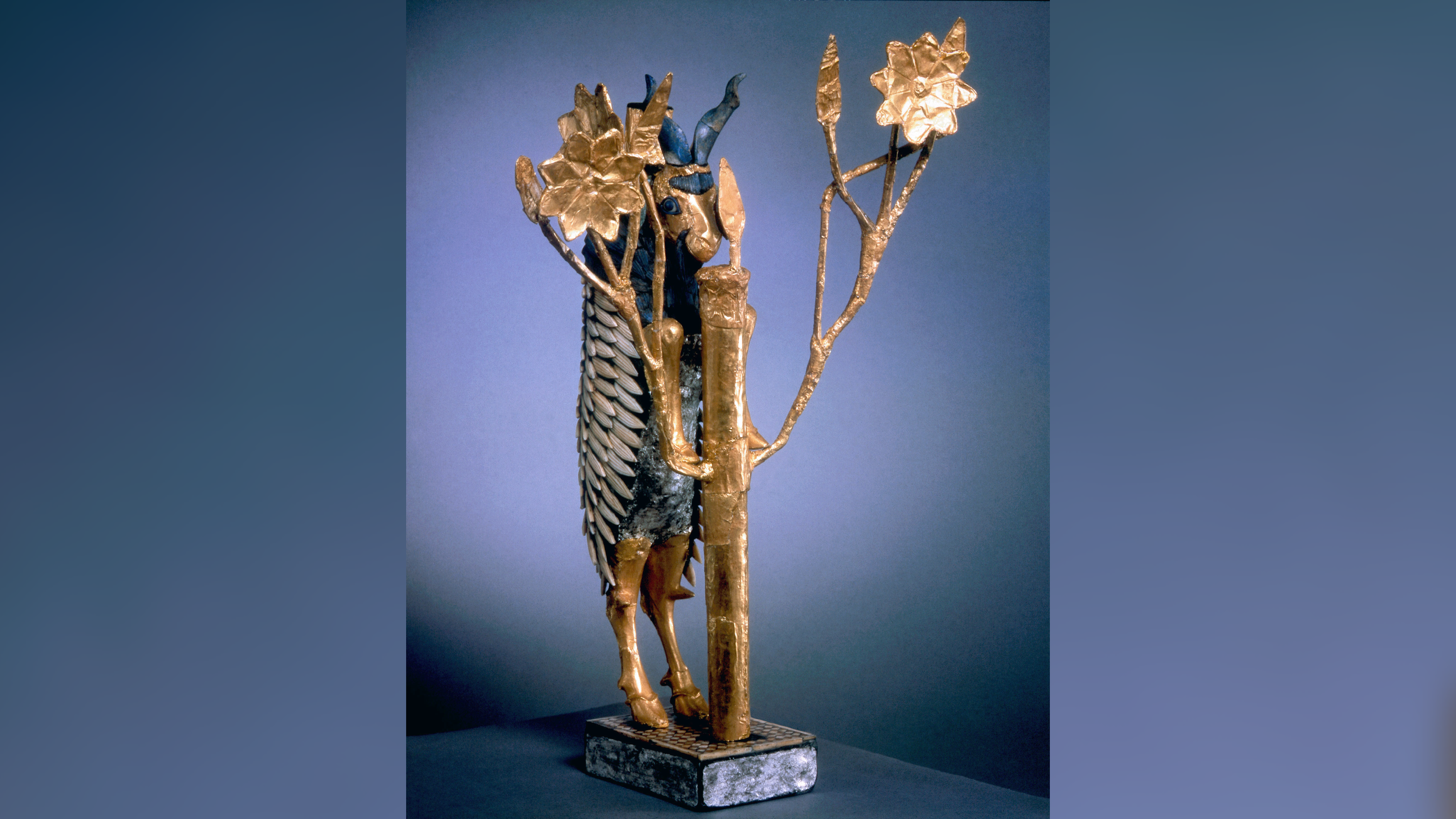
Name: Ram in the Thicket

What it is: A gold and lapis lazuli statuette

Where it is from: The Royal Cemetery at Ur (modern Tell el-Muqayyar, Iraq)


You may like

When it was made: Circa 2550 B.C.

Related: Oseberg tapestry: Viking Age artwork from a boat burial that may depict the Norse tree of life

What it tells us about the past:

Found a century ago in a mass grave in the desert of southern Iraq, this 4,500-year-old statuette may depict the daily ritual associated with destiny and the birth of the universe in ancient Mesopotamia.

Get the world’s most fascinating discoveries delivered straight to your inbox.

Archaeologist Leonard Woolley discovered two nearly identical statuettes, which he named “Ram in the Thicket,” in the Great Death Pit at the Royal Cemetery at Ur in 1928. This burial of one royal Sumerian individual around 2550 B.C. also involved the sacrifice of 68 women and five men.

Woolley discovered the statuettes broken and crushed. Now reconstructed, they measure 16.7 inches (42.5 centimeters) and 18 inches (45.7 cm) tall. The smaller one is on display at the Penn Museum in Philadelphia, while the larger one is housed at the British Museum in London.

According to the Penn Museum, the statuettes may represent markhor goats, a type of Central and South Asian mountain goat with fantastical spiral horns. But Woolley called them “rams” because they reminded him of the biblical story of Abraham sacrificing a ram instead of his son Isaac.

The heads and legs of the goat statuettes are wood, covered in gold leaf, as is the thicket or flowering bush. Their ears are copper, and their bellies are silver. Lapis lazuli, a semiprecious deep-blue stone, was used for their horns and fleece. Each goat stands on its hind legs on a rectangular base decorated with a mosaic of shells, lapis lazuli and red limestone in a diamond pattern.

Experts are unsure what function this pair of goat statuettes served, but they may have been used as offering stands to support small bowls that did not survive, according to a team of Penn Museum researchers who published an analysis of the objects in 2020.

MORE ASTONISHING ARTIFACTS

These researchers view the thicket or bush as a representation of the Mesopotamian cosmic tree that connects heaven and Earth. Rosettes on the tree symbolize heaven, while the leaves signify Earth. The diamond pattern on the statues’ bases may represent mountains — specifically those on the eastern horizon of Ur where the sun rises.

Daily sunrise was very important in ancient Mesopotamia. It was connected to the idea of destiny and associated with the birth of the universe. Rituals for the sun god Shamash often involved the sacrifice of sheep or goats and were made between sunset and sunrise. Because the “ram in the thicket” statuettes evoke sunrise — the time and place where heaven, Earth and the netherworld meet in Mesopotamian belief — they were likely seen as “suitable furnishings” for a royal tomb, the researchers wrote in their analysis.

Source link

Share. Facebook Twitter Pinterest LinkedIn Tumblr Email
Previous ArticleHow much of your disease risk is genetic? It’s complicated.
Next Article ‘The Martian’ predicts human colonies on Mars by 2035. How close are we?
Editor
  • Website

Related Posts

Lifestyle

Latest science news: Comet 3I/ATLAS glows green | Roman roads | Bear attacks

November 8, 2025
Lifestyle

Watch “Kingdom” — Streaming details for David Attenborough series

November 8, 2025
Lifestyle

Some people love AI, others hate it. Here’s why.

November 8, 2025
Add A Comment

Comments are closed.

Categories
  • Entertainment
  • Lifestyle
  • News
  • Sports
  • Tech
  • Travel
Recent Posts
  • Cleaning lady shot and killed after arriving at wrong Indiana address
  • Best Fitbit Sense 2 deal: Save $70 at Amazon
  • Toto Japan Classic: Nasa Hataoka wins a playoff hole in rain-shortened final day to claim seventh LPGA Tour title | Golf News
  • Inside Nick Lachey and Vanessa Lachey’s Epic Love Story
  • Researchers find massive spider web in cave
calendar
November 2025
M T W T F S S
 12
3456789
10111213141516
17181920212223
24252627282930
« Oct    
Recent Posts
  • Cleaning lady shot and killed after arriving at wrong Indiana address
  • Best Fitbit Sense 2 deal: Save $70 at Amazon
  • Toto Japan Classic: Nasa Hataoka wins a playoff hole in rain-shortened final day to claim seventh LPGA Tour title | Golf News
About

Welcome to Baynard Media, your trusted source for a diverse range of news and insights. We are committed to delivering timely, reliable, and thought-provoking content that keeps you informed
and inspired

Categories
  • Entertainment
  • Lifestyle
  • News
  • Sports
  • Tech
  • Travel
Facebook X (Twitter) Pinterest WhatsApp
  • Contact Us
  • About Us
  • Privacy Policy
  • Disclaimer
  • UNSUBSCRIBE
© 2025 copyrights reserved

Type above and press Enter to search. Press Esc to cancel.