Close Menu
  • Home
  • UNSUBSCRIBE
  • News
  • Lifestyle
  • Tech
  • Entertainment
  • Sports
  • Travel
Facebook X (Twitter) WhatsApp
Trending
  • Can people catch infections from plants?
  • Andes virus spreads via ‘close contact’ — but what exactly does that mean?
  • 8-year-old African American boy from Colonial Maryland found buried with white Colonists, and it’s unclear if he was enslaved
  • Science news this week: PCOS has a new name, Neanderthals were the world’s oldest dentists, and the first nuclear bomb explosion spawned an ‘alien’ crystal
  • Newly discovered, blue-whale-size asteroid will fly super close to Earth Monday — and you can watch it live
  • Don Juan Pond: Antarctica’s salty, syrupy lake that never freezes, even when it’s minus 58 F
  • Withings ScanWatch 2 review: Style meets next-level health monitoring
  • AI Chatbots are turbo-charging violence against women and girls: We urgently need to regulate them | Yvonne McDermott Rees
Facebook X (Twitter) WhatsApp
Baynard Media
  • Home
  • UNSUBSCRIBE
  • News
  • Lifestyle
  • Tech
  • Entertainment
  • Sports
  • Travel
Baynard Media
Home»Lifestyle»Great potoo: The ‘tree stump’ bird with a haunting growl and can see with its eyes closed
Lifestyle

Great potoo: The ‘tree stump’ bird with a haunting growl and can see with its eyes closed

EditorBy EditorMarch 22, 2025No Comments2 Mins Read
Share Facebook Twitter Pinterest LinkedIn Tumblr Reddit Telegram Email
Share
Facebook Twitter LinkedIn Pinterest Email

Name: Great potoo (Nyctibius grandis)

Where it lives: Central and South America

What it eats: Large insects, bats and small birds

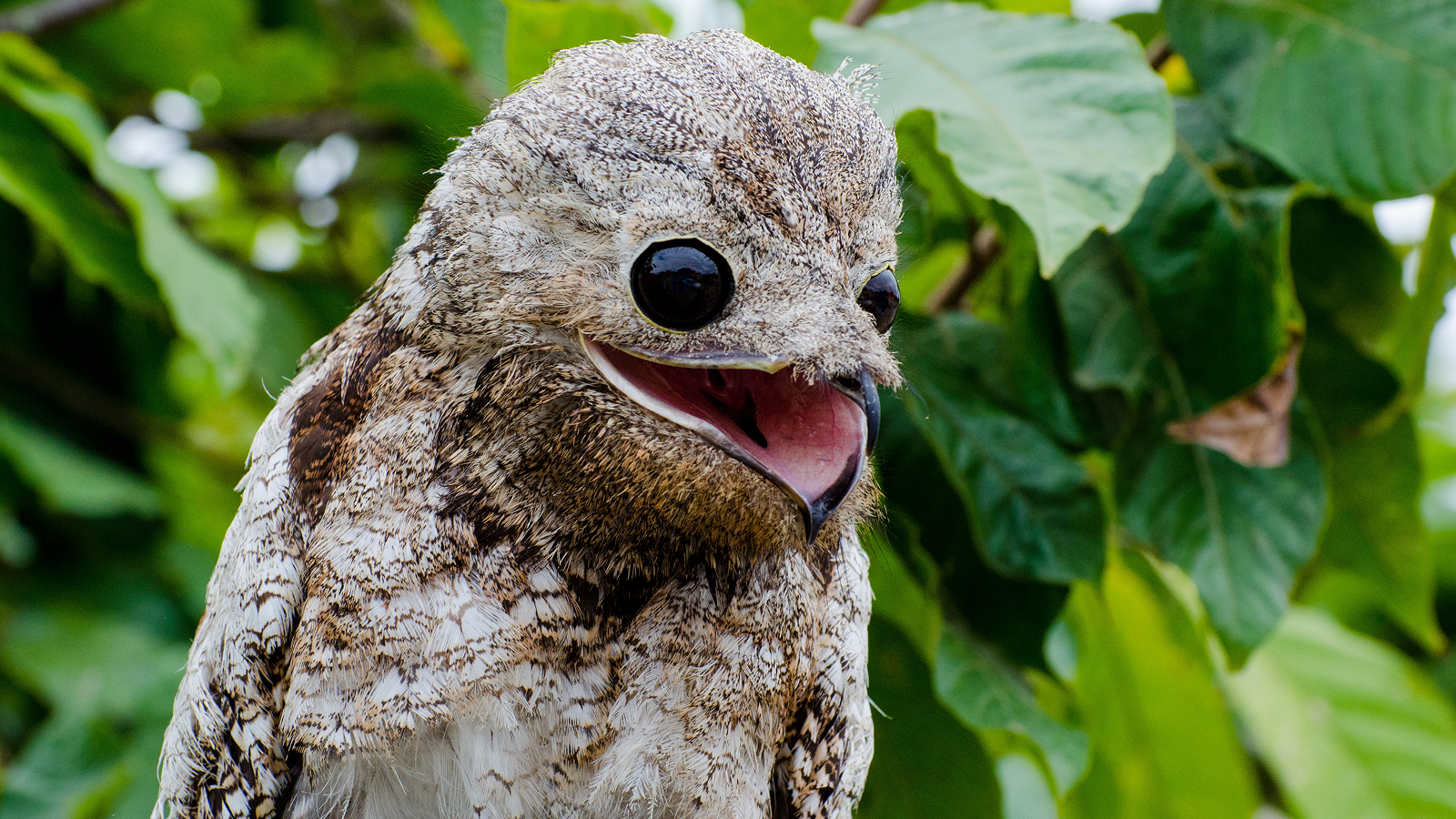
Why it’s awesome: The great potoo is a master of disguise. Its mottled gray-brown feathers and ability to remain perfectly still often cause it to be mistaken for a tree branch or stump, helping it evade detection by predators.

Native to the forests and tropical lowlands of Central and South America, this nocturnal bird can grow to 24 inches (60 centimeters) tall and has a wingspan of more than 28 inches (70 cm). Its grey, brown and white plumage helps it blend seamlessly with the bark of the trees it lands on, making it nearly undetectable by other animals.

By day, great potoos remain silent and still in the trees. But at night, they become active hunters. Their large, owl-like eyes, which protrude from the sides of their heads, provide excellent vision in low-light conditions. Equipped with a large, flattened beak and mouth, these birds are well-adapted to snatching prey such as flying insects and bats out of the air.

Great potoos also have slits in their eyelids, which enable them to see when their eyes are closed. These “notches” help the birds to sense light and movement through their shut eyelids, so they can detect predators and prey even when resting.

Get the world’s most fascinating discoveries delivered straight to your inbox.

Great potoos are also unusual thanks to their distinctive calls. Throughout the night, they emit a loud, moaning growl. This ghostly call has earned the bird a mythical status in local folklore, with some communities in South America believing the sounds to be children calling for lost parents. These calls are used for communication and to defend their territories.

Potoos are monogamous birds, forming lifelong pairs that share the responsibilities of incubation and care for their young. Female great potoos lay a single egg in a natural depression on a tree branch, so they rely on their camouflage and sight to protect themselves and their offspring.

The incubation period for great potoo eggs is approximately 30 days, with both parents sharing the responsibility of incubating the egg. Due to their elusive nature, not much is known about their lifespan – but they are believed to live for around 12 to 14 years, like other bird species.

Source link

Share. Facebook Twitter Pinterest LinkedIn Tumblr Email
Previous ArticleHistoric figures cut from military websites while others are restored following ‘DEI’ ban
Next Article High-school student accidentally discovers black hole ‘light echo’ twice as wide as the Milky Way
Editor
  • Website

Related Posts

Lifestyle

Can people catch infections from plants?

May 16, 2026
Lifestyle

Andes virus spreads via ‘close contact’ — but what exactly does that mean?

May 16, 2026
Lifestyle

8-year-old African American boy from Colonial Maryland found buried with white Colonists, and it’s unclear if he was enslaved

May 16, 2026
Add A Comment

Comments are closed.

Categories
  • Entertainment
  • Lifestyle
  • News
  • Sports
  • Tech
  • Travel
Recent Posts
  • Can people catch infections from plants?
  • Andes virus spreads via ‘close contact’ — but what exactly does that mean?
  • 8-year-old African American boy from Colonial Maryland found buried with white Colonists, and it’s unclear if he was enslaved
  • Science news this week: PCOS has a new name, Neanderthals were the world’s oldest dentists, and the first nuclear bomb explosion spawned an ‘alien’ crystal
  • Newly discovered, blue-whale-size asteroid will fly super close to Earth Monday — and you can watch it live
calendar
May 2026
M T W T F S S
 123
45678910
11121314151617
18192021222324
25262728293031
« Apr    
Recent Posts
  • Can people catch infections from plants?
  • Andes virus spreads via ‘close contact’ — but what exactly does that mean?
  • 8-year-old African American boy from Colonial Maryland found buried with white Colonists, and it’s unclear if he was enslaved
About

Welcome to Baynard Media, your trusted source for a diverse range of news and insights. We are committed to delivering timely, reliable, and thought-provoking content that keeps you informed
and inspired

Categories
  • Entertainment
  • Lifestyle
  • News
  • Sports
  • Tech
  • Travel
Facebook X (Twitter) Pinterest WhatsApp
  • Contact Us
  • About Us
  • Privacy Policy
  • Disclaimer
  • UNSUBSCRIBE
© 2026 copyrights reserved

Type above and press Enter to search. Press Esc to cancel.