Close Menu
  • Home
  • UNSUBSCRIBE
  • News
  • Lifestyle
  • Tech
  • Entertainment
  • Sports
  • Travel
Facebook X (Twitter) WhatsApp
Trending
  • Newly discovered, blue-whale-size asteroid will fly super close to Earth Monday — and you can watch it live
  • Don Juan Pond: Antarctica’s salty, syrupy lake that never freezes, even when it’s minus 58 F
  • Withings ScanWatch 2 review: Style meets next-level health monitoring
  • AI Chatbots are turbo-charging violence against women and girls: We urgently need to regulate them | Yvonne McDermott Rees
  • ‘The biggest El Niño event since the 1870s’: ‘Super’ El Niño is now the most likely scenario by the end of this year ‪—‬ and the humanitarian cost could be huge
  • Antarctica’s sudden sea ice loss is one of the most extreme and confusing events in the modern climate record. Scientists now know why it’s happening.
  • ‘I heard gasps’: Artemis II astronauts reveal inside story of their mind-bending solar eclipse
  • A pill can stop people from developing COVID after being exposed to the virus, trial finds
Facebook X (Twitter) WhatsApp
Baynard Media
  • Home
  • UNSUBSCRIBE
  • News
  • Lifestyle
  • Tech
  • Entertainment
  • Sports
  • Travel
Baynard Media
Home»Lifestyle»Newly discovered, blue-whale-size asteroid will fly super close to Earth Monday — and you can watch it live
Lifestyle

Newly discovered, blue-whale-size asteroid will fly super close to Earth Monday — and you can watch it live

EditorBy EditorMay 16, 2026No Comments4 Mins Read
Share Facebook Twitter Pinterest LinkedIn Tumblr Reddit Telegram Email
Share
Facebook Twitter LinkedIn Pinterest Email

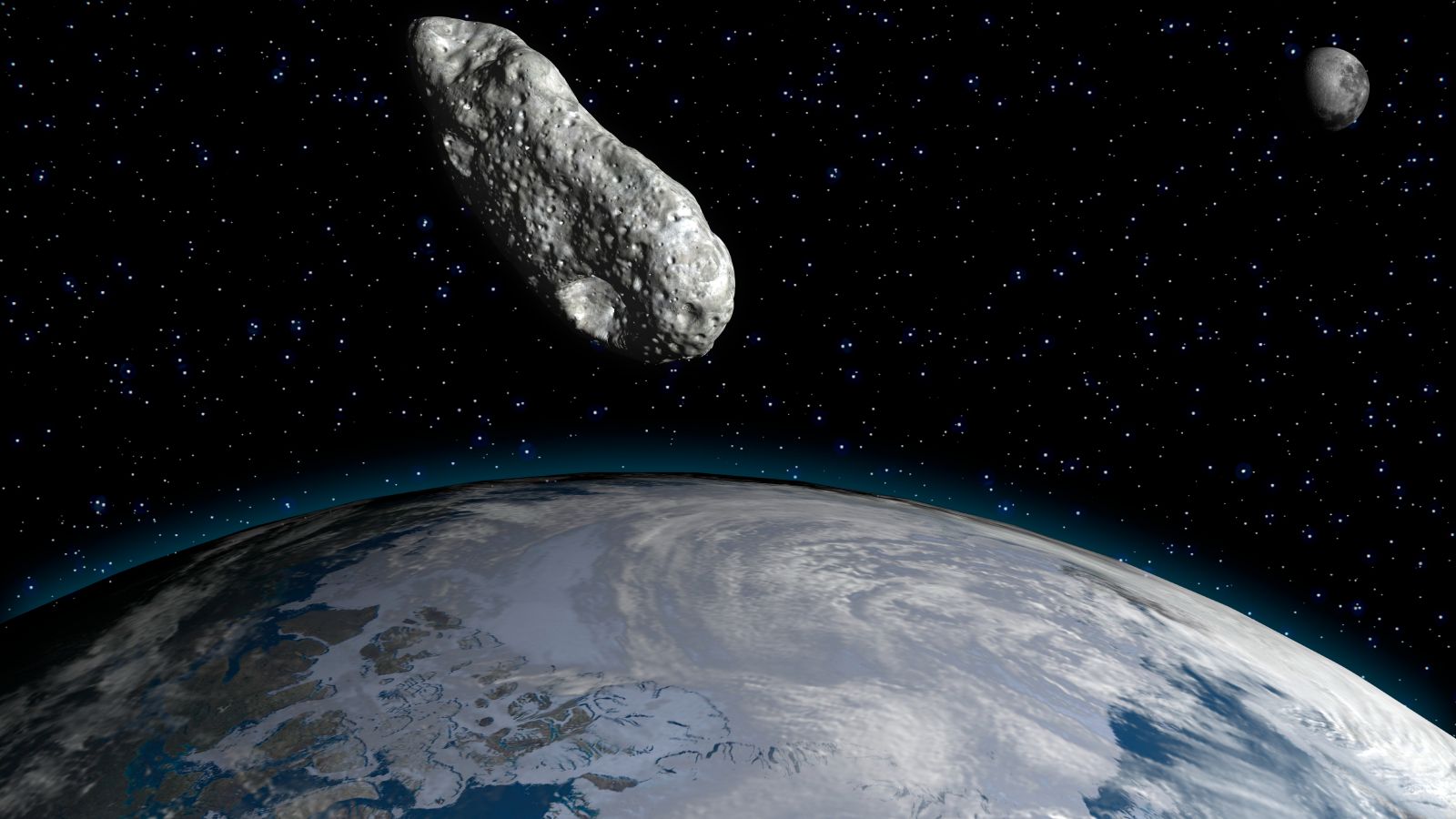
A hefty, never-before-seen asteroid is racing toward Earth at around 20,000 mph (32,000 km/h) and will zoom past our planet closer than some satellites on Monday (May 18), scientists say. You can watch the unusually close encounter for yourself, even if you don’t have access to stargazing equipment.

The asteroid, dubbed 2026 JH2, was discovered May 10 by astronomers at the Mount Lemmon Observatory near Tucson, Arizona, who also spotted the superbright Comet Lemmon last year. The space rock, which has since been verified by other observatories across the globe, likely circles the sun every 3.7 years on an elliptical orbit that takes it as far out as Jupiter, according to the Small-Body Database Lookup from NASA’s Jet Propulsion Laboratory.

2026 JH2 is up to 115 feet (35 meters) across, or just above the maximum length of Earth’s largest animal, the blue whale (Balaenoptera musculus). This puts the space rock on a par with the Chelyabinsk meteor, which spectacularly exploded above Russia in 2013 and is the largest space rock to have entered Earth’s atmosphere in nearly 120 years.


You may like

How close will it get?

At around 6 p.m. EDT Monday, 2026 JH2 will shoot over Earth’s surface at an altitude of around 56,000 miles (91,000 kilometers) — around a quarter the distance between our planet and the moon. At this height, the hefty space rock will sail over most of Earth’s satellites but be closer to us than a handful of spacecraft, such as the Transiting Exoplanet Survey Satellite (TESS). (There is currently no suggestion that these spacecraft are at risk of being hit by 2026 JH2.)

Due to limited observations, there is some level of uncertainty about how close the asteroid may get to Earth, scientists say. However, there is zero chance that it will impact our planet.

An orbital diagram showing the trajectory of the asteroid throughout the inner solar system

2026 JH2 has circles the sun every 3.7 years on a highly elliptical orbit between Earth and Jupiter.

(Image credit: NASA/JPL/Small-Body Database Lookup)

Near its closest approach, 2026 JH2 is expected to reach a peak brightness of around magnitude 11.5, making it fairly easy to spot with a good telescope or a pair of stargazing binoculars. (A detailed, up-to-date breakdown of where to look for the asteroid can be found at TheSkyLive.com.)

However, you can also view it online. The Virtual Telescope Project, which is run by astronomer Gianluca Masi, will be sharing a livestream of the flyby as seen from a telescope in Manciano, Italy.

Get the world’s most fascinating discoveries delivered straight to your inbox.

It is extremely rare for an asteroid the size of 2026 JH2 to come so close to Earth, although smaller space rocks do impact our planet all the time, as evidenced by a recent surge of “fireball” meteors.

The next sizable space rock that will get this close to Earth will likely be the “God of Chaos” asteroid, 99942 Apophis, which will fly within 20,000 miles (32,000 km) of Earth on April 13, 2029 — potentially making it visible to the naked eye.
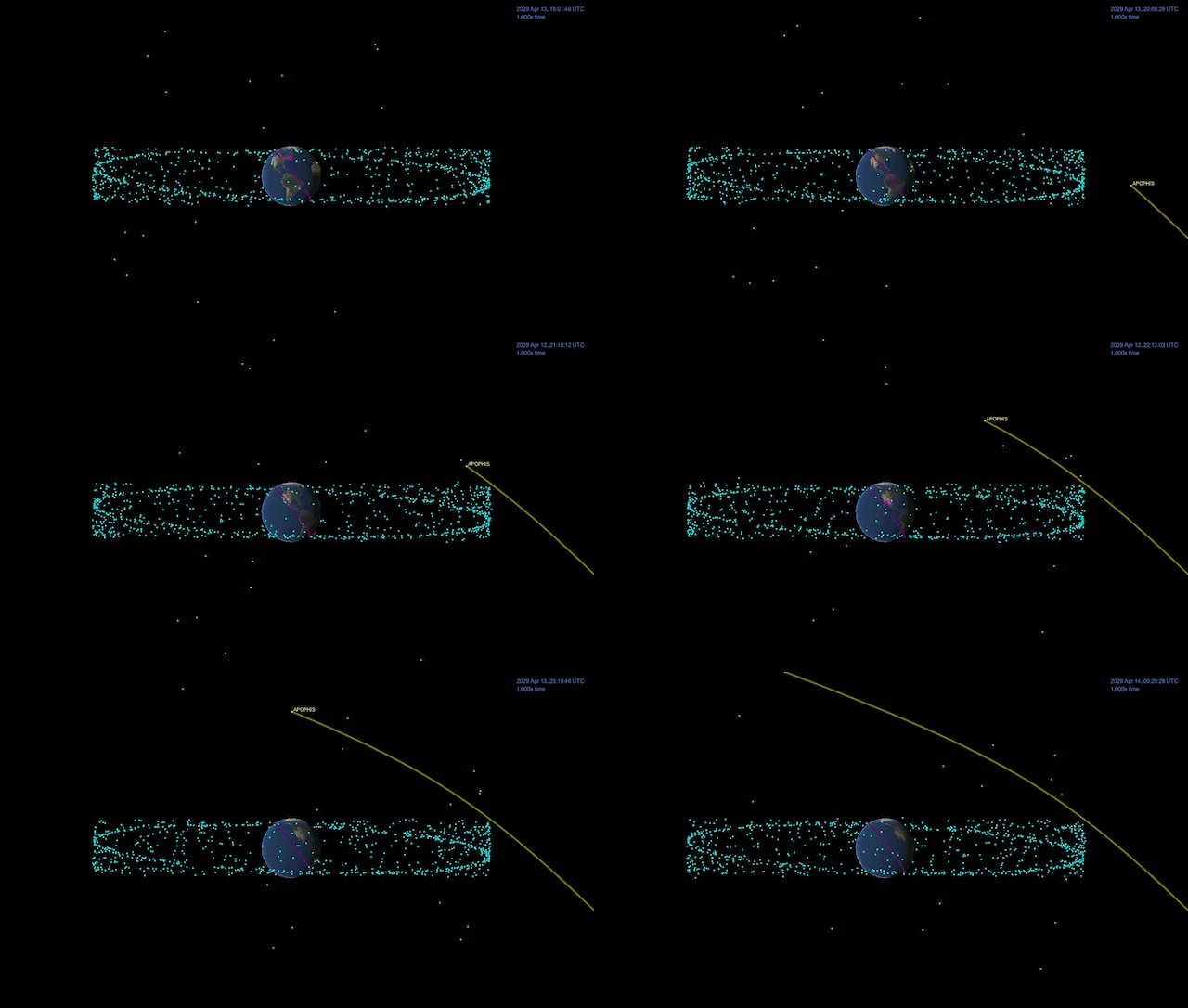
The near Earth asteroid Apophis, shown in yellow, will pass by Earth in 2029 within the distance that some satellites (shown in blue) orbit Earth. The purple line represents the International Space Station's orbit.

2026 JH2 will come closer to Earth than some satellites, similar to the “God of Chaos” asteroid Apophis (shown in this simulation).

(Image credit: NASA/JPL)

However, unlike 2026 JH2, Apophis has the potential to cause serious harm to our planet because it is over 1,100 feet (340 m) across. There is currently zero chance that Apophis will hit Earth while on its current trajectory, but there is a very slim possibility that its course could be altered by interactions with other asteroids over the next three years. As a result, scientists are keeping a very close eye on Apophis and will send a probe to rendezvous with it during the flyby.

After Apophis, the next major flyby will be from the “city killer” asteroid 2024 YR4, which will zoom past the moon at a minimum distance of around 13,200 miles (21,200 km) in 2032. This space rock made headlines last year, when it was temporarily predicted to have a roughly 3% chance of hitting Earth and then a 4% chance of striking the moon. Scientists are now confident that 2024 YR4 will not impact either body.

All of these flybys are a reminder of the potential risk asteroids pose to our planet and highlight the need to seek them out and continue to work on ways of stopping them, if needed.

Source link

Share. Facebook Twitter Pinterest LinkedIn Tumblr Email
Previous ArticleDon Juan Pond: Antarctica’s salty, syrupy lake that never freezes, even when it’s minus 58 F
Editor
  • Website

Related Posts

Lifestyle

Don Juan Pond: Antarctica’s salty, syrupy lake that never freezes, even when it’s minus 58 F

May 16, 2026
Lifestyle

Withings ScanWatch 2 review: Style meets next-level health monitoring

May 15, 2026
Lifestyle

AI Chatbots are turbo-charging violence against women and girls: We urgently need to regulate them | Yvonne McDermott Rees

May 15, 2026
Add A Comment

Comments are closed.

Categories
  • Entertainment
  • Lifestyle
  • News
  • Sports
  • Tech
  • Travel
Recent Posts
  • Newly discovered, blue-whale-size asteroid will fly super close to Earth Monday — and you can watch it live
  • Don Juan Pond: Antarctica’s salty, syrupy lake that never freezes, even when it’s minus 58 F
  • Withings ScanWatch 2 review: Style meets next-level health monitoring
  • AI Chatbots are turbo-charging violence against women and girls: We urgently need to regulate them | Yvonne McDermott Rees
  • ‘The biggest El Niño event since the 1870s’: ‘Super’ El Niño is now the most likely scenario by the end of this year ‪—‬ and the humanitarian cost could be huge
calendar
May 2026
M T W T F S S
 123
45678910
11121314151617
18192021222324
25262728293031
« Apr    
Recent Posts
  • Newly discovered, blue-whale-size asteroid will fly super close to Earth Monday — and you can watch it live
  • Don Juan Pond: Antarctica’s salty, syrupy lake that never freezes, even when it’s minus 58 F
  • Withings ScanWatch 2 review: Style meets next-level health monitoring
About

Welcome to Baynard Media, your trusted source for a diverse range of news and insights. We are committed to delivering timely, reliable, and thought-provoking content that keeps you informed
and inspired

Categories
  • Entertainment
  • Lifestyle
  • News
  • Sports
  • Tech
  • Travel
Facebook X (Twitter) Pinterest WhatsApp
  • Contact Us
  • About Us
  • Privacy Policy
  • Disclaimer
  • UNSUBSCRIBE
© 2026 copyrights reserved

Type above and press Enter to search. Press Esc to cancel.