
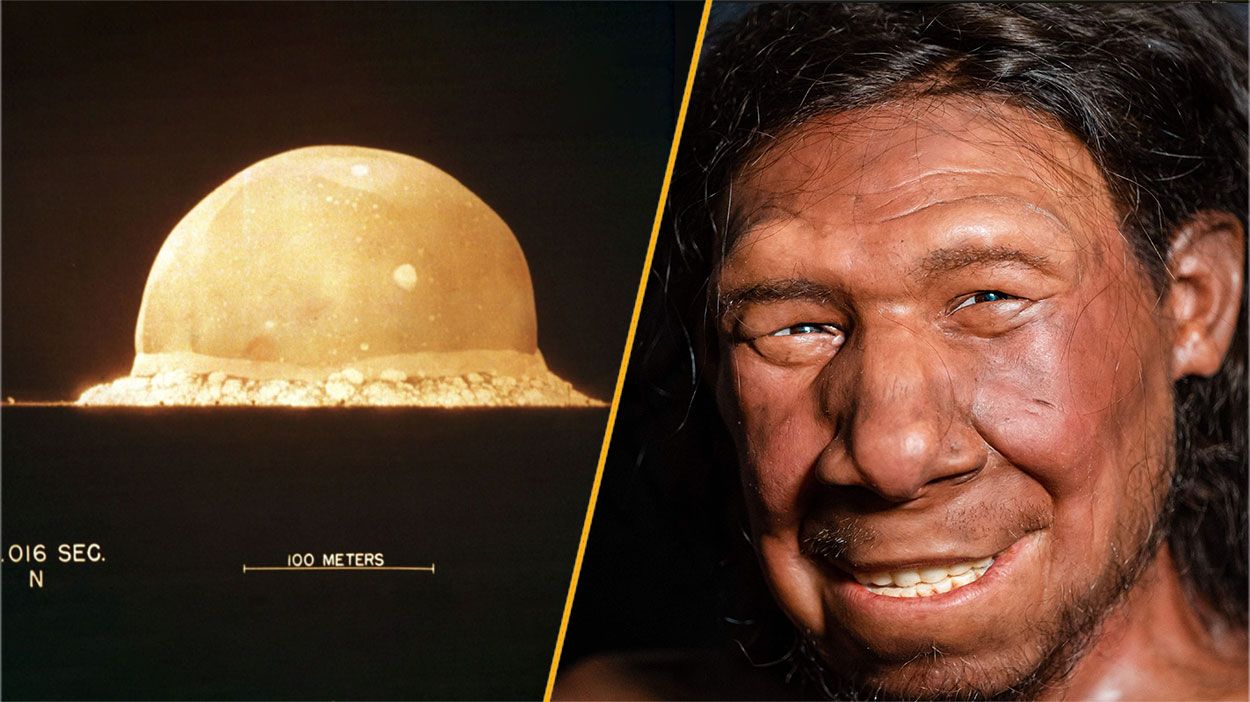
This week’s science news featured some big headlines for health, including the landmark decision to officially rename polycystic ovary syndrome (PCOS) to polyendocrine metabolic ovarian syndrome (PMOS).
The name change — the culmination of a 14-year process that took input from over 14,000 patients and health professionals — was made to better reflect the nature of the disease from one that implied (incorrectly) that people with the disease have a higher number of pathological noncancerous ovarian cysts than those without the condition. Instead, those with PMOS have a large number of “arrested follicles,” or ovarian eggs that have failed to fully mature.
Neanderthals were the world’s oldest dentists
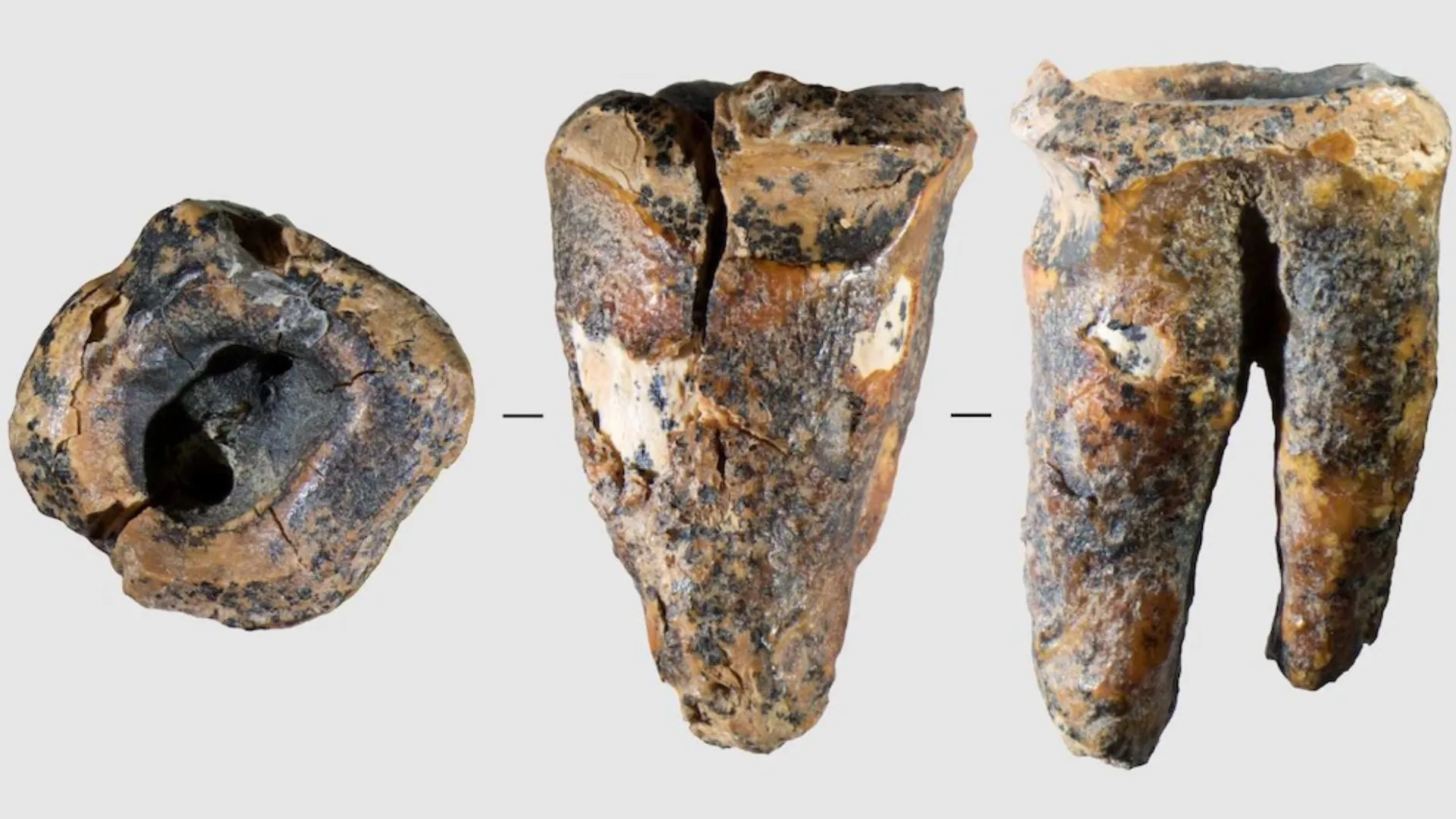
Neanderthals hold the record of being the world’s oldest dentists by about 45,000 years.
Neanderthals may have been the world’s oldest dentists, according to a new study of a 60,000-year-old Neanderthal lower molar with a deep hole in its surface bored out by a small stone drill.
The procedure shows that our closest human relatives had the smarts to recognize that a painful tooth cavity could be treated and that they had the precise motor skills to successfully drill out the rotten enamel. The evidence is also 45,000 years older than the first recorded instance of Homo sapiens performing intentional dentistry.
Discover more archaeology news
—High-status Roman woman was buried in a lead coffin with jet hairpins and exotic resins, archaeologists find
—‘Speculation’ and ‘egregious failure’: 30 researchers publish scathing critiques of study that questioned date of early human occupation of Monte Verde in Chile
—Homo erectus genetic material sequenced for the first time, and it shows ‘deep genetic links’ with modern humans
Life’s Little Mysteries

Can plants infect us with disease? Disturbingly, the answer is yes.
(Image credit: Sumala Chidchoi/Getty Images)
Plants infecting humans is a trope of science fiction, but can it actually happen in real life? Live Science investigated and found a rather disturbing answer.
—If you enjoyed this, sign up for our Life’s Little Mysteries newsletter
First nuclear bomb test spawns “alien” crystal
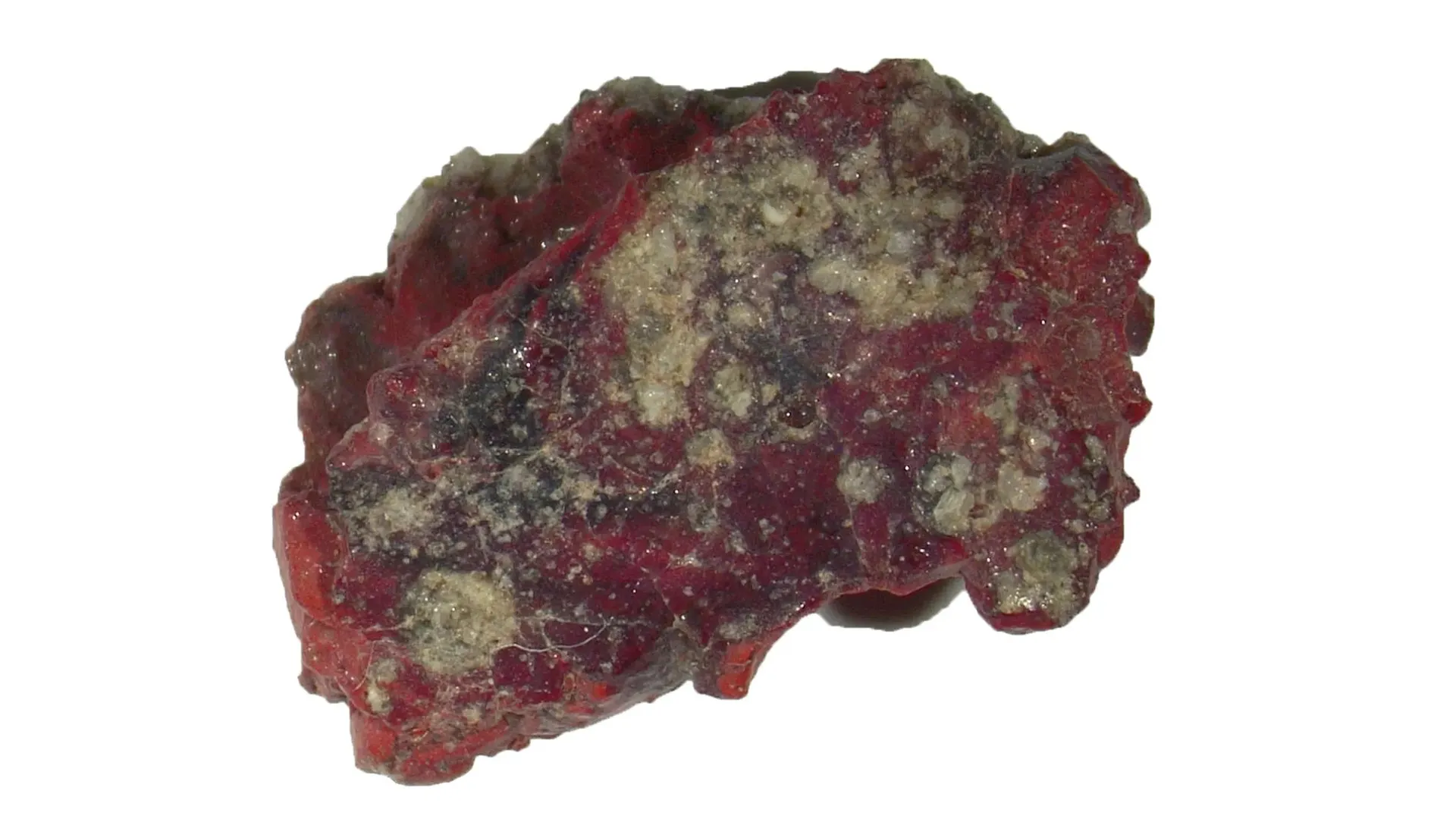
Formed by the first nuclear blast, this rare crystal has yielded a fresh discovery more than 80 years later.
(Image credit: Luca Bindi and Paul J. Steinhardt.)
The world’s first nuclear bomb test reduced the surrounding desert sand to pale-green-and-red glass. Now, more than 80 years later, an analysis of the red parts of this substance — dubbed “trinitite,” after the Trinity test site — has revealed that it contains crystals found nowhere else on Earth.
Red trinitite is composed of a unique clathrate, a type of crystalline structure in which one element (in this case, silicon) encloses others (copper and calcium). The discovery marks the first time clathrate crystals have been found as a byproduct of a nuclear blast and will help expand scientists’ understanding of how matter organizes itself under extreme conditions.
Discover more physics and space news
—Physicists find evidence that the universe isn’t perfectly uniform — potentially unraveling a 100-year-old model of cosmology
—SpaceX prepares to launch next-generation Starship, the tallest and most powerful rocket ever built
—‘I heard gasps’ and ‘oh my God’: Artemis II astronauts reveal inside story of their mind-bending solar eclipse
Also in science news this week
—‘Insect apocalypse’ is already fueling malnutrition in some regions, first-of-its-kind study reveals
—Microplastics absorb heat in the atmosphere and contribute to global warming — as if they weren’t bad enough
—Once-in-a-century ‘super’ El Niño in the cards as ocean temperatures reach near record highs in April
—The Milky Way ate a galaxy called Loki, and scientists think they found its bones
—‘A combination of amazement and horror’: Hitchhiker fish hide in manta ray buttholes
—New ‘trick’ fixes major flaw with lasers in neutral-atom quantum computers — inching us closer to more powerful systems
Beyond the headlines

Pollution can have profound effects on our mental wellbeing that scientists our only just disentangling.
(Image credit: Sanket Jain)
Numerous studies have found that pollution harms our lungs and hearts, but emerging research is revealing that it inflicts our minds, too.
Studies conducted in Asia, the United States and Europe link long-term exposure to air pollution with higher risks of depression, anxiety, schizophrenia, bipolar disorder and suicide. Live Science dug into the research on this global threat to human well-being.
Something for the weekend
If you’re looking for things to keep you busy over the weekend, here are some of the best interviews, opinions, news analyses and quizzes published this week.
—More polar bears are approaching human sites as the climate warms, and it’s not just the skinny ones [Opinion]
—AI self-replication hacks ‘no longer purely theoretical,’ study finds — but experts say it’s too soon to panic [News analysis]
—Live Science crossword puzzle #43: Founder and first ruler of the Mongol Empire — 8 across [Crossword]
Science news in pictures

This blurry dot is a record-breaking one.
(Image credit: JPL & NSF/AUI/NSF NRAO)
It may not look like much, but crammed into the handful of pixels in this image are four human beings circling the moon more than 200,000 miles (320,000 kilometers) away.
The blurry image is of the Artemis II astronauts as they swung around the moon inside their Orion capsule. Captured by a radio telescope here on Earth, it’s a compelling candidate for the longest-distance image of humans ever taken.
Follow Live Science on social media
Want more science news? Follow our Live Science WhatsApp Channel for the latest discoveries as they happen. It’s the best way to get our expert reporting on the go, but if you don’t use WhatsApp we’re also on Facebook, X (formerly Twitter), Flipboard, Instagram, TikTok, Bluesky and LinkedIn.
TOPICS
