
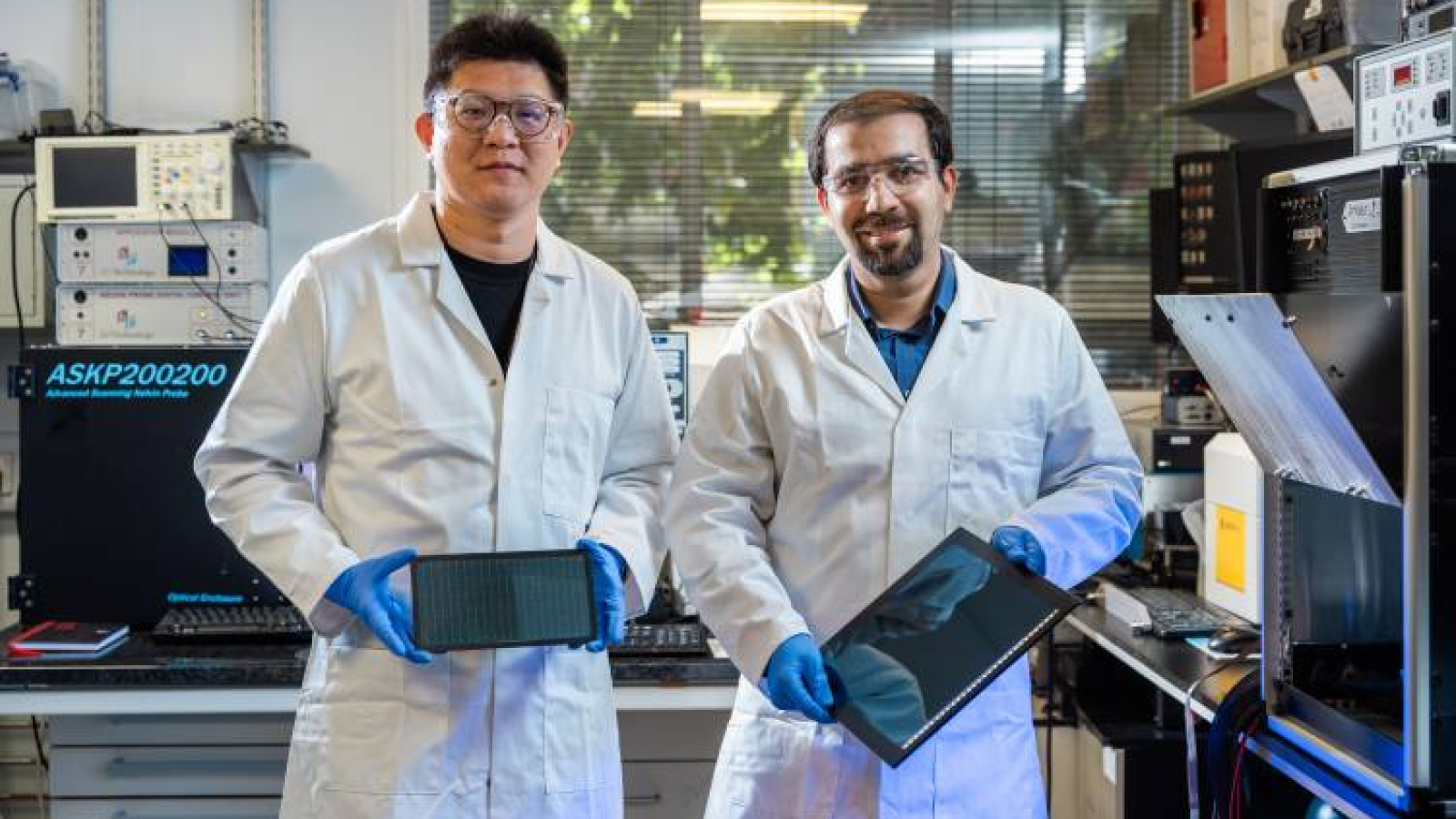
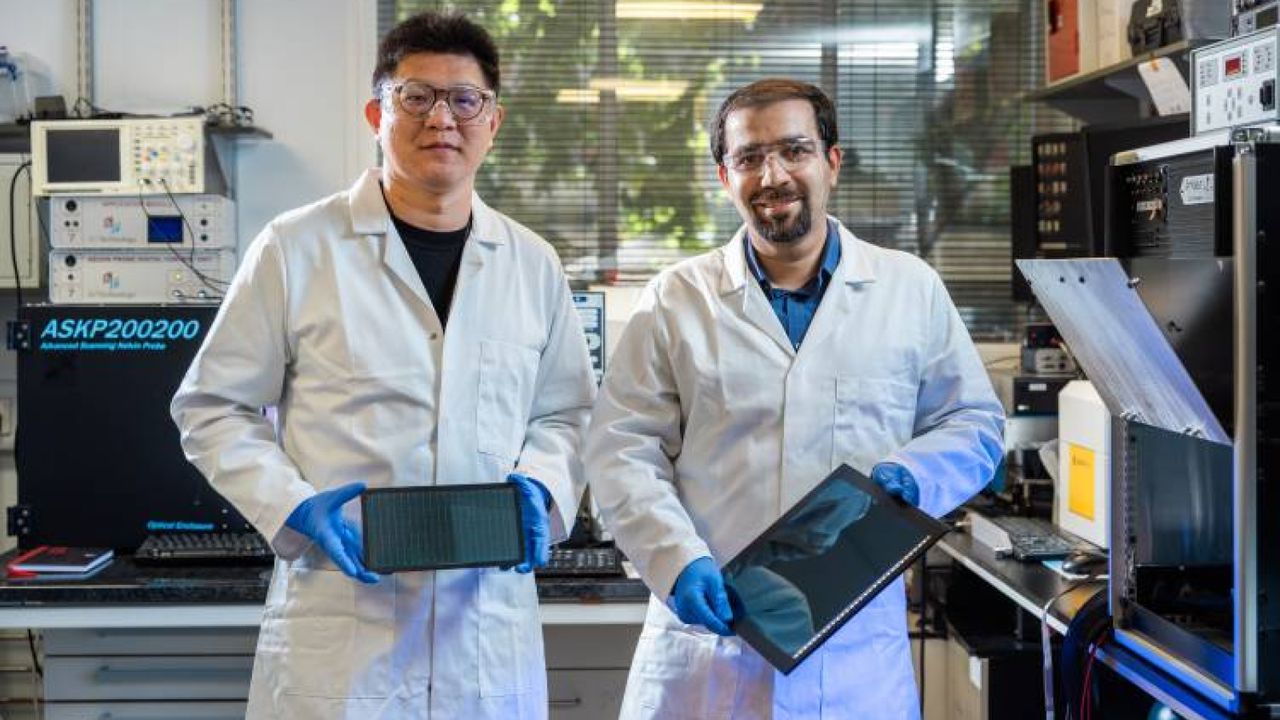
An array of personal and home devices could one day function battery-free following the development of pioneering new solar technology.
These new solar cells are capable of harvesting energy from indoor light. Researchers said the discovery has broad applications and could enable consumers to power devices such as keyboards, alarms and sensors using only indoor ambient light.
In the study, published April 30 in the journal Advanced Functional Materials, researchers used the perovskite to gather light in solar cells. This material is already in use in other solar cells and offers distinct advantages to traditional silicon-based solar panels. In particular, perovskite absorbs lower-power, ambient light more efficiently than traditional methods, according to the study, making it ideal for indoor use.
The researchers’ new perovskite cells were six times more efficient than silicon-based solar cells, the researchers found.
In the long term, perovskite-derived solar cells represent a more sustainable and cost-effective alternative to batteries, said study co-author Mojtaba Abdi Jalebi, associate professor in energy materials at University College London’ Institute for Materials Discovery.
“Billions of devices that require small amounts of energy rely on battery replacements — an unsustainable practice. This number will grow as the Internet of Things expands,” Jalebi said in a statement.
Related: EV batteries could last much longer thanks to new capacitor with 19-times higher energy density that scientists created by mistake
“Currently, solar cells capturing energy from indoor light are expensive and inefficient. Our specially engineered perovskite indoor solar cells can harvest much more energy than commercial cells and is more durable than other prototypes. It paves the way for electronics powered by the ambient light already present in our lives.”
Perovskite composition challenges
Perovskite is already becoming a popular material for use in solar panels, with marked benefits compared with silicon-based materials.
However, while its applications are promising, the material does have several drawbacks regarding stability and longevity.
A key factor here lies in “traps” — miniscule defects in perovskite’s crystal structure. These traps cause electrons to become stuck in minute flaws and indentations within the material, thereby preventing energy from being harnessed.
What’re more, while traps inhibit the flow of electricity, they also accelerate the degradation of the material over time, due to the non-linear flow of charge through the material.
To counter this, the researchers behind the new study used a combination of chemicals to reduce the volume of these defects. This included the application of rubidium chloride, which “encouraged a more homogenous growth” of perovskite crystals and reduced the density of the traps, representatives said in the statement.
Two other chemicals — N,N-dimethyloctylammonium iodide (DMOAI) and phenethylammonium chloride (PEACl), both organic salts of ammonium — were also applied to stabilize two types of ions (iodide and bromide) and prevent them from separating. This helped address the issue of long-term performance degradation in the solar cell, the study noted.
“The solar cell with these tiny defects is like a cake cut into pieces. Through a combination of strategies, we have put this cake back together again, allowing the charge to pass through it more easily,” said study lead-author Siming Huang, a doctoral student at UCL’s Institute for Materials Discovery.
Marked performance benefits
After addressing the issue of traps, researchers found their solar cells converted 37.6% of indoor light into electricity. This was achieved at 1,000 lux, the researchers said, or the equivalent of a “well-lit office.”
Long-term durability also improved, the study found, with the solar cells retaining 92% of their performance over 100 days. By comparison, a control device where the perovskite had not been altered to remove flaws retained 76% of its initial performance.
Jalebi said the team is in discussions with industry stakeholders to “explore scale up strategies and commercial deployment” of the perovskite solar cells.
“The advantage of perovskite solar cells in particular is that they are low-cost — they use materials that are abundant on Earth and require only simple processing. They can be printed in the same way as a newspaper,” Jalebi said.
