Close Menu
  • Home
  • UNSUBSCRIBE
  • News
  • Lifestyle
  • Tech
  • Entertainment
  • Sports
  • Travel
Facebook X (Twitter) WhatsApp
Trending
  • Arthritis drug shows antiviral effects against RSV, the leading cause of infant hospitalization
  • Daddy longlegs may be capturing and devouring frogs in the tropical forests of South America
  • Google wants to release 64 million bacteria-riddled mosquitoes across California and Florida. Here’s why scientists are enthusiastic.
  • ‘In an unrecoverable state’: NASA confirms MAVEN spacecraft is officially dead after loss of signal behind Mars
  • 2 rivers merged to form the Euphrates 3.6 million years ago, eventually leading to the Fertile Crescent
  • NASA confirms fireball meteor exploded over northeastern US with force of 230 tons of TNT
  • Astronauts could use lightning-like plasma jets to kill germs on the moon and Mars, demo hints
  • First whole-genome sequence of a Greenland shark holds clues to their extreme longevity
Facebook X (Twitter) WhatsApp
Baynard Media
  • Home
  • UNSUBSCRIBE
  • News
  • Lifestyle
  • Tech
  • Entertainment
  • Sports
  • Travel
Baynard Media
Home»Lifestyle»‘We never had concrete proof’: Archaeologists discover Christian cross in Abu Dhabi, proving 1,400-year-old site was a monastery
Lifestyle

‘We never had concrete proof’: Archaeologists discover Christian cross in Abu Dhabi, proving 1,400-year-old site was a monastery

EditorBy EditorAugust 22, 2025No Comments2 Mins Read
Share Facebook Twitter Pinterest LinkedIn Tumblr Reddit Telegram Email
Share
Facebook Twitter LinkedIn Pinterest Email

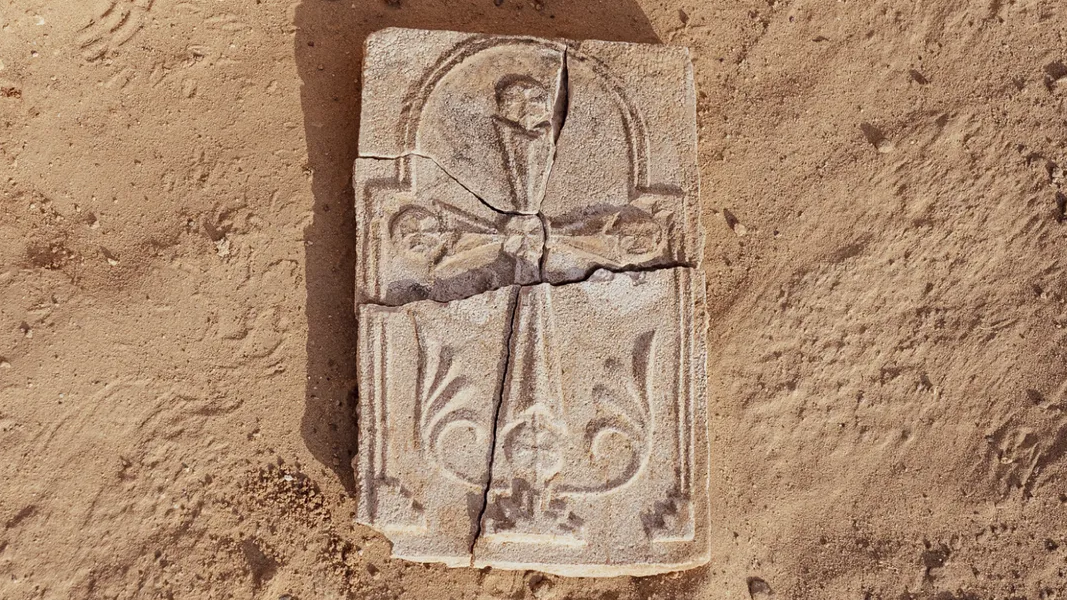
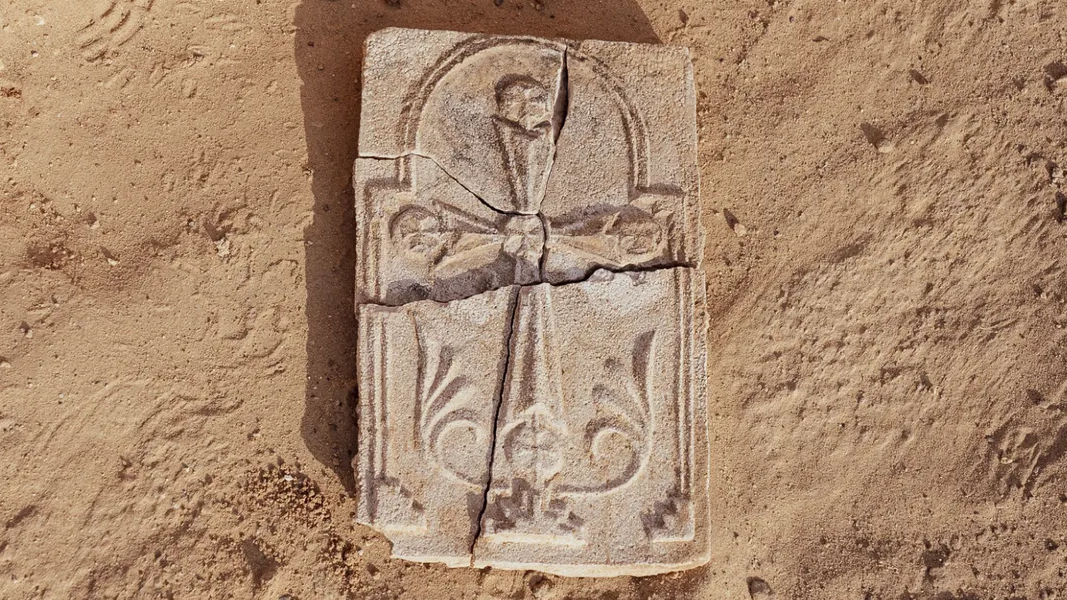
Archaeologists have uncovered a complete plaster cross dating to 1,400 years ago during an excavation in the United Arab Emirates. The Christian symbol finally proves that a series of houses discovered decades ago were part of a monastery.

“This is a very exciting time for us,” Maria Gajewska, an archaeologist at the Department of Culture and Tourism — Abu Dhabi, said in a video. “We never had concrete proof [the houses] were inhabited by Christians.”

Nine small courtyard houses were excavated in 1992 on Sir Bani Yas, an island 110 miles (170 kilometers) southwest of Abu Dhabi. Nearby, archaeologists found a church and monastery dating to the seventh and eighth centuries A.D. But it was unclear whether the houses were related to the monastic settlement.


You may like

This year, archaeologists returned to Sir Bani Yas for further excavation. In the courtyard of one house, they found a stucco plaque in the shape of a Christian cross measuring nearly 1 foot (30 centimeters) long.

With that cross, “we have now proved these houses were part of a Christian settlement,” Gajewska said. Senior monks probably lived in the houses, secluding themselves and praying, before reconvening at the monastery with their brethren, she said.

Related: 1,800-year-old silver amulet could rewrite history of Christianity in the early Roman Empire

Sir Bani Yas was just one location of Christian worship in the region during this time period, according to a translated statement from the Abu Dhabi Media Office. Christianity spread around the Arabian Gulf between the fourth and sixth centuries before the rise of Islam starting in the seventh century. Muslims and Christians lived on Sir Bani Yas until the monastery was abandoned in the eighth century.

Get the world’s most fascinating discoveries delivered straight to your inbox.

The new excavation “helps us better understand the nature of life and the relationships that connected the inhabitants of the island with the surrounding regions,” Hager Hasan Almenhali, an archaeologist at the Department of Culture and Tourism — Abu Dhabi, said in the video.

Archaeologists plan to continue their work on the courtyard houses. The Sir Bani Yas church and monastery site is open to the public.


Source link

Share. Facebook Twitter Pinterest LinkedIn Tumblr Email
Previous ArticleTerry Moran calls Trump’s D.C. National Guard deployment ‘Kabuki Theater’
Next Article Where the Russia-Ukraine peace talks go from here: From the Politics Desk
Editor
  • Website

Related Posts

Lifestyle

Arthritis drug shows antiviral effects against RSV, the leading cause of infant hospitalization

June 4, 2026
Lifestyle

Daddy longlegs may be capturing and devouring frogs in the tropical forests of South America

June 3, 2026
Lifestyle

Google wants to release 64 million bacteria-riddled mosquitoes across California and Florida. Here’s why scientists are enthusiastic.

June 3, 2026
Add A Comment

Comments are closed.

Categories
  • Entertainment
  • Lifestyle
  • News
  • Sports
  • Tech
  • Travel
Recent Posts
  • Arthritis drug shows antiviral effects against RSV, the leading cause of infant hospitalization
  • Daddy longlegs may be capturing and devouring frogs in the tropical forests of South America
  • Google wants to release 64 million bacteria-riddled mosquitoes across California and Florida. Here’s why scientists are enthusiastic.
  • ‘In an unrecoverable state’: NASA confirms MAVEN spacecraft is officially dead after loss of signal behind Mars
  • 2 rivers merged to form the Euphrates 3.6 million years ago, eventually leading to the Fertile Crescent
calendar
June 2026
M T W T F S S
1234567
891011121314
15161718192021
22232425262728
2930  
« May    
Recent Posts
  • Arthritis drug shows antiviral effects against RSV, the leading cause of infant hospitalization
  • Daddy longlegs may be capturing and devouring frogs in the tropical forests of South America
  • Google wants to release 64 million bacteria-riddled mosquitoes across California and Florida. Here’s why scientists are enthusiastic.
About

Welcome to Baynard Media, your trusted source for a diverse range of news and insights. We are committed to delivering timely, reliable, and thought-provoking content that keeps you informed
and inspired

Categories
  • Entertainment
  • Lifestyle
  • News
  • Sports
  • Tech
  • Travel
Facebook X (Twitter) Pinterest WhatsApp
  • Contact Us
  • About Us
  • Privacy Policy
  • Disclaimer
  • UNSUBSCRIBE
© 2026 copyrights reserved

Type above and press Enter to search. Press Esc to cancel.