Close Menu
  • Home
  • UNSUBSCRIBE
  • News
  • Lifestyle
  • Tech
  • Entertainment
  • Sports
  • Travel
Facebook X (Twitter) WhatsApp
Trending
  • New robotic heart mimics common, mysterious condition to help researchers study it
  • Canon EOS R6 III review: A wildlife wonder
  • Medieval babies and adults buried together in Sweden were not related, archaeologists discover — raising big questions about early Christian burial practices
  • NASA is creating a fifth state of matter on the ISS, thanks to an upgrade to a mini-fridge-sized quantum lab
  • New sodium metal battery design charges in just 4 minutes and retains its capacity for years
  • Quantum computing wielded to create extremely rare material critical to nuclear fusion
  • Scientists build tiny ‘diving suit’ for cockroaches, turning them into search-and-rescue cyborgs
  • Physicists develop the first working model of quantum mechanics using only ‘real’ numbers
Facebook X (Twitter) WhatsApp
Baynard Media
  • Home
  • UNSUBSCRIBE
  • News
  • Lifestyle
  • Tech
  • Entertainment
  • Sports
  • Travel
Baynard Media
Home»Lifestyle»Vounous Bowl: A 4,000-year-old basin holding 4 miniature cows and 18 people — that was buried for mysterious reasons in a Bronze Age tomb in Cyprus
Lifestyle

Vounous Bowl: A 4,000-year-old basin holding 4 miniature cows and 18 people — that was buried for mysterious reasons in a Bronze Age tomb in Cyprus

EditorBy EditorJuly 21, 2025No Comments3 Mins Read
Share Facebook Twitter Pinterest LinkedIn Tumblr Reddit Telegram Email
Share
Facebook Twitter LinkedIn Pinterest Email

QUICK FACTS

Name: Vounous Bowl

What it is: Ceramic vessel with complex figural scene inside

Where it is from: Bellapais, northern Cyprus

When it was made: Circa 2025 to 1850 B.C.

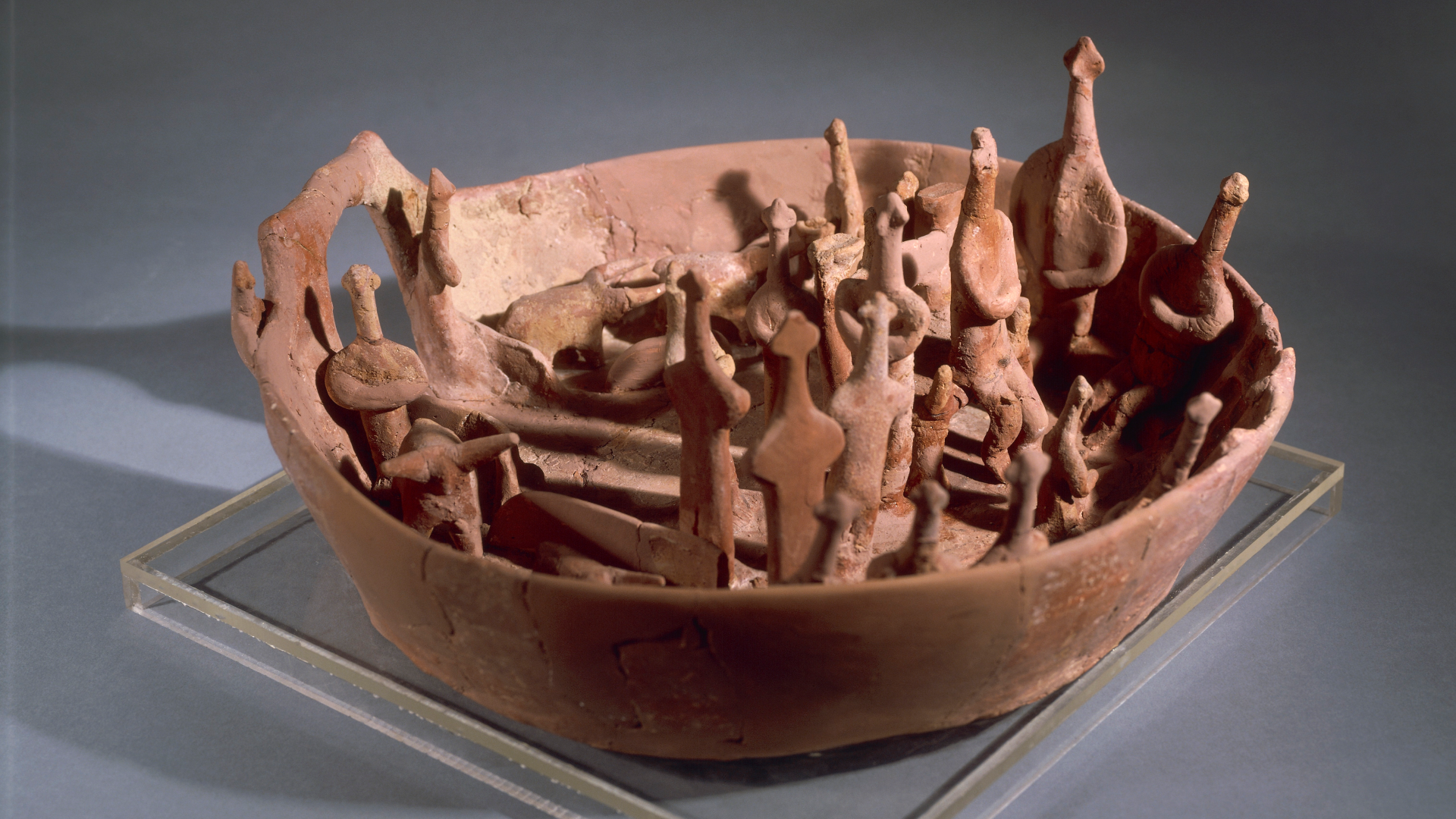
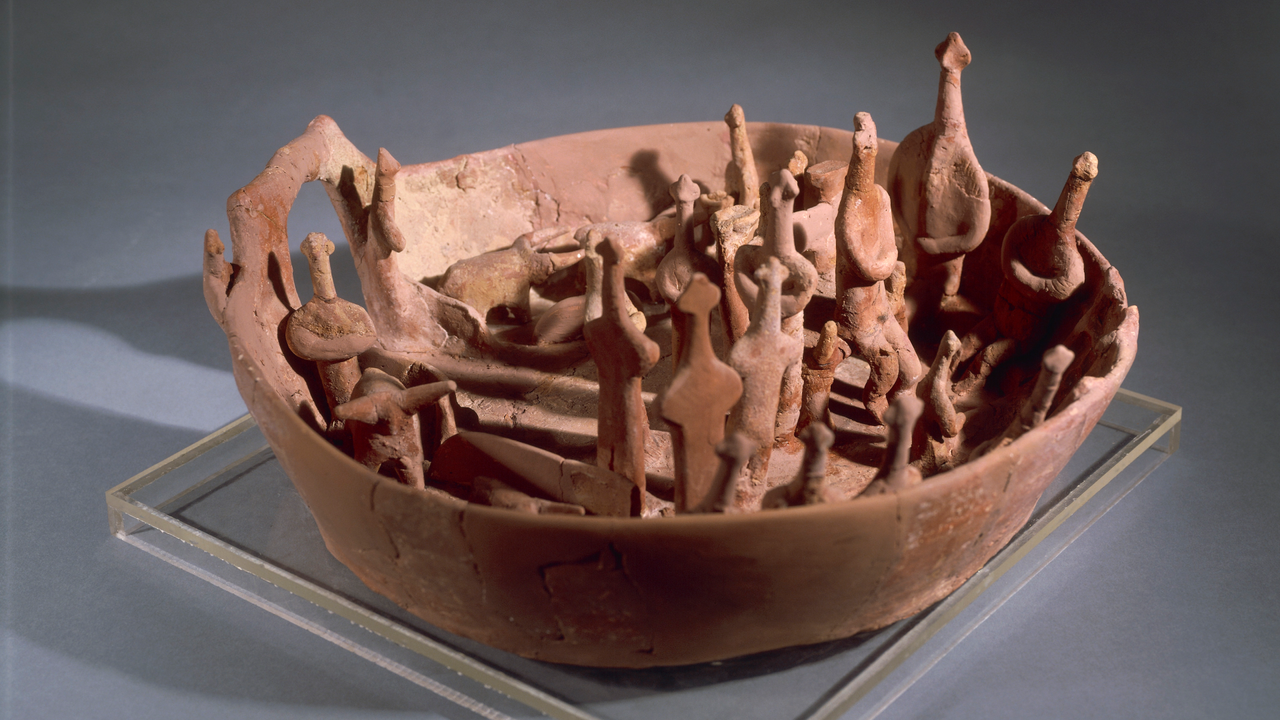
Scholars have debated the meaning of the Vounous Bowl for decades since it was discovered in a Bronze Age tomb in northern Cyprus. While the exact purpose of the unusual vessel is unclear, most experts believe it depicts some sort of sacred scene and may have been used in a religious ceremony.

Excavations at the site of Vounous-Bellapais in the 1930s revealed dozens of tombs from a large prehistoric cemetery. Although many of the tombs had previously been looted, archaeologists recovered a large number of intricately decorated ceramics, including the Vounous Bowl, which had broken into many pieces over the ages.

The Vounous Bowl, which is now in the Cyprus Museum, is shallow with a flat base measuring 14.6 inches (37 centimeters) in diameter and 3.1 inches (8 cm) tall, Louise Steel, an archaeologist at the University of Wales Trinity Saint David, wrote in a 2013 study.


You may like

Related: Roman dodecahedron: A mysterious 12-sided object that has baffled archaeologists for centuries

One side of the bowl has a rough, rectangular hole that likely indicates a doorway. Inside the bowl is a complex scene composed of 18 human figures, four cows in pens and some furniture.

Opposite the doorway is a structure with three pillars linked by two cross bars with wavy lines — which may be a shrine — and a human figure kneeling in front of it. Some figures are seated on a bench with their arms crossed, and one figure appears to be wearing a headdress and sitting on a kind of throne.

In a 1994 study, Edgar Peltenburg, emeritus professor of archaeology at the University of Edinburgh, suggested that the Vounous Bowl had three distinct scenes inside — including a pastoral scene with the cows; an indication of male power with the individual wearing the headdress; and a representation of the spiritual world with the kneeling figures. Together, these scenes reflected a new, hierarchical social order that was developing at this time.

Get the world’s most fascinating discoveries delivered straight to your inbox.

MORE ASTONISHING ARTIFACTS

Steel wrote that the Vounous Bowl was likely a means of symbolic communication, created at a time when the quickly growing population began engaging in elaborate communal feasts and elaborate burial rituals. The use of modeled figures to create a scene inside the bowl is extremely rare in prehistoric Cypriot vessels, so the Vounous Bowl was likely special in some way and buried with someone held in high esteem by their community.

The Vounous Bowl was made at a time of social transition and rapid cultural innovation, and “almost certainly it was meant to be viewed or displayed in significant ceremonial occasions,” Steel wrote. “The Vounous Bowl is just one example of an increased display of symbols within the funerary context.”

Source link

Share. Facebook Twitter Pinterest LinkedIn Tumblr Email
Previous ArticleTucson, Arizona district loses $20 million after Arizona school choice law
Next Article AI fuels tech job cuts despite efficiency questions among workers
Editor
  • Website

Related Posts

Lifestyle

New robotic heart mimics common, mysterious condition to help researchers study it

July 11, 2026
Lifestyle

Canon EOS R6 III review: A wildlife wonder

July 10, 2026
Lifestyle

Medieval babies and adults buried together in Sweden were not related, archaeologists discover — raising big questions about early Christian burial practices

July 10, 2026
Add A Comment

Comments are closed.

Categories
  • Entertainment
  • Lifestyle
  • News
  • Sports
  • Tech
  • Travel
Recent Posts
  • New robotic heart mimics common, mysterious condition to help researchers study it
  • Canon EOS R6 III review: A wildlife wonder
  • Medieval babies and adults buried together in Sweden were not related, archaeologists discover — raising big questions about early Christian burial practices
  • NASA is creating a fifth state of matter on the ISS, thanks to an upgrade to a mini-fridge-sized quantum lab
  • New sodium metal battery design charges in just 4 minutes and retains its capacity for years
calendar
July 2026
M T W T F S S
 12345
6789101112
13141516171819
20212223242526
2728293031  
« Jun    
Recent Posts
  • New robotic heart mimics common, mysterious condition to help researchers study it
  • Canon EOS R6 III review: A wildlife wonder
  • Medieval babies and adults buried together in Sweden were not related, archaeologists discover — raising big questions about early Christian burial practices
About

Welcome to Baynard Media, your trusted source for a diverse range of news and insights. We are committed to delivering timely, reliable, and thought-provoking content that keeps you informed
and inspired

Categories
  • Entertainment
  • Lifestyle
  • News
  • Sports
  • Tech
  • Travel
Facebook X (Twitter) Pinterest WhatsApp
  • Contact Us
  • About Us
  • Privacy Policy
  • Disclaimer
  • UNSUBSCRIBE
© 2026 copyrights reserved

Type above and press Enter to search. Press Esc to cancel.