Close Menu
  • Home
  • UNSUBSCRIBE
  • News
  • Lifestyle
  • Tech
  • Entertainment
  • Sports
  • Travel
Facebook X (Twitter) WhatsApp
Trending
  • Lake Forest Looks to Develop Vacant Site As Affordable Housing
  • Can the US be trusted with the moon? A law scholar raises concerns after Artemis II’s success.
  • 404 | Fox News
  • Hungary’s new leader takes on the authoritarian state
  • Largest-ever 3D map of the universe shows 47 million galaxies, from the Milky Way to ‘cosmic noon’ — Space photo of the week
  • WWE star Trick Williams ready for WrestleMania debut vs Sami Zayn
  • Black parents are not ‘safety stories.’ We deserve real change
  • Science news this week: Physicists witness faster-than-light darkness pinpricks, humans are still evolving, and some polar bears are getting fatter than ever
Facebook X (Twitter) WhatsApp
Baynard Media
  • Home
  • UNSUBSCRIBE
  • News
  • Lifestyle
  • Tech
  • Entertainment
  • Sports
  • Travel
Baynard Media
Home»Lifestyle»Space photo of the week: Look into Titan’s ‘eye,’ 20 years after the Huygens spacecraft’s historic landing on Saturn’s largest moon
Lifestyle

Space photo of the week: Look into Titan’s ‘eye,’ 20 years after the Huygens spacecraft’s historic landing on Saturn’s largest moon

EditorBy EditorJanuary 19, 2025No Comments2 Mins Read
Share Facebook Twitter Pinterest LinkedIn Tumblr Reddit Telegram Email
Share
Facebook Twitter LinkedIn Pinterest Email

What it is: Saturn’s largest moon, Titan

Where it is: Approximately 750 million miles (1.2 billion kilometers) from Earth

When it was shared: May 4, 2006

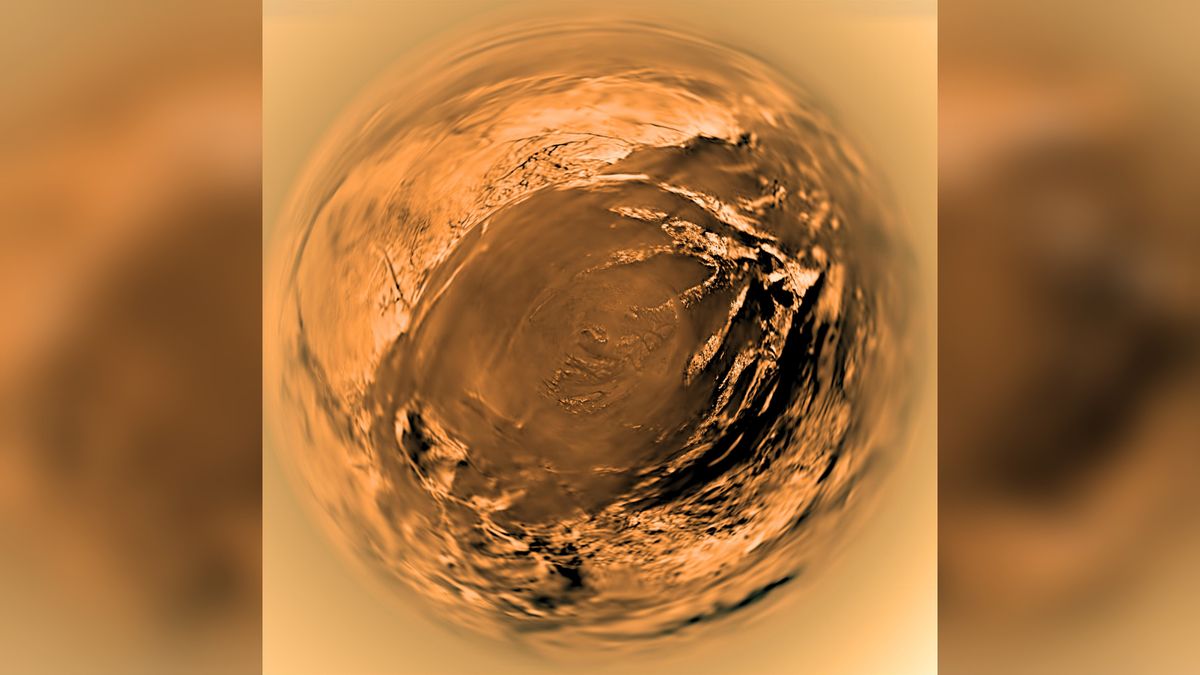
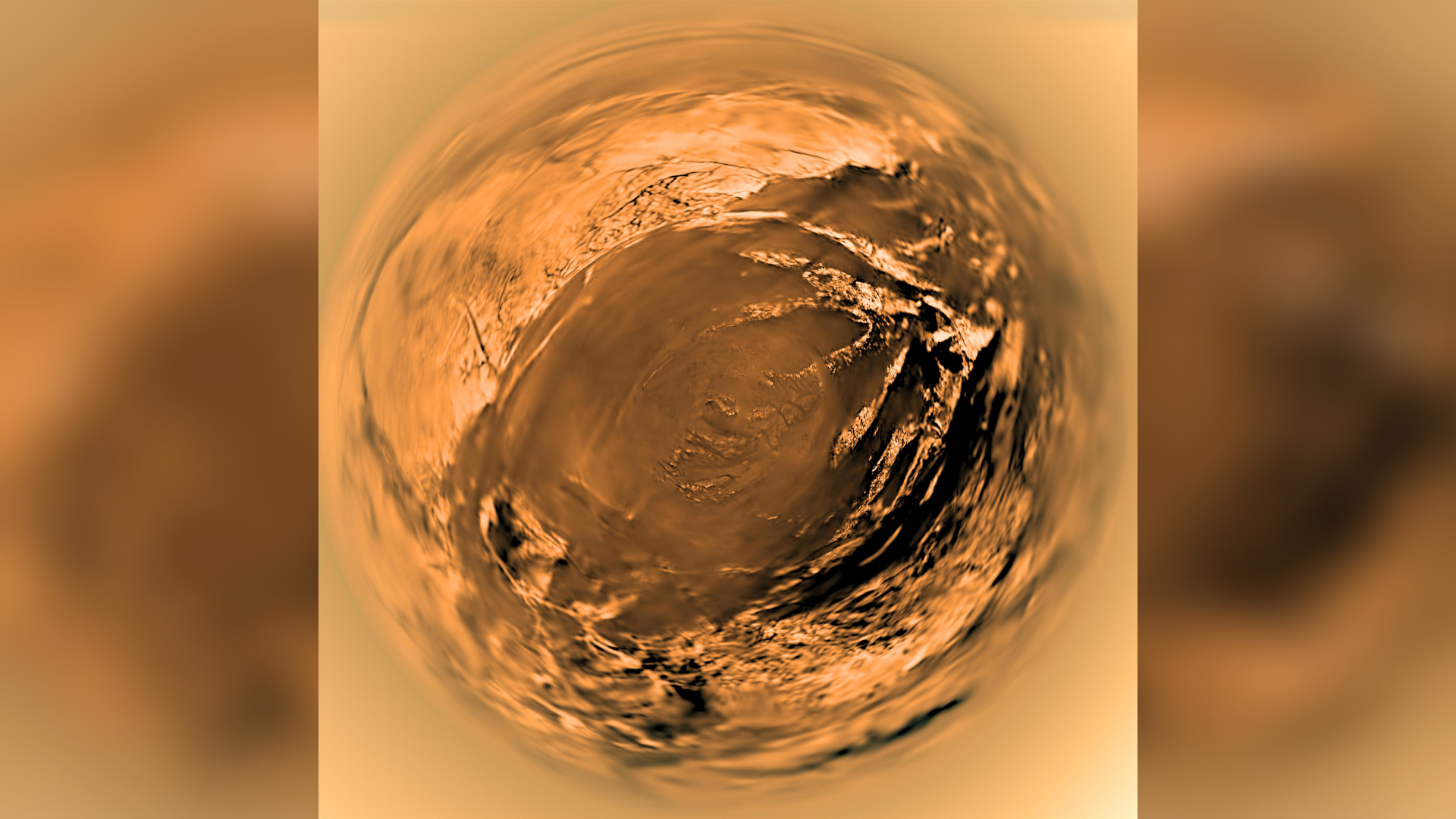
Why it’s so special: This picture was taken by the European Space Agency’s Huygens probe during its historic parachute descent onto Titan’s surface on Jan. 14, 2005. At the moment this image was captured, the probe was approximately 3 miles (5 km) above Saturn’s largest moon. The probe’s descent from its parent spacecraft, NASA’s Cassini, took approximately 2.5 hours. When Huygens landed with a thud near the bright equatorial region of Adiri, it made history as the first and only probe to land in the outer solar system. The probe carried instruments to study Titan’s smog-like atmosphere, chemical properties, wind, temperature and pressure. It was also equipped with cameras to capture Titan’s surface.

Although the probe itself was not designed to withstand the landing, it not only survived but also returned images of frigid Titan’s surface for another hour and 10 minutes after touchdown, until its batteries died.

Over the years, images collected by Huygens’ Descent Imager/Spectral Radiometer instrument revealed that Titan’s surface has Earth-like features including narrow drainage canals, dry lake beds, islands and shoals. Two more instruments — the Gas Chromatograph and Mass Spectrometer and the Surface Science Package — provided compelling evidence for the presence of methane rain and liquid flowing on Titan. Although the rivers and lakes appeared dry when Huygens touched down, evidence suggested that liquid methane may have flowed across the moon’s surface not long ago.

The Huygens landing was part of the Cassini mission, which launched on Oct. 15, 1997. In 2017, after 20 years of thrilling exploration, the spacecraft made its final approach to Saturn, plunged into its atmosphere, and burned up, dramatically ending its remarkable journey.

Get the world’s most fascinating discoveries delivered straight to your inbox.

Source link

Share. Facebook Twitter Pinterest LinkedIn Tumblr Email
Previous ArticleTikTok reinstates service after Trump promises to save the app with day one executive order
Next Article When playing out the back goes wrong! Toone pounces on costly City error
Editor
  • Website

Related Posts

Lifestyle

Can the US be trusted with the moon? A law scholar raises concerns after Artemis II’s success.

April 19, 2026
Lifestyle

Largest-ever 3D map of the universe shows 47 million galaxies, from the Milky Way to ‘cosmic noon’ — Space photo of the week

April 19, 2026
Lifestyle

Science news this week: Physicists witness faster-than-light darkness pinpricks, humans are still evolving, and some polar bears are getting fatter than ever

April 19, 2026
Add A Comment

Comments are closed.

Categories
  • Entertainment
  • Lifestyle
  • News
  • Sports
  • Tech
  • Travel
Recent Posts
  • Lake Forest Looks to Develop Vacant Site As Affordable Housing
  • Can the US be trusted with the moon? A law scholar raises concerns after Artemis II’s success.
  • 404 | Fox News
  • Hungary’s new leader takes on the authoritarian state
  • Largest-ever 3D map of the universe shows 47 million galaxies, from the Milky Way to ‘cosmic noon’ — Space photo of the week
calendar
April 2026
M T W T F S S
 12345
6789101112
13141516171819
20212223242526
27282930  
« Mar    
Recent Posts
  • Lake Forest Looks to Develop Vacant Site As Affordable Housing
  • Can the US be trusted with the moon? A law scholar raises concerns after Artemis II’s success.
  • 404 | Fox News
About

Welcome to Baynard Media, your trusted source for a diverse range of news and insights. We are committed to delivering timely, reliable, and thought-provoking content that keeps you informed
and inspired

Categories
  • Entertainment
  • Lifestyle
  • News
  • Sports
  • Tech
  • Travel
Facebook X (Twitter) Pinterest WhatsApp
  • Contact Us
  • About Us
  • Privacy Policy
  • Disclaimer
  • UNSUBSCRIBE
© 2026 copyrights reserved

Type above and press Enter to search. Press Esc to cancel.