Close Menu
  • Home
  • UNSUBSCRIBE
  • News
  • Lifestyle
  • Tech
  • Entertainment
  • Sports
  • Travel
Facebook X (Twitter) WhatsApp
Trending
  • Science news this week: PCOS has a new name, Neanderthals were the world’s oldest dentists, and the first nuclear bomb explosion spawned an ‘alien’ crystal
  • Newly discovered, blue-whale-size asteroid will fly super close to Earth Monday — and you can watch it live
  • Don Juan Pond: Antarctica’s salty, syrupy lake that never freezes, even when it’s minus 58 F
  • Withings ScanWatch 2 review: Style meets next-level health monitoring
  • AI Chatbots are turbo-charging violence against women and girls: We urgently need to regulate them | Yvonne McDermott Rees
  • ‘The biggest El Niño event since the 1870s’: ‘Super’ El Niño is now the most likely scenario by the end of this year ‪—‬ and the humanitarian cost could be huge
  • Antarctica’s sudden sea ice loss is one of the most extreme and confusing events in the modern climate record. Scientists now know why it’s happening.
  • ‘I heard gasps’: Artemis II astronauts reveal inside story of their mind-bending solar eclipse
Facebook X (Twitter) WhatsApp
Baynard Media
  • Home
  • UNSUBSCRIBE
  • News
  • Lifestyle
  • Tech
  • Entertainment
  • Sports
  • Travel
Baynard Media
Home»Lifestyle»Severe drought helped bring about ‘barbarian’ invasion of Roman Britain, study finds
Lifestyle

Severe drought helped bring about ‘barbarian’ invasion of Roman Britain, study finds

EditorBy EditorApril 25, 2025No Comments3 Mins Read
Share Facebook Twitter Pinterest LinkedIn Tumblr Reddit Telegram Email
Share
Facebook Twitter LinkedIn Pinterest Email

A severe three-year drought helped bring about a “barbarian” invasion of Roman Britain in A.D. 367, a new study finds.

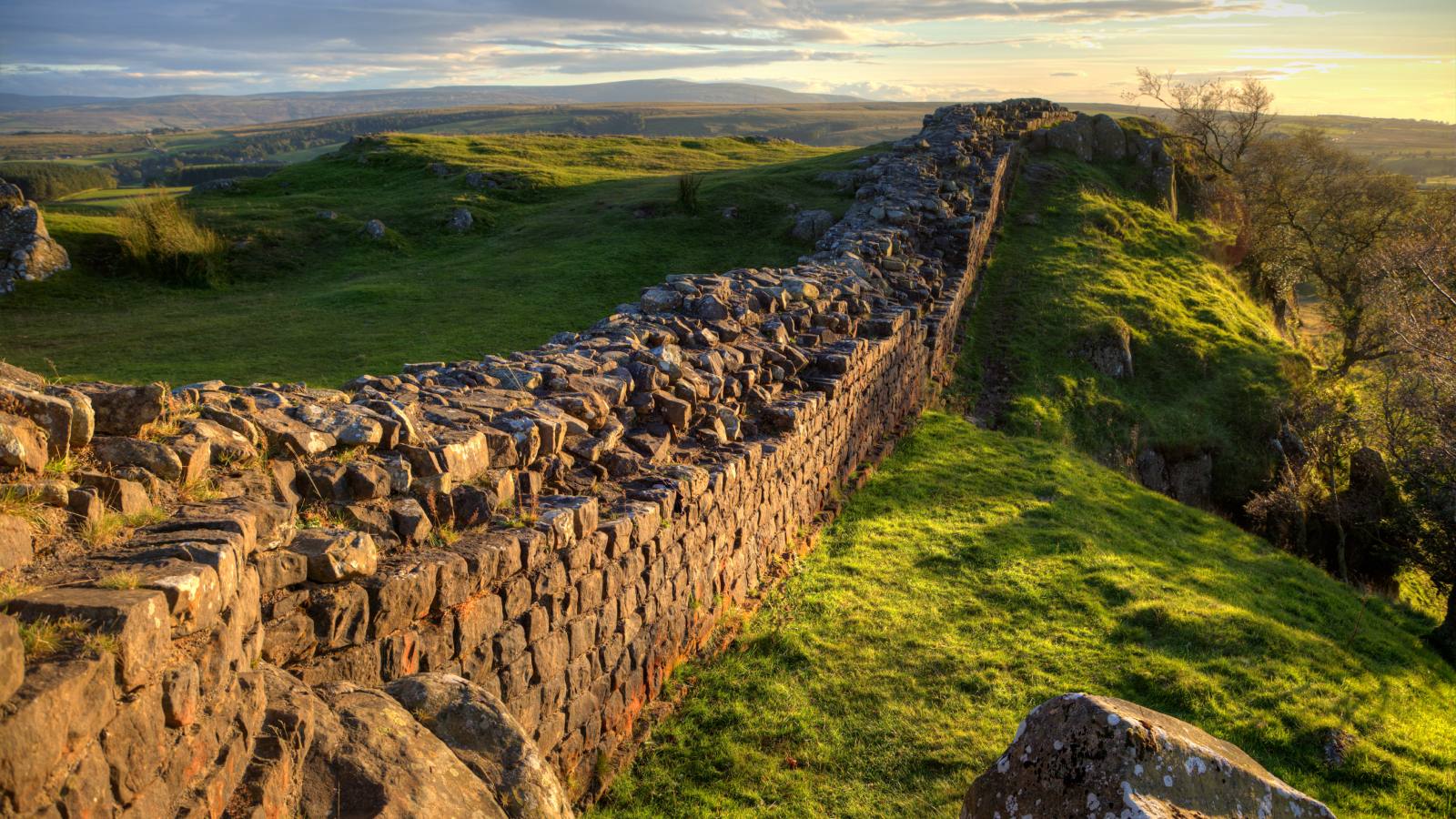
In that year, Roman troops stationed at Hadrian’s Wall on the empire’s northern frontier rebelled and three different “barbarian” groups invaded Roman Britain, with the Picts attacking northern Britain from Scotland, the Scotti invading western Britain from Ireland and the Saxons invading southern Britain from the European continent.

The rebellion and attacks weakened the Western Roman Empire’s hold on the province of Britannia. The violence led to the capture or death of senior Roman commanders, and some Roman soldiers are said to have deserted to join the “barbarians,” according to a statement.


You may like

The Roman historian Ammianus Marcellinus (lived circa 330 to 395) claimed in his book “Res Gestae” (Latin for “things done” or “things that happened”) that the three groups conspired with each other against the Western Roman Empire; and other historians have called the events the “barbarian conspiracy.” While the Western Roman Empire, which included parts of Western Europe, Central Europe and North Africa, regained control of southern Britain in 369, they were forced to abandon it permanently in 410.

Now, a new analysis of oak tree rings from southern Britain and northern France reveals that a severe drought plagued the region from 364 to 366.

“A sequence of severe summer droughts from 364 to 366 not only contributed to prolonged harvest failures and food shortages, but also played a role in the ‘Barbarian Conspiracy’, a catastrophic military defeat for Roman Britain in 367,” the researchers wrote in a study published April 16 in the journal Climatic Change.

Scientists used tree rings to estimate the amount of precipitation that fell on southern Britain from the fourth to sixth centuries. From A.D. 350 to 500, the average monthly precipitation during the main growing season, which lasts from April to July, was 2 inches (51 millimeters). However, it was far less during the years of the rebellion and attacks: in 364, it was 1.14 inches (29 mm); in 365 it was 1.10 inches (28 mm); and in 366 it was 1.45 inches (37 mm), the team found.

Get the world’s most fascinating discoveries delivered straight to your inbox.

“Drought from 364 to 366 would have impacted spring-sown crop growth substantially, triggering poor harvests,” study lead author Charles Norman, a doctoral student in the Department of Geography at the University of Cambridge, said in the statement.

Historical accounts support this: in 367, Ammianus Marcellinus wrote that the population in Britain was in “utmost conditions of famine.”

This food shortage would have affected deliveries of food to Roman troops at Hadrian’s Wall, damaging their morale, the researchers wrote in the paper.

“Three consecutive droughts would have had a devastating impact on the productivity of Roman Britain’s most important agricultural region,” study co-author Ulf Büntgen, a professor in the Department of Geography at the University of Cambridge, said in the statement. “As Roman writers tell us, this resulted in food shortages with all of the destabilizing societal effects this brings.”

The team was careful not to blame the rebellion and invasion entirely on the famine, however. They noted that the Western Roman Empire was experiencing political and economic problems during this time that would have affected its ability to respond to the problems in Britain.

“We propose the 364–366 drought as an environmental catalyst that may explain the scale and abrupt nature of the event,” the researchers wrote in the study.


Roman emperor quiz: Test your knowledge on the rulers of the ancient empire

Source link

Share. Facebook Twitter Pinterest LinkedIn Tumblr Email
Previous ArticleGiant tortoise babies make public debut after 100-year-old ‘Mommy’ gives birth for first time at Philadelphia Zoo
Next Article The Garmin fēnix 7X Sapphire Solar is one of the best smartwatches ever made, and it now has a huge $360 discount at Best Buy
Editor
  • Website

Related Posts

Lifestyle

Science news this week: PCOS has a new name, Neanderthals were the world’s oldest dentists, and the first nuclear bomb explosion spawned an ‘alien’ crystal

May 16, 2026
Lifestyle

Newly discovered, blue-whale-size asteroid will fly super close to Earth Monday — and you can watch it live

May 16, 2026
Lifestyle

Don Juan Pond: Antarctica’s salty, syrupy lake that never freezes, even when it’s minus 58 F

May 16, 2026
Add A Comment

Comments are closed.

Categories
  • Entertainment
  • Lifestyle
  • News
  • Sports
  • Tech
  • Travel
Recent Posts
  • Science news this week: PCOS has a new name, Neanderthals were the world’s oldest dentists, and the first nuclear bomb explosion spawned an ‘alien’ crystal
  • Newly discovered, blue-whale-size asteroid will fly super close to Earth Monday — and you can watch it live
  • Don Juan Pond: Antarctica’s salty, syrupy lake that never freezes, even when it’s minus 58 F
  • Withings ScanWatch 2 review: Style meets next-level health monitoring
  • AI Chatbots are turbo-charging violence against women and girls: We urgently need to regulate them | Yvonne McDermott Rees
calendar
May 2026
M T W T F S S
 123
45678910
11121314151617
18192021222324
25262728293031
« Apr    
Recent Posts
  • Science news this week: PCOS has a new name, Neanderthals were the world’s oldest dentists, and the first nuclear bomb explosion spawned an ‘alien’ crystal
  • Newly discovered, blue-whale-size asteroid will fly super close to Earth Monday — and you can watch it live
  • Don Juan Pond: Antarctica’s salty, syrupy lake that never freezes, even when it’s minus 58 F
About

Welcome to Baynard Media, your trusted source for a diverse range of news and insights. We are committed to delivering timely, reliable, and thought-provoking content that keeps you informed
and inspired

Categories
  • Entertainment
  • Lifestyle
  • News
  • Sports
  • Tech
  • Travel
Facebook X (Twitter) Pinterest WhatsApp
  • Contact Us
  • About Us
  • Privacy Policy
  • Disclaimer
  • UNSUBSCRIBE
© 2026 copyrights reserved

Type above and press Enter to search. Press Esc to cancel.