Close Menu
  • Home
  • UNSUBSCRIBE
  • News
  • Lifestyle
  • Tech
  • Entertainment
  • Sports
  • Travel
Facebook X (Twitter) WhatsApp
Trending
  • Andes virus spreads via ‘close contact’ — but what exactly does that mean?
  • 8-year-old African American boy from Colonial Maryland found buried with white Colonists, and it’s unclear if he was enslaved
  • Science news this week: PCOS has a new name, Neanderthals were the world’s oldest dentists, and the first nuclear bomb explosion spawned an ‘alien’ crystal
  • Newly discovered, blue-whale-size asteroid will fly super close to Earth Monday — and you can watch it live
  • Don Juan Pond: Antarctica’s salty, syrupy lake that never freezes, even when it’s minus 58 F
  • Withings ScanWatch 2 review: Style meets next-level health monitoring
  • AI Chatbots are turbo-charging violence against women and girls: We urgently need to regulate them | Yvonne McDermott Rees
  • ‘The biggest El Niño event since the 1870s’: ‘Super’ El Niño is now the most likely scenario by the end of this year ‪—‬ and the humanitarian cost could be huge
Facebook X (Twitter) WhatsApp
Baynard Media
  • Home
  • UNSUBSCRIBE
  • News
  • Lifestyle
  • Tech
  • Entertainment
  • Sports
  • Travel
Baynard Media
Home»Lifestyle»Pfyn culture flint tool: World’s oldest known ‘Swiss Army’ knife
Lifestyle

Pfyn culture flint tool: World’s oldest known ‘Swiss Army’ knife

EditorBy EditorApril 7, 2025No Comments3 Mins Read
Share Facebook Twitter Pinterest LinkedIn Tumblr Reddit Telegram Email
Share
Facebook Twitter LinkedIn Pinterest Email

Name: Pfyn culture flint tool

What it is: A flint tool with a wooden handle and birch tar

Where it is from: Öhningen, southern Germany

When it was made: 3800 to 3500 B.C.

Related: Hohle Fels water bird: The oldest depiction of a bird in the world

What it tells us about the past:

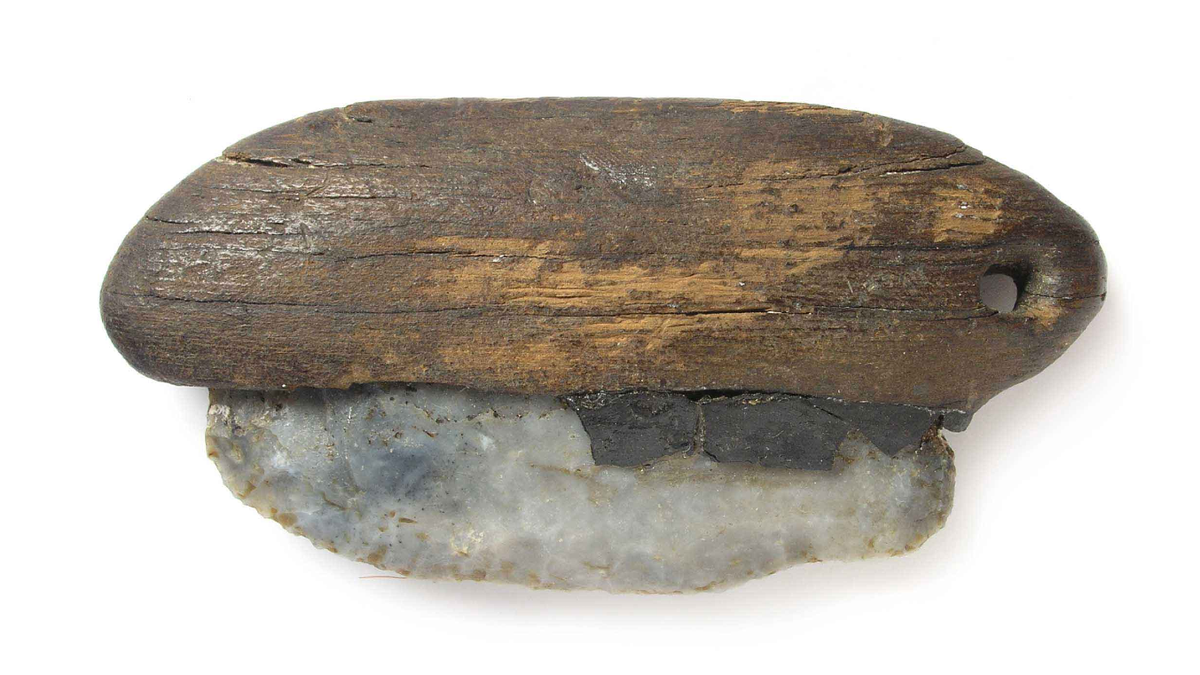
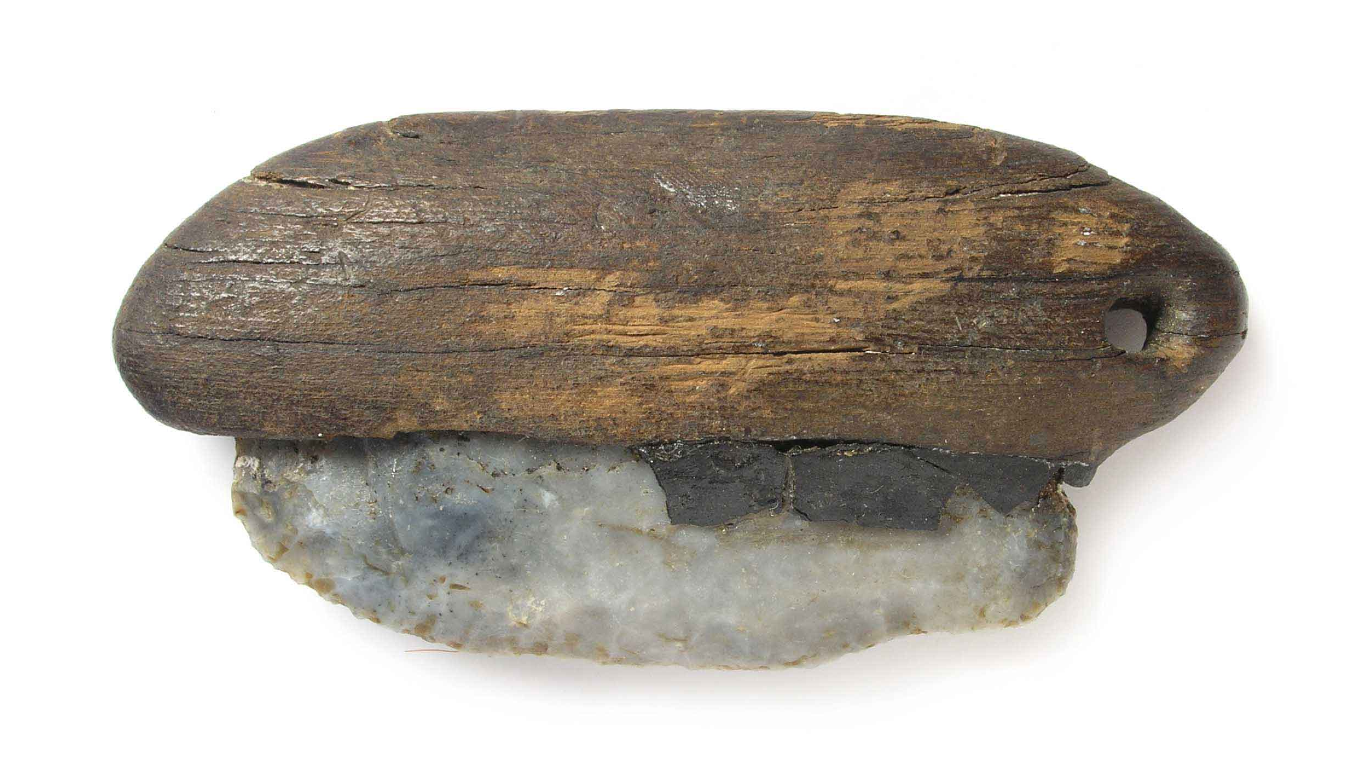
This flint tool from a Neolithic archaeological site in southern Germany provides a rare look at how prehistoric knives were actually used: with a wooden handle that made them easier to grip without injury.

Get the world’s most fascinating discoveries delivered straight to your inbox.

The tool, which is on display at the Baden-Württemberg State Archaeological Museum (ALM), was found at a site called Wangen-Hinterhorn in Öhningen, a municipality on the border of Germany and Switzerland. Measuring just 2.9 inches (7.3 centimeters) long, the tool looks a bit like a small prehistoric Swiss Army knife. The sharp-edged flint blade was fastened to a wooden handle with birch tar, and a hole was drilled into the wood, likely so the tool could be hung.

This knife was discovered at a settlement site associated with the Pfyn culture. During the Neolithic period (4300 to 3500 B.C.), this culture spread from southern Bavaria to northern Switzerland and is well known for its pile dwellings — houses built on stilts in marshy land around the edges of lakes, rivers and wetlands.

Nearly 1,000 Alpine pile dwelling sites have been discovered to date in six countries, according to UNESCO, which added pile dwellings to its World Heritage list in 2011. Because they are located in wetlands, many of these archaeological sites have good conditions for the preservation of organic material that would normally disintegrate, like wood.

The prehistoric settlement of Wangen-Hinterhorn and its pile dwellings were first identified in the shallow water zone along Lake Constance by a farmer in 1856, but extensive excavations by archaeologists did not take place until the 1970s and 1980s.

The people of the Pfyn culture settled the area surrounding Lake Constance around 3900 B.C. They built their dwellings on stilts made from local trees and had domesticated animals and crops. However, they did not necessarily live there permanently; archaeologists have found waves of occupation over the course of a millennium. Artifacts preserved in the wetland environment suggest that the Pfyn people were innovating and experimenting with textiles and that they had also begun to manufacture copper objects.

MORE ASTONISHING ARTIFACTS

Archaeologists have found a few other examples of wood-and-flint tools dated to the Pfyn culture. They include a flint dagger with a wood handle dated to 3000 to 2400 B.C., which is also at ALM, and a flint knife found in the 1940s that had impressions of grain seeds in the tar that held the stone tool into the wooden handle. Although the grain impressions suggest these unique objects may have been used for food processing, little else is known about their function.

Source link

Share. Facebook Twitter Pinterest LinkedIn Tumblr Email
Previous Article2 school-age children have died in Texas measles outbreak, as total cases pass 480
Next Article Watch the moon’s shadow race across US on first anniversary of April 8, 2024 solar eclipse | Earth from space
Editor
  • Website

Related Posts

Lifestyle

Andes virus spreads via ‘close contact’ — but what exactly does that mean?

May 16, 2026
Lifestyle

8-year-old African American boy from Colonial Maryland found buried with white Colonists, and it’s unclear if he was enslaved

May 16, 2026
Lifestyle

Science news this week: PCOS has a new name, Neanderthals were the world’s oldest dentists, and the first nuclear bomb explosion spawned an ‘alien’ crystal

May 16, 2026
Add A Comment

Comments are closed.

Categories
  • Entertainment
  • Lifestyle
  • News
  • Sports
  • Tech
  • Travel
Recent Posts
  • Andes virus spreads via ‘close contact’ — but what exactly does that mean?
  • 8-year-old African American boy from Colonial Maryland found buried with white Colonists, and it’s unclear if he was enslaved
  • Science news this week: PCOS has a new name, Neanderthals were the world’s oldest dentists, and the first nuclear bomb explosion spawned an ‘alien’ crystal
  • Newly discovered, blue-whale-size asteroid will fly super close to Earth Monday — and you can watch it live
  • Don Juan Pond: Antarctica’s salty, syrupy lake that never freezes, even when it’s minus 58 F
calendar
May 2026
M T W T F S S
 123
45678910
11121314151617
18192021222324
25262728293031
« Apr    
Recent Posts
  • Andes virus spreads via ‘close contact’ — but what exactly does that mean?
  • 8-year-old African American boy from Colonial Maryland found buried with white Colonists, and it’s unclear if he was enslaved
  • Science news this week: PCOS has a new name, Neanderthals were the world’s oldest dentists, and the first nuclear bomb explosion spawned an ‘alien’ crystal
About

Welcome to Baynard Media, your trusted source for a diverse range of news and insights. We are committed to delivering timely, reliable, and thought-provoking content that keeps you informed
and inspired

Categories
  • Entertainment
  • Lifestyle
  • News
  • Sports
  • Tech
  • Travel
Facebook X (Twitter) Pinterest WhatsApp
  • Contact Us
  • About Us
  • Privacy Policy
  • Disclaimer
  • UNSUBSCRIBE
© 2026 copyrights reserved

Type above and press Enter to search. Press Esc to cancel.