Close Menu
  • Home
  • UNSUBSCRIBE
  • News
  • Lifestyle
  • Tech
  • Entertainment
  • Sports
  • Travel
Facebook X (Twitter) WhatsApp
Trending
  • Jupiter and Venus conjunction 2026: See two bright planets at the same time this weekend
  • Flu drugs might fight cognitive decline seen in HIV, early study hints
  • NASA astronauts briefly shelter in ‘safe haven’ procedure following worsening leaks on International Space Station
  • Why can’t we figure out how strong gravity is?
  • Stupid hot: Heat waves cause cognitive changes in animals, making them more aggressive and unable to complete basic tasks
  • Tump administration to remove 900 deep sea monitoring instruments that would have studied the collapsing Atlantic current
  • Science news this week: Ötzi the Iceman used to make sourdough, Italian teenagers discover Roman villa under school, Google plans to release 64 million mosquitos, and RIP to NASA’s Maven probe
  • Coming El Niño will be the strongest ever recorded, new forecast predicts
Facebook X (Twitter) WhatsApp
Baynard Media
  • Home
  • UNSUBSCRIBE
  • News
  • Lifestyle
  • Tech
  • Entertainment
  • Sports
  • Travel
Baynard Media
Home»Lifestyle»Jupiter and Venus conjunction 2026: See two bright planets at the same time this weekend
Lifestyle

Jupiter and Venus conjunction 2026: See two bright planets at the same time this weekend

EditorBy EditorJune 7, 2026No Comments3 Mins Read
Share Facebook Twitter Pinterest LinkedIn Tumblr Reddit Telegram Email
Share
Facebook Twitter LinkedIn Pinterest Email

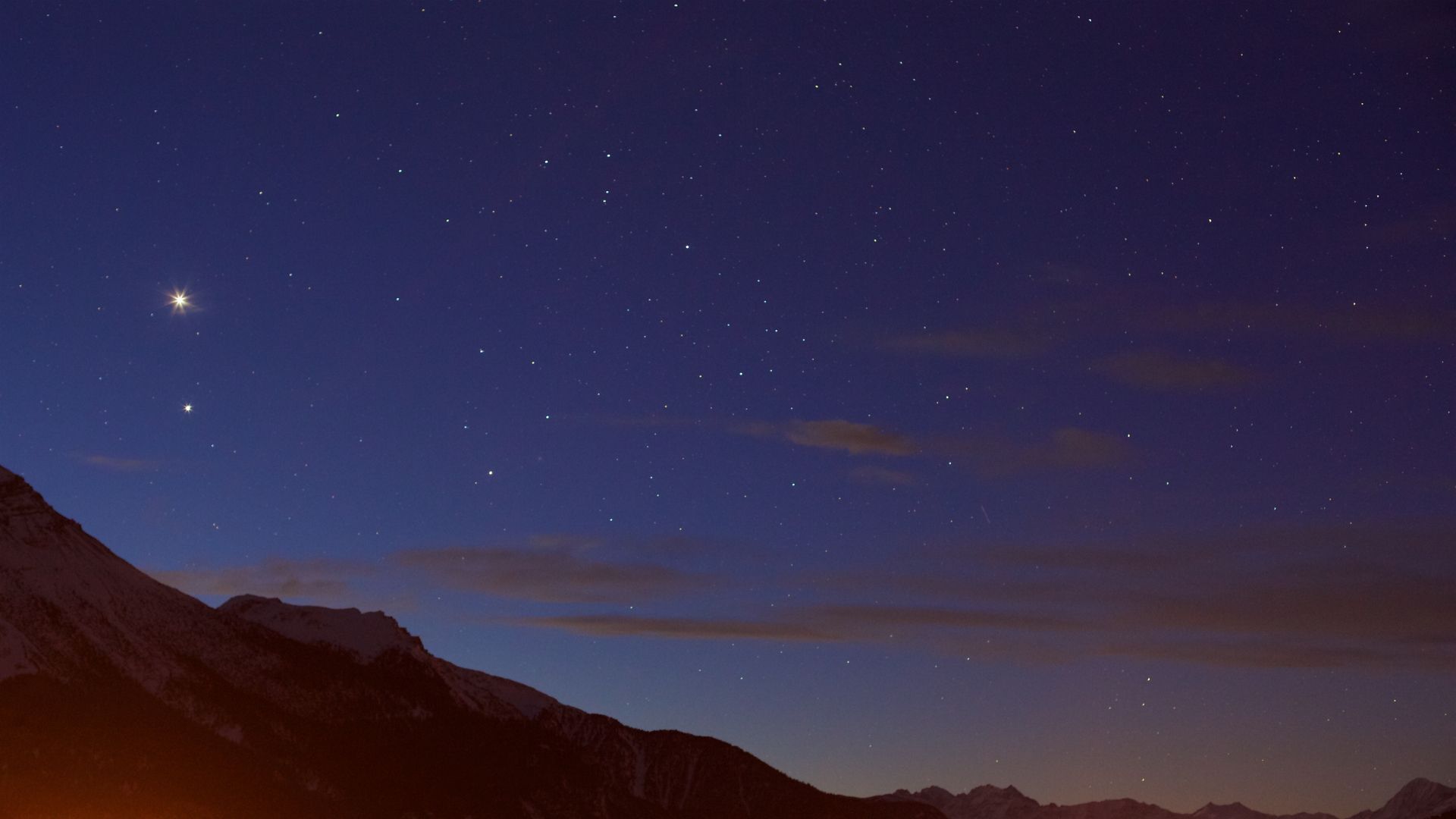
In one of 2026’s skywatching highlights, the two brightest planets in the night sky will appear very close to each other for a string of several evenings.

This conjunction of Venus and Jupiter will occur in the western sky during twilight and be easily visible to the naked eye. The best time to look will be from about 45 minutes to two hours after sunset on Tuesday, June 9, though the evenings on either side will offer almost the same view. Find a location with a clear view of the western horizon for the best show.

On June 9, the two worlds will appear to be just 1.6 degrees apart — about three times the width of a full moon. To measure that distance in the night sky, hold up either a single index finger or two pinky fingers side-by-side at arm’s length. It’s a close enough conjunction to fit comfortably within the field of view of standard binoculars — a rare opportunity for skywatchers.

For all of its beauty, the conjunction is an optical illusion. Jupiter, an outer planet with respect to Earth, will be much farther away. The gas giant will be about six astronomical units (au), or six times the Earth-sun distance, from Earth at the time of the conjunction. Venus, an inner planet, will be just 1.2 au away — five times closer than Jupiter.

What’s happening is that Venus is rising while Jupiter is receding in Earth’s sky. Sooner or later, they must appear to pass closely in the night sky. To understand why, consider the speeds of the three planets involved — Venus, Earth and Jupiter.


You may like

Venus takes 224.7 days to orbit the sun, Earth takes 365.25 days, and Jupiter takes 11.86 years. As can be seen on The Planets Today, Earth is currently racing away from Jupiter, causing it to appear to sink in our evening sky. On July 29, Jupiter will be lost in the glare of the sun. However, the faster-moving Venus is approaching Earth, causing it to rise in our evening sky. Venus will shine brightly as the “Evening Star” all summer, reaching its farthest distance from the sunset in mid-August.

As well as being dramatically closer to Earth, Venus will also be vastly brighter in the sky. During the conjunction, Venus will shine at -3.9 magnitude with Jupiter at -1.7 magnitude (in skywatching, a lesser magnitude corresponds to a brighter object). That makes Venus about 7.5 times brighter than Jupiter as seen from Earth. As well as being closer than Jupiter, Venus reflects significantly more sunlight because of its thick cloud layers.

Get the world’s most fascinating discoveries delivered straight to your inbox.

Although you can see the conjunction with the naked eye, a pair of stargazing binoculars will help you see both planets together, while with a good backyard telescope, you may see some of Jupiter’s four large Galilean moons — Ganymede, Europa, Callisto and Io — as dots of light in a line on either side of the giant planet. A decent camera will also let you take stunning photos of the conjunction.

The next major planetary conjunction will take place before sunrise on Nov. 15, when Jupiter and Mars will appear just 1.2 degrees from each other.

Source link

Share. Facebook Twitter Pinterest LinkedIn Tumblr Email
Previous ArticleFlu drugs might fight cognitive decline seen in HIV, early study hints
Editor
  • Website

Related Posts

Lifestyle

Flu drugs might fight cognitive decline seen in HIV, early study hints

June 7, 2026
Lifestyle

NASA astronauts briefly shelter in ‘safe haven’ procedure following worsening leaks on International Space Station

June 7, 2026
Lifestyle

Why can’t we figure out how strong gravity is?

June 6, 2026
Add A Comment

Comments are closed.

Categories
  • Entertainment
  • Lifestyle
  • News
  • Sports
  • Tech
  • Travel
Recent Posts
  • Jupiter and Venus conjunction 2026: See two bright planets at the same time this weekend
  • Flu drugs might fight cognitive decline seen in HIV, early study hints
  • NASA astronauts briefly shelter in ‘safe haven’ procedure following worsening leaks on International Space Station
  • Why can’t we figure out how strong gravity is?
  • Stupid hot: Heat waves cause cognitive changes in animals, making them more aggressive and unable to complete basic tasks
calendar
June 2026
M T W T F S S
1234567
891011121314
15161718192021
22232425262728
2930  
« May    
Recent Posts
  • Jupiter and Venus conjunction 2026: See two bright planets at the same time this weekend
  • Flu drugs might fight cognitive decline seen in HIV, early study hints
  • NASA astronauts briefly shelter in ‘safe haven’ procedure following worsening leaks on International Space Station
About

Welcome to Baynard Media, your trusted source for a diverse range of news and insights. We are committed to delivering timely, reliable, and thought-provoking content that keeps you informed
and inspired

Categories
  • Entertainment
  • Lifestyle
  • News
  • Sports
  • Tech
  • Travel
Facebook X (Twitter) Pinterest WhatsApp
  • Contact Us
  • About Us
  • Privacy Policy
  • Disclaimer
  • UNSUBSCRIBE
© 2026 copyrights reserved

Type above and press Enter to search. Press Esc to cancel.