Close Menu
  • Home
  • UNSUBSCRIBE
  • News
  • Lifestyle
  • Tech
  • Entertainment
  • Sports
  • Travel
Facebook X (Twitter) WhatsApp
Trending
  • Lemur used in ‘lemur yoga’ session dies of human herpesvirus, study finds
  • ‘A fine line between reducing stigma and trivialising conditions’: Social media, self-diagnosis and the glamorization of ADHD
  • New 2D memory device stores data on just a single electron
  • Before we ban kids from social media completely, here’s what we should try first | Jonathan Bellack and Mariana Olaizola Rosenblat
  • Scientists uncover a better way to beat ‘the bends’ — using deep-diving pigs
  • Mars may have been losing its water more than 4 billion years ago, oldest-known Martian meteorite suggests
  • ‘The lance head was still inside the pelvis’: Mass grave found in Austria may hold casualties of unknown ancient Roman battle
  • ‘Full-on berserker mode’: Archaeologists solve mystery of medieval soldiers with gruesome square holes in their skull
Facebook X (Twitter) WhatsApp
Baynard Media
  • Home
  • UNSUBSCRIBE
  • News
  • Lifestyle
  • Tech
  • Entertainment
  • Sports
  • Travel
Baynard Media
Home»Lifestyle»NASA astronauts briefly shelter in ‘safe haven’ procedure following worsening leaks on International Space Station
Lifestyle

NASA astronauts briefly shelter in ‘safe haven’ procedure following worsening leaks on International Space Station

EditorBy EditorJune 7, 2026No Comments3 Mins Read
Share Facebook Twitter Pinterest LinkedIn Tumblr Reddit Telegram Email
Share
Facebook Twitter LinkedIn Pinterest Email

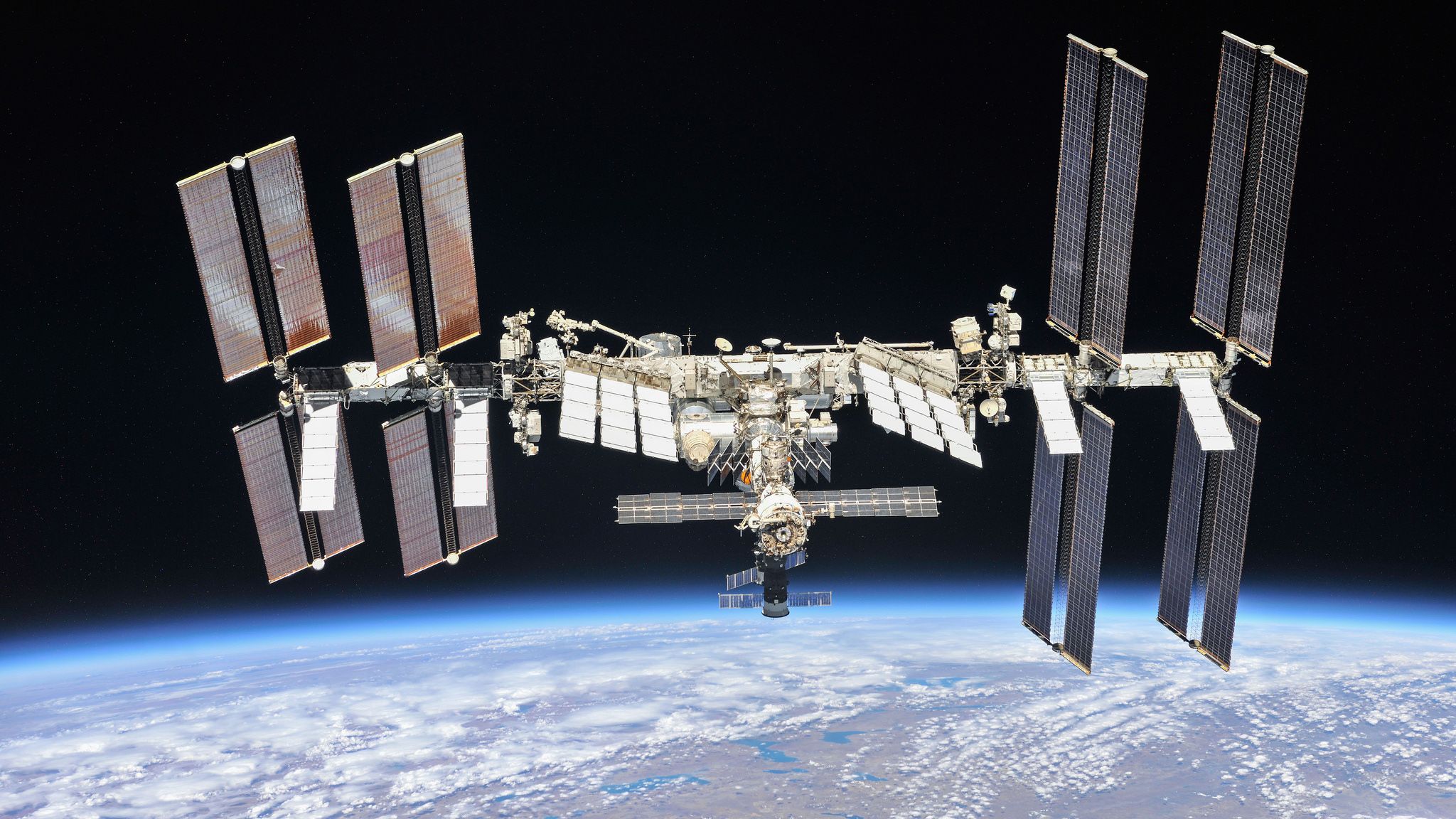
An emergency evacuation alert given to NASA astronauts aboard the International Space Station (ISS) has been lifted following urgent repairs of leaks within the Russian segment of the orbital laboratory.

The four astronauts of NASA’s Crew-12 mission to the ISS — consisting of U.S. astronauts Jessica Meir and Jack Hathaway, French astronaut Sophie Adenot, and Russian cosmonaut Andrey Fedyaev — were ordered to put on their spacesuits and shelter inside their docked Crew Dragon spacecraft on Friday (June 5) while two members of the station’s Russian crew attempted fixes on structural faults leaking air out of the station.

“Following new leaks, Roscosmos has elected to proceed with a more extensive repair operation on Friday, June 5,” NASA press secretary Bethany Stevens wrote on X on Friday as the situation developed. “Out of an abundance of caution, NASA has directed all four of the agency’s SpaceX Crew-12 members and NASA astronaut Chris Williams to assume an elevated safety posture in the Dragon spacecraft while the repair is underway.”
(Williams, a NASA astronaut, launched to the ISS as part of Russia’s Soyuz ms-28 mission, and would have had to evacuate with the Russian cosmonauts had the emergency continued.)

After initial efforts by the Russian crewmembers to patch the leaks, one of which was successful, Roscosmos announced a pause to its structural repair efforts “as more measurements and data is assessed,” Stevens wrote in a follow-up post on X. “NASA has instructed the crew members inside the Dragon spacecraft to end the safe haven procedures and return to planned operations aboard the International Space Station.”

A persistent problem

The location of the leaks is the PrK module, a transfer tunnel that connects the Russian Zvezda Service Module to a docking port used by Progress, a spacecraft used for delivering Roscosmos cargo.


You may like

Air leaks caused by micro-cracks in this module have been a recurring headache for both NASA and Roscosmos since 2019, requiring constant monitoring and for the hatch leading to the Zvezda module to be closed except for when the station is receiving cargo.

Despite multiple attempts to patch up these leaks, they have persisted. Additionally, despite downplaying their severity in public, NASA considers the leaks from the Roscosmos module to be both high in likelihood and high in consequence, with potential for “catastrophic failure,” according to Ars Technica.

Get the world’s most fascinating discoveries delivered straight to your inbox.

While the threat posed by the worsening leaks appears to have been stemmed for now, this event will likely further complicate plans to extend the ISS’s lifespan. The station was originally due to be retired by the end of 2030, when it would be nudged through Earth’s atmosphere before plunging into the Pacific Ocean.

However, NASA and the U.S. Congress have been eyeing plans to extend the station’s lifespan to at least 2032 to give controversial private space stations time to come online. Russia, for its part, has repeatedly signaled a desire to withdraw from the ISS as soon as possible.

Source link

Share. Facebook Twitter Pinterest LinkedIn Tumblr Email
Previous ArticleWhy can’t we figure out how strong gravity is?
Next Article Flu drugs might fight cognitive decline seen in HIV, early study hints
Editor
  • Website

Related Posts

Lifestyle

Lemur used in ‘lemur yoga’ session dies of human herpesvirus, study finds

August 15, 2026
Lifestyle

‘A fine line between reducing stigma and trivialising conditions’: Social media, self-diagnosis and the glamorization of ADHD

August 15, 2026
Lifestyle

New 2D memory device stores data on just a single electron

August 15, 2026
Add A Comment

Comments are closed.

Categories
  • Entertainment
  • Lifestyle
  • News
  • Sports
  • Tech
  • Travel
Recent Posts
  • Lemur used in ‘lemur yoga’ session dies of human herpesvirus, study finds
  • ‘A fine line between reducing stigma and trivialising conditions’: Social media, self-diagnosis and the glamorization of ADHD
  • New 2D memory device stores data on just a single electron
  • Before we ban kids from social media completely, here’s what we should try first | Jonathan Bellack and Mariana Olaizola Rosenblat
  • Scientists uncover a better way to beat ‘the bends’ — using deep-diving pigs
calendar
August 2026
M T W T F S S
 12
3456789
10111213141516
17181920212223
24252627282930
31  
« Jul    
Recent Posts
  • Lemur used in ‘lemur yoga’ session dies of human herpesvirus, study finds
  • ‘A fine line between reducing stigma and trivialising conditions’: Social media, self-diagnosis and the glamorization of ADHD
  • New 2D memory device stores data on just a single electron
About

Welcome to Baynard Media, your trusted source for a diverse range of news and insights. We are committed to delivering timely, reliable, and thought-provoking content that keeps you informed
and inspired

Categories
  • Entertainment
  • Lifestyle
  • News
  • Sports
  • Tech
  • Travel
Facebook X (Twitter) Pinterest WhatsApp
  • Contact Us
  • About Us
  • Privacy Policy
  • Disclaimer
  • UNSUBSCRIBE
© 2026 copyrights reserved

Type above and press Enter to search. Press Esc to cancel.