Close Menu
  • Home
  • UNSUBSCRIBE
  • News
  • Lifestyle
  • Tech
  • Entertainment
  • Sports
  • Travel
Facebook X (Twitter) WhatsApp
Trending
  • Arthritis drug shows antiviral effects against RSV, the leading cause of infant hospitalization
  • Daddy longlegs may be capturing and devouring frogs in the tropical forests of South America
  • Google wants to release 64 million bacteria-riddled mosquitoes across California and Florida. Here’s why scientists are enthusiastic.
  • ‘In an unrecoverable state’: NASA confirms MAVEN spacecraft is officially dead after loss of signal behind Mars
  • 2 rivers merged to form the Euphrates 3.6 million years ago, eventually leading to the Fertile Crescent
  • NASA confirms fireball meteor exploded over northeastern US with force of 230 tons of TNT
  • Astronauts could use lightning-like plasma jets to kill germs on the moon and Mars, demo hints
  • First whole-genome sequence of a Greenland shark holds clues to their extreme longevity
Facebook X (Twitter) WhatsApp
Baynard Media
  • Home
  • UNSUBSCRIBE
  • News
  • Lifestyle
  • Tech
  • Entertainment
  • Sports
  • Travel
Baynard Media
Home»Lifestyle»Orcas start wearing dead salmon hats again after ditching the trend for 37 years
Lifestyle

Orcas start wearing dead salmon hats again after ditching the trend for 37 years

EditorBy EditorNovember 28, 2024No Comments3 Mins Read
Share Facebook Twitter Pinterest LinkedIn Tumblr Reddit Telegram Email
Share
Facebook Twitter LinkedIn Pinterest Email

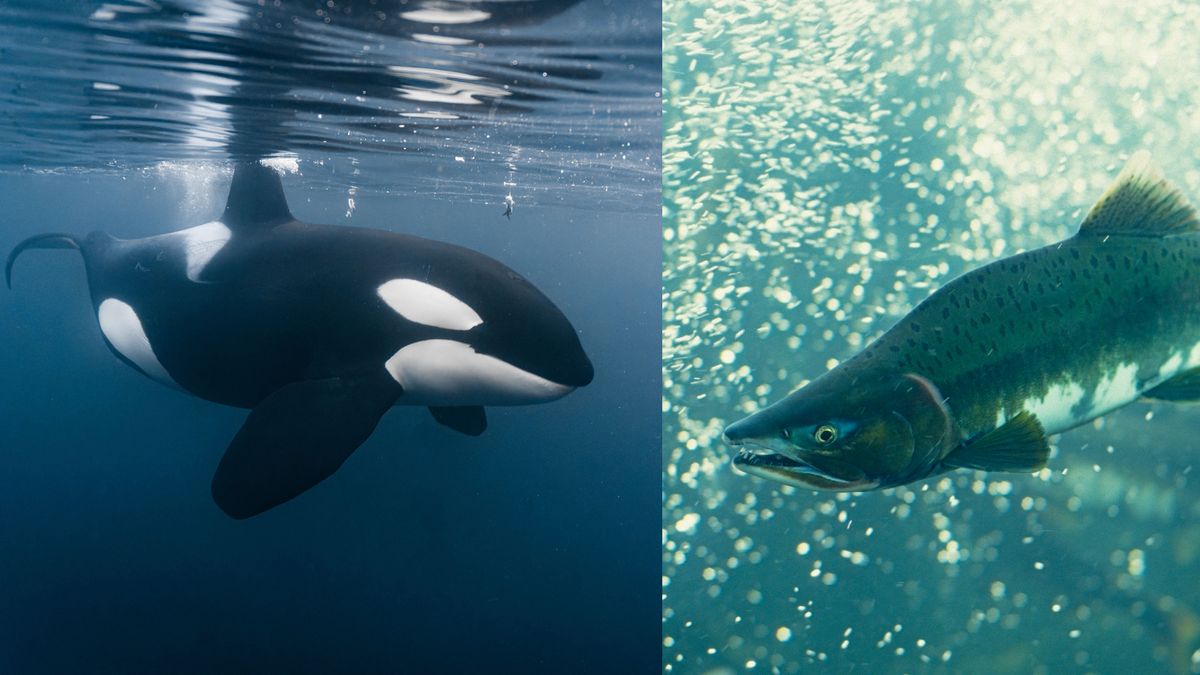
Northwest Pacific orcas have started wearing salmon hats again, bringing back a bizarre trend first described in the 1980s, researchers say.

Last month, scientists and whale watchers spotted orcas (Orcinus orca) in South Puget Sound and off Point No Point in Washington State swimming with dead fish on their heads.

This is the first time they’ve donned the bizarre headgear since the summer of 1987, when a trendsetting female West Coast orca kickstarted the behavior for no apparent reason. Within a couple of weeks, the rest of the pod had jumped on the bandwagon and turned salmon corpses into must-have fashion accessories, according to the marine conservation charity ORCA — but it’s unclear whether the same will happen this time around.

Researchers think the orcas sporting salmon hats now may be veterans of the trend when it first appeared nearly 40 years ago. “It does seem possible that some individuals that experienced [the behavior] the first time around may have started it again,” Andrew Foote, an evolutionary ecologist at the University of Oslo in Norway, told New Scientist.

Related: Orcas are learning terrifying new behaviors. Are they getting smarter?

The motivation for the salmon hat trend remains a mystery. “Honestly, your guess is as good as mine,” Deborah Giles, an orca researcher at the University of Washington who also heads the science and research teams at the non-profit Wild Orca, told New Scientist.

Salmon hats are a perfect example of what researchers call a “fad” — a behavior initiated by one or two individuals and temporarily picked up by others before it’s abandoned. Back in the 1980s, the trend only lasted a year; by the summer of 1988, dead fish were totally passé and salmon hats disappeared from the West Coast orca population.

Get the world’s most fascinating discoveries delivered straight to your inbox.

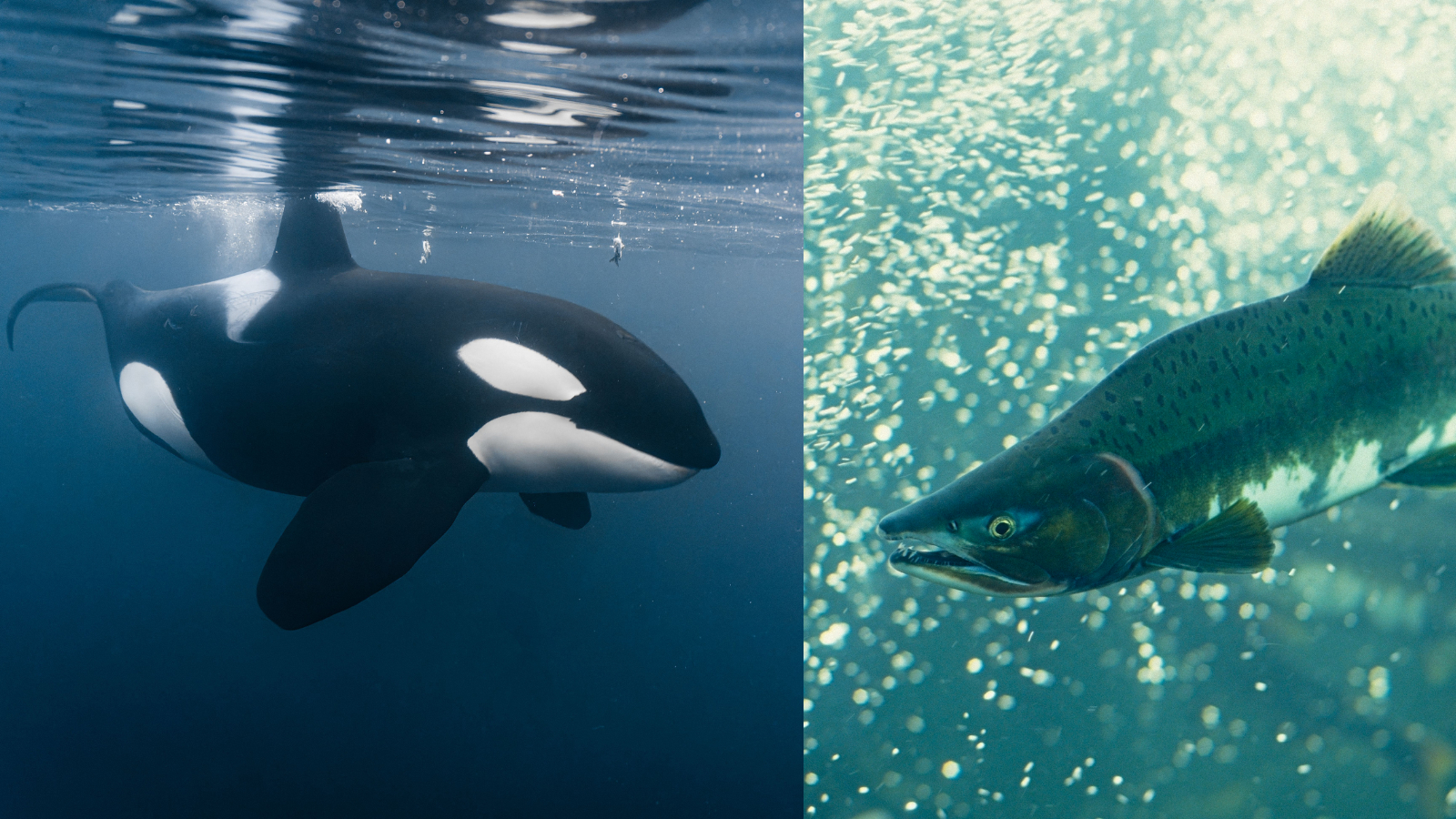
Orca researchers’ best guess is that salmon hat fads are linked to high food availability. South Puget Sound is currently teeming with chum salmon (Oncorhynchus keta), and with too much food to eat on the spot, orcas may be saving fish for later by balancing them on their heads, New Scientist reported.

Orcas have been spotted stashing food away in other places, too. “We’ve seen mammal-eating killer whales carry large chunks of food under their pectoral fin, kind of tucked in next to their body,” Giles said. Salmon is probably too small to fit securely under orcas’ pectoral fins, so the marine mammals may have opted for the top of their heads instead.

Camera-equipped drones could help researchers monitor salmon hat-wearing orcas in a way that was not possible 37 years ago. “Over time, we may be able to gather enough information to show that, for instance, one carried a fish for 30 minutes or so, and then he ate it,” Giles said.

But the food availability theory could be wrong — if the footage reveals that orcas abandon the salmon without eating them, researchers will be sent back to the drawing board.

Whatever the reason for the behavior, Giles said it’s been fun to watch it come back in style. “It’s been a while since I’ve personally seen it,” she said.

Source link

Share. Facebook Twitter Pinterest LinkedIn Tumblr Email
Previous ArticleNFL could see 7-10 coaches fired after 2024 season comes to an end, analyst says
Next Article Owners of Peanut the squirrel plan to sue after he was euthanized
Editor
  • Website

Related Posts

Lifestyle

Arthritis drug shows antiviral effects against RSV, the leading cause of infant hospitalization

June 4, 2026
Lifestyle

Daddy longlegs may be capturing and devouring frogs in the tropical forests of South America

June 3, 2026
Lifestyle

Google wants to release 64 million bacteria-riddled mosquitoes across California and Florida. Here’s why scientists are enthusiastic.

June 3, 2026
Add A Comment

Comments are closed.

Categories
  • Entertainment
  • Lifestyle
  • News
  • Sports
  • Tech
  • Travel
Recent Posts
  • Arthritis drug shows antiviral effects against RSV, the leading cause of infant hospitalization
  • Daddy longlegs may be capturing and devouring frogs in the tropical forests of South America
  • Google wants to release 64 million bacteria-riddled mosquitoes across California and Florida. Here’s why scientists are enthusiastic.
  • ‘In an unrecoverable state’: NASA confirms MAVEN spacecraft is officially dead after loss of signal behind Mars
  • 2 rivers merged to form the Euphrates 3.6 million years ago, eventually leading to the Fertile Crescent
calendar
June 2026
M T W T F S S
1234567
891011121314
15161718192021
22232425262728
2930  
« May    
Recent Posts
  • Arthritis drug shows antiviral effects against RSV, the leading cause of infant hospitalization
  • Daddy longlegs may be capturing and devouring frogs in the tropical forests of South America
  • Google wants to release 64 million bacteria-riddled mosquitoes across California and Florida. Here’s why scientists are enthusiastic.
About

Welcome to Baynard Media, your trusted source for a diverse range of news and insights. We are committed to delivering timely, reliable, and thought-provoking content that keeps you informed
and inspired

Categories
  • Entertainment
  • Lifestyle
  • News
  • Sports
  • Tech
  • Travel
Facebook X (Twitter) Pinterest WhatsApp
  • Contact Us
  • About Us
  • Privacy Policy
  • Disclaimer
  • UNSUBSCRIBE
© 2026 copyrights reserved

Type above and press Enter to search. Press Esc to cancel.