Close Menu
  • Home
  • UNSUBSCRIBE
  • News
  • Lifestyle
  • Tech
  • Entertainment
  • Sports
  • Travel
Facebook X (Twitter) WhatsApp
Trending
  • ‘Nations need to prepare now’: Key Atlantic ocean current is much closer to collapse than scientists thought
  • Neanderthal toddlers grew faster than modern humans, probably because of the harsh environment they evolved in
  • NASA shuts off another Voyager 1 instrument as humanity’s most distant spacecraft prepares for risky ‘Big Bang’ maneuver to save power
  • Florida is facing its most intense drought in 15 years. Here’s how it got so bad and how long it will last.
  • New blood test aims to spot liver scarring when it’s still reversible and before it paves the way to cancer
  • ‘We’re the best servants anyone could dream of!’: AI superintelligence has no need to enslave humans because we’re already bowing to it
  • Glowing ring of plankton surrounding New Zealand islands linked to deadly underwater plateau — Earth from space
  • Omar files new financial form in response to Trump, GOP critics
Facebook X (Twitter) WhatsApp
Baynard Media
  • Home
  • UNSUBSCRIBE
  • News
  • Lifestyle
  • Tech
  • Entertainment
  • Sports
  • Travel
Baynard Media
Home»Lifestyle»‘Medieval’ nanotech chainmail sports 100 trillion chemical bonds per square centimeter — and could be the future of armor
Lifestyle

‘Medieval’ nanotech chainmail sports 100 trillion chemical bonds per square centimeter — and could be the future of armor

EditorBy EditorJanuary 22, 2025No Comments3 Mins Read
Share Facebook Twitter Pinterest LinkedIn Tumblr Reddit Telegram Email
Share
Facebook Twitter LinkedIn Pinterest Email

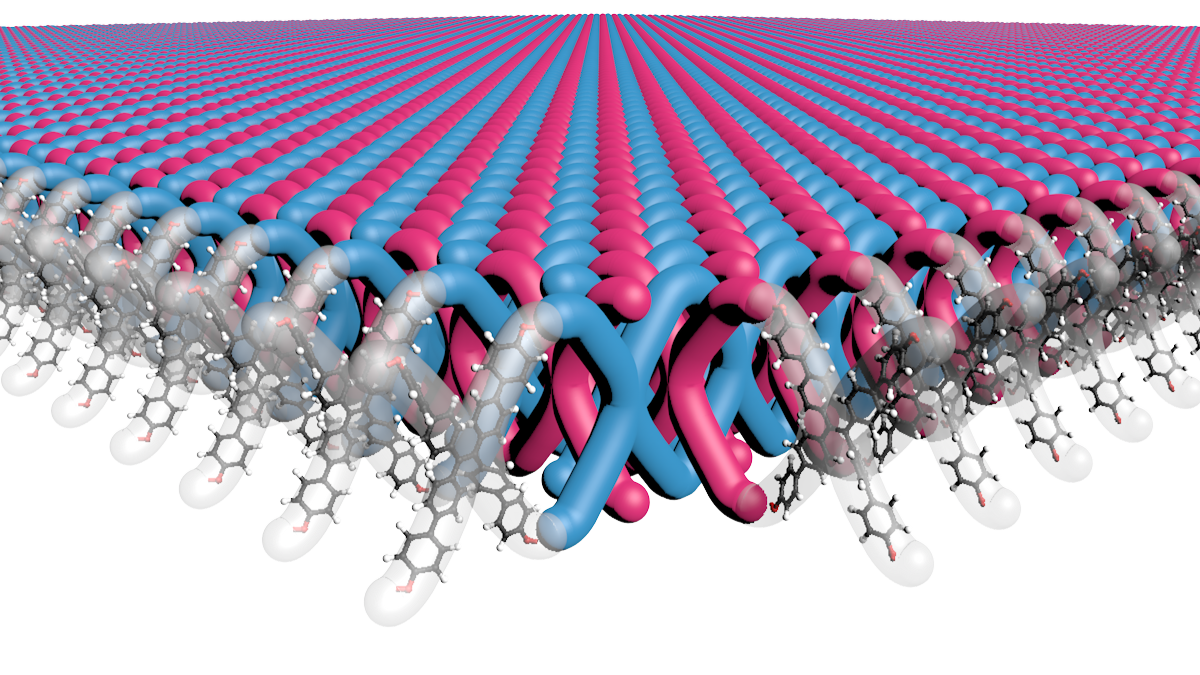
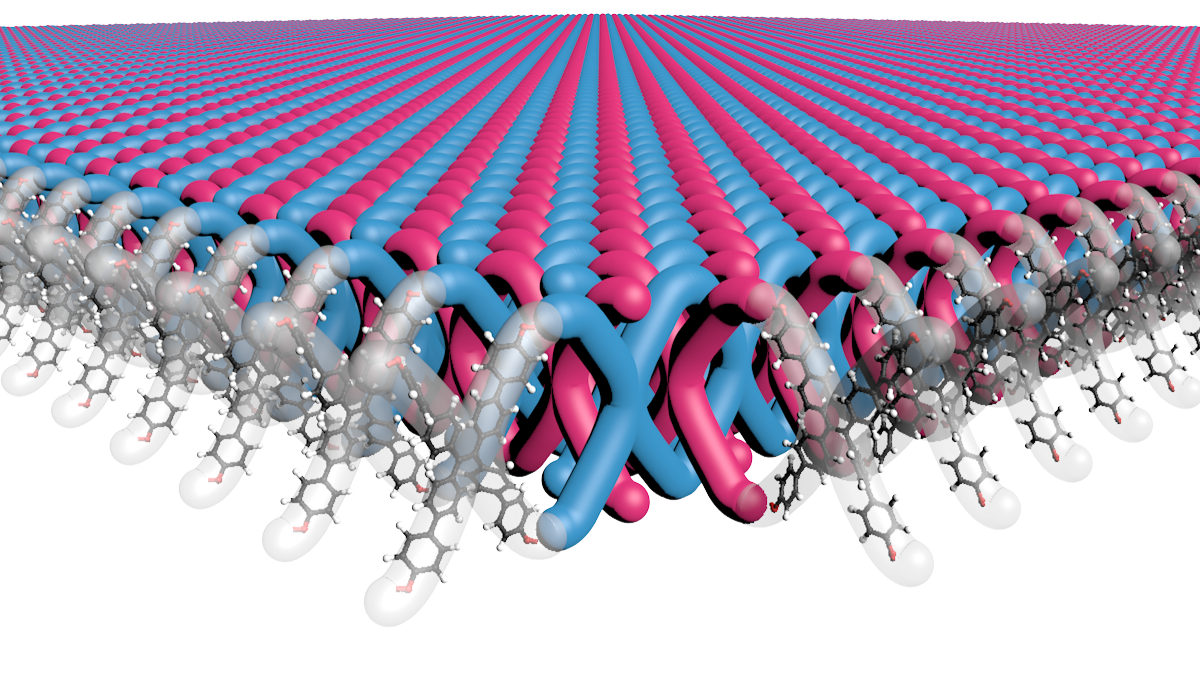
Chemists have invented a new material that could be the future of body armor — chainmail. But this isn’t the Middle Ages all over again; the new super-strong material is made of molecules that are interlocked on a nanoscale, scientists say.

Researchers fused lines of molecules like links in a chain to create sheets of the world’s first two-dimensional mechanically interlocked material (2D MIM), which has length and width. The material contains 100 trillion chemical bonds per square centimeter (around 650 trillion per square inch), which is the highest density of mechanical bonds ever achieved, the researchers reported in the study, published Jan. 16 in the journal Science.

The study authors added a small amount of the material to a tough plastic material called Ultem — also made from molecule chains. Ultem is already incredibly strong but became even stronger with the 2D MIM. The research, which could eventually be used in body armor, was partly funded by the government’s Defense Advanced Research Projects Agency.

“It’s similar to chainmail in that it cannot easily rip because each of the mechanical bonds has a bit of freedom to slide around,” study co-author William Dichtel, a chemistry professor at Northwestern University in Illinois, said in a statement. “If you pull it, it can dissipate the applied force in multiple directions. And if you want to rip it apart, you would have to break it in many, many different places.”

Related: Scientists discover revolutionary method that makes fuel from water and sunlight — but it’s not finished yet

The 2D MIM material is made of interlocked polymers, which are long chains of smaller molecules, called monomers. The team took lines of X-shaped monomers and arranged them into crystal structures that react together so that the ends of the monomers bond with the ends of other monomers, according to the statement.

Each monomer’s X-shape left gaps in which researchers could weave additional lines of these molecular building blocks, creating layers of interlocked 2D polymers within the crystals. The scientists then dissolved the crystals to retrieve the interlocked polymers.

Get the world’s most fascinating discoveries delivered straight to your inbox.

“After the polymer is formed, there’s not a whole lot holding the structure together,” Dichtel said. “So, when we put it in solvent, the crystal dissolves, but each 2D layer holds together. We can manipulate those individual sheets.”

To test their new material, the researchers made composite materials out of 97.5% Ultem fiber and 2.5% 2D MIM. The small amount of interlocked 2D polymer increased the force needed to deform Ultem fibers by 45% and the amount of stress the Ultem could withstand by 22%, according to the study.

“We have a lot more analysis to do, but we can tell that it improves the strength of these composite materials,” Dichtel said. “Almost every property we have measured has been exceptional in some way.”

Source link

Share. Facebook Twitter Pinterest LinkedIn Tumblr Email
Previous ArticleBest headphones deal: The Sennheiser 599 open back headphones are 51% off
Next Article Liverpool 2 – 1 Lille
Editor
  • Website

Related Posts

Lifestyle

‘Nations need to prepare now’: Key Atlantic ocean current is much closer to collapse than scientists thought

April 22, 2026
Lifestyle

Neanderthal toddlers grew faster than modern humans, probably because of the harsh environment they evolved in

April 21, 2026
Lifestyle

NASA shuts off another Voyager 1 instrument as humanity’s most distant spacecraft prepares for risky ‘Big Bang’ maneuver to save power

April 21, 2026
Add A Comment

Comments are closed.

Categories
  • Entertainment
  • Lifestyle
  • News
  • Sports
  • Tech
  • Travel
Recent Posts
  • ‘Nations need to prepare now’: Key Atlantic ocean current is much closer to collapse than scientists thought
  • Neanderthal toddlers grew faster than modern humans, probably because of the harsh environment they evolved in
  • NASA shuts off another Voyager 1 instrument as humanity’s most distant spacecraft prepares for risky ‘Big Bang’ maneuver to save power
  • Florida is facing its most intense drought in 15 years. Here’s how it got so bad and how long it will last.
  • New blood test aims to spot liver scarring when it’s still reversible and before it paves the way to cancer
calendar
April 2026
M T W T F S S
 12345
6789101112
13141516171819
20212223242526
27282930  
« Mar    
Recent Posts
  • ‘Nations need to prepare now’: Key Atlantic ocean current is much closer to collapse than scientists thought
  • Neanderthal toddlers grew faster than modern humans, probably because of the harsh environment they evolved in
  • NASA shuts off another Voyager 1 instrument as humanity’s most distant spacecraft prepares for risky ‘Big Bang’ maneuver to save power
About

Welcome to Baynard Media, your trusted source for a diverse range of news and insights. We are committed to delivering timely, reliable, and thought-provoking content that keeps you informed
and inspired

Categories
  • Entertainment
  • Lifestyle
  • News
  • Sports
  • Tech
  • Travel
Facebook X (Twitter) Pinterest WhatsApp
  • Contact Us
  • About Us
  • Privacy Policy
  • Disclaimer
  • UNSUBSCRIBE
© 2026 copyrights reserved

Type above and press Enter to search. Press Esc to cancel.