Close Menu
  • Home
  • UNSUBSCRIBE
  • News
  • Lifestyle
  • Tech
  • Entertainment
  • Sports
  • Travel
Facebook X (Twitter) WhatsApp
Trending
  • Supreme Court takes up Catholic objection to Colorado’s preschool program
  • Cygnus X-1 — the first black hole ever discovered — is spewing ‘dancing jets’ of energy at half the speed of light
  • Carney says Canada’s U.S. ties have become ‘weaknesses’
  • Target revamps grocery in ultra-competitive Twin Cities market
  • Altar to Sol: A rare 1,900-year-old monument dedicated to the Roman god of light and used in a secret underground ritual
  • NRCC reports record $47M first quarter fundraising haul in its history
  • More Homeless Dogs Available For Adoption At Orange County’s Animal Shelter
  • Did King Arthur really exist?
Facebook X (Twitter) WhatsApp
Baynard Media
  • Home
  • UNSUBSCRIBE
  • News
  • Lifestyle
  • Tech
  • Entertainment
  • Sports
  • Travel
Baynard Media
Home»Lifestyle»Massive, ‘potentially hazardous’ asteroid due to make closest-ever approach to Earth tonight — and you can watch it live
Lifestyle

Massive, ‘potentially hazardous’ asteroid due to make closest-ever approach to Earth tonight — and you can watch it live

EditorBy EditorDecember 3, 2024No Comments2 Mins Read
Share Facebook Twitter Pinterest LinkedIn Tumblr Reddit Telegram Email
Share
Facebook Twitter LinkedIn Pinterest Email

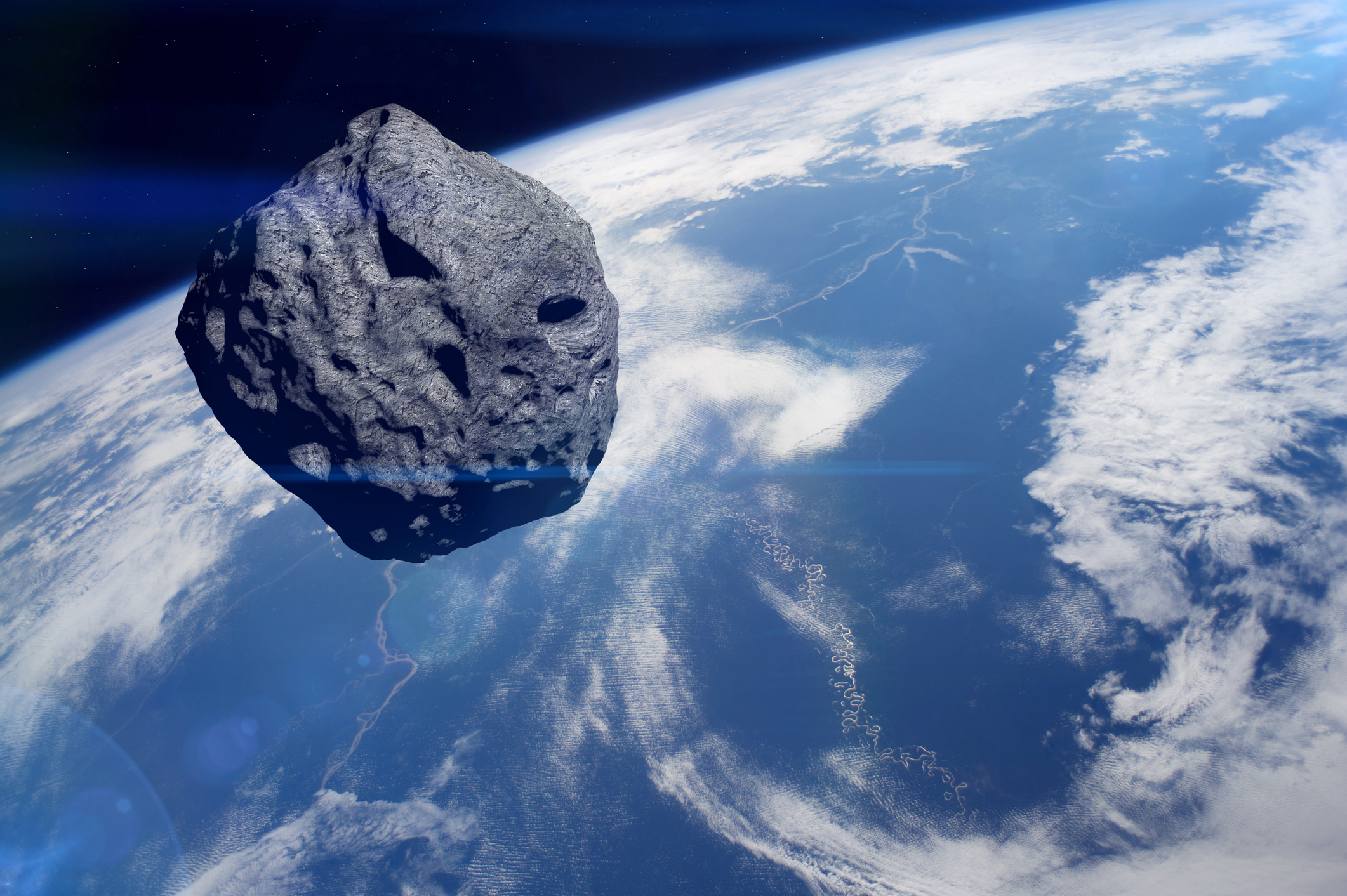
A “potentially hazardous” asteroid the size of a football stadium will zoom past our planet in the early hours tomorrow morning (Dec. 4) — and you can watch it live.

The gigantic space rock, which is traveling at roughly 27,500 miles per hour (44,300 kilometers per hour), will reach a minimum distance of 1.37 million miles (2.2 million kilometers) from Earth at 0:27 ET — its closest approach to our planet on record, according to NASA’s Jet Propulsion Laboratory (JPL).

The historic flyby can be watched via a free livestream from the Virtual Telescope Project (VTP) which starts at 13:30 ET today (Dec. 3). 2020 XR will also be visible to 8 inch (20 centimeter) telescopes, according to a statement by the European Space Agency (ESA).

Asteroid 2020 XR is classified by NASA as a near Earth object, or NEO, meaning that its orbit sometimes brings it within 1.3 astronomical units (AU) of the sun — equivalent to 1.3 times the average distance between the sun and Earth.

Any NEOs that approach within 4,650,000 miles (7,500,000 km) of Earth and are larger than 500 feet (150 meters) in diameter are considered to be “potentially hazardous.” However, the flyby on Dec. 4 does not pose any threat to our planet.

Related: NASA’s most wanted: The 5 most dangerous asteroids to Earth

“When astronomers first discovered 2020 XR, they thought it had a small chance of impacting Earth in 2028,” Juan Luis Cano, coordinator of the ESA’s Near-Earth Object Coordination Center, said in the statement. “But by going back and finding the asteroid in older data, they were able to refine its trajectory and rule out any hazard.”

Get the world’s most fascinating discoveries delivered straight to your inbox.

The asteroid measures approximately 1,200 feet (366 m) in diameter, making it large enough to wipe out a small city.

The space rock last approached Earth in December 1977 — before it was discovered. However, at the time, its minimum distance was roughly 10 million miles (16 million km) further away than what is expected during tonight’s encounter, JPL estimates.

2020 XR is not expected to approach this close again until at least the year 2196. It is next forecast to fly past our planet in November 2028. However, the minimum distance will be much further away, at an estimated 11.3 million miles (18.2 million km).

Source link

Share. Facebook Twitter Pinterest LinkedIn Tumblr Email
Previous ArticleColorado Republicans sound off on migrant surge impact on citizens: ‘Their souls are crushed’
Next Article Israel-Hezbollah cease-fire increasingly fragile amid new attacks
Editor
  • Website

Related Posts

Lifestyle

Cygnus X-1 — the first black hole ever discovered — is spewing ‘dancing jets’ of energy at half the speed of light

April 20, 2026
Lifestyle

Altar to Sol: A rare 1,900-year-old monument dedicated to the Roman god of light and used in a secret underground ritual

April 20, 2026
Lifestyle

Did King Arthur really exist?

April 20, 2026
Add A Comment

Comments are closed.

Categories
  • Entertainment
  • Lifestyle
  • News
  • Sports
  • Tech
  • Travel
Recent Posts
  • Supreme Court takes up Catholic objection to Colorado’s preschool program
  • Cygnus X-1 — the first black hole ever discovered — is spewing ‘dancing jets’ of energy at half the speed of light
  • Carney says Canada’s U.S. ties have become ‘weaknesses’
  • Target revamps grocery in ultra-competitive Twin Cities market
  • Altar to Sol: A rare 1,900-year-old monument dedicated to the Roman god of light and used in a secret underground ritual
calendar
April 2026
M T W T F S S
 12345
6789101112
13141516171819
20212223242526
27282930  
« Mar    
Recent Posts
  • Supreme Court takes up Catholic objection to Colorado’s preschool program
  • Cygnus X-1 — the first black hole ever discovered — is spewing ‘dancing jets’ of energy at half the speed of light
  • Carney says Canada’s U.S. ties have become ‘weaknesses’
About

Welcome to Baynard Media, your trusted source for a diverse range of news and insights. We are committed to delivering timely, reliable, and thought-provoking content that keeps you informed
and inspired

Categories
  • Entertainment
  • Lifestyle
  • News
  • Sports
  • Tech
  • Travel
Facebook X (Twitter) Pinterest WhatsApp
  • Contact Us
  • About Us
  • Privacy Policy
  • Disclaimer
  • UNSUBSCRIBE
© 2026 copyrights reserved

Type above and press Enter to search. Press Esc to cancel.