Close Menu
  • Home
  • UNSUBSCRIBE
  • News
  • Lifestyle
  • Tech
  • Entertainment
  • Sports
  • Travel
Facebook X (Twitter) WhatsApp
Trending
  • Strange mammal ancestor laid huge, leathery eggs —‬ and it was key to surviving the world’s worst mass extinction
  • Ancient process that created rare earth elements discovered — and it could help us locate desperately needed deposits
  • This humanoid robot does all your housework for you ‪—‬ and its makers say it’s ready for your home
  • ‘Nations need to prepare now’: Key Atlantic ocean current is much closer to collapse than scientists thought
  • Neanderthal toddlers grew faster than modern humans, probably because of the harsh environment they evolved in
  • NASA shuts off another Voyager 1 instrument as humanity’s most distant spacecraft prepares for risky ‘Big Bang’ maneuver to save power
  • Florida is facing its most intense drought in 15 years. Here’s how it got so bad and how long it will last.
  • New blood test aims to spot liver scarring when it’s still reversible and before it paves the way to cancer
Facebook X (Twitter) WhatsApp
Baynard Media
  • Home
  • UNSUBSCRIBE
  • News
  • Lifestyle
  • Tech
  • Entertainment
  • Sports
  • Travel
Baynard Media
Home»Lifestyle»Liftoff! NASA launches SPHEREx telescope — an infrared observatory that will help JWST solve the mysteries of the universe
Lifestyle

Liftoff! NASA launches SPHEREx telescope — an infrared observatory that will help JWST solve the mysteries of the universe

EditorBy EditorMarch 12, 2025No Comments3 Mins Read
Share Facebook Twitter Pinterest LinkedIn Tumblr Reddit Telegram Email
Share
Facebook Twitter LinkedIn Pinterest Email

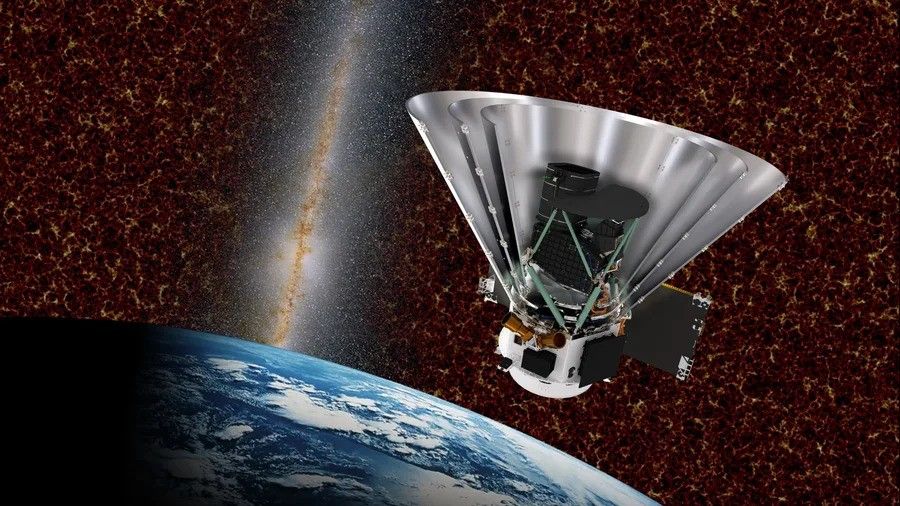
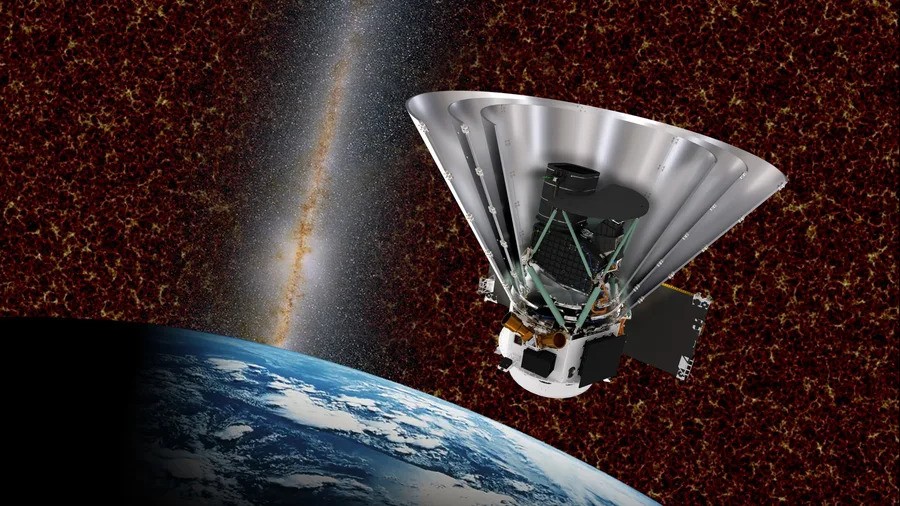
NASA has launched a new infrared space telescope into orbit that is set to rival the James Webb Space Telescope (JWST) in its unprecedented view of our universe.

The Spectro-Photometer for the History of the Universe, Epoch of Reionization, and Ices Explorer (SPHEREx) blasted off from Vandenberg Space Force Base in California atop a SpaceX Falcon 9 rocket on March 11. at 11:10 p.m. EST.

Once it is fully online, the space telescope will scan the entire night sky a total of four times using 102 separate infrared color sensors, enabling it to collect data from more than 450 million galaxies during its planned two-year operation. This dataset will give scientists key insights into some of the biggest questions in cosmology: such as the ways galaxies take shape and evolve over time, the origins of water, and how our universe came to be.

This makes SPHEREx the perfect complement for the JWST, flagging regions of interest for the latter to study with greater depth and resolution.

“Taking a snapshot with JWST is like taking a picture of a person,” Shawn Domagal-Goldman, acting director of the Astrophysics Division at NASA Headquarters, told reporters during a news conference on Jan. 31. “What SPHEREx and other survey missions can do is almost like going into panorama mode, when you want to catch a big group of people and the things standing behind or around them.”

Related: Euclid space telescope: ESA’s groundbreaking mission to study dark matter and dark energy

SPHEREx, which cost a total of $488 million and has been in development for roughly a decade, is set to map the universe by observing both optical and infrared light. It will orbit the Earth 14.5 times a day, completing 11,000 orbits during its lifetime to filter infrared light from distant gas and dust clouds using a technique called spectroscopy.

Get the world’s most fascinating discoveries delivered straight to your inbox.

By peering through these clouds, the scientists operating the cone-shaped telescope hope to piece together an unprecedented picture of our cosmos using some of its most ancient light.

This will enable astronomers to study galaxies at various stages in their evolution; trace the ice floating in empty space to see how life may have begun; and even understand the period of rapid inflation the universe underwent immediately after the Big Bang.

“Literally a trillionth of a trillionth of a billionth of a second after the Big Bang, the observable universe went through a remarkable expansion,” Jamie Bock, principal investigator of SPHEREx at the California Institute of Technology in Pasadena, said during the news conference. “Expanding a trillion trillion fold, and that expansion expanded tiny fluctuations smaller than an atom, to enormous cosmological scales that we see today… We still don’t know what drove inflation or why it happened.”

SPHEREx isn’t the only payload aboard the rocket. The rocket is also carrying thePolarimeter to Unify the Corona and Heliosphere (PUNCH) instrument, which will study how the sun’s corona — its outermost layer of plasma — streams across our solar system in the form of solar wind.

“We expect we’ll revolutionize how space weather is forecasted,” Craig DeForest, a heliophysicist at the Southwest Research Institute and the PUNCH mission’s principal investigator, said during a Feb. 13 news conference. “We’re the first mission able to track space-weather events in three dimensions.”

Source link

Share. Facebook Twitter Pinterest LinkedIn Tumblr Email
Previous ArticleDave Weldon, former lawmaker and vaccine critic, faces Senate grilling for CDC director role
Next Article How Education Department layoffs could impact students with disabilities
Editor
  • Website

Related Posts

Lifestyle

Strange mammal ancestor laid huge, leathery eggs —‬ and it was key to surviving the world’s worst mass extinction

April 22, 2026
Lifestyle

Ancient process that created rare earth elements discovered — and it could help us locate desperately needed deposits

April 22, 2026
Lifestyle

This humanoid robot does all your housework for you ‪—‬ and its makers say it’s ready for your home

April 22, 2026
Add A Comment

Comments are closed.

Categories
  • Entertainment
  • Lifestyle
  • News
  • Sports
  • Tech
  • Travel
Recent Posts
  • Strange mammal ancestor laid huge, leathery eggs —‬ and it was key to surviving the world’s worst mass extinction
  • Ancient process that created rare earth elements discovered — and it could help us locate desperately needed deposits
  • This humanoid robot does all your housework for you ‪—‬ and its makers say it’s ready for your home
  • ‘Nations need to prepare now’: Key Atlantic ocean current is much closer to collapse than scientists thought
  • Neanderthal toddlers grew faster than modern humans, probably because of the harsh environment they evolved in
calendar
April 2026
M T W T F S S
 12345
6789101112
13141516171819
20212223242526
27282930  
« Mar    
Recent Posts
  • Strange mammal ancestor laid huge, leathery eggs —‬ and it was key to surviving the world’s worst mass extinction
  • Ancient process that created rare earth elements discovered — and it could help us locate desperately needed deposits
  • This humanoid robot does all your housework for you ‪—‬ and its makers say it’s ready for your home
About

Welcome to Baynard Media, your trusted source for a diverse range of news and insights. We are committed to delivering timely, reliable, and thought-provoking content that keeps you informed
and inspired

Categories
  • Entertainment
  • Lifestyle
  • News
  • Sports
  • Tech
  • Travel
Facebook X (Twitter) Pinterest WhatsApp
  • Contact Us
  • About Us
  • Privacy Policy
  • Disclaimer
  • UNSUBSCRIBE
© 2026 copyrights reserved

Type above and press Enter to search. Press Esc to cancel.