Close Menu
  • Home
  • UNSUBSCRIBE
  • News
  • Lifestyle
  • Tech
  • Entertainment
  • Sports
  • Travel
Facebook X (Twitter) WhatsApp
Trending
  • Goodbye PCOS: Polycystic ovary syndrome is getting a new name that doctors say better reflects the underlying disease
  • Microplastics absorb heat in the atmosphere and contribute to global warming — as if they weren’t bad enough
  • ‘Insect apocalypse’ is already fueling malnutrition in some regions, first-of-its-kind study reveals
  • Hantavirus LIVE: American passengers from cruise head to specialized facilities in Nebraska
  • New ‘trick’ fixes major flaw in neutral-atom quantum computers — inching us closer to a superpowerful system
  • A 2025 Alaskan tsunami was one of the largest on record, new research finds
  • Lion’s head pendant: An ancient Egyptian board game piece that was later repurposed into a magical religious object with baboons
  • Are we more closely related to cats or dogs?
Facebook X (Twitter) WhatsApp
Baynard Media
  • Home
  • UNSUBSCRIBE
  • News
  • Lifestyle
  • Tech
  • Entertainment
  • Sports
  • Travel
Baynard Media
Home»Lifestyle»‘Illegal’ metal detectorist found a huge hoard of Roman treasure in Germany — and kept it hidden for 8 years
Lifestyle

‘Illegal’ metal detectorist found a huge hoard of Roman treasure in Germany — and kept it hidden for 8 years

EditorBy EditorOctober 21, 2025No Comments3 Mins Read
Share Facebook Twitter Pinterest LinkedIn Tumblr Reddit Telegram Email
Share
Facebook Twitter LinkedIn Pinterest Email

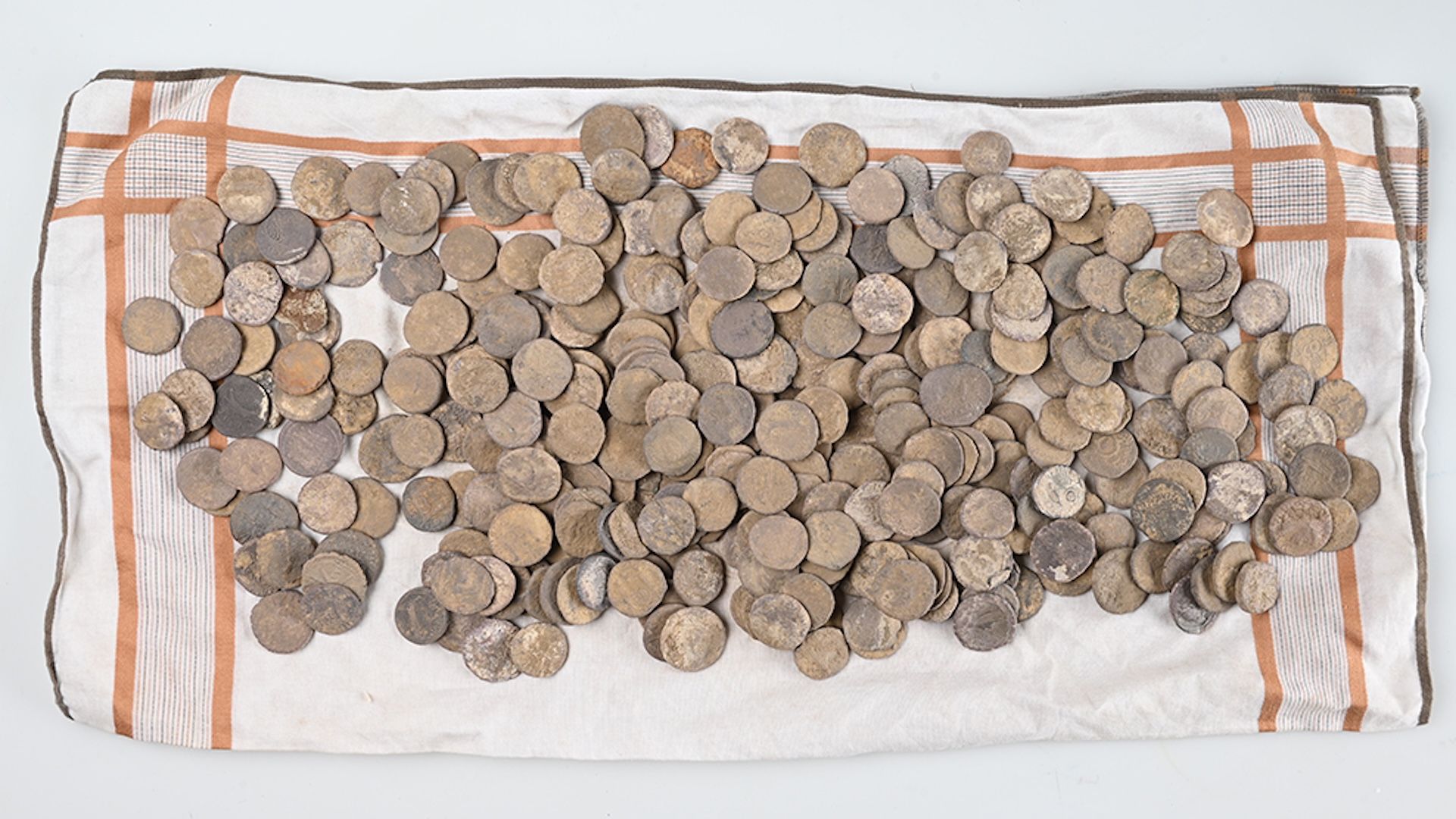
A man in Germany has discovered a Roman-era hoard with hundreds of silver coins, a gold ring, one gold coin and several silver bars — but he didn’t do it legally.

The man initially found the 2,000-year-old hoard with a metal detector in 2017 near the village of Borsum in the Hildesheim district of Lower Saxony, northwest Germany. However, he didn’t have a permit to unearth artifacts, and he didn’t report the finding at the time. Instead, he waited until April this year to tell the police and the city of Hildesheim’s monument protection authorities, according to a translated statement.

Upon learning of the hoard, officials from the Lower Saxony State Office for Monument Preservation went to the spot where the man unearthed the treasure, to see if he had missed any artifacts and determine if they could learn anything about how the hoard had been buried around two millennia ago.


You may like

In early October, government officials did a more comprehensive archaeological investigation of the area and found several more coins, bringing the silver coin total to 450 — making it one of the largest hoards of Roman coins ever found in Lower Saxony, the statement reported.

“The discovery is of enormous scientific importance,” Sebastian Messal, the archaeologist and regional department head overseeing the case at the Lower Saxony State Office for Monument Preservation, said in German to the German Press Agency (DPA).

The coins date to the early Roman Imperial period, after the Roman Republic had collapsed and emperors began ruling the empire. The Imperial period witnessed coexistence but also opposition between the Romans and Germanic tribes beyond the frontier, according to the statement. An upcoming analysis will enable researchers to give a more definitive date for when the hoard was likely buried.

Image 1 of 2

a collection of artifacts covered in dirt in a box
(Image credit: Bartels, PI Hildesheim, ZKD/FK Forensics)

Some of the artifacts found in the hoard in Lower Saxony that have yet to be cleaned and conserved.

four metal pins
(Image credit: Bartels, PI Hildesheim, ZKD/FK Forensics)

Metal pins were a part of the hoard that was buried around 2,000 years ago in what is now northwest Germany.


“Only then can we assess where the artifacts came from and why they were buried here,” the statement said. “Were they Romans or Germanic tribes?”

Since turning in the treasure, the now 31-year-old man who found the hoard has participated in a government-run metal detector course. The Hildesheim public prosecutor’s office also dropped an investigation into his case because the statute of limitations had expired. In Lower Saxony, metal detectorists looking for artifacts need a permit to ensure they properly find and report discoveries in a way that won’t disturb archaeological deposits or sites.


Roman emperor quiz: Test your knowledge on the rulers of the ancient empire

Source link

Share. Facebook Twitter Pinterest LinkedIn Tumblr Email
Previous ArticleUniversity of Utah accused of pushing DEI despite state anti-DEI law
Next Article U.S. marshal and undocumented immigrant shot during ICE stop in Los Angeles, officials say
Editor
  • Website

Related Posts

Lifestyle

Goodbye PCOS: Polycystic ovary syndrome is getting a new name that doctors say better reflects the underlying disease

May 12, 2026
Lifestyle

Microplastics absorb heat in the atmosphere and contribute to global warming — as if they weren’t bad enough

May 12, 2026
Lifestyle

‘Insect apocalypse’ is already fueling malnutrition in some regions, first-of-its-kind study reveals

May 11, 2026
Add A Comment

Comments are closed.

Categories
  • Entertainment
  • Lifestyle
  • News
  • Sports
  • Tech
  • Travel
Recent Posts
  • Goodbye PCOS: Polycystic ovary syndrome is getting a new name that doctors say better reflects the underlying disease
  • Microplastics absorb heat in the atmosphere and contribute to global warming — as if they weren’t bad enough
  • ‘Insect apocalypse’ is already fueling malnutrition in some regions, first-of-its-kind study reveals
  • Hantavirus LIVE: American passengers from cruise head to specialized facilities in Nebraska
  • New ‘trick’ fixes major flaw in neutral-atom quantum computers — inching us closer to a superpowerful system
calendar
May 2026
M T W T F S S
 123
45678910
11121314151617
18192021222324
25262728293031
« Apr    
Recent Posts
  • Goodbye PCOS: Polycystic ovary syndrome is getting a new name that doctors say better reflects the underlying disease
  • Microplastics absorb heat in the atmosphere and contribute to global warming — as if they weren’t bad enough
  • ‘Insect apocalypse’ is already fueling malnutrition in some regions, first-of-its-kind study reveals
About

Welcome to Baynard Media, your trusted source for a diverse range of news and insights. We are committed to delivering timely, reliable, and thought-provoking content that keeps you informed
and inspired

Categories
  • Entertainment
  • Lifestyle
  • News
  • Sports
  • Tech
  • Travel
Facebook X (Twitter) Pinterest WhatsApp
  • Contact Us
  • About Us
  • Privacy Policy
  • Disclaimer
  • UNSUBSCRIBE
© 2026 copyrights reserved

Type above and press Enter to search. Press Esc to cancel.