Close Menu
  • Home
  • UNSUBSCRIBE
  • News
  • Lifestyle
  • Tech
  • Entertainment
  • Sports
  • Travel
Facebook X (Twitter) WhatsApp
Trending
  • ‘Nations need to prepare now’: Key Atlantic ocean current is much closer to collapse than scientists thought
  • Neanderthal toddlers grew faster than modern humans, probably because of the harsh environment they evolved in
  • NASA shuts off another Voyager 1 instrument as humanity’s most distant spacecraft prepares for risky ‘Big Bang’ maneuver to save power
  • Florida is facing its most intense drought in 15 years. Here’s how it got so bad and how long it will last.
  • New blood test aims to spot liver scarring when it’s still reversible and before it paves the way to cancer
  • ‘We’re the best servants anyone could dream of!’: AI superintelligence has no need to enslave humans because we’re already bowing to it
  • Glowing ring of plankton surrounding New Zealand islands linked to deadly underwater plateau — Earth from space
  • Omar files new financial form in response to Trump, GOP critics
Facebook X (Twitter) WhatsApp
Baynard Media
  • Home
  • UNSUBSCRIBE
  • News
  • Lifestyle
  • Tech
  • Entertainment
  • Sports
  • Travel
Baynard Media
Home»Lifestyle»Diagnostic dilemma: A woman got ‘broken heart syndrome’ after eating too much wasabi
Lifestyle

Diagnostic dilemma: A woman got ‘broken heart syndrome’ after eating too much wasabi

EditorBy EditorDecember 11, 2024No Comments3 Mins Read
Share Facebook Twitter Pinterest LinkedIn Tumblr Reddit Telegram Email
Share
Facebook Twitter LinkedIn Pinterest Email

The patient: A 60-year-old woman in Be’er Sheva, Israel

The symptoms: While enjoying the food at a wedding, the woman began feeling a painful pressure in her chest that then radiated into her arms. This sensation persisted for several hours, although the pain subsided enough that she opted to stay at the reception. The next day, lingering chest pain, discomfort and generalized feelings of weakness prompted her to seek medical care.

What happened next: Emergency room physicians performed an ultrasound and detected abnormal activity in the patient’s left ventricle, the part of the heart that performs most of the organ’s pumping action. Some segments of the heart muscle were not contracting at all, and contraction in other segments was reduced. This disruption was “moderate to severe,” doctors wrote in a report of the case.

The diagnosis: Doctors determined that the woman was experiencing a condition called takotsubo cardiomyopathy, also known as “broken heart syndrome,” which produces symptoms mimicking those of a heart attack, such as chest pain and difficulty breathing. “Takotsubo” refers to a type of Japanese jar used for trapping octopuses; the condition distorts the muscles of the left ventricle, making it resemble a narrow-necked octopus-catching jar.

The treatment: The woman received steroids and medications for lowering blood pressure, including ACE inhibitors, which relax arteries and veins, and beta-blockers, which block the effects of stress hormones on the heart. The doctors referred her to a cardiac rehabilitation center. After one month, an echocardiogram showed that the patient’s heart activity had returned to normal.

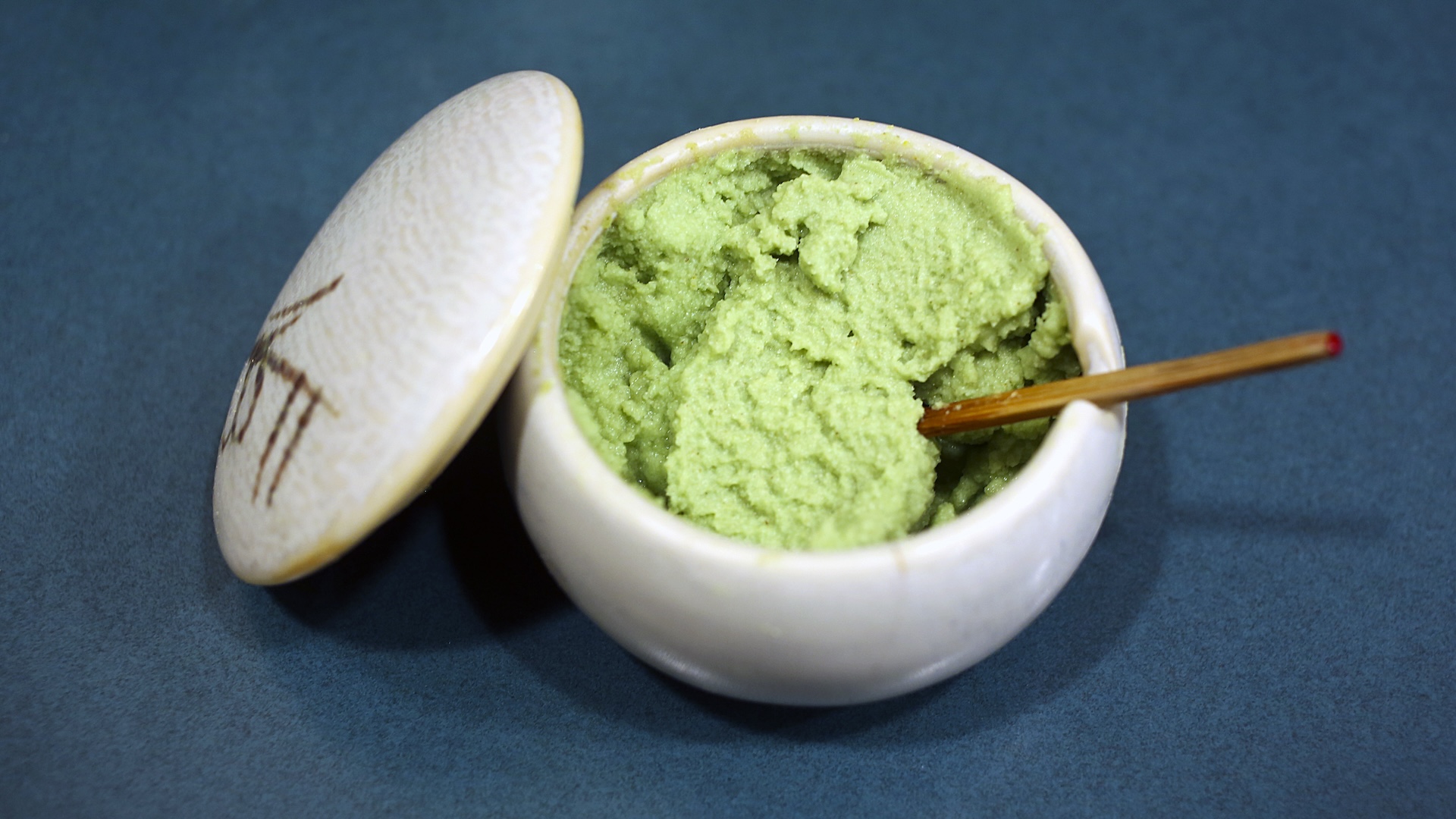
What makes the case unique: Prior to this case, scientific studies had linked takotsubo cardiomyopathy to drug use, neurological disease, physical or emotional stress, and allergic reactions to certain foods. But this case had a cause that had never been documented before: Minutes before developing symptoms, the woman had mistaken wasabi for avocado and swallowed a teaspoon-sized helping.

This is the first example of wasabi consumption causing broken heart syndrome. While some compounds in wasabi are likely beneficial to health, such as cancer-fighting agents, swallowing an unusually large amount may have triggered an extreme stress reaction in the patient, thus leading to disruption of her normal heart function.

Get the world’s most fascinating discoveries delivered straight to your inbox.

This article is for informational purposes only and is not meant to offer medical advice.

Ever wonder why some people build muscle more easily than others or why freckles come out in the sun? Send us your questions about how the human body works to community@livescience.com with the subject line “Health Desk Q,” and you may see your question answered on the website!

Source link

Share. Facebook Twitter Pinterest LinkedIn Tumblr Email
Previous ArticleBowman posts ‘Dear White People’ thread after Daniel Penny acquittal
Next Article Kyle Rudolph reveals Daniel Jones’ reasoning behind joining Vikings: ‘Opportunity for me in the future’
Editor
  • Website

Related Posts

Lifestyle

‘Nations need to prepare now’: Key Atlantic ocean current is much closer to collapse than scientists thought

April 22, 2026
Lifestyle

Neanderthal toddlers grew faster than modern humans, probably because of the harsh environment they evolved in

April 21, 2026
Lifestyle

NASA shuts off another Voyager 1 instrument as humanity’s most distant spacecraft prepares for risky ‘Big Bang’ maneuver to save power

April 21, 2026
Add A Comment

Comments are closed.

Categories
  • Entertainment
  • Lifestyle
  • News
  • Sports
  • Tech
  • Travel
Recent Posts
  • ‘Nations need to prepare now’: Key Atlantic ocean current is much closer to collapse than scientists thought
  • Neanderthal toddlers grew faster than modern humans, probably because of the harsh environment they evolved in
  • NASA shuts off another Voyager 1 instrument as humanity’s most distant spacecraft prepares for risky ‘Big Bang’ maneuver to save power
  • Florida is facing its most intense drought in 15 years. Here’s how it got so bad and how long it will last.
  • New blood test aims to spot liver scarring when it’s still reversible and before it paves the way to cancer
calendar
April 2026
M T W T F S S
 12345
6789101112
13141516171819
20212223242526
27282930  
« Mar    
Recent Posts
  • ‘Nations need to prepare now’: Key Atlantic ocean current is much closer to collapse than scientists thought
  • Neanderthal toddlers grew faster than modern humans, probably because of the harsh environment they evolved in
  • NASA shuts off another Voyager 1 instrument as humanity’s most distant spacecraft prepares for risky ‘Big Bang’ maneuver to save power
About

Welcome to Baynard Media, your trusted source for a diverse range of news and insights. We are committed to delivering timely, reliable, and thought-provoking content that keeps you informed
and inspired

Categories
  • Entertainment
  • Lifestyle
  • News
  • Sports
  • Tech
  • Travel
Facebook X (Twitter) Pinterest WhatsApp
  • Contact Us
  • About Us
  • Privacy Policy
  • Disclaimer
  • UNSUBSCRIBE
© 2026 copyrights reserved

Type above and press Enter to search. Press Esc to cancel.