Close Menu
  • Home
  • UNSUBSCRIBE
  • News
  • Lifestyle
  • Tech
  • Entertainment
  • Sports
  • Travel
Facebook X (Twitter) WhatsApp
Trending
  • Artemis moon landing could face long delay while NASA waits for next-generation spacesuits
  • NASA’s Curiosity rover finds a surprising number of giant ‘dragon scales’ littered across Mars
  • Diagnostic dilemma: A teen’s classic diabetes symptoms didn’t improve with treatment — revealing she also had a much rarer syndrome
  • Strange mammal ancestor laid huge, leathery eggs —‬ and it was key to surviving the world’s worst mass extinction
  • Ancient process that created rare earth elements discovered — and it could help us locate desperately needed deposits
  • This humanoid robot does all your housework for you ‪—‬ and its makers say it’s ready for your home
  • ‘Nations need to prepare now’: Key Atlantic ocean current is much closer to collapse than scientists thought
  • Neanderthal toddlers grew faster than modern humans, probably because of the harsh environment they evolved in
Facebook X (Twitter) WhatsApp
Baynard Media
  • Home
  • UNSUBSCRIBE
  • News
  • Lifestyle
  • Tech
  • Entertainment
  • Sports
  • Travel
Baynard Media
Home»Lifestyle»Venus at ‘greatest brilliancy’: How to see our neighboring planet at its best and brightest this week
Lifestyle

Venus at ‘greatest brilliancy’: How to see our neighboring planet at its best and brightest this week

EditorBy EditorApril 20, 2025No Comments2 Mins Read
Share Facebook Twitter Pinterest LinkedIn Tumblr Reddit Telegram Email
Share
Facebook Twitter LinkedIn Pinterest Email

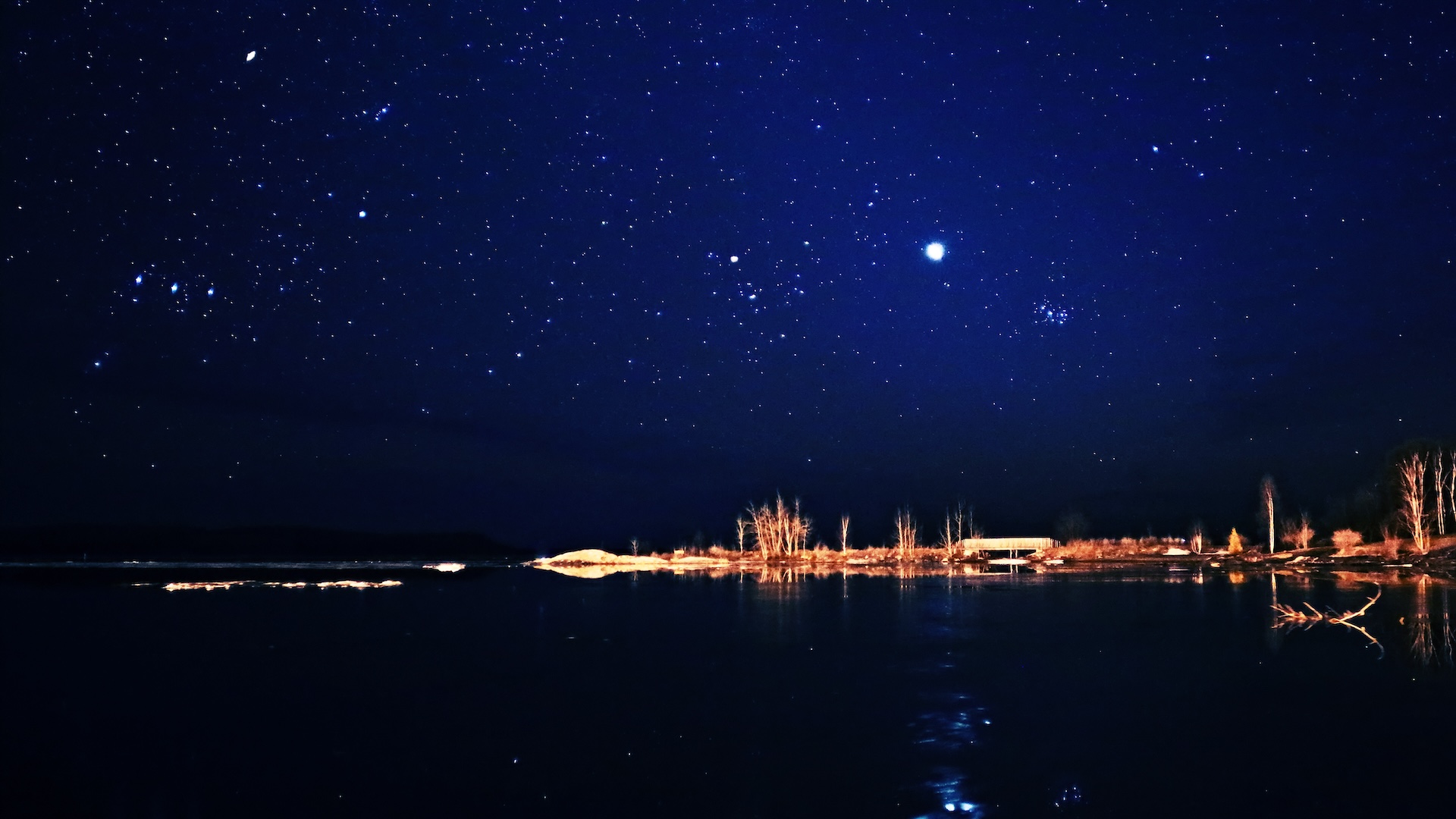
Go outside an hour before sunrise on Thursday, April 24, and if the skies are clear, you’ll be greeted by a spectacular sight in the east: Venus shining at -4.4 magnitude — its brightest, as seen from Earth, until Sept. 22, 2026.

Venus currently has the nickname the “Morning Star” because it rises in the east and shines brightly just before sunrise. It’s been that way only since March 22, when the planet traveled roughly between Earth and the sun and was lost in the sun’s glare for a few weeks.

That was Venus’ inferior conjunction with the sun, according to In-The-Sky.org. Prior to that, the planet had been shining very brightly as the “Evening Star” in the west just after sunset, reaching -4.6 magnitude on Feb. 16. (Lower magnitudes correspond to brighter objects.)

Related: The 10 best stargazing events of 2025

Venus has been shining brightly in recent months because it’s been close to Earth. In fact, Venus has been undertaking Earth on the inside on its 225-Earth-day orbit of the sun. Because Earth takes a longer 365 days to complete an orbit, Venus must approach Earth, undertake it and then travel away from it.

As a result, Venus gets much larger and brighter from our perspective on Earth. But something else happens to it, too. If you use a good telescope on April 24, you will see that, despite being so bright, Venus is a 23%-illuminated crescent. Just as we see the moon as a crescent as it orbits Earth, we see the inner planets — Venus and Mercury — as crescents as they orbit the sun. Check back a month later, on May 24, and Venus will shine at -4.2 magnitude and be 45%-lit.

Although Venus will be at its most brilliant from Earth on April 24, it will appear bright throughout late April. If you have clear skies on April 25, you’ll see an 8%-illuminated crescent moon just below Venus, while Saturn will sit just below Venus throughout April. Together, the three celestial objects will briefly form a smiley face in the sky.

Get the world’s most fascinating discoveries delivered straight to your inbox.

Source link

Share. Facebook Twitter Pinterest LinkedIn Tumblr Email
Previous ArticleSpace photo of the week: James Webb telescope reveals hidden past of the ‘Crystal Ball Nebula’
Next Article Lviv pysanka: World’s oldest Easter egg
Editor
  • Website

Related Posts

Lifestyle

Artemis moon landing could face long delay while NASA waits for next-generation spacesuits

April 22, 2026
Lifestyle

NASA’s Curiosity rover finds a surprising number of giant ‘dragon scales’ littered across Mars

April 22, 2026
Lifestyle

Diagnostic dilemma: A teen’s classic diabetes symptoms didn’t improve with treatment — revealing she also had a much rarer syndrome

April 22, 2026
Add A Comment

Comments are closed.

Categories
  • Entertainment
  • Lifestyle
  • News
  • Sports
  • Tech
  • Travel
Recent Posts
  • Artemis moon landing could face long delay while NASA waits for next-generation spacesuits
  • NASA’s Curiosity rover finds a surprising number of giant ‘dragon scales’ littered across Mars
  • Diagnostic dilemma: A teen’s classic diabetes symptoms didn’t improve with treatment — revealing she also had a much rarer syndrome
  • Strange mammal ancestor laid huge, leathery eggs —‬ and it was key to surviving the world’s worst mass extinction
  • Ancient process that created rare earth elements discovered — and it could help us locate desperately needed deposits
calendar
April 2026
M T W T F S S
 12345
6789101112
13141516171819
20212223242526
27282930  
« Mar    
Recent Posts
  • Artemis moon landing could face long delay while NASA waits for next-generation spacesuits
  • NASA’s Curiosity rover finds a surprising number of giant ‘dragon scales’ littered across Mars
  • Diagnostic dilemma: A teen’s classic diabetes symptoms didn’t improve with treatment — revealing she also had a much rarer syndrome
About

Welcome to Baynard Media, your trusted source for a diverse range of news and insights. We are committed to delivering timely, reliable, and thought-provoking content that keeps you informed
and inspired

Categories
  • Entertainment
  • Lifestyle
  • News
  • Sports
  • Tech
  • Travel
Facebook X (Twitter) Pinterest WhatsApp
  • Contact Us
  • About Us
  • Privacy Policy
  • Disclaimer
  • UNSUBSCRIBE
© 2026 copyrights reserved

Type above and press Enter to search. Press Esc to cancel.