Close Menu
  • Home
  • UNSUBSCRIBE
  • News
  • Lifestyle
  • Tech
  • Entertainment
  • Sports
  • Travel
Facebook X (Twitter) WhatsApp
Trending
  • ‘A turning point in history’: Gene therapy improves hearing in 90% of patients with congenital deafness in largest trial of its kind
  • Artemis moon landing could face long delay while NASA waits for next-generation spacesuits
  • NASA’s Curiosity rover finds a surprising number of giant ‘dragon scales’ littered across Mars
  • Diagnostic dilemma: A teen’s classic diabetes symptoms didn’t improve with treatment — revealing she also had a much rarer syndrome
  • Strange mammal ancestor laid huge, leathery eggs —‬ and it was key to surviving the world’s worst mass extinction
  • Ancient process that created rare earth elements discovered — and it could help us locate desperately needed deposits
  • This humanoid robot does all your housework for you ‪—‬ and its makers say it’s ready for your home
  • ‘Nations need to prepare now’: Key Atlantic ocean current is much closer to collapse than scientists thought
Facebook X (Twitter) WhatsApp
Baynard Media
  • Home
  • UNSUBSCRIBE
  • News
  • Lifestyle
  • Tech
  • Entertainment
  • Sports
  • Travel
Baynard Media
Home»Lifestyle»The North Pole could shift 90 feet west by 2100
Lifestyle

The North Pole could shift 90 feet west by 2100

EditorBy EditorApril 22, 2025No Comments3 Mins Read
Share Facebook Twitter Pinterest LinkedIn Tumblr Reddit Telegram Email
Share
Facebook Twitter LinkedIn Pinterest Email

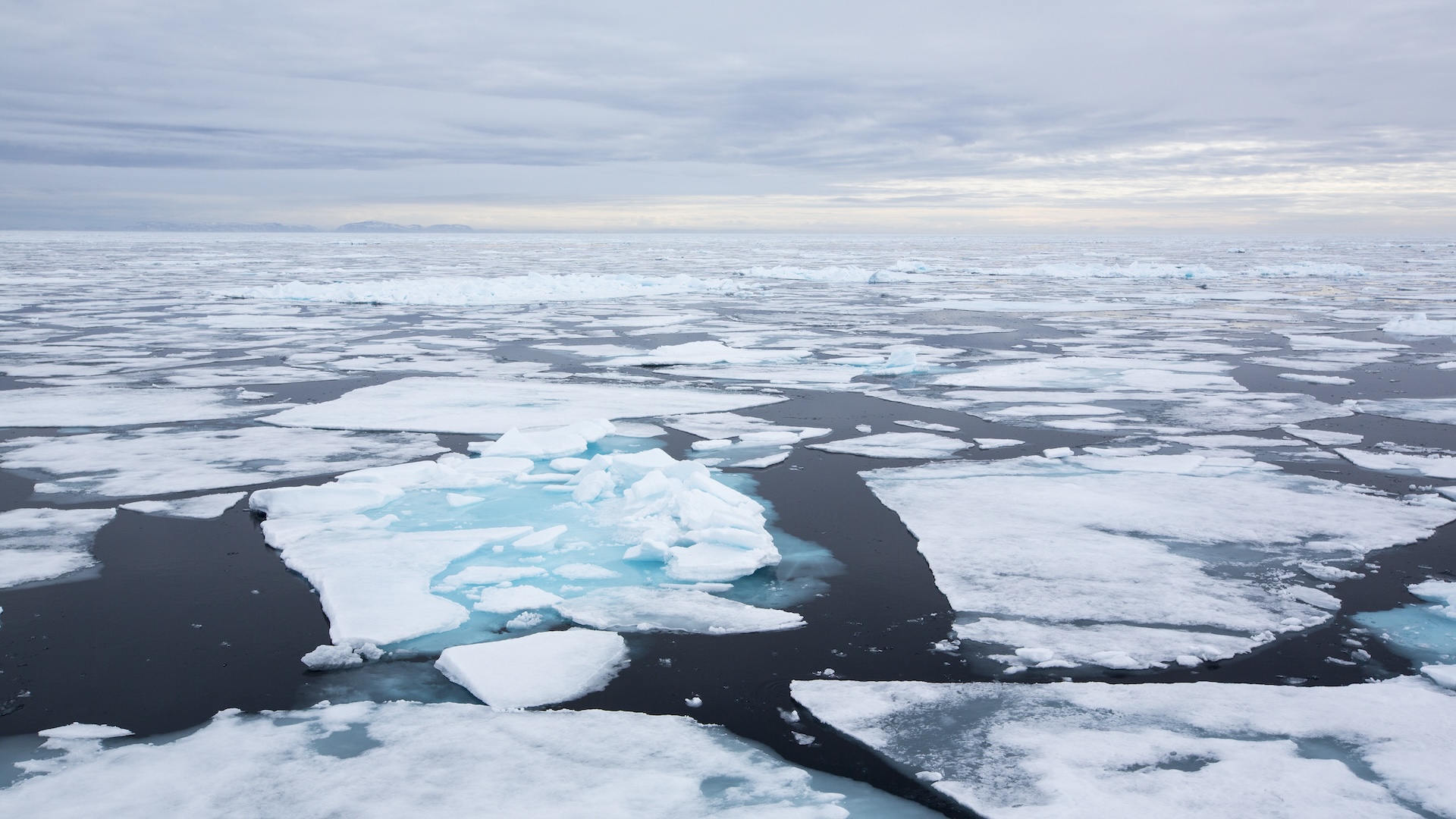
Dramatic ice melt due to climate change may move the locations of Earth’s geographic poles in the coming years, a new study finds.

As ice sheets melt and ocean mass gets redistributed around the planet, Earth’s geographic North and South poles could shift up to 89 feet (27 meters) by 2100 as the planet’s axis of rotation changes, according to the study, published March 5 in the journal Geophysical Research Letters. The shift could affect satellite and spacecraft navigation, the researchers said.

As Earth spins, changes in the distribution of the planet’s mass cause it to wobble on its axis like a top. Many of these wobbles are regular and predictable — some are due to regular changes in atmospheric pressure and ocean currents, while others result from interactions between the core and the mantle.

Recent studies have suggested that melting ice sheets and glaciers could also affect this mass distribution and shift Earth’s poles. In the new study, researchers at ETH Zurich used both the movement of the poles from 1900 to 2018 and projections of ice sheet melt to predict how far the poles might move under different human-caused climate change scenarios.

The North Pole could shift westward by more than 89 feet by 2100 under the worst-case greenhouse gas emissions scenario, the team found. Under a more optimistic emissions scenario, the pole could still shift as much as 39 feet (12 m) relative to its location in 1900. Meltwater from the Greenland and Antarctic ice sheets played the largest role in the simulations, followed by glacier melt.

“This effect is somewhat surpassing the effect of glacial isostatic adjustment, which is the effect of solid Earth rebound after the termination of the last ice age,” study co-author Mostafa Kiani Shahvandi, an Earth scientist now at the University of Vienna, told Live Science.

In other words, land at the surface of the crust sunk under the weight of ice age glaciers and rose when they melted, changing the weight distribution in Earth’s crust and shifting the poles. “This means that what humans have done has somewhat shifted the pole more than the effect of ice ages,” Kiani Shahvandi said.

Get the world’s most fascinating discoveries delivered straight to your inbox.

Causing confusion for sat-nav

A shift in Earth’s rotational axis could disrupt satellite and spacecraft navigation, Kiandi Shahvandi said. Scientists map a spacecraft’s location in part using Earth’s rotation axis as a reference. If that axis shifts over time, it could become harder to pinpoint the spacecraft’s exact location.

Future work could involve examining paleoclimate data to determine how much the poles have shifted over millions of years during past episodes of natural climate change. According to Kiandi Shahvandi, this would help reveal the true scale of human impact on the poles’ movement.

This story was originally published on April 8.

Source link

Share. Facebook Twitter Pinterest LinkedIn Tumblr Email
Previous ArticlePair of ‘glowing’ lava lakes spotted on Africa’s most active volcanoes as they erupt simultaneously — Earth from space
Next Article New QPU benchmark will show when quantum computers surpass existing computing capabilities, scientists say
Editor
  • Website

Related Posts

Lifestyle

‘A turning point in history’: Gene therapy improves hearing in 90% of patients with congenital deafness in largest trial of its kind

April 22, 2026
Lifestyle

Artemis moon landing could face long delay while NASA waits for next-generation spacesuits

April 22, 2026
Lifestyle

NASA’s Curiosity rover finds a surprising number of giant ‘dragon scales’ littered across Mars

April 22, 2026
Add A Comment

Comments are closed.

Categories
  • Entertainment
  • Lifestyle
  • News
  • Sports
  • Tech
  • Travel
Recent Posts
  • ‘A turning point in history’: Gene therapy improves hearing in 90% of patients with congenital deafness in largest trial of its kind
  • Artemis moon landing could face long delay while NASA waits for next-generation spacesuits
  • NASA’s Curiosity rover finds a surprising number of giant ‘dragon scales’ littered across Mars
  • Diagnostic dilemma: A teen’s classic diabetes symptoms didn’t improve with treatment — revealing she also had a much rarer syndrome
  • Strange mammal ancestor laid huge, leathery eggs —‬ and it was key to surviving the world’s worst mass extinction
calendar
April 2026
M T W T F S S
 12345
6789101112
13141516171819
20212223242526
27282930  
« Mar    
Recent Posts
  • ‘A turning point in history’: Gene therapy improves hearing in 90% of patients with congenital deafness in largest trial of its kind
  • Artemis moon landing could face long delay while NASA waits for next-generation spacesuits
  • NASA’s Curiosity rover finds a surprising number of giant ‘dragon scales’ littered across Mars
About

Welcome to Baynard Media, your trusted source for a diverse range of news and insights. We are committed to delivering timely, reliable, and thought-provoking content that keeps you informed
and inspired

Categories
  • Entertainment
  • Lifestyle
  • News
  • Sports
  • Tech
  • Travel
Facebook X (Twitter) Pinterest WhatsApp
  • Contact Us
  • About Us
  • Privacy Policy
  • Disclaimer
  • UNSUBSCRIBE
© 2026 copyrights reserved

Type above and press Enter to search. Press Esc to cancel.