Close Menu
  • Home
  • UNSUBSCRIBE
  • News
  • Lifestyle
  • Tech
  • Entertainment
  • Sports
  • Travel
Facebook X (Twitter) WhatsApp
Trending
  • Strange mammal ancestor laid huge, leathery eggs —‬ and it was key to surviving the world’s worst mass extinction
  • Ancient process that created rare earth elements discovered — and it could help us locate desperately needed deposits
  • This humanoid robot does all your housework for you ‪—‬ and its makers say it’s ready for your home
  • ‘Nations need to prepare now’: Key Atlantic ocean current is much closer to collapse than scientists thought
  • Neanderthal toddlers grew faster than modern humans, probably because of the harsh environment they evolved in
  • NASA shuts off another Voyager 1 instrument as humanity’s most distant spacecraft prepares for risky ‘Big Bang’ maneuver to save power
  • Florida is facing its most intense drought in 15 years. Here’s how it got so bad and how long it will last.
  • New blood test aims to spot liver scarring when it’s still reversible and before it paves the way to cancer
Facebook X (Twitter) WhatsApp
Baynard Media
  • Home
  • UNSUBSCRIBE
  • News
  • Lifestyle
  • Tech
  • Entertainment
  • Sports
  • Travel
Baynard Media
Home»Lifestyle»Strange mammal ancestor laid huge, leathery eggs —‬ and it was key to surviving the world’s worst mass extinction
Lifestyle

Strange mammal ancestor laid huge, leathery eggs —‬ and it was key to surviving the world’s worst mass extinction

EditorBy EditorApril 22, 2026No Comments5 Mins Read
Share Facebook Twitter Pinterest LinkedIn Tumblr Reddit Telegram Email
Share
Facebook Twitter LinkedIn Pinterest Email

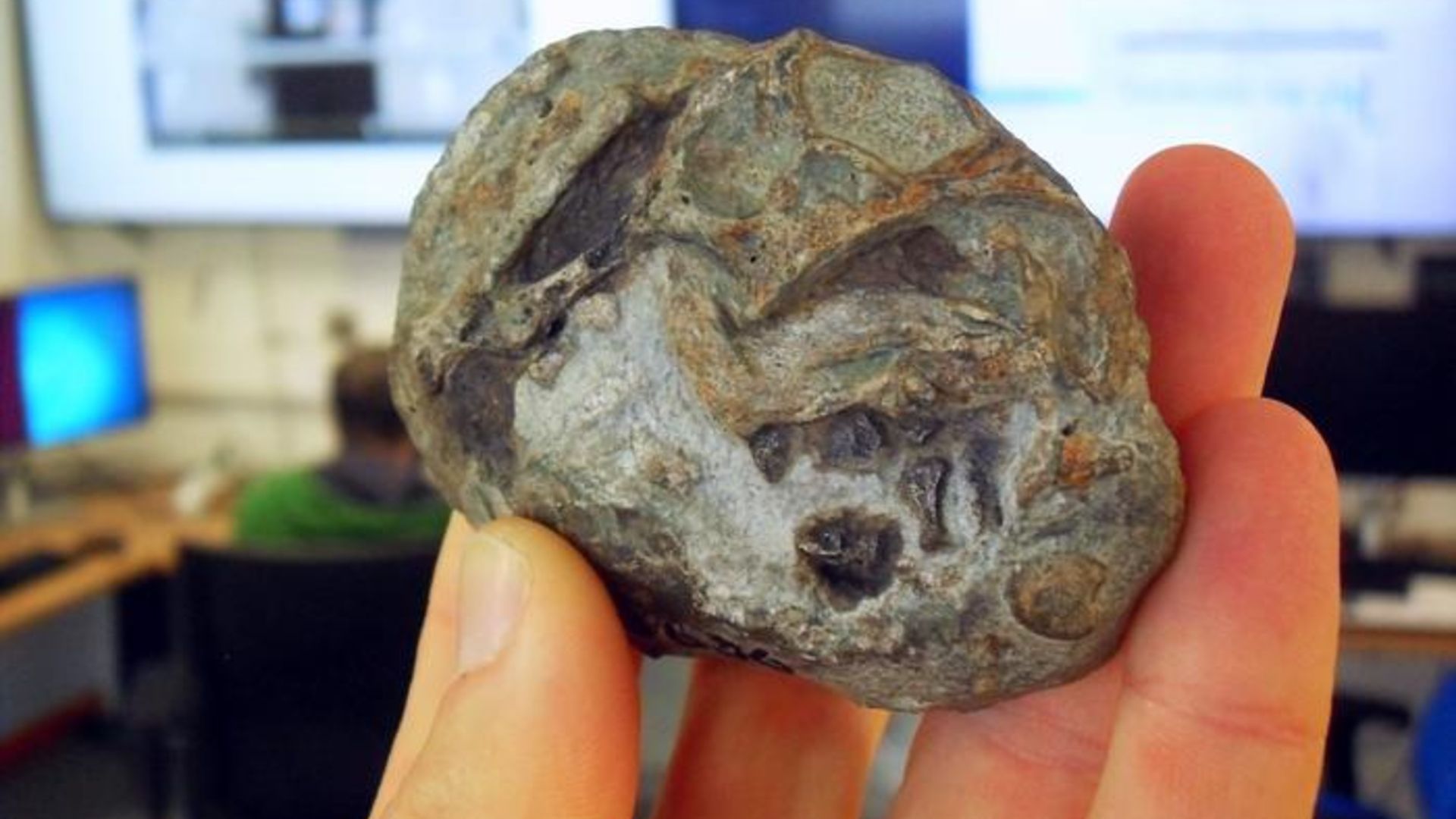
Scientists have cracked a major mystery about mammal evolution after discovering a 250 million-year-old fossilized egg from before the time of the dinosaurs. Researchers say the specimen, which holds a curled-up embryo of the plant-eating animal Lystrosaurus, is the first known egg ever found from a mammal ancestor, proving that mammals’ ancestors laid eggs.

The egg could help paleontologists better understand how these animals survived the Permian-Triassic extinction, also known as the Great Dying, which occurred around 252 million years ago. During this event, Earth faced brutal heat, drought, volcanic eruptions and ocean acidification, and 90% of Earth’s species died.

“It reveals how reproductive strategies can shape survival in extreme environments: by producing large, yolk-rich eggs and precocial young, Lystrosaurus was able to thrive in the harsh, unpredictable conditions following the end-Permian mass extinction,” Julien Benoit, a paleontologist and associate professor at the University of the Witwatersrand, South Africa’s Evolutionary Studies Institute, said in a statement.


You may like

The researchers revealed their findings April 9 in the journal PLOS One.

Which came first: the therapsid or the egg?

The fossilized egg was first found in 2008 during fieldwork near the Xhariep municipal district in South Africa. Although the specimen only had small flecks of bone near a nodule, it contained a nearly complete, tightly curled embryo. The researchers identified the animal as Lystrosaurus, an early ancestor of mammals belonging to a group known as therapsids. Therapsids were mammal-like reptiles that lived around 272 million to 250 million years ago that modern mammals descended from.

“The adult [Lystrosaurus] looked like a pig, with naked skin, a beak like a turtle, and two tusks sticking out and pointing down,” the researchers wrote for The Conversation.

Scientists have known about this mammal ancestor for years, but they weren’t sure whether the animal laid eggs.

Get the world’s most fascinating discoveries delivered straight to your inbox.

Initially, the researchers couldn’t determine if the embryo had already been born or was still inside an egg when it died, because the fossil lacked an outer shell and only the embryo was preserved.

An illustration showing a gray and pink embryo curled up in a white ovular egg.

An artist’s rendering of a Lystrosaurus embryo within its partially preserved shell. (Image credit: Sophie Vrard)

“I suspected even then that it had died within the egg, but at the time, we simply didn’t have the technology to confirm it,” Jennifer Botha, a professor at the University of the Witwatersrand’s Evolutionary Studies Institute in South Africa, said in a statement.

For the new study, the researchers used powerful CT scans at the European Synchrotron Radiation Facility in France to study the fossil without damaging it. The scans revealed tiny structures inside the fossil, including an unfused lower jaw, still in two halves. That meant the embryo was not developed enough to feed on its own ‪—‬ a sign that it hadn’t hatched yet. The researchers suspect the shell was leathery and dissolved.


What to read next

A 3D scan showing a colorful skeleton cramped within an ovular shape.

A 3D reconstruction of the skeleton created from X-ray scans. (Image credit: Professor Julien Benoit)

“For over 150 years of South African palaeontology, no fossil had ever been conclusively identified as a therapsid egg,” Botha said in the statement. “This is the first time we can say, with confidence, that mammal ancestors like Lystrosaurus laid eggs, making it a true milestone in the field.”

Putting all the eggs into one surviving basket

The researchers found that Lystrosaurus laid unusually large eggs for its body size. In living animals, large eggs carry more yolk, which can fuel more complete development before they hatch. That finding points to Lystrosaurus having young that were relatively mature and mobile soon after birth, the researchers suggested. This would have made these animals more capable of feeding themselves and avoiding danger, thus helping them survive the Great Dying, the researchers said.

The larger size of the eggs and their leathery texture helped these animals survive in other ways too, the researchers suggested.

“The larger the egg, the smaller its surface area (comparatively speaking), so Lystrosaurus eggs would lose less water through their leathery shell than those of other species of that time,” the researchers wrote in The Conversation. “Given the dry environment during and in the immediate aftermath of the extinction, this was a significant advantage, especially since hard-shelled eggs would not evolve for another 50 million years, at least.”

While many lineages vanished in the Permian-Triassic extinction event, Lystrosaurus not only survived but became one of the dominant land animals afterward.

“Growing up fast, reproducing young and proliferating were the secrets of Lystrosaurus survival,” the researchers added in The Conversation article.

The findings could help scientists understand more about how animals can survive changing climates.

“In a modern context, this work is highly impactful because it offers a deep-time perspective on resilience and adaptability in the face of rapid climate change and ecological crisis,” Benoit said in the statement. “Understanding how past organisms survived global upheaval helps scientists better predict how species today might respond to ongoing environmental stress, making this discovery not just a breakthrough in palaeontology, but also highly relevant to current biodiversity and climate challenges.”

Source link

Share. Facebook Twitter Pinterest LinkedIn Tumblr Email
Previous ArticleAncient process that created rare earth elements discovered — and it could help us locate desperately needed deposits
Editor
  • Website

Related Posts

Lifestyle

Ancient process that created rare earth elements discovered — and it could help us locate desperately needed deposits

April 22, 2026
Lifestyle

This humanoid robot does all your housework for you ‪—‬ and its makers say it’s ready for your home

April 22, 2026
Lifestyle

‘Nations need to prepare now’: Key Atlantic ocean current is much closer to collapse than scientists thought

April 22, 2026
Add A Comment

Comments are closed.

Categories
  • Entertainment
  • Lifestyle
  • News
  • Sports
  • Tech
  • Travel
Recent Posts
  • Strange mammal ancestor laid huge, leathery eggs —‬ and it was key to surviving the world’s worst mass extinction
  • Ancient process that created rare earth elements discovered — and it could help us locate desperately needed deposits
  • This humanoid robot does all your housework for you ‪—‬ and its makers say it’s ready for your home
  • ‘Nations need to prepare now’: Key Atlantic ocean current is much closer to collapse than scientists thought
  • Neanderthal toddlers grew faster than modern humans, probably because of the harsh environment they evolved in
calendar
April 2026
M T W T F S S
 12345
6789101112
13141516171819
20212223242526
27282930  
« Mar    
Recent Posts
  • Strange mammal ancestor laid huge, leathery eggs —‬ and it was key to surviving the world’s worst mass extinction
  • Ancient process that created rare earth elements discovered — and it could help us locate desperately needed deposits
  • This humanoid robot does all your housework for you ‪—‬ and its makers say it’s ready for your home
About

Welcome to Baynard Media, your trusted source for a diverse range of news and insights. We are committed to delivering timely, reliable, and thought-provoking content that keeps you informed
and inspired

Categories
  • Entertainment
  • Lifestyle
  • News
  • Sports
  • Tech
  • Travel
Facebook X (Twitter) Pinterest WhatsApp
  • Contact Us
  • About Us
  • Privacy Policy
  • Disclaimer
  • UNSUBSCRIBE
© 2026 copyrights reserved

Type above and press Enter to search. Press Esc to cancel.