Close Menu
  • Home
  • UNSUBSCRIBE
  • News
  • Lifestyle
  • Tech
  • Entertainment
  • Sports
  • Travel
Facebook X (Twitter) WhatsApp
Trending
  • Lemur used in ‘lemur yoga’ session dies of human herpesvirus, study finds
  • ‘A fine line between reducing stigma and trivialising conditions’: Social media, self-diagnosis and the glamorization of ADHD
  • New 2D memory device stores data on just a single electron
  • Before we ban kids from social media completely, here’s what we should try first | Jonathan Bellack and Mariana Olaizola Rosenblat
  • Scientists uncover a better way to beat ‘the bends’ — using deep-diving pigs
  • Mars may have been losing its water more than 4 billion years ago, oldest-known Martian meteorite suggests
  • ‘The lance head was still inside the pelvis’: Mass grave found in Austria may hold casualties of unknown ancient Roman battle
  • ‘Full-on berserker mode’: Archaeologists solve mystery of medieval soldiers with gruesome square holes in their skull
Facebook X (Twitter) WhatsApp
Baynard Media
  • Home
  • UNSUBSCRIBE
  • News
  • Lifestyle
  • Tech
  • Entertainment
  • Sports
  • Travel
Baynard Media
Home»Lifestyle»‘Red balloon’ sprouts from baby’s back due to birth defect
Lifestyle

‘Red balloon’ sprouts from baby’s back due to birth defect

EditorBy EditorJanuary 10, 2025No Comments3 Mins Read
Share Facebook Twitter Pinterest LinkedIn Tumblr Reddit Telegram Email
Share
Facebook Twitter LinkedIn Pinterest Email

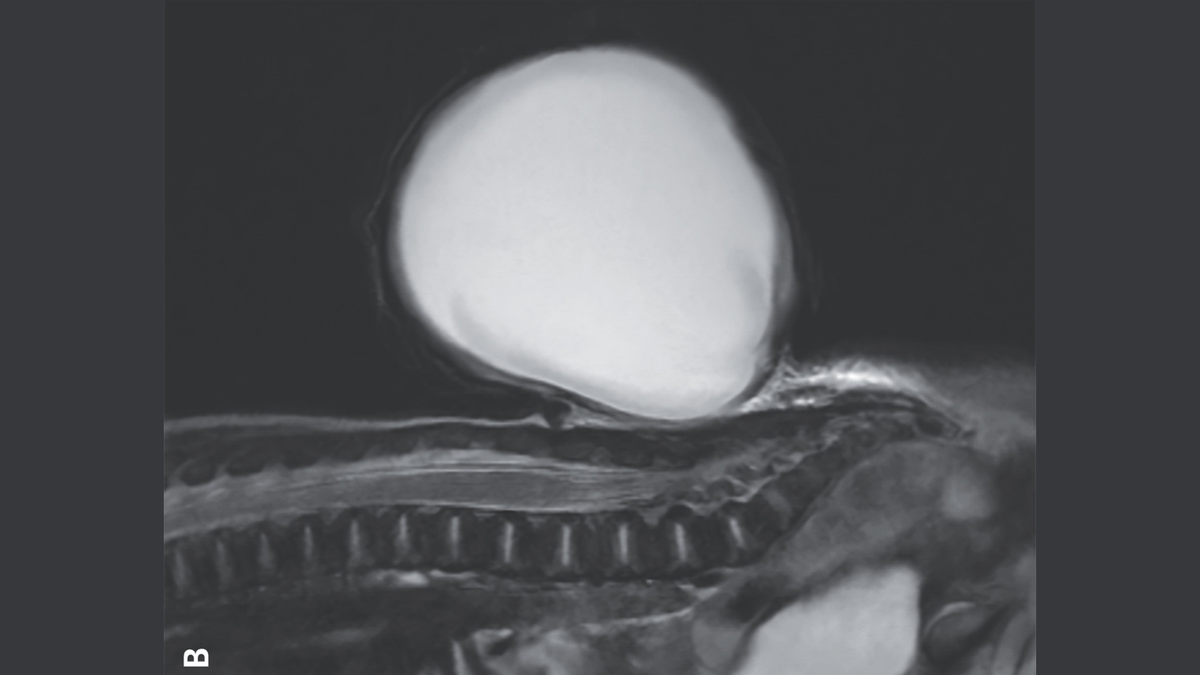
A common birth defect caused a newborn baby to develop a giant, red, balloon-like sac that protruded from the lower back, a striking new image shows.

The image was taken by doctors at Massachusetts General Hospital in Boston. The sac was around 3 inches (7.7 centimeters) long, 2.8 inches (7.1 cm) wide and 2.1 inches (5.3 cm) deep. It was caused by a neural tube defect — which, after heart defects, is the second most common type of disability that is present from birth, affecting between 5 and 8 babies per 10,000 in the U.S.

The neural tube is a hollow structure that forms during the third and fourth weeks post-conception and it later becomes the brain and spinal cord. Sometimes this process is disrupted, leaving babies with a gap in their spine known as spina bifida. Usually, this gap is covered by skin and doesn’t cause any symptoms, and many people are unaware they have the condition.

Occasionally, though, tissue and fluid that covers and protects the spinal cord is pushed through the gap, creating a sac-like, protruding structure. This is what happened to the boy in the image, who had a specific version of spina bifida called meningocele.

Related: Mother rejoices after her child’s successful spina bifida surgery in the womb

Scientists don’t know what causes spina bifida; however a combination of genetic, nutritional and environmental risk factors make it more likely. For instance, if the mother does not have enough folate or vitamin B9 during early pregnancy, takes certain medications such as the anti-epileptic drug valproic acid, or has diabetes that is not well managed, there is a greater risk of them having a baby with spina bifida.

However, none of these factors played a role in the baby’s condition in this case, according to a report of his case published Dec. 28, 2024 in the New England Journal of Medicine.

Get the world’s most fascinating discoveries delivered straight to your inbox.

Image 1 of 2

A blurred image with a medical disclaimer in black text which reads
(Image credit: Live Science)

A close-up picture of the "red balloon"-like sac structure that was protruding from the newborn's spine.
The sac-like protrusion (pictured above) was caused by a condition known as meningocele.(Image credit: The New England Journal of Medicine ©2024)

Doctors first noticed the spinal defect during an ultrasound exam around 20 weeks, or halfway through, the pregnancy. Patients with meningoceles often have minor problems such as issues with their bladder and bowels. However, the condition can usually be treated with a simple surgical repair, either before or after birth.

Serious complications are more likely to happen if a baby has another type of spinal bifida known as myelomeningocele, in which neural tissue is also found in the sac. For example, these children may be at risk of developing paralysis, frequent urinary tract infections (UTIs) and a type of brain infection known as meningitis.

In the boy’s case, his parents opted for him to have surgery to remove the sac and reconstruct his spinal cord after birth. Four days after the surgery, he was discharged home, and at his six-month checkup, doctors said he was developing without any adverse effects.

Source link

Share. Facebook Twitter Pinterest LinkedIn Tumblr Email
Previous ArticleMilo Ventimiglia & Pregnant Wife Jarah Mariano Lose Home in Fire
Next Article OhSnap MCON at CES 2025: An elite phone gaming accessory
Editor
  • Website

Related Posts

Lifestyle

Lemur used in ‘lemur yoga’ session dies of human herpesvirus, study finds

August 15, 2026
Lifestyle

‘A fine line between reducing stigma and trivialising conditions’: Social media, self-diagnosis and the glamorization of ADHD

August 15, 2026
Lifestyle

New 2D memory device stores data on just a single electron

August 15, 2026
Add A Comment

Comments are closed.

Categories
  • Entertainment
  • Lifestyle
  • News
  • Sports
  • Tech
  • Travel
Recent Posts
  • Lemur used in ‘lemur yoga’ session dies of human herpesvirus, study finds
  • ‘A fine line between reducing stigma and trivialising conditions’: Social media, self-diagnosis and the glamorization of ADHD
  • New 2D memory device stores data on just a single electron
  • Before we ban kids from social media completely, here’s what we should try first | Jonathan Bellack and Mariana Olaizola Rosenblat
  • Scientists uncover a better way to beat ‘the bends’ — using deep-diving pigs
calendar
September 2026
M T W T F S S
 123456
78910111213
14151617181920
21222324252627
282930  
« Aug    
Recent Posts
  • Lemur used in ‘lemur yoga’ session dies of human herpesvirus, study finds
  • ‘A fine line between reducing stigma and trivialising conditions’: Social media, self-diagnosis and the glamorization of ADHD
  • New 2D memory device stores data on just a single electron
About

Welcome to Baynard Media, your trusted source for a diverse range of news and insights. We are committed to delivering timely, reliable, and thought-provoking content that keeps you informed
and inspired

Categories
  • Entertainment
  • Lifestyle
  • News
  • Sports
  • Tech
  • Travel
Facebook X (Twitter) Pinterest WhatsApp
  • Contact Us
  • About Us
  • Privacy Policy
  • Disclaimer
  • UNSUBSCRIBE
© 2026 copyrights reserved

Type above and press Enter to search. Press Esc to cancel.