Close Menu
  • Home
  • UNSUBSCRIBE
  • News
  • Lifestyle
  • Tech
  • Entertainment
  • Sports
  • Travel
Facebook X (Twitter) WhatsApp
Trending
  • ‘Exceptional’ drilled tooth reveals Neanderthals practiced dentistry in Siberia 60,000 years ago
  • The CDC has taken a back seat in the global hantavirus response — and that could be a problem in future outbreaks, epidemiologist says
  • SpaceX prepares to launch Starship V3, the tallest and most powerful rocket ever built
  • Pollution may fuel depression, anxiety and other mental health problems, emerging research suggests
  • Hantavirus updates: American doctor on cruise speaks out from quarantine; unrelated potential case appears in Illinois
  • Diagnostic dilemma: An infant’s brown eyes turned indigo after COVID antiviral treatment
  • AI self-replication hacks ‘no longer purely theoretical,’ study finds —‬ ‪but experts say it’s too soon to panic
  • Shimmering silver ‘sunglint’ obscures Hawaii as hurricane approaches — Earth from space
Facebook X (Twitter) WhatsApp
Baynard Media
  • Home
  • UNSUBSCRIBE
  • News
  • Lifestyle
  • Tech
  • Entertainment
  • Sports
  • Travel
Baynard Media
Home»Lifestyle»Mechanical Dog: A ‘good boy’ from ancient Egypt that has a red tongue and ‘barks’
Lifestyle

Mechanical Dog: A ‘good boy’ from ancient Egypt that has a red tongue and ‘barks’

EditorBy EditorMarch 18, 2025No Comments3 Mins Read
Share Facebook Twitter Pinterest LinkedIn Tumblr Reddit Telegram Email
Share
Facebook Twitter LinkedIn Pinterest Email

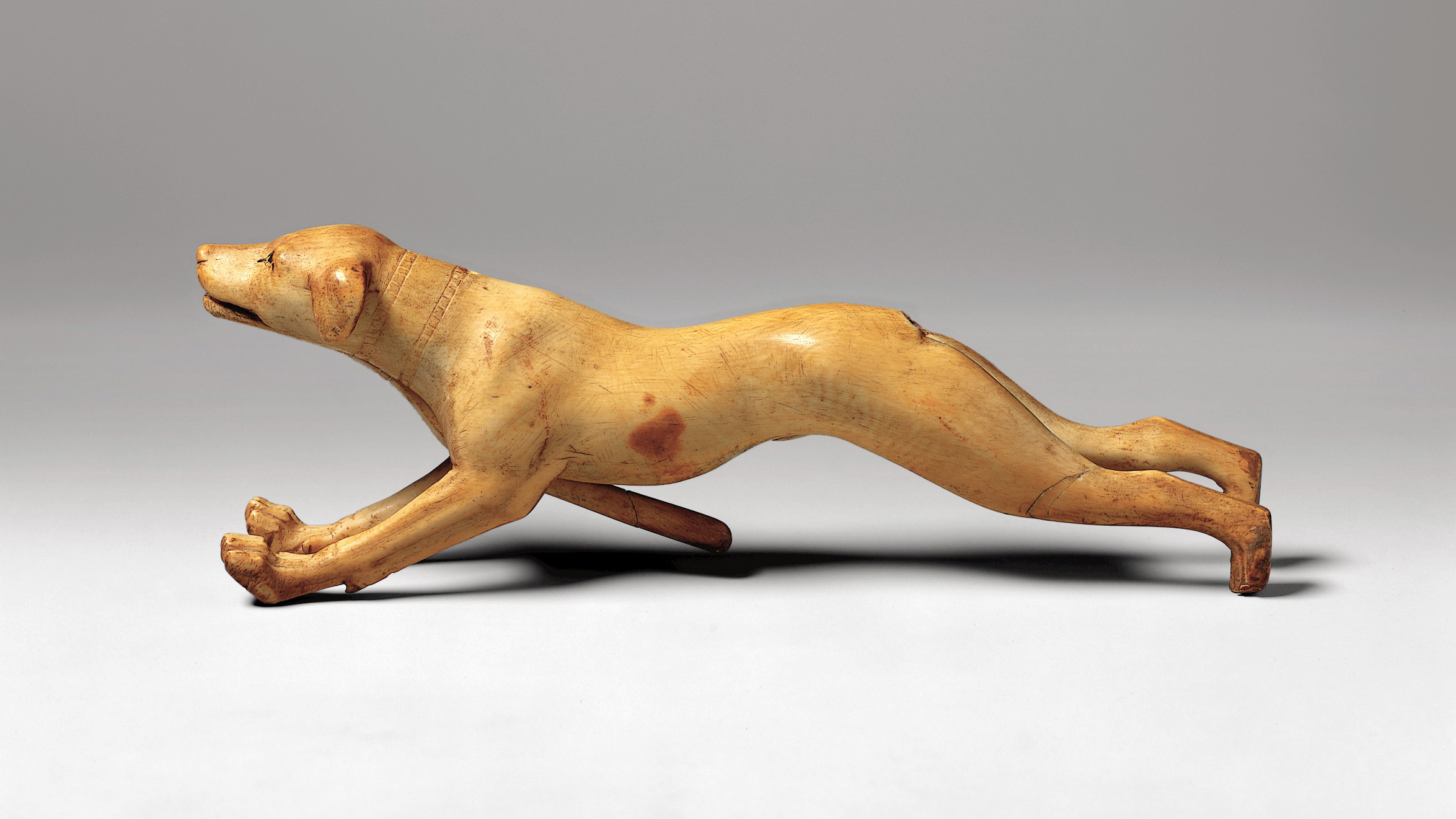
Name: Mechanical Dog

What it is: A moving dog sculpture carved from ivory

Where it is from: Egypt

When it was made: Around 1390 to 1352 B.C.

Related: Onfim’s doodle: A 13th-century kid’s self-portrait on horseback, slaying an enemy

What it tells us about the past:

Posed as if leaping through the air, this carved ivory dog opens its mouth as a lever is pushed up and down, revealing two lower teeth and a red tongue. The dog, which was discovered in an ancient Egyptian tomb, is a reminder that these domesticated canines have been beloved pets for at least 3,400 years.

Get the world’s most fascinating discoveries delivered straight to your inbox.

The small dog sculpture, now at The Metropolitan Museum of Art in New York City, is made from elephant ivory. It is 7.2 inches (18.2 centimeters) long from nose to toes and shows the very good boy in a flying gallop, legs extended in the air. According to The Met, the lever that works the dog’s lower jaw, making it appear to bark, was originally held on by a piece of leather cord looped through small holes. At some point, the cord was replaced with a metal dowel secured in the dog’s shoulder.

The Met obtained the dog sculpture from the personal collection of Howard Carter, the Egyptologist who famously discovered King Tut’s tomb in the Valley of the Kings in 1922. It is unclear exactly where the dog was found, but The Met suggests it may have been placed in an elite tomb sometime during the reign of Amenhotep III, King Tut‘s grandfather, in the 14th century B.C. But its purpose is unclear; it may have been a toy or a magical ceremonial object.

Ancient Egyptians were quite fond of their dogs. While some were used for hunting, shepherding or as watchdogs, many were pets. This sculpture definitely represents a domesticated dog because the incised lines around its neck form a collar, Met curator emerita Catharine Roehrig wrote in a publication of the artifact.

During Egypt’s New Kingdom (1550 to 1070 B.C.), dog collars became increasingly ornate, often inscribed with the dog’s name, such as those found in the Tomb of Maiherpri. This dog sculpture does not have a name attached to its collar, but The Met notes that some common Egyptian dog names translate to Blackie, Son of the Moon and Good-for-Nothing.

MORE ASTONISHING ARTIFACTS

The breed of this sculpted dog is also unclear. Ancient Egyptians tended to prefer energetic dog breeds, and the ones often represented in their art include the ancestors of the hunting dog basenji, the Ibizan hound and the pharaoh hound.

Dogs were also linked with the god Anubis and with the afterlife in Egyptian mythology; they were sometimes seen as a kind of intermediary between the worlds of the living and the dead. Killing a dog — particularly a collared one — was a severe crime, and a family would have mourned the death of their dog as they would a human relative: by shaving their eyebrows. However, Egyptians believed that they would meet their dogs again in the afterlife, which is likely the reason they mummified them and buried them in special pet cemeteries.

Source link

Share. Facebook Twitter Pinterest LinkedIn Tumblr Email
Previous ArticleIsrael says it is striking Hamas targets in Gaza and will intensify military force
Next Article Parents of missing Pitt student Sudiksha Konanki ask Dominican Republic police to declare her dead
Editor
  • Website

Related Posts

Lifestyle

‘Exceptional’ drilled tooth reveals Neanderthals practiced dentistry in Siberia 60,000 years ago

May 14, 2026
Lifestyle

The CDC has taken a back seat in the global hantavirus response — and that could be a problem in future outbreaks, epidemiologist says

May 13, 2026
Lifestyle

SpaceX prepares to launch Starship V3, the tallest and most powerful rocket ever built

May 13, 2026
Add A Comment

Comments are closed.

Categories
  • Entertainment
  • Lifestyle
  • News
  • Sports
  • Tech
  • Travel
Recent Posts
  • ‘Exceptional’ drilled tooth reveals Neanderthals practiced dentistry in Siberia 60,000 years ago
  • The CDC has taken a back seat in the global hantavirus response — and that could be a problem in future outbreaks, epidemiologist says
  • SpaceX prepares to launch Starship V3, the tallest and most powerful rocket ever built
  • Pollution may fuel depression, anxiety and other mental health problems, emerging research suggests
  • Hantavirus updates: American doctor on cruise speaks out from quarantine; unrelated potential case appears in Illinois
calendar
May 2026
M T W T F S S
 123
45678910
11121314151617
18192021222324
25262728293031
« Apr    
Recent Posts
  • ‘Exceptional’ drilled tooth reveals Neanderthals practiced dentistry in Siberia 60,000 years ago
  • The CDC has taken a back seat in the global hantavirus response — and that could be a problem in future outbreaks, epidemiologist says
  • SpaceX prepares to launch Starship V3, the tallest and most powerful rocket ever built
About

Welcome to Baynard Media, your trusted source for a diverse range of news and insights. We are committed to delivering timely, reliable, and thought-provoking content that keeps you informed
and inspired

Categories
  • Entertainment
  • Lifestyle
  • News
  • Sports
  • Tech
  • Travel
Facebook X (Twitter) Pinterest WhatsApp
  • Contact Us
  • About Us
  • Privacy Policy
  • Disclaimer
  • UNSUBSCRIBE
© 2026 copyrights reserved

Type above and press Enter to search. Press Esc to cancel.