Close Menu
  • Home
  • UNSUBSCRIBE
  • News
  • Lifestyle
  • Tech
  • Entertainment
  • Sports
  • Travel
Facebook X (Twitter) WhatsApp
Trending
  • Science news this week: PCOS has a new name, Neanderthals were the world’s oldest dentists, and the first nuclear bomb explosion spawned an ‘alien’ crystal
  • Newly discovered, blue-whale-size asteroid will fly super close to Earth Monday — and you can watch it live
  • Don Juan Pond: Antarctica’s salty, syrupy lake that never freezes, even when it’s minus 58 F
  • Withings ScanWatch 2 review: Style meets next-level health monitoring
  • AI Chatbots are turbo-charging violence against women and girls: We urgently need to regulate them | Yvonne McDermott Rees
  • ‘The biggest El Niño event since the 1870s’: ‘Super’ El Niño is now the most likely scenario by the end of this year ‪—‬ and the humanitarian cost could be huge
  • Antarctica’s sudden sea ice loss is one of the most extreme and confusing events in the modern climate record. Scientists now know why it’s happening.
  • ‘I heard gasps’: Artemis II astronauts reveal inside story of their mind-bending solar eclipse
Facebook X (Twitter) WhatsApp
Baynard Media
  • Home
  • UNSUBSCRIBE
  • News
  • Lifestyle
  • Tech
  • Entertainment
  • Sports
  • Travel
Baynard Media
Home»Lifestyle»EVs could charge 500% faster in freezing weather after new discovery
Lifestyle

EVs could charge 500% faster in freezing weather after new discovery

EditorBy EditorApril 24, 2025No Comments3 Mins Read
Share Facebook Twitter Pinterest LinkedIn Tumblr Reddit Telegram Email
Share
Facebook Twitter LinkedIn Pinterest Email

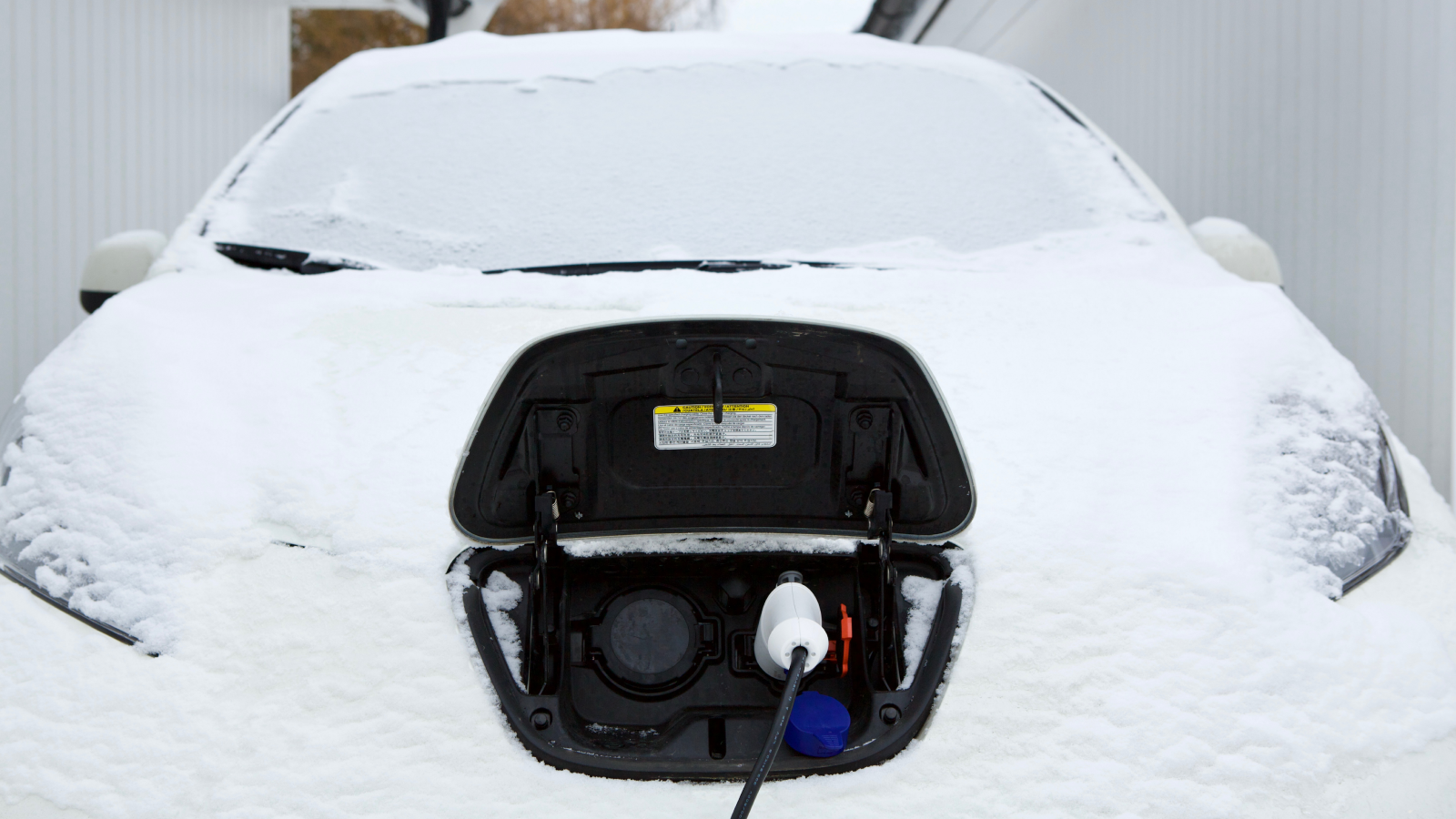
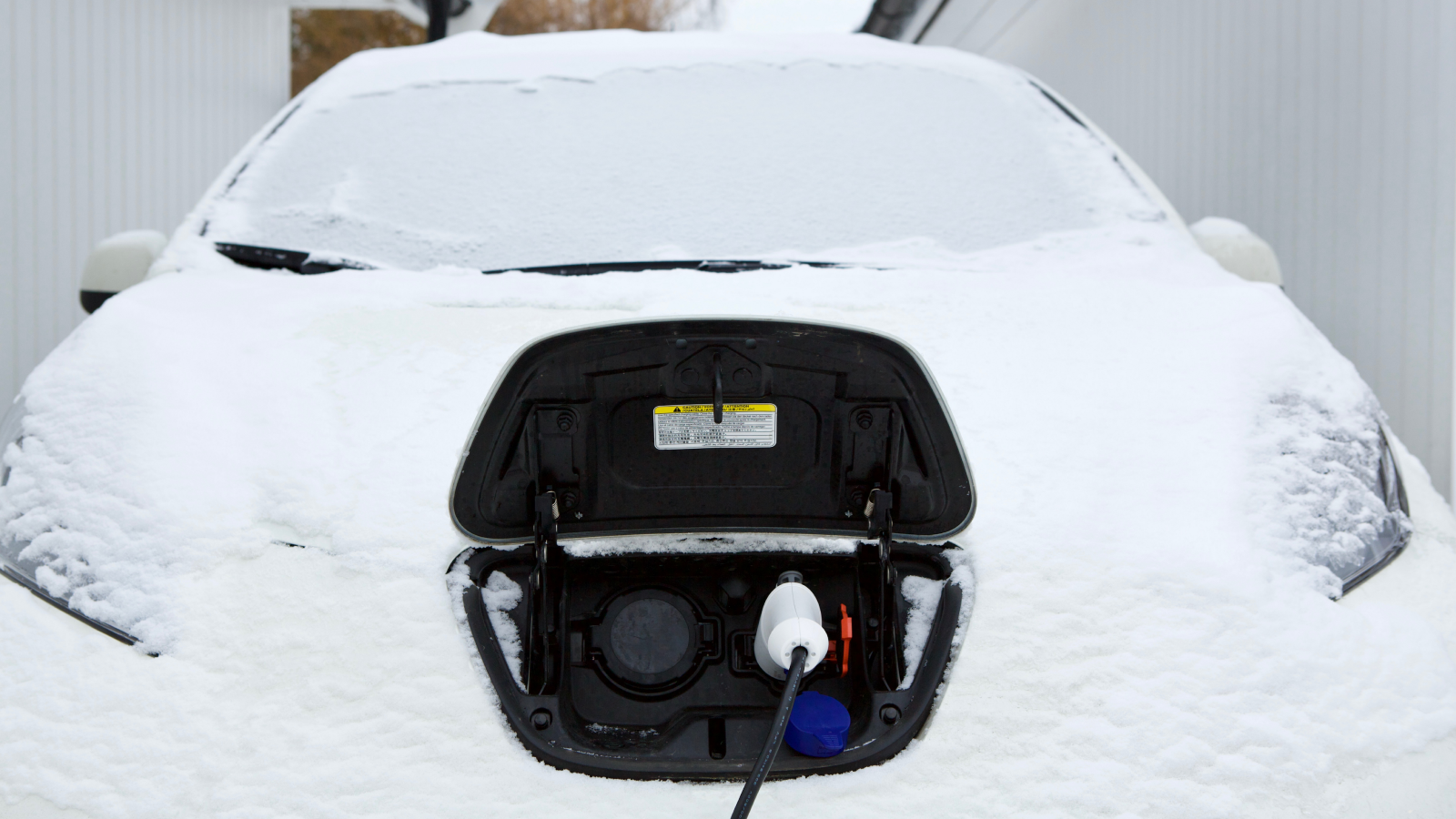
Electric vehicles could charge 500% faster in cold weather thanks to a new manufacturing process, research suggests.

In a new study published March 17 in the journal Joule, scientists explained how they could markedly improve Lithium-ion battery charging rates in temperatures as low as 14 degrees Fahrenheit (minus 10 degrees Celsius) by tweaking the structural design of the battery and altering the chemical reactions that occur during charging.

The researchers were able to “simultaneously achieve extreme fast charging at low temperatures, without sacrificing the energy density of the lithium-ion battery,” Neil Dasgupta, study author and associate professor of mechanical engineering and materials science at the University of -Michigan, said in a statement.

Cold temperatures limit charging rates and reduce overall energy efficiency due to the chemical processes at play during charging.

Batteries work by moving lithium ions between two electrode plates within a liquid electrolyte solution. This process is efficient in warmer temperatures, but in colder conditions, the electrolyte fluid thickens, reducing electrical currents and thereby extending charging times.

Related: Future electric cars could go more than 600 miles on a single charge thanks to battery-boosting gel

It’s an issue manufacturers have addressed in several ways, including increasing the thickness of the electrodes used in battery cells or by modifying the structure of the battery itself. But these steps have further exacerbated the problem. A 2023 study on lithium-ion battery efficiency showed alterations to the composition of electrolytes impeded fast-charging capabilities, for example.

Get the world’s most fascinating discoveries delivered straight to your inbox.

Researchers create new ‘pathways’ for ions

In a previous study published in 2020, the researchers created what they described as new “pathways” in the anode — the electrode that receives lithium ions during charging and sends electrons to the cathode at the opposite end.

To create these pathways, the researchers used lasers to poke holes in the anode’s graphite layers, which enabled lithium ions to move faster, in turn meaning they could embed themselves more quickly within the electrode.

This earlier project sped up charging times, but in cold weather conditions, it created a buildup of lithium on the anode. This “plating,” prevented the electrode from reacting with the electrolyte fluid.

“That plating prevents the entire electrode from being charged, once again reducing the battery’s energy capacity,” study co-author Manoj Jangid, a senior research fellow at the University of Michigan, told Live Science.

To prevent this layer from forming, in the new study they coated the battery with a 20 nanometer-thick material made from lithium borate-carbonate. Previous research in solid-state batteries showed that this material improved the efficiency of ion delivery.

In this instance, the coating, combined with the pathways technique delivered a 500% increase in charging efficiency in sub-zero temperatures, the researchers said. Batteries modified using these techniques also retained 97% of their capacity, even when fast-charged up to 100 times in subfreezing temperatures.

While the study was limited in scope, Dasgupta said the changes are easy to implement at the manufacturing level and could have wide-ranging implications.

“We envision this approach as something that EV battery manufacturers could adopt without major changes to existing factories,” Dasgupta said.

Source link

Share. Facebook Twitter Pinterest LinkedIn Tumblr Email
Previous ArticleGamma-ray bursts reveal largest structure in the universe is bigger and closer to Earth than we knew: ‘The jury is still out on what it all means.’
Next Article Stone Age quiz: What do you know about the Paleolithic, Mesolithic and Neolithic?
Editor
  • Website

Related Posts

Lifestyle

Science news this week: PCOS has a new name, Neanderthals were the world’s oldest dentists, and the first nuclear bomb explosion spawned an ‘alien’ crystal

May 16, 2026
Lifestyle

Newly discovered, blue-whale-size asteroid will fly super close to Earth Monday — and you can watch it live

May 16, 2026
Lifestyle

Don Juan Pond: Antarctica’s salty, syrupy lake that never freezes, even when it’s minus 58 F

May 16, 2026
Add A Comment

Comments are closed.

Categories
  • Entertainment
  • Lifestyle
  • News
  • Sports
  • Tech
  • Travel
Recent Posts
  • Science news this week: PCOS has a new name, Neanderthals were the world’s oldest dentists, and the first nuclear bomb explosion spawned an ‘alien’ crystal
  • Newly discovered, blue-whale-size asteroid will fly super close to Earth Monday — and you can watch it live
  • Don Juan Pond: Antarctica’s salty, syrupy lake that never freezes, even when it’s minus 58 F
  • Withings ScanWatch 2 review: Style meets next-level health monitoring
  • AI Chatbots are turbo-charging violence against women and girls: We urgently need to regulate them | Yvonne McDermott Rees
calendar
May 2026
M T W T F S S
 123
45678910
11121314151617
18192021222324
25262728293031
« Apr    
Recent Posts
  • Science news this week: PCOS has a new name, Neanderthals were the world’s oldest dentists, and the first nuclear bomb explosion spawned an ‘alien’ crystal
  • Newly discovered, blue-whale-size asteroid will fly super close to Earth Monday — and you can watch it live
  • Don Juan Pond: Antarctica’s salty, syrupy lake that never freezes, even when it’s minus 58 F
About

Welcome to Baynard Media, your trusted source for a diverse range of news and insights. We are committed to delivering timely, reliable, and thought-provoking content that keeps you informed
and inspired

Categories
  • Entertainment
  • Lifestyle
  • News
  • Sports
  • Tech
  • Travel
Facebook X (Twitter) Pinterest WhatsApp
  • Contact Us
  • About Us
  • Privacy Policy
  • Disclaimer
  • UNSUBSCRIBE
© 2026 copyrights reserved

Type above and press Enter to search. Press Esc to cancel.