Close Menu
  • Home
  • UNSUBSCRIBE
  • News
  • Lifestyle
  • Tech
  • Entertainment
  • Sports
  • Travel
Facebook X (Twitter) WhatsApp
Trending
  • Saving old trees may protect people’s health more than planting new ones, study of Chicago neighborhoods finds
  • Memory may not work how we thought, study of mice in artificial hibernation finds
  • Romans unceremoniously dumped plague victims down a well, mysterious mass grave in Croatia suggest
  • New AI lets robots complete tasks twice as fast
  • Mammal ancestors may have given live birth 90 million years earlier than we thought, rewriting evolutionary timelines
  • How to see and photograph the partial lunar eclipse on August 27-28
  • Watch now! The Aug. 12 total solar eclipse has begun (live stream)
  • ‘No longer will anything seem impossible or marvellous’: How an ‘immoral, foul-mouthed and violent man’ wrote the first eyewitness account of a total solar eclipse​​
Facebook X (Twitter) WhatsApp
Baynard Media
  • Home
  • UNSUBSCRIBE
  • News
  • Lifestyle
  • Tech
  • Entertainment
  • Sports
  • Travel
Baynard Media
Home»Lifestyle»‘Big-butt starfish,’ ‘little sweet potato’ and dozens of never-before-seen species recorded during deep-sea expedition off Argentina
Lifestyle

‘Big-butt starfish,’ ‘little sweet potato’ and dozens of never-before-seen species recorded during deep-sea expedition off Argentina

EditorBy EditorAugust 5, 2025No Comments3 Mins Read
Share Facebook Twitter Pinterest LinkedIn Tumblr Reddit Telegram Email
Share
Facebook Twitter LinkedIn Pinterest Email

A deep-sea expedition off the coast of Argentina has captured stunning footage of more than 40 never-before-seen species.

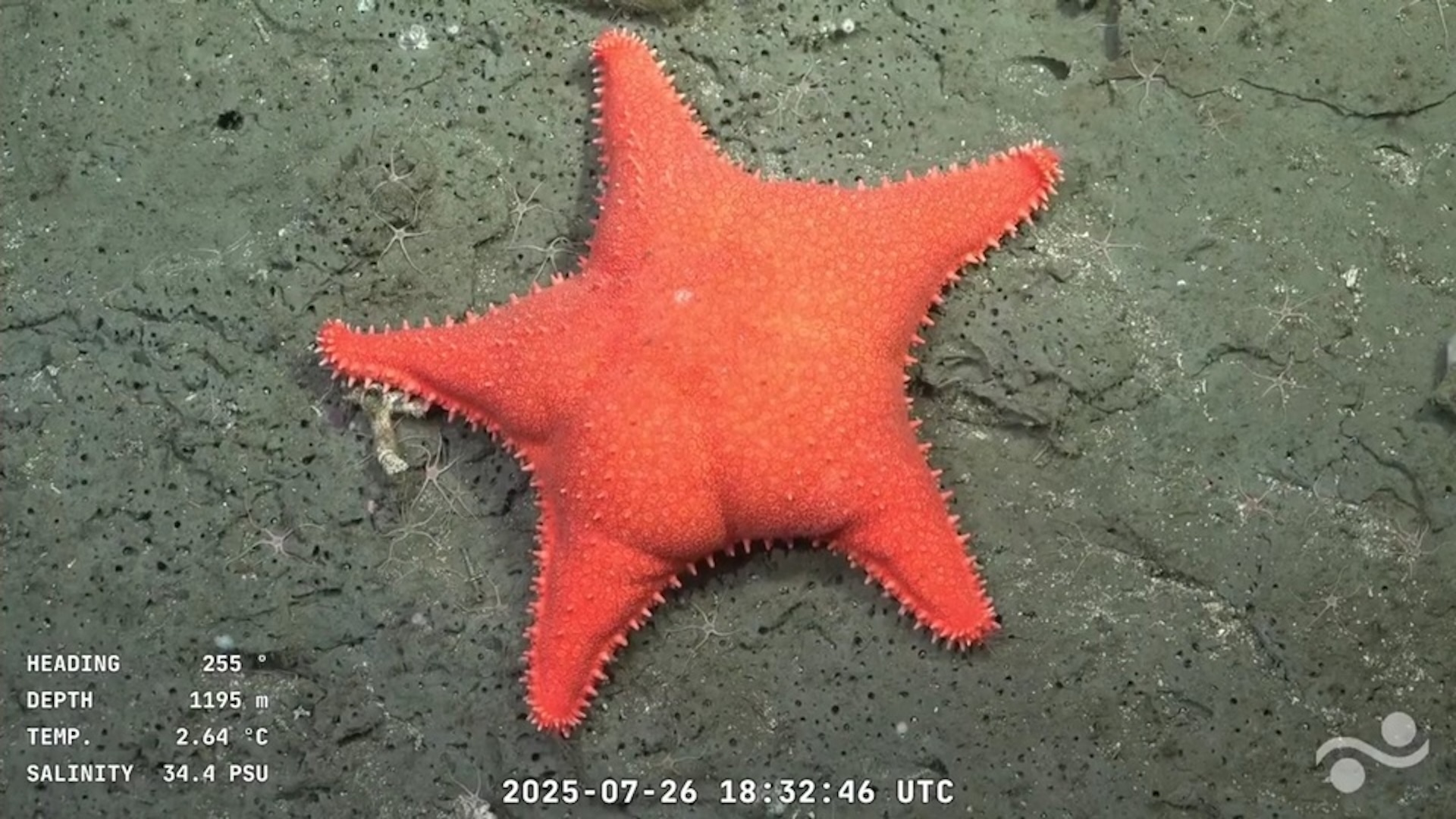
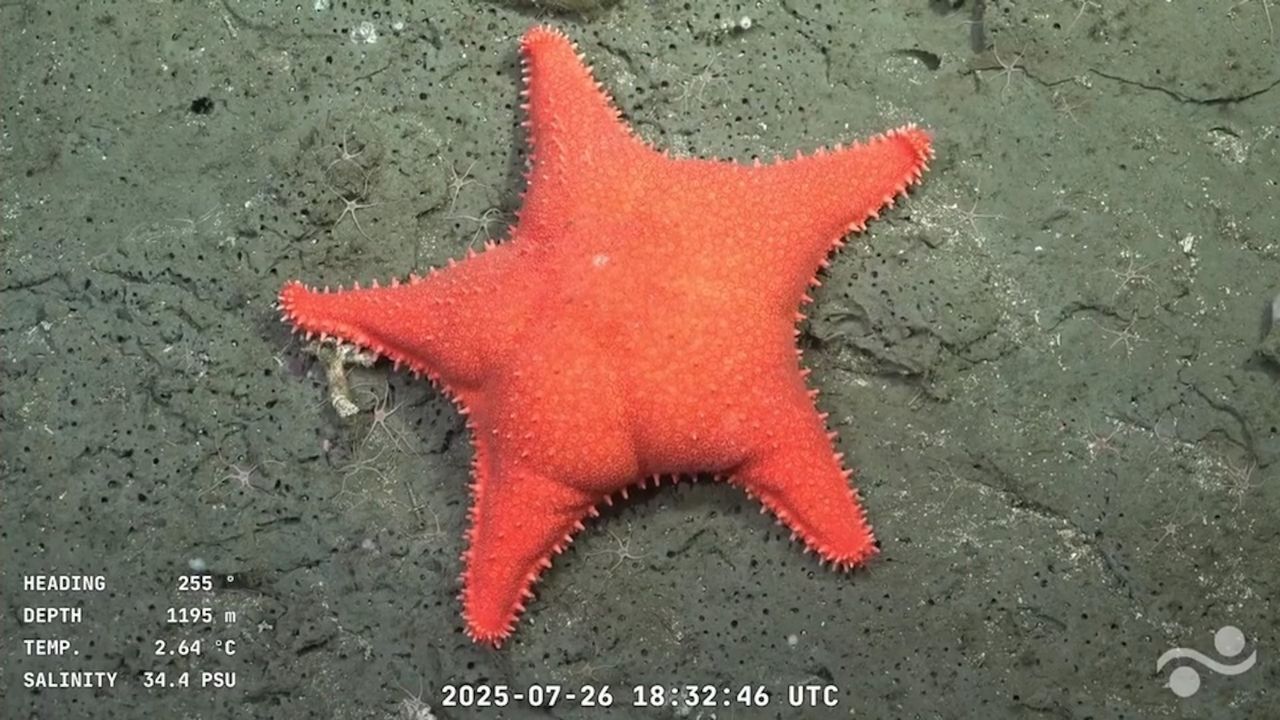
One unexpected star of the show is a plump sea creature that has been dubbed the “big-butt starfish” for its uncanny resemblance to Patrick Star from “SpongeBob SquarePants.”

During the remotely operated vehicle (ROV) SuBastian‘s dives in Argentina’s Mar del Plata submarine canyon, which have been running since July 23, scientists aboard its accompanying research vessel provide a high-definition livestream, with real-time commentary on rarely seen deep-sea life. The dives have revealed carnivorous sponges, translucent fish, vividly colored rays and corals that have never been documented in the South Atlantic, a biodiversity hotspot that remains largely unexplored.


You may like

The sea star, which has become a viral hit on social media, belongs to the genus Hippasteria, which is known for its thick central disc and short, stubby arms. During the livestream, viewers interacting via chat affectionately nicknamed it “estrella culona” — Spanish for “big-butt star.”

Argentine scientists involved with the expedition have offered a few hypotheses for the creature’s attention-grabbing anatomy. The starfish may simply be well fed; they are voracious carnivores. Or, its rounded appearance could be the result of gravity, as it was filmed on a vertical surface with its central disc hanging downward, creating the illusion of glutes.

Starfish don’t have rear ends like humans or other bilaterally symmetrical animals do. Instead, they exhibit radial symmetry, with a mouth located on the underside of the central disc. That lower, or “oral,” surface lies pressed against the seafloor, where feeding occurs. The anus is located in the center of the upper, or “aboral,” surface, which is what a diver would see first when approaching the animal.

Related: ‘A disembodied head walking about the sea floor on its lips’: Scientists finally work out what a starfish is

Get the world’s most fascinating discoveries delivered straight to your inbox.


“Although starfish do have a complete digestive system and an anus, it’s not in the location people are pointing to on social media,” Mariela Romanelli, a biologist and curator of the invertebrate collection at Argentina’s National Museum of Natural Sciences, told local news site Infobae in Spanish. “Still, the resemblance to Patrick Star’s butt is pretty hilarious.”

The big-butt starfish isn’t the only creature from the expedition, led by scientists from the National Scientific and Technical Research Council and the Schmidt Ocean Institute, that has charmed the public. Another deep-sea creature captured on camera was a violet sea cucumber, belonging to the genus Benthodytes, whose plump body and purple hue earned it its name “Batatita”” (“Little Sweet Potato”). The specimen was collected by the ROV and is alive and well at the surface, expedition scientists said.

So far, the expedition has documented at least 25 species of fish, both bony and cartilaginous; carnivorous sponges that have never been recorded in the South Atlantic; and crustaceans and other invertebrates that are specially adapted to the pitch-black depths.

The livestream, broadcast for the first time from nearly 13,100 feet (4,000 meters) below sea level, continues through Aug. 10 and can be viewed on the Schmidt Ocean Institute’s official YouTube channel.

Source link

Share. Facebook Twitter Pinterest LinkedIn Tumblr Email
Previous ArticleCotton calls for CAIR nonprofit status revoked over alleged terrorism ties
Next Article Ghislaine Maxwell’s transfer to cushy prison camp is a ‘travesty of justice,’ ex-BOP official says
Editor
  • Website

Related Posts

Lifestyle

Saving old trees may protect people’s health more than planting new ones, study of Chicago neighborhoods finds

August 14, 2026
Lifestyle

Memory may not work how we thought, study of mice in artificial hibernation finds

August 13, 2026
Lifestyle

Romans unceremoniously dumped plague victims down a well, mysterious mass grave in Croatia suggest

August 13, 2026
Add A Comment

Comments are closed.

Categories
  • Entertainment
  • Lifestyle
  • News
  • Sports
  • Tech
  • Travel
Recent Posts
  • Saving old trees may protect people’s health more than planting new ones, study of Chicago neighborhoods finds
  • Memory may not work how we thought, study of mice in artificial hibernation finds
  • Romans unceremoniously dumped plague victims down a well, mysterious mass grave in Croatia suggest
  • New AI lets robots complete tasks twice as fast
  • Mammal ancestors may have given live birth 90 million years earlier than we thought, rewriting evolutionary timelines
calendar
August 2026
M T W T F S S
 12
3456789
10111213141516
17181920212223
24252627282930
31  
« Jul    
Recent Posts
  • Saving old trees may protect people’s health more than planting new ones, study of Chicago neighborhoods finds
  • Memory may not work how we thought, study of mice in artificial hibernation finds
  • Romans unceremoniously dumped plague victims down a well, mysterious mass grave in Croatia suggest
About

Welcome to Baynard Media, your trusted source for a diverse range of news and insights. We are committed to delivering timely, reliable, and thought-provoking content that keeps you informed
and inspired

Categories
  • Entertainment
  • Lifestyle
  • News
  • Sports
  • Tech
  • Travel
Facebook X (Twitter) Pinterest WhatsApp
  • Contact Us
  • About Us
  • Privacy Policy
  • Disclaimer
  • UNSUBSCRIBE
© 2026 copyrights reserved

Type above and press Enter to search. Press Esc to cancel.