Close Menu
  • Home
  • UNSUBSCRIBE
  • News
  • Lifestyle
  • Tech
  • Entertainment
  • Sports
  • Travel
Facebook X (Twitter) WhatsApp
Trending
  • Complex animals evolved up to 10 million years earlier than previously thought, fossil discovery shows
  • Scurvy-plagued whalers’ remains discovered at ‘Corpse Point’ on Arctic island
  • Some cancer patients don’t respond to immunotherapy. An existing asthma drug could change that.
  • The Appalachian Mountains hold enough lithium to make 500 billion cellphones, researchers discover
  • 800-year-old notebook with ‘rather unpleasant odor’ found in medieval German toilet
  • Celestron AstroMaster LT 70AZ review
  • Global warming is accelerating 5,000 times faster than rice can evolve
  • Scientists discover deadly, highly venomous box jellyfish near Singapore’s ‘Island of Death Behind’
Facebook X (Twitter) WhatsApp
Baynard Media
  • Home
  • UNSUBSCRIBE
  • News
  • Lifestyle
  • Tech
  • Entertainment
  • Sports
  • Travel
Baynard Media
Home»Lifestyle»Ancient Egyptian ‘granary with scribes’ diorama: A miniature workplace found buried in a tomb from the Middle Kingdom
Lifestyle

Ancient Egyptian ‘granary with scribes’ diorama: A miniature workplace found buried in a tomb from the Middle Kingdom

EditorBy EditorFebruary 17, 2025No Comments2 Mins Read
Share Facebook Twitter Pinterest LinkedIn Tumblr Reddit Telegram Email
Share
Facebook Twitter LinkedIn Pinterest Email

Name: Model of a Granary with Scribes

What it is: A wooden model with plaster, paint and linen decorations

Where it is from: Thebes, Egypt (modern-day Luxor)

When it was made: Circa 1980 B.C.

Related: Thule snow goggles: 1,000-year-old Arctic eyewear carved from walrus tusks

What it tells us about the past:

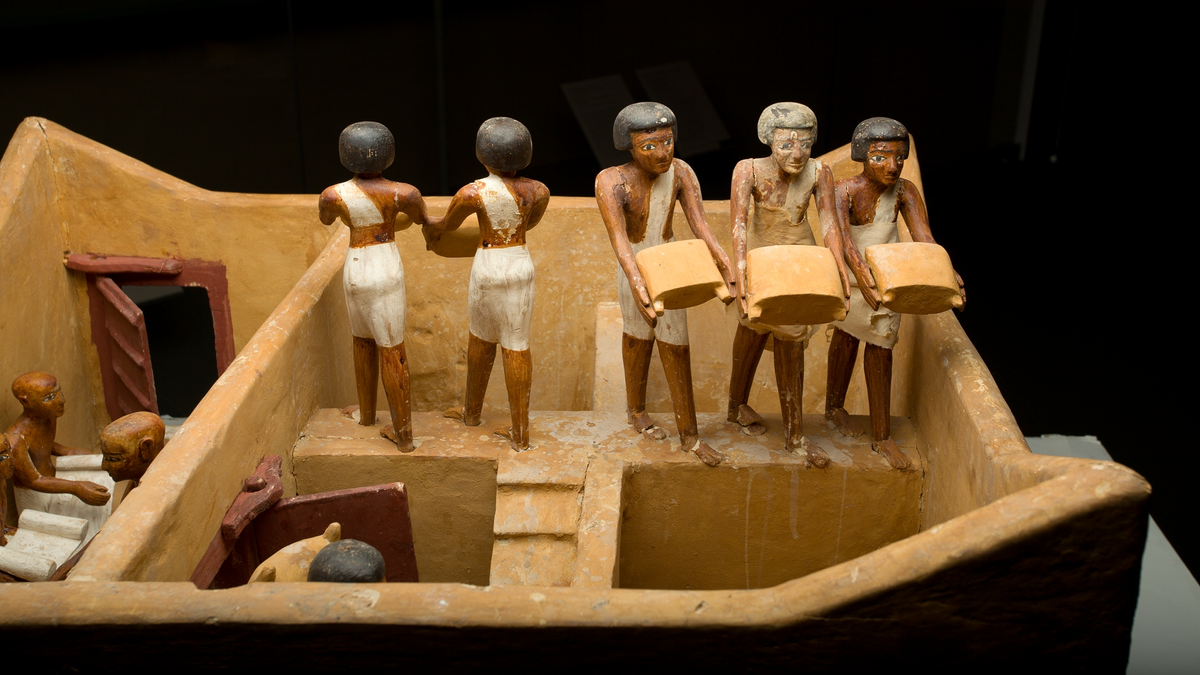
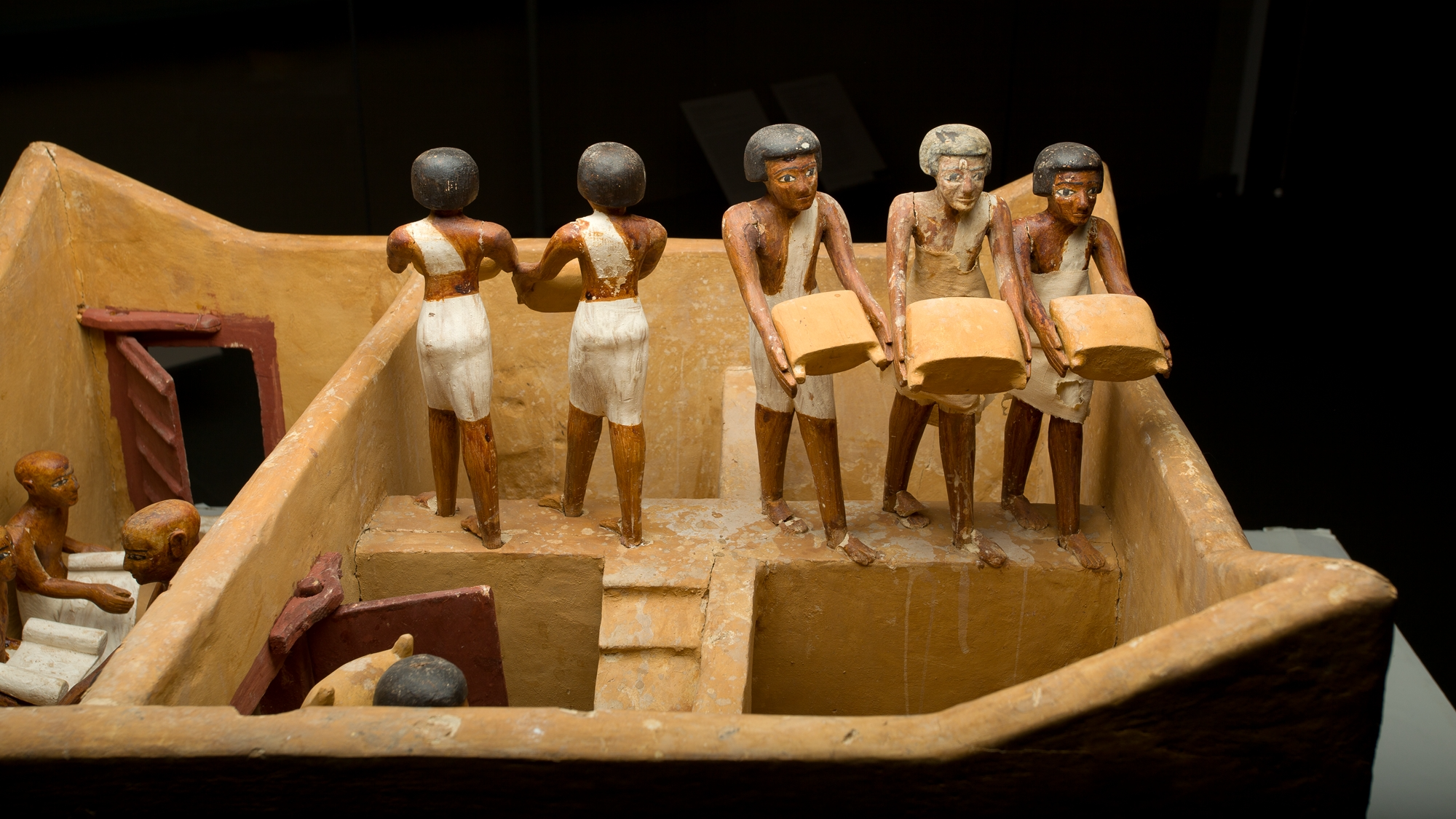
This decorated wooden diorama was discovered in a secret chamber of an ancient Egyptian tomb in Thebes (now Luxor) in 1920. The enormous tomb was that of Meketre, the chief steward of the pharaoh’s household, who died around 1980 B.C., in Egypt’s 12th dynasty during the Middle Kingdom, a period known for its distinctive art. The model represents a miniature granary, which suggests the importance of wheat and barley in ancient Egyptian society.

Get the world’s most fascinating discoveries delivered straight to your inbox.

The model, which is on view at the Metropolitan Museum of Art in New York City, was made from a wooden box measuring 29.5 by 22 by 14.4 inches (74.9 by 56 by 36.5 centimeters). The slightly peaked corners evoke an ancient style of architecture that helped protect against thieves and rodents, according to the Met. Inside, the box is divided into two sections: the place where the grain was stored and the place where measuring and accounting took place.

Models of 15 men, each roughly 7.9 inches (20 cm) tall, were also included in the diorama. Six are carrying sacks of grain, while the other nine are recording the supply on papyrus scrolls and wooden tablets.

MORE ASTONISHING ARTIFACTS

Egypt’s agricultural wealth came primarily from cereals, including wheat and barley, and the pharaohs controlled the main food-producing area: the Nile Valley. Keeping track of grain supplies was therefore crucial to ancient Egyptian society, according to the Met. In Meketre’s role as chief steward, he was likely in charge of all royal estates that supplied the palace with grain and other food.

The secret chamber of Meketre’s tomb revealed 24 models in total, including a garden of fig trees and a sporting boat. Half of these models are in the Met’s collection, while the other half are in the Egyptian Museum in Cairo.

It is unclear why some ancient Egyptians were buried with these models, but some scholars suspect the dioramas may have been created to help support the dead in the afterlife.

Source link

Share. Facebook Twitter Pinterest LinkedIn Tumblr Email
Previous ArticleBest Samsung Presidents’ Day deals: Save on The Frame TV, Galaxy Buds, and more
Next Article China accuses U.S. of ‘serious regression’ in its Taiwan position after change to State Dept. website
Editor
  • Website

Related Posts

Lifestyle

Complex animals evolved up to 10 million years earlier than previously thought, fossil discovery shows

May 21, 2026
Lifestyle

Scurvy-plagued whalers’ remains discovered at ‘Corpse Point’ on Arctic island

May 20, 2026
Lifestyle

Some cancer patients don’t respond to immunotherapy. An existing asthma drug could change that.

May 20, 2026
Add A Comment

Comments are closed.

Categories
  • Entertainment
  • Lifestyle
  • News
  • Sports
  • Tech
  • Travel
Recent Posts
  • Complex animals evolved up to 10 million years earlier than previously thought, fossil discovery shows
  • Scurvy-plagued whalers’ remains discovered at ‘Corpse Point’ on Arctic island
  • Some cancer patients don’t respond to immunotherapy. An existing asthma drug could change that.
  • The Appalachian Mountains hold enough lithium to make 500 billion cellphones, researchers discover
  • 800-year-old notebook with ‘rather unpleasant odor’ found in medieval German toilet
calendar
May 2026
M T W T F S S
 123
45678910
11121314151617
18192021222324
25262728293031
« Apr    
Recent Posts
  • Complex animals evolved up to 10 million years earlier than previously thought, fossil discovery shows
  • Scurvy-plagued whalers’ remains discovered at ‘Corpse Point’ on Arctic island
  • Some cancer patients don’t respond to immunotherapy. An existing asthma drug could change that.
About

Welcome to Baynard Media, your trusted source for a diverse range of news and insights. We are committed to delivering timely, reliable, and thought-provoking content that keeps you informed
and inspired

Categories
  • Entertainment
  • Lifestyle
  • News
  • Sports
  • Tech
  • Travel
Facebook X (Twitter) Pinterest WhatsApp
  • Contact Us
  • About Us
  • Privacy Policy
  • Disclaimer
  • UNSUBSCRIBE
© 2026 copyrights reserved

Type above and press Enter to search. Press Esc to cancel.