
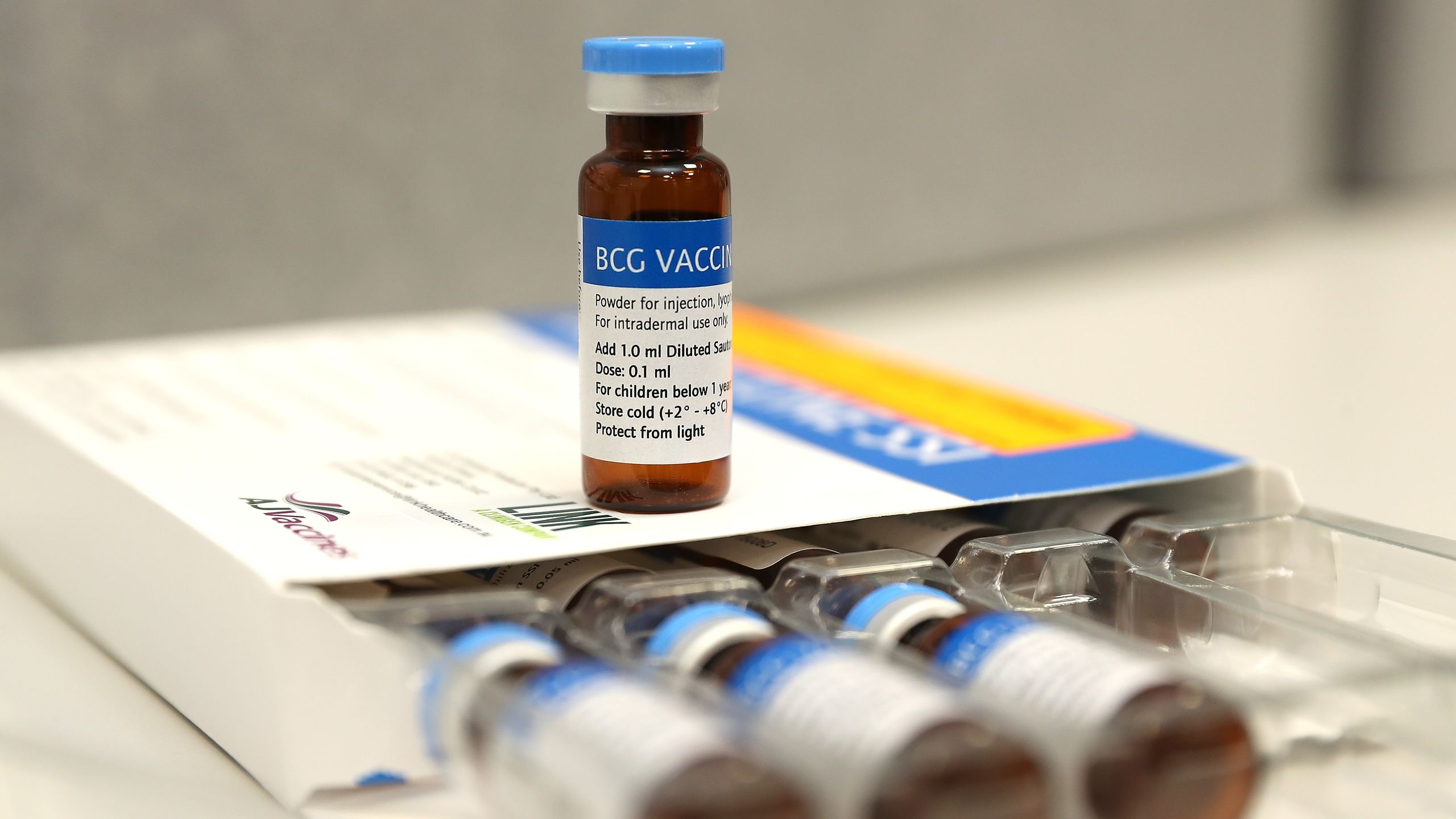
A century-old tuberculosis vaccine reduced insulin use in people with diabetes, new clinical trial results suggest. The catch: Research on this vaccine has divided the diabetes research community for years.
The Bacillus Calmette-Guérin (BCG) vaccine contains a weakened version of the bacterium Mycobacterium bovis, the germ that causes tuberculosis. Inside the body, the vaccine prompts a protective response against the bacterium. It’s also approved to treat bladder cancer, acting as an immunotherapy that rouses an attack against tumors.
The leader of the trials, Dr. Denise Faustman of Massachusetts General Hospital, has long been the subject of controversy. Early on, critics argued that she falsely raised hope that her work could lead to a cure for those with long-standing type 1 diabetes.

On June 5, Faustman and colleagues presented results from two new clinical trials at the annual meeting of the American Diabetes Association in New Orleans. The results suggest the BCG vaccine may offer benefits to people with type 1 diabetes — not by curing the disease, but by improving blood sugar control or slowing the disease’s progression, depending on the population. Here’s what to know.
About 2 million Americans have type 1 diabetes, an autoimmune disease that destroys insulin-making cells in the pancreas. Patients monitor their blood sugar and inject insulin multiple times a day, carefully calculating every dose. Too much insulin and blood sugar crashes, causing shakiness, seizures or blackouts; too little, and chronically high blood sugar damages the heart, kidneys, eyes and nerves.
Early in the disease process, patients still have some insulin-making cells, but people with longstanding disease have almost none left. Curing type 1 diabetes in those with longstanding disease is a tough problem that requires stopping the immune attack and regenerating enough insulin-making cells to eliminate the need for injected insulin.
The new trial results do not show that level of improvement. However, “the new data suggests that BCG could reduce insulin resistance and decrease the amount of insulin needed in patients with both late-onset and juvenile-onset type 1 diabetes,” said Dr. Gillian Goddard, a board-certified endocrinologist at NYU Langone Health who wasn’t involved in the studies.
Get the world’s most fascinating discoveries delivered straight to your inbox.
“These are phase 2 trials so further trials will be needed to fully understand the benefits of BCG in Type 1 diabetes,” she told Live Science in an email, “but it could be another tool in our arsenal for improving the lives of patients with type 1 diabetes.”
Others are more skeptical. Dr. John Buse, an endocrinologist at the University of North Carolina School of Medicine, cautioned that the improvements seen in these small trials may not hold up in a larger trial. The history of type 1 diabetes research “is littered with losers and no blockbuster successes,” he told Live Science in an email.

People with type 1 diabetes must carefully monitor their blood sugar and inject insulin to keep it in check. Could BCG help improve blood sugar control?
(Image credit: BSIP / Contributor via Getty Images)
Different trials, different benefits
In the trials, researchers tracked the effect of six doses of the BCG vaccine, administered over five years, on two separate groups of diabetes patients.
In one trial, 34 adults with childhood-onset type 1 received the BCG vaccine and 24 received a placebo. By five or more years later, the BCG group had measurable improvements in blood sugar levels and reduced insulin use, compared to the placebo.
This conclusion was based on hemoglobin A1C (HbA1c) tests, which measure a person’s average blood sugar levels over the past two to three months. The vaccinated group went from an average 7.84% at the start of the trial to 7.30% five years later. Historically, a drop of 0.5% has been considered clinically meaningful enough to consider a therapy for approval.
The vaccinated group also spent more time in a healthy blood sugar range, up to 183% more often than they had at the start of the trial. They didn’t experience more episodes of dangerously low blood sugar than the unvaccinated group.
It would take a big program to develop proof and that is probably the biggest barrier to finding out whether it is in fact useful.
Dr. John Buse, an endocrinologist at the University of North Carolina School of Medicine
The second trial focused on latent autoimmune diabetes (LADA). This is an adult-onset form of diabetes also known as “type 1.5.” It’s different from type 2 diabetes, which is not autoimmune.
Sixty-eight adults with LADA received the BCG vaccine and 27 received a placebo. The vaccine didn’t lower blood sugar readings, but it appeared to slow the disease: Vaccinated patients showed preserved — and in some cases, partially restored — insulin production over five years, as measured by levels of C-peptide, a protein released by the pancreas alongside insulin.
Vaccinated patients also needed less insulin over five years, while those given placebo needed 22% more at the five-year mark than they did at the start of the trial.
“The results exceeded my expectations,” Faustman told Live Science in an email.
How does it work?
In the LADA trial, the blood of the vaccinated group carried lower levels of two key antibodies that drive the attack on insulin-producing cells. This hints that the BCG vaccine may protect a person’s remaining insulin-making cells from the immune system, the researchers think.
Faustman and her colleagues think that a different mechanism — one they proposed in a 2018 study — is at play in childhood-onset diabetes, where participants had little or no remaining insulin production in their pancreas at the start of the trial.
Uncontrolled diabetes forces cells to use fat for energy, instead of being able to efficiently switch between fat and sugar. From their 2018 study, the researchers concluded that BCG vaccinations specifically help shift immune cells, called regulatory T cells, out of a fat-burning state toward a sugar-burning state. Those immune cells then pull sugar out of the blood but stop once blood sugar declines, thus preventing dangerous crashes, Faustman explained.
Buse said that he can’t personally judge whether these proposed mechanisms behind the vaccine’s effects make sense. But he does suspect that BCG may work better for some diabetes patients than others; there could be responders and non-responders.
The evidence presented “suggests that there may be a benefit,” he said, but the current data is probably not strong enough to say so definitively. “It would take a big program to develop proof and that is probably the biggest barrier to finding out whether it is in fact useful.”
The only Food and Drug Administration-approved drug that delays insulin dependence is teplizumab, which is given early in the disease, before patients need insulin. BCG, by contrast, may offer benefits even to patients who have already been on insulin for years, Goddard said.
Faustman’s team has now studied over 350 adults, following individual participants for up to eight years, and another trial involving 250 children is currently underway. “This is the next step to prove this safe, affordable and durable drug can work on all stages of T1D,” she said.
Regardless of whether BCG improves blood sugar control in type 1, the “path of the future” is using combination approaches that treat the disease on multiple fronts simultaneously, Buse said. Whether BCG would be part of that mix remains to be seen, he said.
“It seems reasonable to proceed further [with research],” he said, “but funders will have to read the tea leaves to decide where to invest their resources among many options.”
This article is for informational purposes only and is not meant to offer medical advice.
