Close Menu
  • Home
  • UNSUBSCRIBE
  • News
  • Lifestyle
  • Tech
  • Entertainment
  • Sports
  • Travel
Facebook X (Twitter) WhatsApp
Trending
  • NYPD investigation opened over ‘disturbing’ video of officers’ use of force during arrest
  • Artemis II quiz: Is your knowledge of NASA’s historic moon mission out of this world?
  • DHS Secretary says California governor candidate Steyer misunderstands ICE
  • Higher education needs to catch up to Minnesota’s modern learners
  • Moving to Portugal on D7 Visa: Rental Contract
  • Iran to execute first female protester from 2026 uprising
  • Irvine Officials Deadlock on How to Close Multimillion Dollar Budget Deficits
  • ‘Human evolution didn’t slow down; we were just missing the signal’: Large DNA study reveals natural selection led to more redheads and less male-pattern baldness
Facebook X (Twitter) WhatsApp
Baynard Media
  • Home
  • UNSUBSCRIBE
  • News
  • Lifestyle
  • Tech
  • Entertainment
  • Sports
  • Travel
Baynard Media
Home»Lifestyle»Orionids 2025: Meteor shower caused by Halley’s Comet peaks as two new comets cross the sky
Lifestyle

Orionids 2025: Meteor shower caused by Halley’s Comet peaks as two new comets cross the sky

EditorBy EditorOctober 17, 2025No Comments3 Mins Read
Share Facebook Twitter Pinterest LinkedIn Tumblr Reddit Telegram Email
Share
Facebook Twitter LinkedIn Pinterest Email

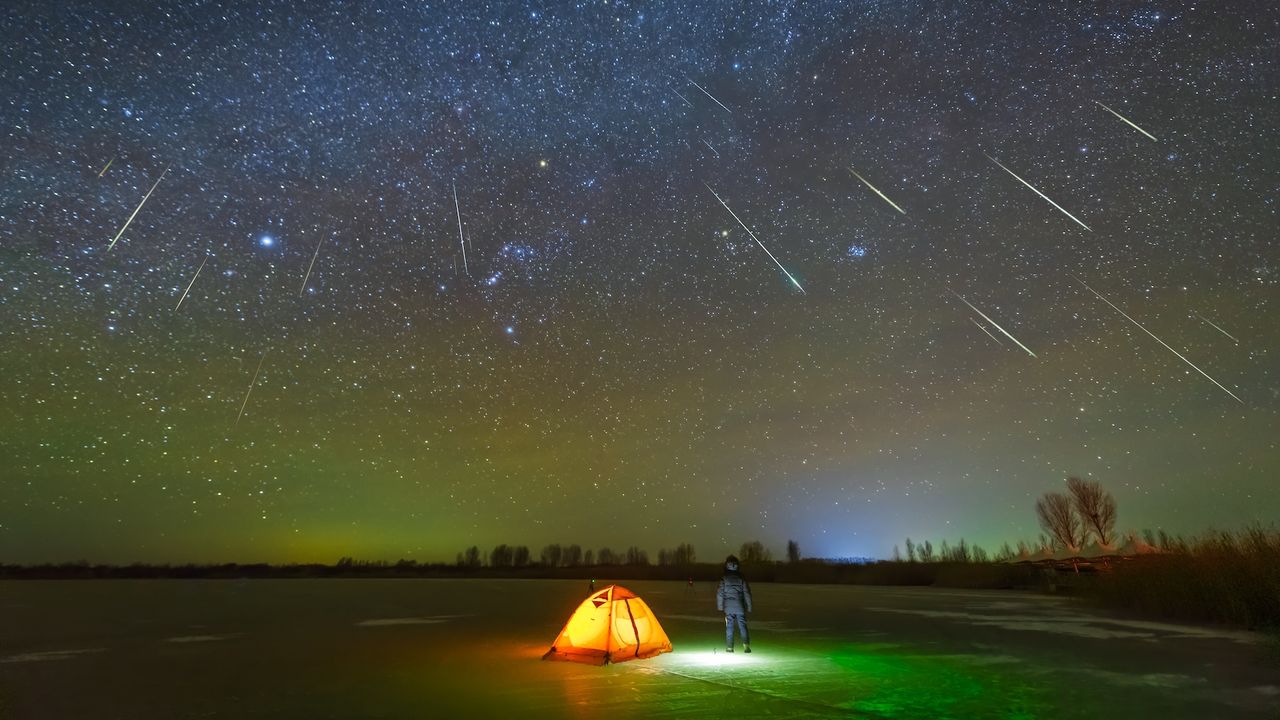
Skywatchers are set for something special after dark on Monday, Oct. 20, through Tuesday, Oct. 21, when an annual meteor shower produced by Halley’s Comet peaks just as two recently discovered comets reach their brightest points in the night sky.

According to the American Meteor Society, the Orionid meteor shower runs from Oct. 2 through Nov. 7, peaking on Oct. 20 to Oct. 21. That coincides with a new moon — when the moon is between Earth and the sun and is absent from the night sky — meaning the rare sky show should benefit from profound darkness. However, clear weather will still be required to see meteors and the brightening comets Lemmon (C/2025 A6) and SWAN (C/2025 R2).

The Orionids are the main event in fall’s “meteor season,” during which a host of minor meteor showers take place. Around 20 “shooting stars” per hour are expected during the Orionids’ peak, with meteors hitting Earth’s atmosphere at a speed of 41 miles per second (66 kilometers per second). The “shooting stars” can occur anywhere in the night sky, but if you trace them backwards, they will appear to come from a region of the night sky just north of the bright reddish star Betelgeuse in the constellation Orion — hence the shower’s name. NASA calls the Orionids one of the most beautiful showers of the year.


You may like

Orionids are the product of Halley’s Comet, which was last seen in the inner solar system in 1986 and will next be seen in 2061. The other meteor shower caused by Halley’s Comet is April’s Eta Aquariids.

While the Orionid meteor shower will be best seen in the hours after midnight on Tuesday, Oct. 21, the viewing window for the comets will take place much earlier the previous evening. Both comets will be in the post-sunset night sky and will be best seen an hour and a half after sunset — primarily with stargazing binoculars, but perhaps with the naked eye too if viewed from a dark sky site.

Comet Lemmon, which was discovered in January by the Mt. Lemmon SkyCenter observatory in Arizona’s Santa Catalina Mountains, will be low in the northwest between the end of the handle of the Big Dipper and the bright star Arcturus. Comet SWAN, which was first spotted in September by NASA’s orbiting Solar Dynamics Observatory, will be low in the south, just below the bright star Altair, one of the three stars in the famous Summer Triangle shape.

Get the world’s most fascinating discoveries delivered straight to your inbox.

Source link

Share. Facebook Twitter Pinterest LinkedIn Tumblr Email
Previous ArticleHow one man dodged Alzheimer's, plus 'trans trend' plunges at colleges
Next Article Kiss Lead Guitarist, Ace Frehley, Dies at 74
Editor
  • Website

Related Posts

Lifestyle

Artemis II quiz: Is your knowledge of NASA’s historic moon mission out of this world?

April 16, 2026
Lifestyle

Moving to Portugal on D7 Visa: Rental Contract

April 16, 2026
Lifestyle

‘Human evolution didn’t slow down; we were just missing the signal’: Large DNA study reveals natural selection led to more redheads and less male-pattern baldness

April 16, 2026
Add A Comment

Comments are closed.

Categories
  • Entertainment
  • Lifestyle
  • News
  • Sports
  • Tech
  • Travel
Recent Posts
  • NYPD investigation opened over ‘disturbing’ video of officers’ use of force during arrest
  • Artemis II quiz: Is your knowledge of NASA’s historic moon mission out of this world?
  • DHS Secretary says California governor candidate Steyer misunderstands ICE
  • Higher education needs to catch up to Minnesota’s modern learners
  • Moving to Portugal on D7 Visa: Rental Contract
calendar
April 2026
M T W T F S S
 12345
6789101112
13141516171819
20212223242526
27282930  
« Mar    
Recent Posts
  • NYPD investigation opened over ‘disturbing’ video of officers’ use of force during arrest
  • Artemis II quiz: Is your knowledge of NASA’s historic moon mission out of this world?
  • DHS Secretary says California governor candidate Steyer misunderstands ICE
About

Welcome to Baynard Media, your trusted source for a diverse range of news and insights. We are committed to delivering timely, reliable, and thought-provoking content that keeps you informed
and inspired

Categories
  • Entertainment
  • Lifestyle
  • News
  • Sports
  • Tech
  • Travel
Facebook X (Twitter) Pinterest WhatsApp
  • Contact Us
  • About Us
  • Privacy Policy
  • Disclaimer
  • UNSUBSCRIBE
© 2026 copyrights reserved

Type above and press Enter to search. Press Esc to cancel.