Close Menu
  • Home
  • UNSUBSCRIBE
  • News
  • Lifestyle
  • Tech
  • Entertainment
  • Sports
  • Travel
Facebook X (Twitter) WhatsApp
Trending
  • Pregnancy quiz: Can you deliver on the science of growing babies?
  • Science news this week: The latest on the cruise ship hantavirus infections, a shortcut to Mars, and a fast-charging quantum battery
  • Hantavirus cruise LIVE: Cruise passengers monitored in at least 5 US states as American passengers set to receive repatriation flight
  • Mangroves clean up $8.7 billion of nitrogen pollution every year, study finds
  • Flowering plants transformed into ‘hopeful monsters’ in 9 dire bursts across evolutionary time, study finds
  • US government declassifies nearly 200 UAP files, including strange sightings from Apollo astronauts
  • Some gene therapies no longer require clinical trials, thanks to new FDA rule. Is this safe, and who will it help?
  • Live quantum network test in New York overcomes 2 key hurdles in creating an ‘unhackable’ internet
Facebook X (Twitter) WhatsApp
Baynard Media
  • Home
  • UNSUBSCRIBE
  • News
  • Lifestyle
  • Tech
  • Entertainment
  • Sports
  • Travel
Baynard Media
Home»Lifestyle»40-year-old ‘mega’ iceberg — the largest on Earth — is on the move after being trapped in a giant vortex for months
Lifestyle

40-year-old ‘mega’ iceberg — the largest on Earth — is on the move after being trapped in a giant vortex for months

EditorBy EditorDecember 19, 2024No Comments3 Mins Read
Share Facebook Twitter Pinterest LinkedIn Tumblr Reddit Telegram Email
Share
Facebook Twitter LinkedIn Pinterest Email

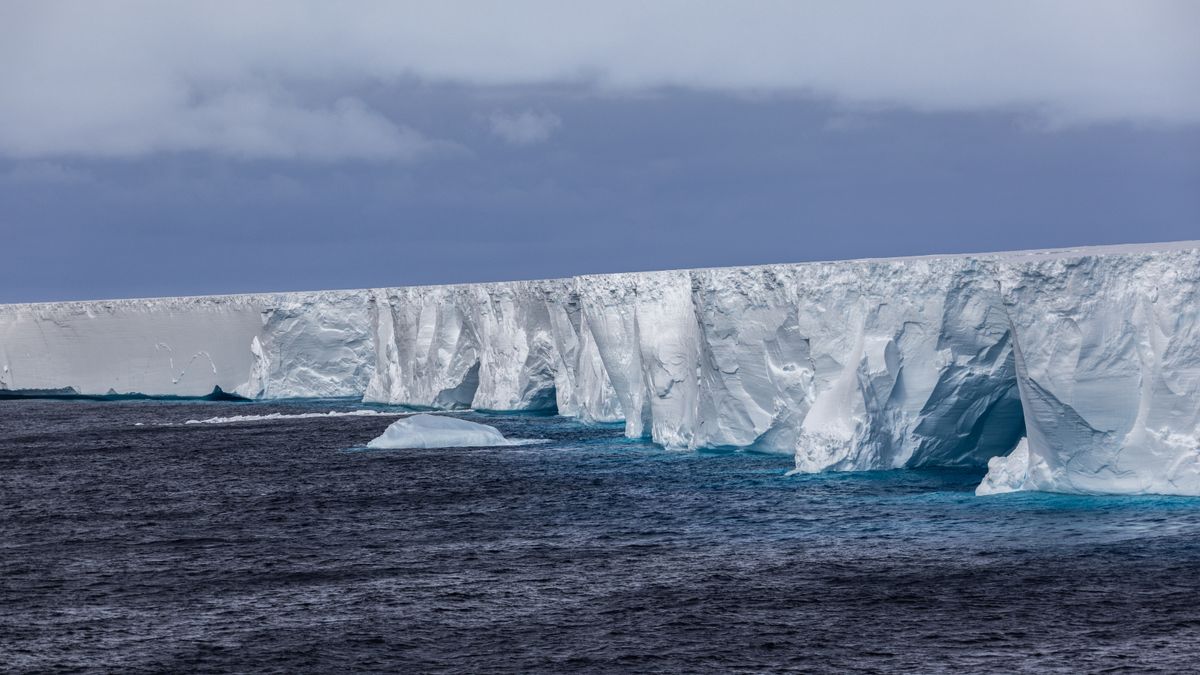
The world’s largest iceberg is on the move again after escaping from a giant vortex that caused it to spin in place for months. This is the big berg’s second great escape in as many years, after breaking free from the seafloor where it was stuck for 37 years in 2023.

Scientists are now closely monitoring the icy slab’s slow march toward oblivion in hopes of learning more about the temporary hidden ecosystem it may support.

A23a, which is often dubbed a “megaberg,” has a surface area roughly three times larger than New York City and weighs just under 1 trillion tons. It first broke off from Antarctica’s Filchner Ice Shelf in 1986 but became trapped on the seafloor just a few miles offshore, which has significantly slowed its melt rate. Over the last few decades, it has held the title of “world’s largest iceberg” on multiple occasions, most recently since May 2023, when the previous largest berg — A-76A — broke apart.

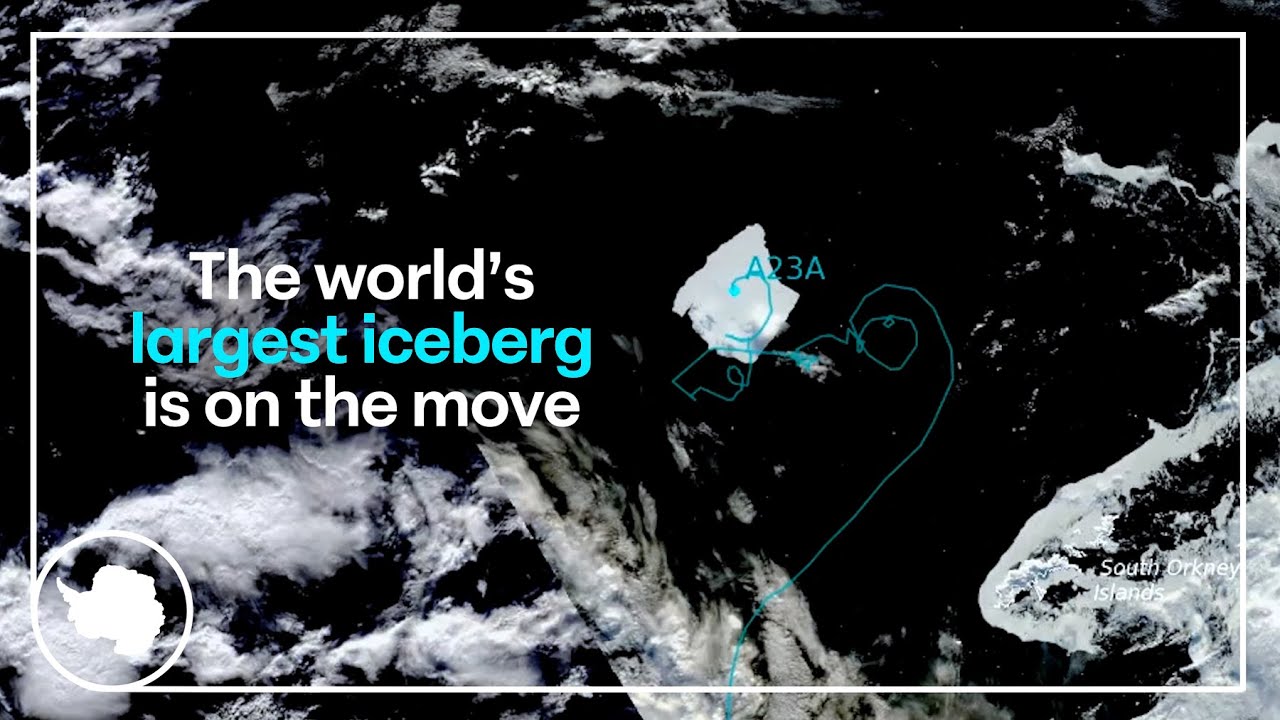
Late last year, A23a finally broke free from its seafloor tether and began moving away from Antarctica. But it didn’t get far. Just a few months later, the enormous ice island got trapped to the east of the South Orkney Islands in a Taylor column — a giant mass of rotating water caused by ocean currents circling an underwater mountain, or seamount. At its maximum spin speed, the berg was rotating about 15 degrees counterclockwise every day, researchers wrote on YouTube.

But as of Dec. 13, the megaberg has escaped from the Taylor column and resumed its journey away from the South Pole, according to a statement by the British Antarctic Survey (BAS).

Related: ISS astronaut captures constellation of icebergs in amazing space photos
A23a megaberg escapes after months in ocean vortex | British Antarctic Survey – YouTube
A23a megaberg escapes after months in ocean vortex | British Antarctic Survey - YouTube


Watch On

“It’s exciting to see A23a on the move again after periods of being stuck,” Andrew Meijers, an oceanographer at BAS, said in the statement. “We are interested to see if it will take the same route the other large icebergs that have calved off Antarctica have taken. And more importantly what impact this will have on the local ecosystem.”

Get the world’s most fascinating discoveries delivered straight to your inbox.

Drake Passage, the ‘iceberg graveyard’

Most massive icebergs that break off from Antarctica drift north through a section of the Southern Ocean known as the Drake Passage, which has become known as the “iceberg graveyard” because it propels icebergs north into warmer waters, where they eventually break apart.

This is what happened to A-76A last year and its predecessor A68a, which also passed through this region before being ripped in half by ocean currents in 2020.

A graphic showing how A23a has moved away from Antarctica over the last few years

This graphic shows how A23a has gradually moved away from Antarctica and where it got stuck in the Taylor column (in the rectangular box). (Image credit: Omar Zaghloul/Anadolu via Getty Images using data from the British Antarctic Survey)

Researchers are keeping a particularly close eye on A23a to learn more about how its eventual breakup may impact the surrounding ocean ecosystem.

“We know that these giant icebergs can provide nutrients to the waters they pass through, creating thriving ecosystems in otherwise less productive areas,” Laura Taylor, a doctoral candidate in biogeochemistry with BAS, said in the statement. “What we don’t know is what difference particular icebergs, their scale, and their origins can make to that process.”

Scientists have taken water samples throughout the iceberg’s predicted path and will continue to take samples in its wake. Comparing these samples with one another should help shed light on this mystery.

Source link

Share. Facebook Twitter Pinterest LinkedIn Tumblr Email
Previous ArticleBest Apple Pencil deal: Save $50 on the Apple Pencil (2nd Gen)
Next Article How did unclaimed bodies end up with a major biotech company?
Editor
  • Website

Related Posts

Lifestyle

Pregnancy quiz: Can you deliver on the science of growing babies?

May 9, 2026
Lifestyle

Science news this week: The latest on the cruise ship hantavirus infections, a shortcut to Mars, and a fast-charging quantum battery

May 9, 2026
Lifestyle

Hantavirus cruise LIVE: Cruise passengers monitored in at least 5 US states as American passengers set to receive repatriation flight

May 9, 2026
Add A Comment

Comments are closed.

Categories
  • Entertainment
  • Lifestyle
  • News
  • Sports
  • Tech
  • Travel
Recent Posts
  • Pregnancy quiz: Can you deliver on the science of growing babies?
  • Science news this week: The latest on the cruise ship hantavirus infections, a shortcut to Mars, and a fast-charging quantum battery
  • Hantavirus cruise LIVE: Cruise passengers monitored in at least 5 US states as American passengers set to receive repatriation flight
  • Mangroves clean up $8.7 billion of nitrogen pollution every year, study finds
  • Flowering plants transformed into ‘hopeful monsters’ in 9 dire bursts across evolutionary time, study finds
calendar
May 2026
M T W T F S S
 123
45678910
11121314151617
18192021222324
25262728293031
« Apr    
Recent Posts
  • Pregnancy quiz: Can you deliver on the science of growing babies?
  • Science news this week: The latest on the cruise ship hantavirus infections, a shortcut to Mars, and a fast-charging quantum battery
  • Hantavirus cruise LIVE: Cruise passengers monitored in at least 5 US states as American passengers set to receive repatriation flight
About

Welcome to Baynard Media, your trusted source for a diverse range of news and insights. We are committed to delivering timely, reliable, and thought-provoking content that keeps you informed
and inspired

Categories
  • Entertainment
  • Lifestyle
  • News
  • Sports
  • Tech
  • Travel
Facebook X (Twitter) Pinterest WhatsApp
  • Contact Us
  • About Us
  • Privacy Policy
  • Disclaimer
  • UNSUBSCRIBE
© 2026 copyrights reserved

Type above and press Enter to search. Press Esc to cancel.