Close Menu
  • Home
  • UNSUBSCRIBE
  • News
  • Lifestyle
  • Tech
  • Entertainment
  • Sports
  • Travel
Facebook X (Twitter) WhatsApp
Trending
  • Full moon helps paint vibrant, muddy ‘brushstrokes’ in Indonesian river — Earth from space
  • Estrogen in both the male and female brain shapes responses to trauma, study suggests
  • NASA just released 12,000 more Artemis II photos ‪—‬ here are a dozen of our favorites
  • Hantavirus infects at least 1 on cruise ship, while 5 others fall ill: Here’s what we know
  • Athena bowl: A silver and gold vessel of the goddess and her owl, buried in a German forest 2,000 years ago
  • ‘Moved to tears when we saw them’: Why archaeologists re-created gorgeous outfits from centuries-old Christian Nubian murals
  • DwarfLab Dwarf Mini smart telescope review
  • New data center will be partially powered by human brain cells for the first time
Facebook X (Twitter) WhatsApp
Baynard Media
  • Home
  • UNSUBSCRIBE
  • News
  • Lifestyle
  • Tech
  • Entertainment
  • Sports
  • Travel
Baynard Media
Home»Lifestyle»240 million-year-old ‘warrior’ crocodile ancestor from Pangaea had plated armor — and it looked just like a dinosaur
Lifestyle

240 million-year-old ‘warrior’ crocodile ancestor from Pangaea had plated armor — and it looked just like a dinosaur

EditorBy EditorNovember 13, 2025No Comments3 Mins Read
Share Facebook Twitter Pinterest LinkedIn Tumblr Reddit Telegram Email
Share
Facebook Twitter LinkedIn Pinterest Email

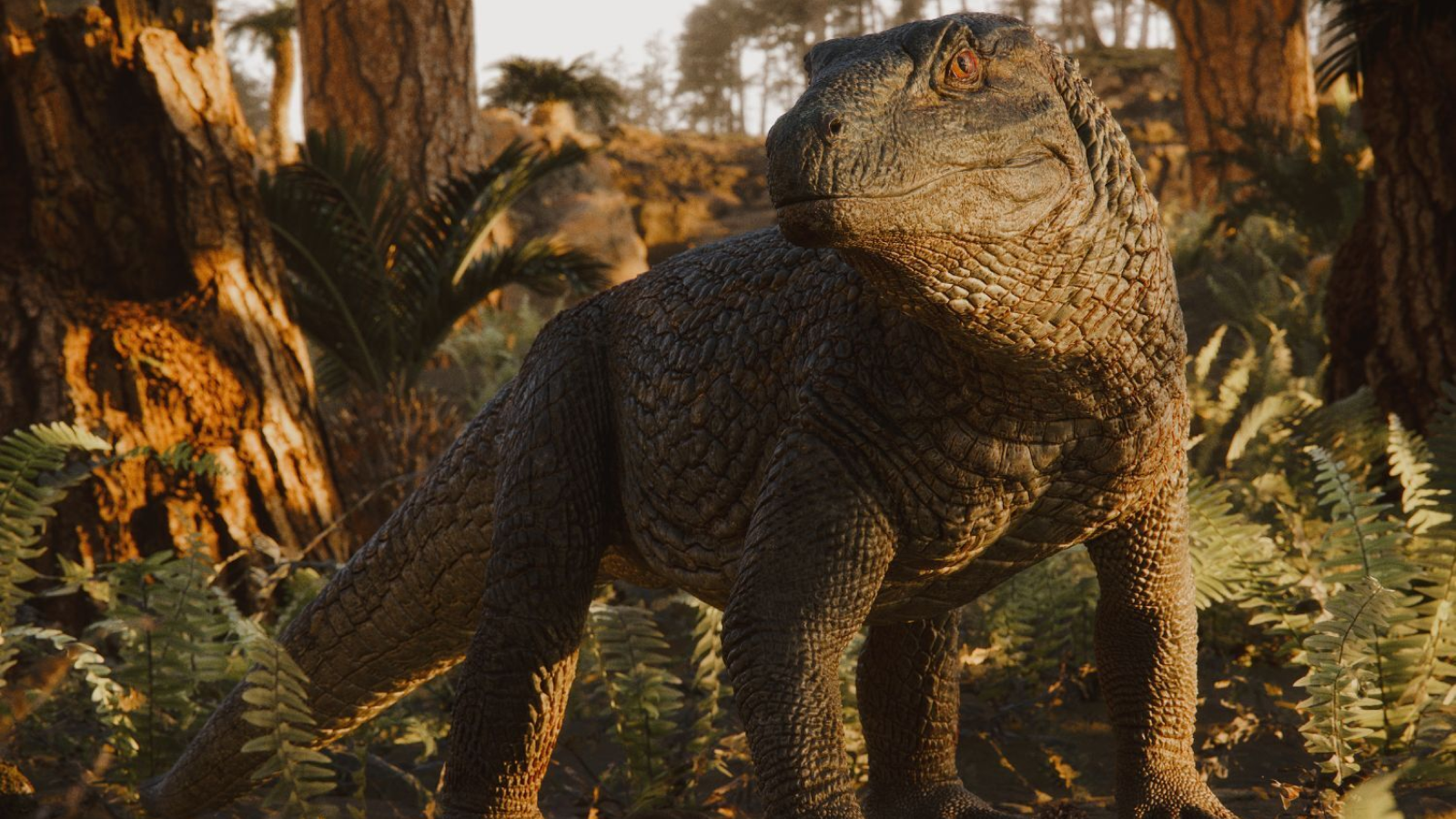
Researchers have unearthed a giant “warrior” lizard that stalked Brazil 240 million years ago in the Triassic period, just before the dawn of the dinosaurs. The discovery fills in gaps in our understanding of the time before the dinosaurs dominated Earth, and further highlights the links between what is now Africa and South America.

The armor-plated reptile resembles a dinosaur but is actually an ancestor of modern crocodiles. Scientists have called the creature Tainrakuasuchus bellator, which is a mixture of Greek, Latin and Indigenous Brazilian language Guarani, meaning “pointed-tooth warrior crocodile.” The team revealed its findings in a study published in the Journal of Systematic Palaeontology on Nov. 13.

“Its discovery helps illuminate a key moment in the history of life, the period that preceded the rise of the dinosaurs,” study lead author Rodrigo Temp Müller, a paleontologist at the Federal University of Santa Maria in Brazil, said in a statement.


You may like

During the Triassic (252 million to 201 million years ago), Archosaurs dominated the world of land-based vertebrates — the name means “ruling reptiles” — and is split into two main groups. One group, Ornithosuchia, evolved into birds and dinosaurs, while the other, Pseudosuchia, gave rise to crocodilians, such as modern crocodiles.

Infographic showing size and skeletal structure of Tainrakuasuchus bellator.

Infographic showing size and skeletal structure of T. bellator. (Image credit: By Caio Fantini, Rodrigo Temp Müller, Mauricio Garcia)

T. bellator belongs to Pseudosuchia. It was about 7.9 feet (2.4 meters) long and weighed 130 pounds (60 kilograms). It had a long neck and thin jaw full of sharp teeth. Very few of these types of Pseudosuchia (called poposauroids) have been found in South America, the researchers noted.

The team found the partial skeleton of T. bellator, including the lower jaw, backbone and pelvis, during an excavation in May in the Dona Francisca municipality in Brazil.

The reptile’s back was covered in bony plates called osteoderms, which modern crocodiles also have.

Get the world’s most fascinating discoveries delivered straight to your inbox.

“This animal was an active predator, but despite its relatively large size, it was far from the largest hunter of its time, with the same ecosystem home to giants as big as seven meters [23 feet] long,” said Müller, who led the team of palaeontologists that excavated T. bellator. “Despite the diversity of pseudosuchians, they remain poorly understood.” Fossils of some of their lineages, such as poposauroids, are “extremely rare” in the fossil record, he said.

T. bellator is closely related to another individual discovered in Tanzania, he said. Mandasuchus tanyauchen, discovered in 1933, lived about 245 million years ago, when Africa and South America were both part of the supercontinent Pangea.

“At that time, the continents were still united, which allowed the free dispersal of organisms across regions that are now separated by oceans,” Müller said. “As a result, the faunas of Brazil and Africa shared several common elements, reflecting an intertwined evolutionary and ecological history.”

Source link

Share. Facebook Twitter Pinterest LinkedIn Tumblr Email
Previous ArticleTexas AG Ken Paxton sues county over program that helps migrants obtain lawyers
Next Article Speaker Johnson calls shutdown ‘pointless and foolish’
Editor
  • Website

Related Posts

Lifestyle

Full moon helps paint vibrant, muddy ‘brushstrokes’ in Indonesian river — Earth from space

May 5, 2026
Lifestyle

Estrogen in both the male and female brain shapes responses to trauma, study suggests

May 5, 2026
Lifestyle

NASA just released 12,000 more Artemis II photos ‪—‬ here are a dozen of our favorites

May 4, 2026
Add A Comment

Comments are closed.

Categories
  • Entertainment
  • Lifestyle
  • News
  • Sports
  • Tech
  • Travel
Recent Posts
  • Full moon helps paint vibrant, muddy ‘brushstrokes’ in Indonesian river — Earth from space
  • Estrogen in both the male and female brain shapes responses to trauma, study suggests
  • NASA just released 12,000 more Artemis II photos ‪—‬ here are a dozen of our favorites
  • Hantavirus infects at least 1 on cruise ship, while 5 others fall ill: Here’s what we know
  • Athena bowl: A silver and gold vessel of the goddess and her owl, buried in a German forest 2,000 years ago
calendar
May 2026
M T W T F S S
 123
45678910
11121314151617
18192021222324
25262728293031
« Apr    
Recent Posts
  • Full moon helps paint vibrant, muddy ‘brushstrokes’ in Indonesian river — Earth from space
  • Estrogen in both the male and female brain shapes responses to trauma, study suggests
  • NASA just released 12,000 more Artemis II photos ‪—‬ here are a dozen of our favorites
About

Welcome to Baynard Media, your trusted source for a diverse range of news and insights. We are committed to delivering timely, reliable, and thought-provoking content that keeps you informed
and inspired

Categories
  • Entertainment
  • Lifestyle
  • News
  • Sports
  • Tech
  • Travel
Facebook X (Twitter) Pinterest WhatsApp
  • Contact Us
  • About Us
  • Privacy Policy
  • Disclaimer
  • UNSUBSCRIBE
© 2026 copyrights reserved

Type above and press Enter to search. Press Esc to cancel.