Close Menu
  • Home
  • UNSUBSCRIBE
  • News
  • Lifestyle
  • Tech
  • Entertainment
  • Sports
  • Travel
Facebook X (Twitter) WhatsApp
Trending
  • ‘If astrological compatibility exists, its effects should be observable’: TL;DR — it’s not
  • Humanoid robots have outpaced human runners in the half-marathon, beating the world record ‪—‬ here are the secrets to this astonishing feat
  • Google AI breakthrough means chatbots use six times less memory during conversations without compromising performance
  • ZWO Seestar S30 Pro smart telescope review
  • Doctors partially delivered a baby at 25 weeks to perform a lifesaving surgery and then returned him to the womb
  • Poop-encrusted chamber pots from the Roman Empire reveal oldest known human cases of Crypto parasite
  • Weapons of the world quiz: Can you identify these historical objects of war?
  • ‘The detectors never stopped beeping!’ Nearly 3,000 coins discovered in field are Norway’s largest Viking hoard on record
Facebook X (Twitter) WhatsApp
Baynard Media
  • Home
  • UNSUBSCRIBE
  • News
  • Lifestyle
  • Tech
  • Entertainment
  • Sports
  • Travel
Baynard Media
Home»Lifestyle»1.8 million-year-old jawbone may be earliest evidence of Homo erectus outside Africa
Lifestyle

1.8 million-year-old jawbone may be earliest evidence of Homo erectus outside Africa

EditorBy EditorSeptember 3, 2025No Comments3 Mins Read
Share Facebook Twitter Pinterest LinkedIn Tumblr Reddit Telegram Email
Share
Facebook Twitter LinkedIn Pinterest Email

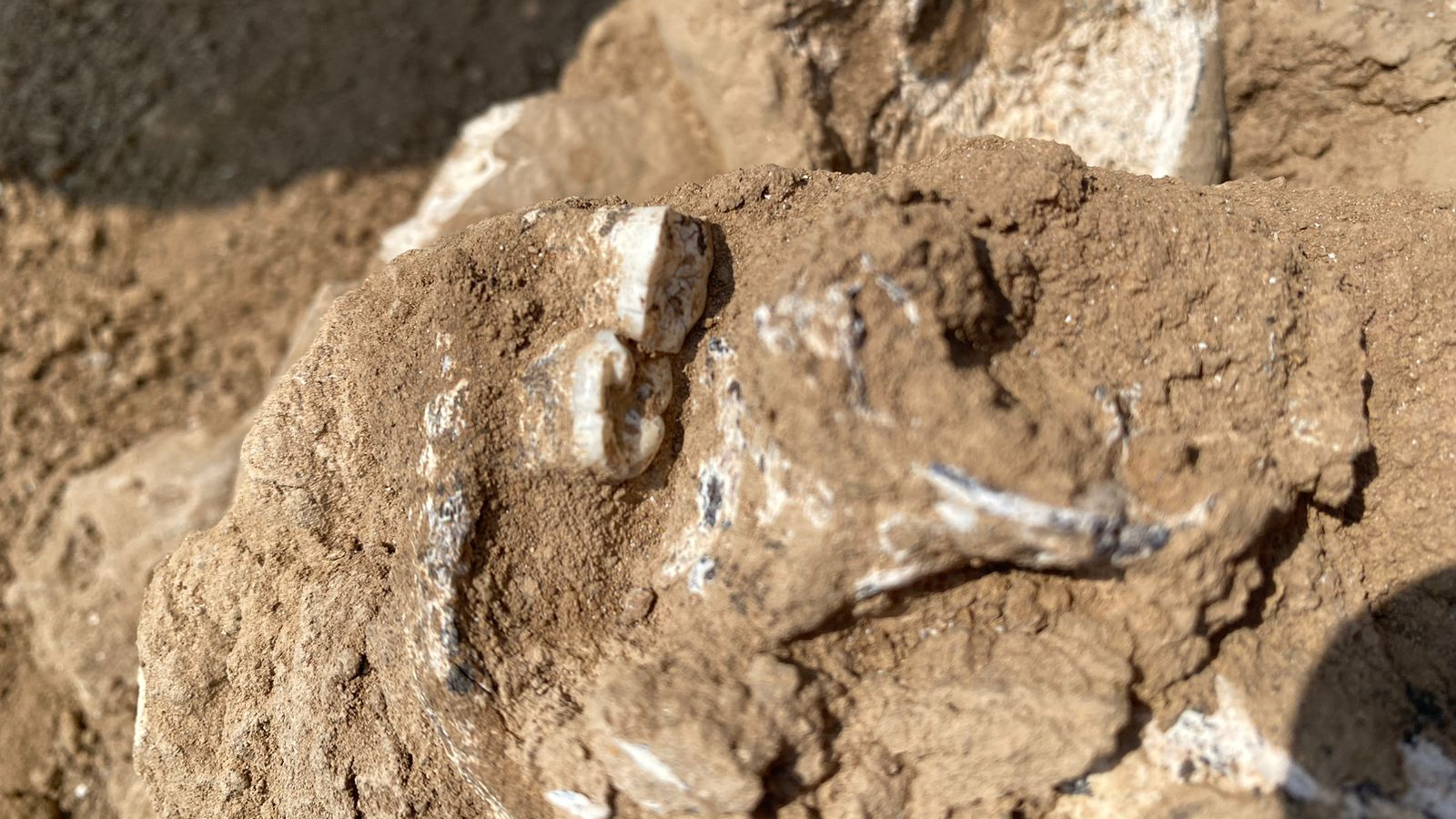
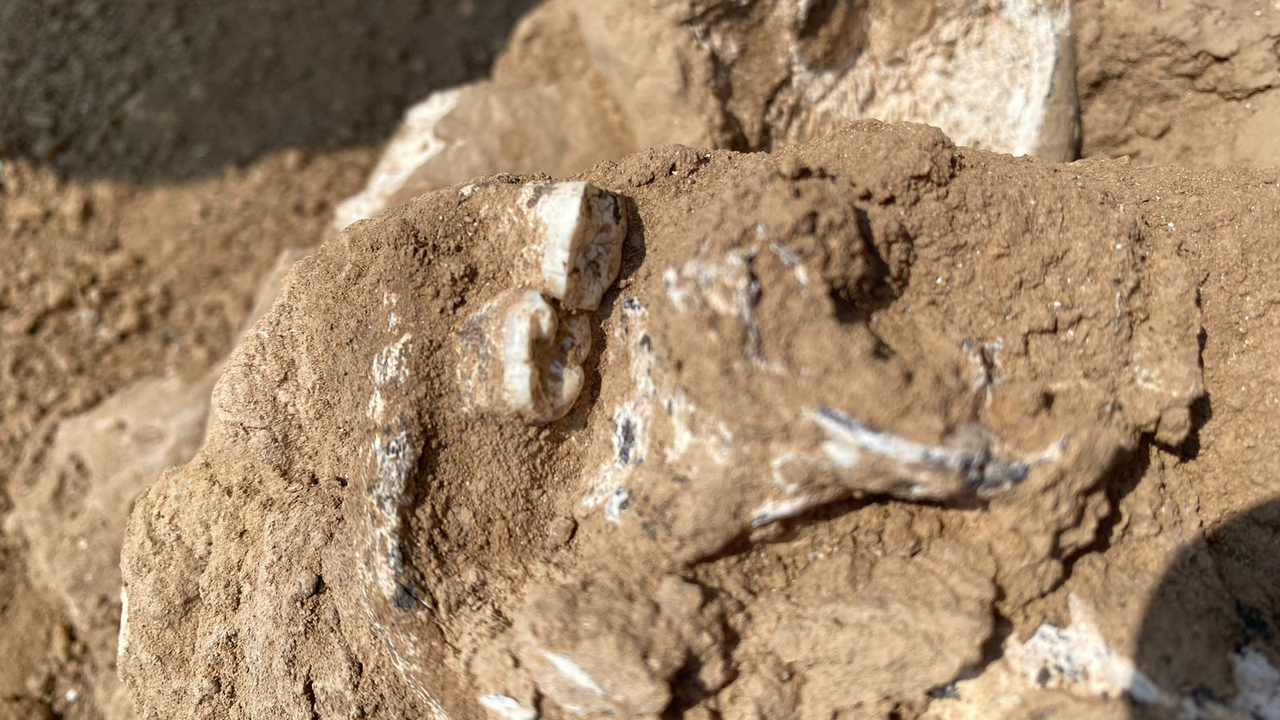
A roughly 1.8 million-year-old Homo erectus jawbone discovered in the Republic of Georgia may be evidence of one of the earliest human groups to live outside Africa.

The discovery, announced July 31 by the Georgian National Agency for Cultural Heritage Preservation, sheds new light on the evolution of our genus, Homo, and “is expected to reveal the reasons for the migration of early hominins out of Africa,” Giorgi Bidzinashvili, an archaeologist at Ilia State University in Tbilisi, told Live Science in an email.

Bidzinashvili has been leading an excavation at the early Stone Age site of Orozmani, about 60 miles (100 kilometers) south of Tbilisi, Georgia’s capital, since 2020. In those early excavations, researchers discovered stone tools near ancient animal bones, as well as a single tooth from H. erectus, which they unearthed in 2022.


You may like

H. erectus evolved around 2 million years ago in Africa. It was the first human ancestor to leave Africa, and explored parts of Europe, Asia and Oceania. The earliest fossil evidence of this journey comes from the site of Dmanisi, which is just 12 miles (19 km) from Orozmani.

In a 2011 study, chemical dating of the lava flows on top of Dmanisi and Orozmani showed that the sites are roughly contemporaneous. Both date to between 1.825 million and 1.765 million years ago.

Excavations at Dmanisi over the past three decades have revealed more than 100 fossil bones, including five skulls. Those skeletons showed that the earliest hominins to leave Africa were significantly shorter and had smaller brains than Homo sapiens. The Dmanisi skeletons were initially given the species name Homo georgicus, but they are now generally considered the earliest known H. erectus individuals in Eurasia.

Related: 1.5 million-year-old footprints reveal our Homo erectus ancestors lived with a 2nd proto-human species

Get the world’s most fascinating discoveries delivered straight to your inbox.

So far, the Orozmani fossils, which include just one tooth and one partial jaw, are not as numerous as those at Dmanisi. “Since we have not yet cleaned the jaw,” Bidzinashvili said, “it has not been compared with the Orozmani tooth from 2022.”

But the discovery of fossils at Orozmani suggests that Dmanisi was not a unique site. Several early human groups may have settled in the Caucasus soon after leaving Africa.

“Maybe we’re seeing that this movement to Georgia wasn’t an isolated incident, but maybe there was a broader distribution of Homo erectus in this time period,” Karen Baab, a biological anthropologist at Midwestern University in Glendale, Arizona, who was not involved in the research, told Live Science.

The research team is trying to figure out whether one site is older than the other.

“Until we have new dates, we can neither confirm nor deny that the Orozmani human fossils are older than Dmanisi or contemporaneous,” Bidzinashvili said. “By the end of the year, we will know.”


Source link

Share. Facebook Twitter Pinterest LinkedIn Tumblr Email
Previous ArticleJon Jones cleared as prosecution dismisses New Mexico crash case charges
Next Article Over $500,000 worth of fake Labubu dolls intercepted at Seattle airport, CBP says
Editor
  • Website

Related Posts

Lifestyle

‘If astrological compatibility exists, its effects should be observable’: TL;DR — it’s not

May 1, 2026
Lifestyle

Humanoid robots have outpaced human runners in the half-marathon, beating the world record ‪—‬ here are the secrets to this astonishing feat

May 1, 2026
Lifestyle

Google AI breakthrough means chatbots use six times less memory during conversations without compromising performance

May 1, 2026
Add A Comment

Comments are closed.

Categories
  • Entertainment
  • Lifestyle
  • News
  • Sports
  • Tech
  • Travel
Recent Posts
  • ‘If astrological compatibility exists, its effects should be observable’: TL;DR — it’s not
  • Humanoid robots have outpaced human runners in the half-marathon, beating the world record ‪—‬ here are the secrets to this astonishing feat
  • Google AI breakthrough means chatbots use six times less memory during conversations without compromising performance
  • ZWO Seestar S30 Pro smart telescope review
  • Doctors partially delivered a baby at 25 weeks to perform a lifesaving surgery and then returned him to the womb
calendar
May 2026
M T W T F S S
 123
45678910
11121314151617
18192021222324
25262728293031
« Apr    
Recent Posts
  • ‘If astrological compatibility exists, its effects should be observable’: TL;DR — it’s not
  • Humanoid robots have outpaced human runners in the half-marathon, beating the world record ‪—‬ here are the secrets to this astonishing feat
  • Google AI breakthrough means chatbots use six times less memory during conversations without compromising performance
About

Welcome to Baynard Media, your trusted source for a diverse range of news and insights. We are committed to delivering timely, reliable, and thought-provoking content that keeps you informed
and inspired

Categories
  • Entertainment
  • Lifestyle
  • News
  • Sports
  • Tech
  • Travel
Facebook X (Twitter) Pinterest WhatsApp
  • Contact Us
  • About Us
  • Privacy Policy
  • Disclaimer
  • UNSUBSCRIBE
© 2026 copyrights reserved

Type above and press Enter to search. Press Esc to cancel.