Close Menu
  • Home
  • UNSUBSCRIBE
  • News
  • Lifestyle
  • Tech
  • Entertainment
  • Sports
  • Travel
Facebook X (Twitter) WhatsApp
Trending
  • Great Pyramid of Giza is remarkably resilient to earthquakes —‬ and it’s due to the ancient Egyptians’ ‘extraordinary’ engineering knowledge
  • China’s real-life ‘transformer’ mech is a giant humanoid robot that can switch from bounding on 4 legs to walking on 2
  • How can we prevent AI models from cannibalizing themselves when human-generated data runs out? Scientists say they’ve found the answer.
  • ‘The system is likely to reach a breaking point’: Major Italian volcano is speeding toward a transition, and a major eruption could be on the way
  • China installs world’s largest floating wind turbine in deep water test — it generates enough energy to power 4,200 homes annually
  • Diagnostic dilemma: A biopsy of a woman’s cancerous tumor caused it to vanish
  • Physicists confirm ‘negative time’ is real in mind-bending quantum experiment
  • Complex animals evolved up to 10 million years earlier than previously thought, fossil discovery shows
Facebook X (Twitter) WhatsApp
Baynard Media
  • Home
  • UNSUBSCRIBE
  • News
  • Lifestyle
  • Tech
  • Entertainment
  • Sports
  • Travel
Baynard Media
Home»Lifestyle»Great Pyramid of Giza is remarkably resilient to earthquakes —‬ and it’s due to the ancient Egyptians’ ‘extraordinary’ engineering knowledge
Lifestyle

Great Pyramid of Giza is remarkably resilient to earthquakes —‬ and it’s due to the ancient Egyptians’ ‘extraordinary’ engineering knowledge

EditorBy EditorMay 21, 2026No Comments4 Mins Read
Share Facebook Twitter Pinterest LinkedIn Tumblr Reddit Telegram Email
Share
Facebook Twitter LinkedIn Pinterest Email

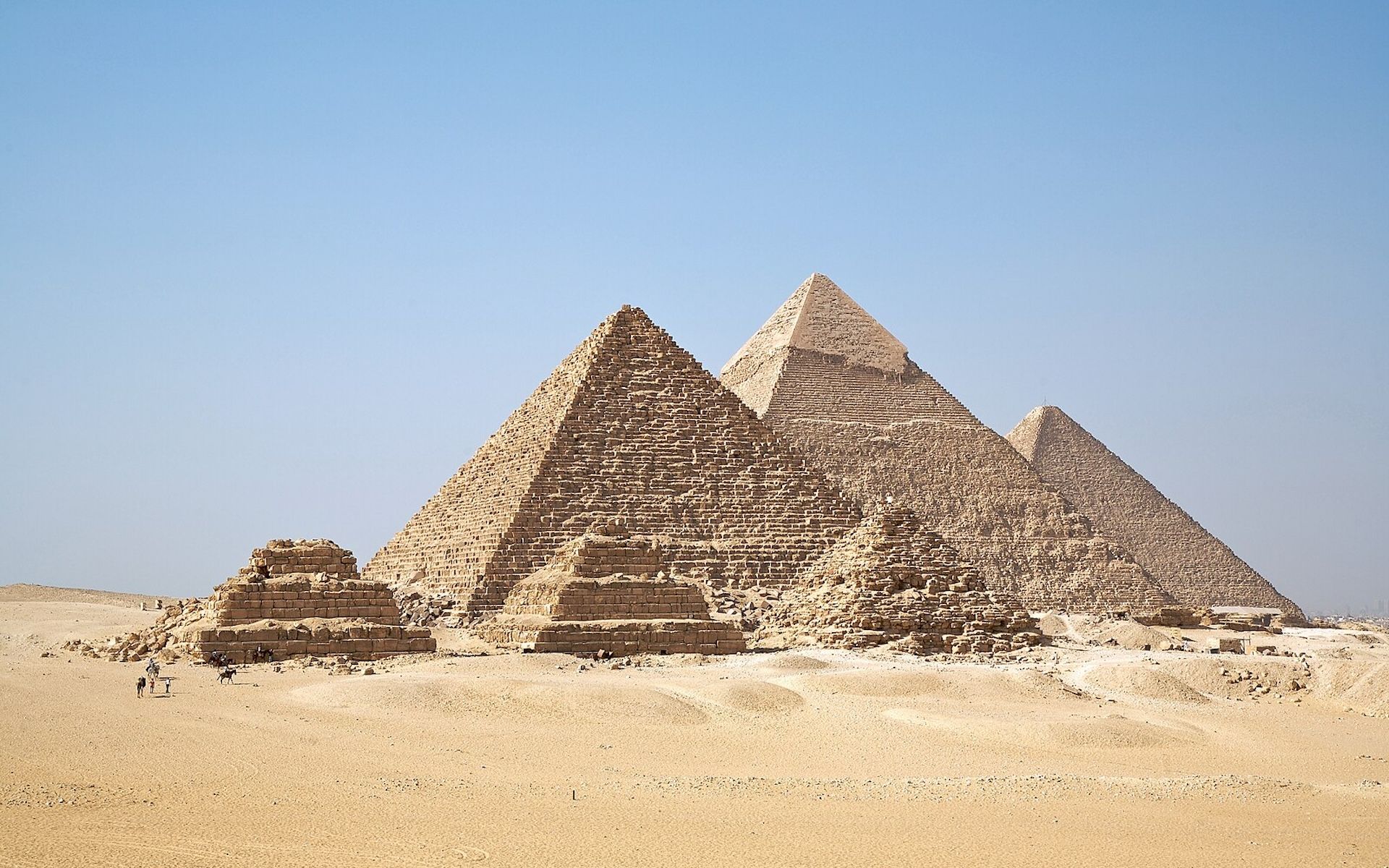
Egypt’s Great Pyramid of Giza, also known as the Great Pyramid of Khufu, has stood for more than 4,600 years, even through powerful earthquakes. Now, new research explains why: The structure is remarkably resilient to vibrations.

The pyramid has lost only about 33 feet (10 meters) of height since its construction during Egypt’s Old Kingdom (2649 to 2150 B.C.). That’s despite experiencing strong earthquakes over the millennia, including one with an estimated magnitude of 6.8 that struck south of Cairo in the city of Fayum in 1847 and a temblor with a magnitude of 5.9 in 1992 that knocked some of the topmost stones to the ground.

The new study of vibrations throughout the pyramid’s structure suggests that certain architectural features, such as a series of chambers known as the pressure-relieving chambers above the chamber where the pharaoh Khufu once rested, dampen seismic movement toward the top of the structure.


You may like

“[T]he study highlights the extraordinary practical engineering knowledge of ancient Egyptian builders, who developed highly effective construction practices through centuries of experimentation and refinement,” study co-author Asem Salama, a geoscientist at the National Research Institute of Astronomy and Geophysics in Cairo, wrote Live Science in an email.

Salama and his team placed vibration sensors in 37 sites in and around the Great Pyramid and recorded ambient vibrations when no tourists were inside the pyramid. “In heritage conservation, this information can provide important insights into structural stability, hidden vulnerabilities, and long-term preservation strategies while fully respecting the integrity of the monument,” Salama explained.

A diagram of the inside structure of the Great Pyramid, with green shading for inside the pyramid and blue for the ground it sits on

The layout of the Great Pyramid included many rooms and corridors.

(Image credit: Asem Salama et al./Scientific Reports)

The team found that throughout the pyramid, vibrations were remarkably similar, ranging from about 2.0 to 2.6 hertz. This was quite different from the frequencies on the ground nearby, which were typically around 0.6 hertz. This gap in frequencies means that during earthquakes, the pyramid sits apart from the vibrations traveling through the ground, perhaps contributing to its resilience, the researchers reported Thursday (May 21) in the journal Scientific Reports.

Two side by side images show an underground pyramid on the left, with a dimly it room where on the right a person kneels next to a metal box in the same room

An archaeologist takes measurements inside the Relieving Chambers of the Great Pyramid at Giza in Egypt. The inscription on the left-hand side commemorates the discovery of the top four chambers by Western archaeologists in 1837.

(Image credit: Asem Salama et al./Scientific Reports)

Other features contributing to the pyramid’s stability include its massive base, strong limestone foundation and symmetrical geometry, Salama said. The vibrations do increase toward the top of the structure, which is typical in most buildings (imagine a skyscraper built to sway in an earthquake), but this pattern is interrupted by the pressure-relieving chambers that sit about 200 feet (61 m) high inside the pyramid. These chambers lie over the King’s Chamber and are thought to have been built to take some of the weight off the pharaoh’s final resting place. They also, it turns out, dampen vibrations that otherwise might travel toward the structure’s apex.

Get the world’s most fascinating discoveries delivered straight to your inbox.

A man wearing a red jacket and dark pants stands in a stone tunnel that's dimly lit.

Archeologists take measurements in the passage coming from Caliph al-Ma’mun’s Entrance (also known as the Robbers’ Tunnel).

(Image credit: Asem Salama et al.)

The researchers plan to take more measurements at the Great Pyramid and hope to use similar methods at other important Egyptian archaeological sites. It’s likely that some of the same features of the pyramidal shape help protect the other pyramids at Giza, but each structure is likely unique, Salama said, as ancient Egyptian architects evolved their methods over time.

“Earlier pyramids,” he said, “show evidence of experimentation and structural evolution, including changes in slope geometry and internal layouts.”


Are you a fan of mummies and hieroglyphs? Find out with our ancient Egypt quiz!

Source link

Share. Facebook Twitter Pinterest LinkedIn Tumblr Email
Previous ArticleChina’s real-life ‘transformer’ mech is a giant humanoid robot that can switch from bounding on 4 legs to walking on 2
Editor
  • Website

Related Posts

Lifestyle

China’s real-life ‘transformer’ mech is a giant humanoid robot that can switch from bounding on 4 legs to walking on 2

May 21, 2026
Lifestyle

How can we prevent AI models from cannibalizing themselves when human-generated data runs out? Scientists say they’ve found the answer.

May 21, 2026
Lifestyle

‘The system is likely to reach a breaking point’: Major Italian volcano is speeding toward a transition, and a major eruption could be on the way

May 21, 2026
Add A Comment

Comments are closed.

Categories
  • Entertainment
  • Lifestyle
  • News
  • Sports
  • Tech
  • Travel
Recent Posts
  • Great Pyramid of Giza is remarkably resilient to earthquakes —‬ and it’s due to the ancient Egyptians’ ‘extraordinary’ engineering knowledge
  • China’s real-life ‘transformer’ mech is a giant humanoid robot that can switch from bounding on 4 legs to walking on 2
  • How can we prevent AI models from cannibalizing themselves when human-generated data runs out? Scientists say they’ve found the answer.
  • ‘The system is likely to reach a breaking point’: Major Italian volcano is speeding toward a transition, and a major eruption could be on the way
  • China installs world’s largest floating wind turbine in deep water test — it generates enough energy to power 4,200 homes annually
calendar
May 2026
M T W T F S S
 123
45678910
11121314151617
18192021222324
25262728293031
« Apr    
Recent Posts
  • Great Pyramid of Giza is remarkably resilient to earthquakes —‬ and it’s due to the ancient Egyptians’ ‘extraordinary’ engineering knowledge
  • China’s real-life ‘transformer’ mech is a giant humanoid robot that can switch from bounding on 4 legs to walking on 2
  • How can we prevent AI models from cannibalizing themselves when human-generated data runs out? Scientists say they’ve found the answer.
About

Welcome to Baynard Media, your trusted source for a diverse range of news and insights. We are committed to delivering timely, reliable, and thought-provoking content that keeps you informed
and inspired

Categories
  • Entertainment
  • Lifestyle
  • News
  • Sports
  • Tech
  • Travel
Facebook X (Twitter) Pinterest WhatsApp
  • Contact Us
  • About Us
  • Privacy Policy
  • Disclaimer
  • UNSUBSCRIBE
© 2026 copyrights reserved

Type above and press Enter to search. Press Esc to cancel.