Close Menu
  • Home
  • UNSUBSCRIBE
  • News
  • Lifestyle
  • Tech
  • Entertainment
  • Sports
  • Travel
Facebook X (Twitter) WhatsApp
Trending
  • ‘One of the most rapid transitions that I’ve seen’: NOAA forecaster on how this year’s El Niño could shatter records
  • May’s Flower ‘micromoon’ will look extra small tonight, with a rare Blue Moon following
  • ‘If astrological compatibility exists, its effects should be observable’: TL;DR — it’s not
  • Humanoid robots have outpaced human runners in the half-marathon, beating the world record ‪—‬ here are the secrets to this astonishing feat
  • Google AI breakthrough means chatbots use six times less memory during conversations without compromising performance
  • ZWO Seestar S30 Pro smart telescope review
  • Doctors partially delivered a baby at 25 weeks to perform a lifesaving surgery and then returned him to the womb
  • Poop-encrusted chamber pots from the Roman Empire reveal oldest known human cases of Crypto parasite
Facebook X (Twitter) WhatsApp
Baynard Media
  • Home
  • UNSUBSCRIBE
  • News
  • Lifestyle
  • Tech
  • Entertainment
  • Sports
  • Travel
Baynard Media
Home»Lifestyle»Yosemite’s glaciers have survived 20,000 years — but we could be the first people to see Sierra Nevada ice-free
Lifestyle

Yosemite’s glaciers have survived 20,000 years — but we could be the first people to see Sierra Nevada ice-free

EditorBy EditorOctober 1, 2025No Comments3 Mins Read
Share Facebook Twitter Pinterest LinkedIn Tumblr Reddit Telegram Email
Share
Facebook Twitter LinkedIn Pinterest Email

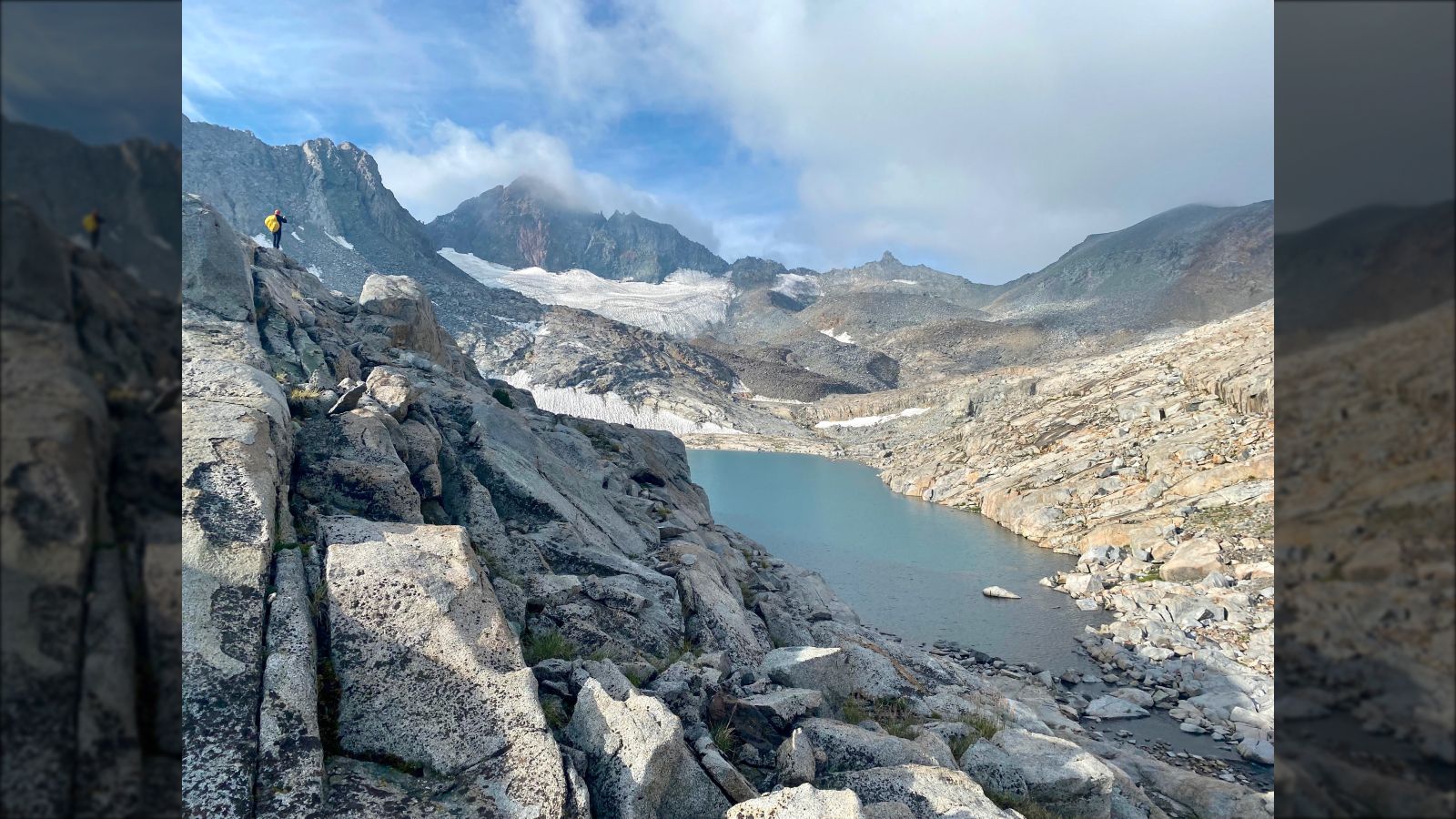
The mountain glaciers of Yosemite National Park are projected to melt away in 75 years or less. Now, new research finds that their loss will be the first time humans have ever seen the Sierra Nevada mountains without ice.

According to a new study, published Wednesday (Oct. 1) in the journal Science Advances, the Sierra Nevada’s glaciers have not disappeared since the last ice age. Because they reached their maximum extent during the ice age about 30,000 years ago, and because humans aren’t thought to have arrived in North America until after 30,000 years ago, that means people have never witnessed an ice-free Sierra Nevada, according to the study.

“Anthropogenic climate change is therefore likely creating a no-analog scenario in the western United States within the current interglacial,” the researchers wrote in the new paper.


You may like

Geoscientists have long known that the extent of the mountain glaciers in what is now the western U.S. shrank and grew over the last 11,700 years, a timeframe known as the Holocene. In the warm early Holocene, the Sierra glaciers got smaller before expanding again in the mid-to-late Holocene. They’ve since shrunk in the last century, contracting from formidable ice walls hanging above steep slopes into small snowfields barely clinging to existence.

Portrait size image showing two photos of Maclure Glacier in Yosemite National Park. September 1914 (above) versus September 2021 (below). In 2021, ice coverage is considerably less compared to the photo taken in 1914.

Repeat photography of Maclure Glacier in Yosemite National Park. September 1914 versus September 2021. (Image credit: United States Geological Survey and Greg Stock (National Park Service).)

What was unclear was whether these glaciers ever fully disappeared. Some studies of glacial sediments in lakes below the ice suggest they may have vanished in the early Holocene, only to reform 3,000 years ago.

To get a clearer picture, the researchers tested samples of boulders and recently-exposed bedrock from near four retreating glaciers in and near Yosemite National Park: Conness, Maclure, Lyell and Palisade. They were looking for particular variations of carbon and the element beryllium that are formed only when cosmic rays from the sun hit the rock.

Since these variations don’t form when the rocks are buried and sheltered from the sun, their presence can reveal when the rock was exposed. And because the variations decay away at known rates, they also provide a “clock” that gives a date for that exposure.

Get the world’s most fascinating discoveries delivered straight to your inbox.

The results suggest that the rocks beneath these long-lasting glaciers have been exposed for between less than 100 to several thousand years, and that none of the glaciers have ever fully disappeared — though the eastern section of the Lyell glacier may have been even smaller than it was today during the early Holocene. This tracks with the current warming trends, the study authors wrote: California’s recent summer warming of 3.6 degrees Fahrenheit (2 degrees Celsius) over pre-industrial temperatures is comparable to or larger than the climate 11,000 years ago.

Prior to the Holocene, during the ice age — scientifically known as the Last Glacial Period — the Sierra Nevada glaciers would have been beefier, peaking around 30,000 years ago. Humans are confirmed to have been living in North America as early as 23,000 years ago. Some controversial archaeological evidence puts people in northwestern New Mexico around 30,000 years ago. Either way, it’s unlikely that humans ever set eyes on an ice-free Sierra Nevada.

“[Our] reconstructed glacial history indicates that a future glacier-free Sierra Nevada is unprecedented in human history,” the authors wrote.

Source link

Share. Facebook Twitter Pinterest LinkedIn Tumblr Email
Previous ArticleSchumer calls GOP’s claim about government shutdown an ‘effing lie’
Next Article Pope Leo questions what it means to be pro-life
Editor
  • Website

Related Posts

Lifestyle

‘One of the most rapid transitions that I’ve seen’: NOAA forecaster on how this year’s El Niño could shatter records

May 1, 2026
Lifestyle

May’s Flower ‘micromoon’ will look extra small tonight, with a rare Blue Moon following

May 1, 2026
Lifestyle

‘If astrological compatibility exists, its effects should be observable’: TL;DR — it’s not

May 1, 2026
Add A Comment

Comments are closed.

Categories
  • Entertainment
  • Lifestyle
  • News
  • Sports
  • Tech
  • Travel
Recent Posts
  • ‘One of the most rapid transitions that I’ve seen’: NOAA forecaster on how this year’s El Niño could shatter records
  • May’s Flower ‘micromoon’ will look extra small tonight, with a rare Blue Moon following
  • ‘If astrological compatibility exists, its effects should be observable’: TL;DR — it’s not
  • Humanoid robots have outpaced human runners in the half-marathon, beating the world record ‪—‬ here are the secrets to this astonishing feat
  • Google AI breakthrough means chatbots use six times less memory during conversations without compromising performance
calendar
May 2026
M T W T F S S
 123
45678910
11121314151617
18192021222324
25262728293031
« Apr    
Recent Posts
  • ‘One of the most rapid transitions that I’ve seen’: NOAA forecaster on how this year’s El Niño could shatter records
  • May’s Flower ‘micromoon’ will look extra small tonight, with a rare Blue Moon following
  • ‘If astrological compatibility exists, its effects should be observable’: TL;DR — it’s not
About

Welcome to Baynard Media, your trusted source for a diverse range of news and insights. We are committed to delivering timely, reliable, and thought-provoking content that keeps you informed
and inspired

Categories
  • Entertainment
  • Lifestyle
  • News
  • Sports
  • Tech
  • Travel
Facebook X (Twitter) Pinterest WhatsApp
  • Contact Us
  • About Us
  • Privacy Policy
  • Disclaimer
  • UNSUBSCRIBE
© 2026 copyrights reserved

Type above and press Enter to search. Press Esc to cancel.