Close Menu
  • Home
  • UNSUBSCRIBE
  • News
  • Lifestyle
  • Tech
  • Entertainment
  • Sports
  • Travel
Facebook X (Twitter) WhatsApp
Trending
  • Wreck of World War II Japanese ‘hellship’ that sank with more than 1,000 Allied POWs on board discovered off the Philippines
  • Venus will disappear behind the moon in broad daylight Wednesday: How to watch the rare lunar occultation
  • 5,000-year-old burial of man with battered skull found in kiln in Germany — and he may have been a human sacrifice
  • A Texas-size chunk of winter sea ice is missing from Antarctica — and it’s probably not coming back
  • Earth-based telescope shares image of Artemis II capsule near the moon — one of the farthest photos of humans ever taken
  • Dangerously hot and humid: Rising temperatures in the US make outdoor exercise hazardous
  • ‘They are trying to tame nature’: China is building the world’s biggest dam in an earthquake-prone region of Tibet
  • ‘I never thought we’d see one alive’: Elusive goblin shark captured on camera for the first time
Facebook X (Twitter) WhatsApp
Baynard Media
  • Home
  • UNSUBSCRIBE
  • News
  • Lifestyle
  • Tech
  • Entertainment
  • Sports
  • Travel
Baynard Media
Home»Lifestyle»Wreck of World War II Japanese ‘hellship’ that sank with more than 1,000 Allied POWs on board discovered off the Philippines
Lifestyle

Wreck of World War II Japanese ‘hellship’ that sank with more than 1,000 Allied POWs on board discovered off the Philippines

EditorBy EditorJune 17, 2026No Comments4 Mins Read
Share Facebook Twitter Pinterest LinkedIn Tumblr Reddit Telegram Email
Share
Facebook Twitter LinkedIn Pinterest Email

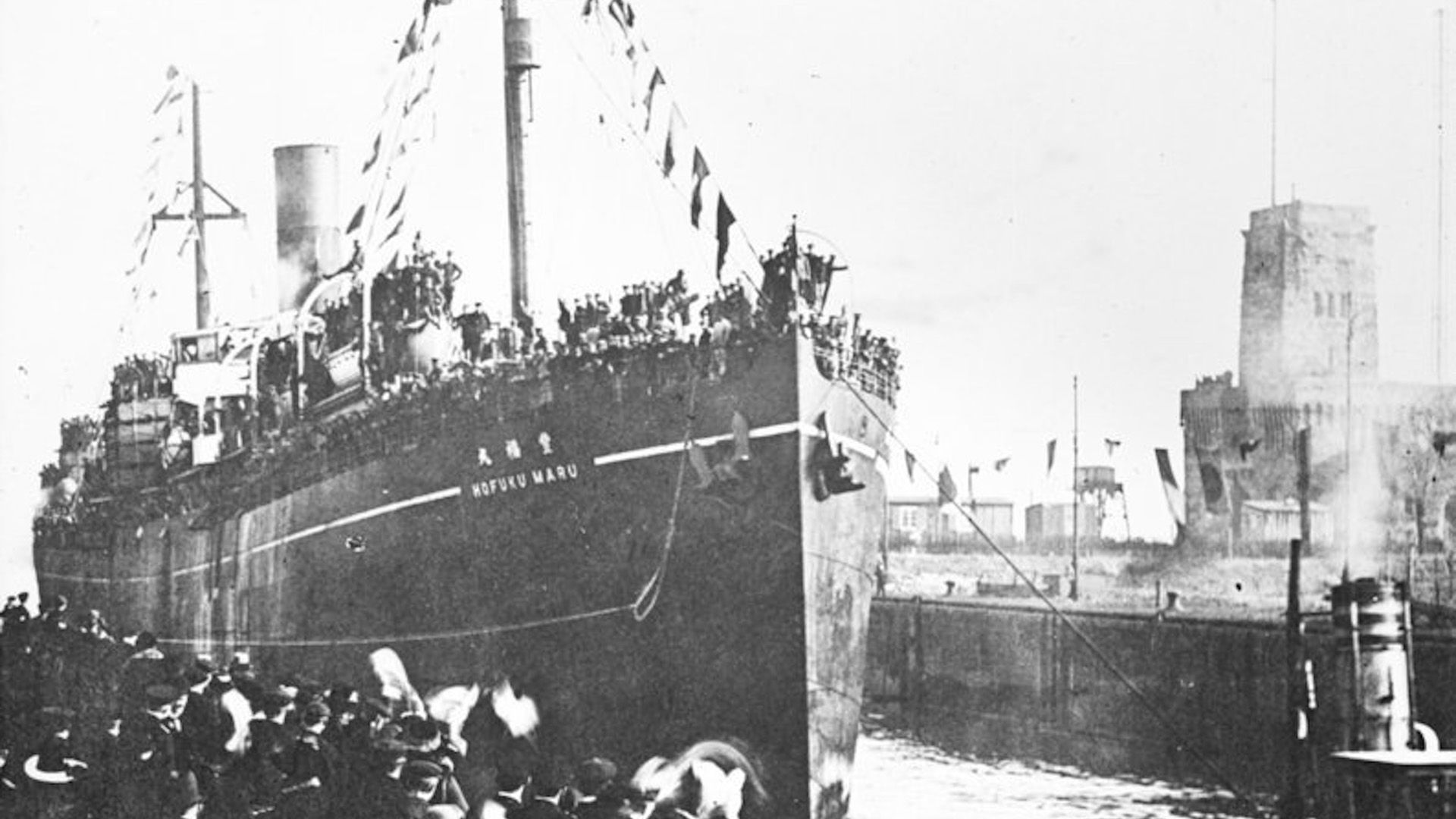
The wreck of a Japanese prison ship that was sunk by U.S. warplanes and went down with more than 1,000 Allied prisoners of war in 1944 has been discovered in the Philippines.

The vessel was one of the notorious “hellships” used by the Japanese to ferry POWs between work camps. Many of the prisoners who died when the ship sank had worked on the infamous Burma-Thailand “Death Railway.”

“Sadly, a lot of these prisoner transport ships were sunk by the Allies,” expedition leader and American TV show host Josh Gates told Live Science. “The ships were painted to just look like military vessels, and they were inside the Japanese convoys — so the Allies thought they were legitimate military targets.”

Gates teamed up with the Hellships Memorial Foundation, a U.S.-registered non-profit based in Subic Bay in the Philippines, to investigate the sinking of the hellship Hōfuku Maru. Its wreck had never been found, probably because searchers were guided by incorrect U.S. records to look too far north, he said.

But Japanese wartime records were more precise about the wreck’s location, helping the team find the remains of the Hōfuku Maru in January, Gates said. His team has since made five dives to the wreck, which sits a few miles off the west coast of the main Philippines island of Luzon at a depth of about 160 feet (50 meters).


You may like

A blue 3D reconstruction of a shipwreck on the bottom of the ocean against a black background

The newfound wreck lies a few miles from the coast of the main Philippines island of Luzon, northwest of Manila.

(Image credit: Evan Kovacs, Marine Imaging Technologies, LLC)

Prison ships

Japan used more than 130 hellships during World War II, but the wrecks of only a few have been found. Many hellships, including the Hōfuku Maru, were converted freighters. The Hōfuku Maru was used as a prison ship from 1942 until its sinking about two years later.

Gates said the vessel was part of a Japanese military convoy sailing from the Philippines to Japan when it was attacked on Sept. 21, 1944. U.S. warplanes had spotted the convoy, and one dropped a torpedo that cut the Hōfuku Maru in half. It quickly sank.

Get the world’s most fascinating discoveries delivered straight to your inbox.

But the ship had roughly 1,200 Allied POWs on board, from the British and Dutch armies, many of whom had been forced to work on the Death Railway. Some were able to swim ashore, but they were recaptured by the Japanese. About 1,040 died in the sinking, Gates said.

3D maps of shipwrecks found in the bottom of the ocean, with blue areas showing 3D ship reconstruction on the bottom of the seafloor against a black background

Mapping with an underwater drone has identified three separate sections of the wreck.

(Image credit: Evan Kovacs, Marine Imaging Technologies, LLC)

War captives

The 1929 Geneva Convention placed strict limits on the use of prisoners of war for labor, but Japan was infamous for flouting these rules during World War II, claiming that it never ratified the convention and that wartime made POW labor important. Japan used POWs for slave labor on railways and docks, as well as in factories and mines. Of the roughly 132,100 prisoners captured from the United States and United Kingdom armies, nearly a third of them — about 35,000 people — died of exhaustion, malnutrition and disease.

Gates said the Japanese hellships used to ferry thousands of POWs between work camps were miserable places themselves: there was little light, air or food, and prisoners might be kept there for months. Human remains have been identified on the newfound wreck, and it will now be considered a war grave, he said. International conventions aim to prevent such wrecks from being disturbed.

The team first spotted the wreck with sonar, and then dove to identify parts of the structure that confirmed it as the Hōfuku Maru. They also mapped the wreck with a remotely operated underwater vehicle, which helped them determine that the ship had split into separate parts, just as accounts of the sinking had reported.

The Hellships Memorial Foundation would now work to try to locate the families of the victims, Gates said.

Source link

Share. Facebook Twitter Pinterest LinkedIn Tumblr Email
Previous ArticleVenus will disappear behind the moon in broad daylight Wednesday: How to watch the rare lunar occultation
Editor
  • Website

Related Posts

Lifestyle

Venus will disappear behind the moon in broad daylight Wednesday: How to watch the rare lunar occultation

June 17, 2026
Lifestyle

5,000-year-old burial of man with battered skull found in kiln in Germany — and he may have been a human sacrifice

June 16, 2026
Lifestyle

A Texas-size chunk of winter sea ice is missing from Antarctica — and it’s probably not coming back

June 16, 2026
Add A Comment

Comments are closed.

Categories
  • Entertainment
  • Lifestyle
  • News
  • Sports
  • Tech
  • Travel
Recent Posts
  • Wreck of World War II Japanese ‘hellship’ that sank with more than 1,000 Allied POWs on board discovered off the Philippines
  • Venus will disappear behind the moon in broad daylight Wednesday: How to watch the rare lunar occultation
  • 5,000-year-old burial of man with battered skull found in kiln in Germany — and he may have been a human sacrifice
  • A Texas-size chunk of winter sea ice is missing from Antarctica — and it’s probably not coming back
  • Earth-based telescope shares image of Artemis II capsule near the moon — one of the farthest photos of humans ever taken
calendar
June 2026
M T W T F S S
1234567
891011121314
15161718192021
22232425262728
2930  
« May    
Recent Posts
  • Wreck of World War II Japanese ‘hellship’ that sank with more than 1,000 Allied POWs on board discovered off the Philippines
  • Venus will disappear behind the moon in broad daylight Wednesday: How to watch the rare lunar occultation
  • 5,000-year-old burial of man with battered skull found in kiln in Germany — and he may have been a human sacrifice
About

Welcome to Baynard Media, your trusted source for a diverse range of news and insights. We are committed to delivering timely, reliable, and thought-provoking content that keeps you informed
and inspired

Categories
  • Entertainment
  • Lifestyle
  • News
  • Sports
  • Tech
  • Travel
Facebook X (Twitter) Pinterest WhatsApp
  • Contact Us
  • About Us
  • Privacy Policy
  • Disclaimer
  • UNSUBSCRIBE
© 2026 copyrights reserved

Type above and press Enter to search. Press Esc to cancel.