Close Menu
  • Home
  • UNSUBSCRIBE
  • News
  • Lifestyle
  • Tech
  • Entertainment
  • Sports
  • Travel
Facebook X (Twitter) WhatsApp
Trending
  • New robotic heart mimics common, mysterious condition to help researchers study it
  • Canon EOS R6 III review: A wildlife wonder
  • Medieval babies and adults buried together in Sweden were not related, archaeologists discover — raising big questions about early Christian burial practices
  • NASA is creating a fifth state of matter on the ISS, thanks to an upgrade to a mini-fridge-sized quantum lab
  • New sodium metal battery design charges in just 4 minutes and retains its capacity for years
  • Quantum computing wielded to create extremely rare material critical to nuclear fusion
  • Scientists build tiny ‘diving suit’ for cockroaches, turning them into search-and-rescue cyborgs
  • Physicists develop the first working model of quantum mechanics using only ‘real’ numbers
Facebook X (Twitter) WhatsApp
Baynard Media
  • Home
  • UNSUBSCRIBE
  • News
  • Lifestyle
  • Tech
  • Entertainment
  • Sports
  • Travel
Baynard Media
Home»Lifestyle»Venus will disappear behind the moon in broad daylight Wednesday: How to watch the rare lunar occultation
Lifestyle

Venus will disappear behind the moon in broad daylight Wednesday: How to watch the rare lunar occultation

EditorBy EditorJune 17, 2026No Comments4 Mins Read
Share Facebook Twitter Pinterest LinkedIn Tumblr Reddit Telegram Email
Share
Facebook Twitter LinkedIn Pinterest Email

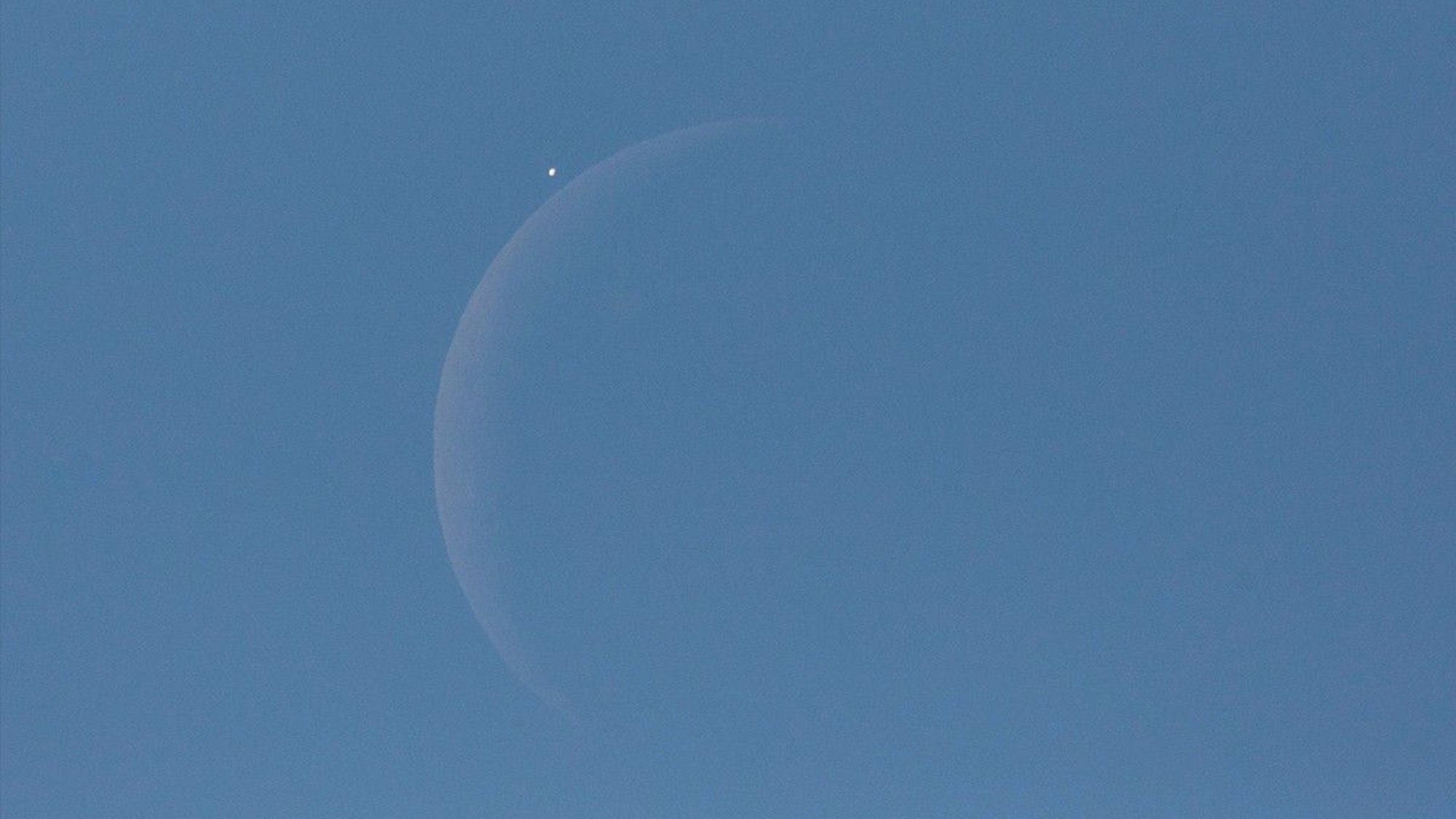
This Wednesday (June 17), for the first time in 11 years, people across North America will be able to look up in the daytime sky and see Venus temporarily vanish behind the faint crescent moon.

The rare skywatching spectacle can be viewed with the naked eye and recorded without any special equipment, as long as the weather cooperates — however, using a good pair of binoculars or a backyard telescope will make it much easier to see the faint light of Venus in the daytime sky. No matter how you go about skywatching, you must take great care not to stare directly at the sun while doing so.

During the event, known as a lunar occultation, the moon will briefly pass between Earth and Venus, which has been shining especially bright over the past few weeks while hanging out alongside Jupiter in the evening sky. As a result of the occultation, the hellish planet will appear to blink out of existence, before reappearing around an hour later, allowing for two separate skywatching experiences. The last time this happened was on Dec. 7, 2015, and you will not be able to see it again until 2029.

How to see Venus disappear

The occultation will be visible from the 48 contiguous U.S. states, as well as from large parts of Canada and some countries in the northern half of South America — assuming there are clear skies at the time of the event. (The latest forecast suggests that weather conditions will be most favorable along the West Coast.)

As with most skywatching events, such as solar eclipses, not everyone will see it at the same time. For example, people in San Francisco will observe Venus vanish at around 11:34 a.m. PDT, while those in Miami will watch the planet disappear at about 4:06 p.m. EDT (around 92 minutes later when disregarding time zones).


You may like

The duration of the occultation will also vary with location. For example, Venus will reappear after around 58 minutes for viewers in San Antonio, but people in Philadelphia will have to wait roughly 80 minutes to see the planet again.

You can see the exact timings for more than 700 locations across the U.S. in a list compiled by the International Occultation Timing Association.

Get the world’s most fascinating discoveries delivered straight to your inbox.

The best place to watch both the disappearance and reappearance of Venus will be from within the shadow of a large tree or building. Blocking out the sun will not only make it easier to see both the moon and Venus but also reduce the risk of sustaining eye damage by looking directly at the sun.

If you are struggling to see the occultation, try using your phone camera to zoom in on the waxing crescent to better locate and record Venus, Spaceweather.com recommends.

What the June 17 lunar occultation will look like

During the event, around 11% of the moon will be faintly visible in the daytime sky, according to Sky & Telescope. Around three-quarters of Venus will be visible — although it will look like a single spot to the naked eye — so the planet will shine much brighter than the moon. The pair will be collectively located around 38 degrees from the sun in the sky.

Venus will vanish behind the side of the moon opposite the illuminated crescent and will take around 30 seconds to disappear completely. It will then reappear above the crescent, similar to the iconic “Earthrise” photos taken by lunar astronauts, such as the Artemis II crew. (The exact spot where Venus disappears and reappears will depend on where you are in the world.)

If you miss this occultation or fancy another skywatching spectacle, be sure to head back outside later the same day, around an hour after sunset, when Venus, Jupiter and Mercury will shine alongside the crescent moon as it passes in front of the Beehive Cluster (also called M44).

Source link

Share. Facebook Twitter Pinterest LinkedIn Tumblr Email
Previous Article5,000-year-old burial of man with battered skull found in kiln in Germany — and he may have been a human sacrifice
Next Article Wreck of World War II Japanese ‘hellship’ that sank with more than 1,000 Allied POWs on board discovered off the Philippines
Editor
  • Website

Related Posts

Lifestyle

New robotic heart mimics common, mysterious condition to help researchers study it

July 11, 2026
Lifestyle

Canon EOS R6 III review: A wildlife wonder

July 10, 2026
Lifestyle

Medieval babies and adults buried together in Sweden were not related, archaeologists discover — raising big questions about early Christian burial practices

July 10, 2026
Add A Comment

Comments are closed.

Categories
  • Entertainment
  • Lifestyle
  • News
  • Sports
  • Tech
  • Travel
Recent Posts
  • New robotic heart mimics common, mysterious condition to help researchers study it
  • Canon EOS R6 III review: A wildlife wonder
  • Medieval babies and adults buried together in Sweden were not related, archaeologists discover — raising big questions about early Christian burial practices
  • NASA is creating a fifth state of matter on the ISS, thanks to an upgrade to a mini-fridge-sized quantum lab
  • New sodium metal battery design charges in just 4 minutes and retains its capacity for years
calendar
July 2026
M T W T F S S
 12345
6789101112
13141516171819
20212223242526
2728293031  
« Jun    
Recent Posts
  • New robotic heart mimics common, mysterious condition to help researchers study it
  • Canon EOS R6 III review: A wildlife wonder
  • Medieval babies and adults buried together in Sweden were not related, archaeologists discover — raising big questions about early Christian burial practices
About

Welcome to Baynard Media, your trusted source for a diverse range of news and insights. We are committed to delivering timely, reliable, and thought-provoking content that keeps you informed
and inspired

Categories
  • Entertainment
  • Lifestyle
  • News
  • Sports
  • Tech
  • Travel
Facebook X (Twitter) Pinterest WhatsApp
  • Contact Us
  • About Us
  • Privacy Policy
  • Disclaimer
  • UNSUBSCRIBE
© 2026 copyrights reserved

Type above and press Enter to search. Press Esc to cancel.