Close Menu
  • Home
  • UNSUBSCRIBE
  • News
  • Lifestyle
  • Tech
  • Entertainment
  • Sports
  • Travel
Facebook X (Twitter) WhatsApp
Trending
  • New robotic heart mimics common, mysterious condition to help researchers study it
  • Canon EOS R6 III review: A wildlife wonder
  • Medieval babies and adults buried together in Sweden were not related, archaeologists discover — raising big questions about early Christian burial practices
  • NASA is creating a fifth state of matter on the ISS, thanks to an upgrade to a mini-fridge-sized quantum lab
  • New sodium metal battery design charges in just 4 minutes and retains its capacity for years
  • Quantum computing wielded to create extremely rare material critical to nuclear fusion
  • Scientists build tiny ‘diving suit’ for cockroaches, turning them into search-and-rescue cyborgs
  • Physicists develop the first working model of quantum mechanics using only ‘real’ numbers
Facebook X (Twitter) WhatsApp
Baynard Media
  • Home
  • UNSUBSCRIBE
  • News
  • Lifestyle
  • Tech
  • Entertainment
  • Sports
  • Travel
Baynard Media
Home»Lifestyle»Virginia opossums: The American marsupials that have barely changed since the time of the dinosaurs
Lifestyle

Virginia opossums: The American marsupials that have barely changed since the time of the dinosaurs

EditorBy EditorJuly 26, 2025No Comments3 Mins Read
Share Facebook Twitter Pinterest LinkedIn Tumblr Reddit Telegram Email
Share
Facebook Twitter LinkedIn Pinterest Email

QUICK FACTS

Name: Virginia opossum (Didelphis virginiana)

Where it lives: Central and North America

What it eats: Fruit, insects, small animals and carrion

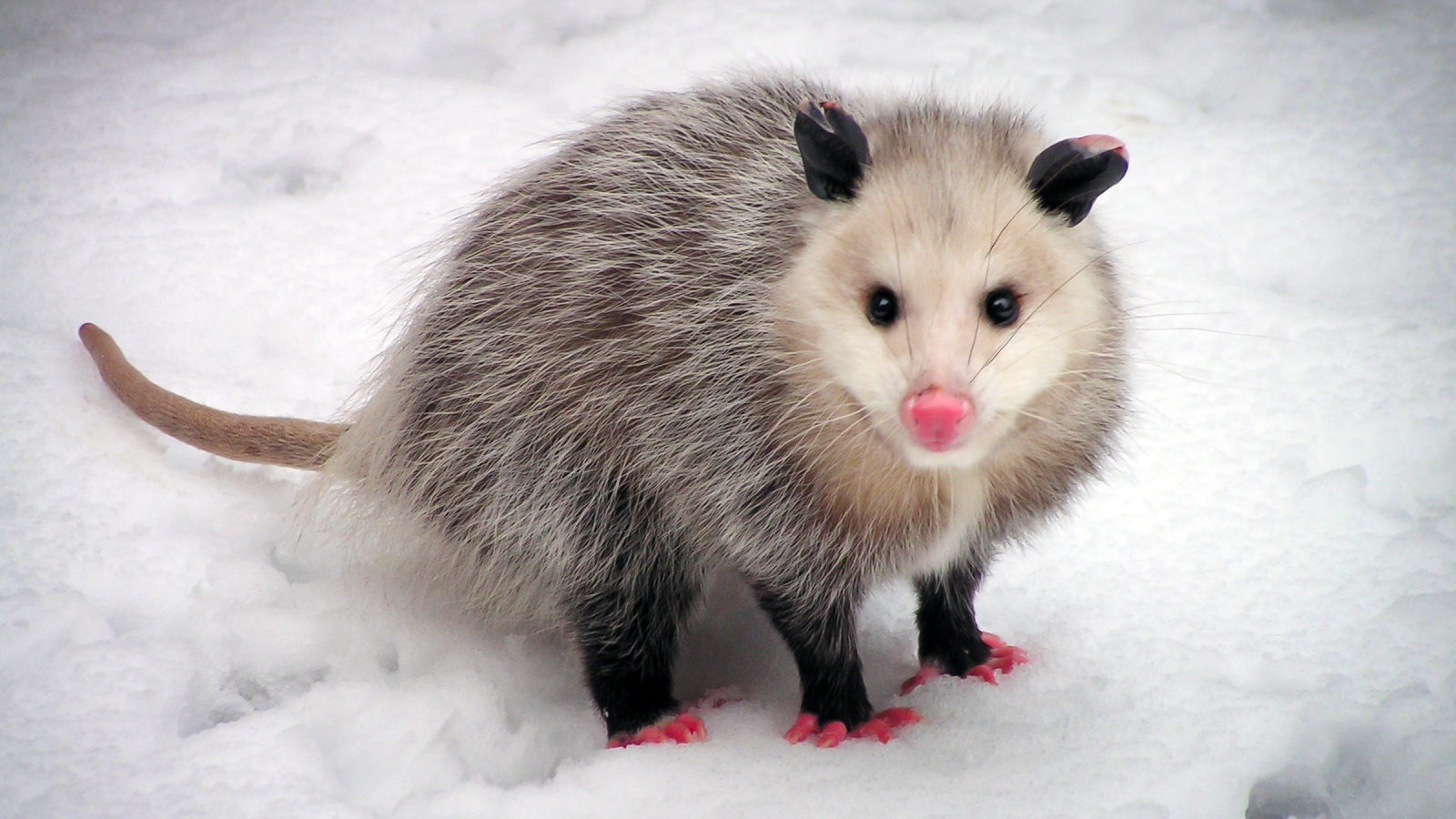
With their beady eyes, big ears, hairless tails and short, stocky legs, opossums are distinctive marsupials. Despite their odd appearance, these animals have a rich evolutionary history and have remained largely unchanged for millions of years. Their remarkable ability to adapt to different environments, food sources and predators has helped them survive from the time of the dinosaurs to today.

The Virginia opossum is the only opossum species found in the United States and Canada. Opossums have the smallest brain-to-weight ratio of any North American mammal.

The earliest known relatives of modern opossums lived over 65 million years ago, around the time dinosaurs went extinct. A 2009 study published in PLOS ONE found that peradectids, a family of marsupials known from fossils mostly in North America and Eurasia, are the closest extinct relatives of living opossums. Like modern opossums, peradectids had opposable thumbs on their hind feet and a similarly shaped skull — features that have remained nearly unchanged for millions of years. The earliest opossum fossils date back to the early Miocene epoch, roughly 20 million years ago.


You may like

One key reason why opossums have survived for so long with few changes is because they are adaptable. These marsupials eat almost anything, including fruit, insects, small animals and animal carcasses. They can live anywhere from forests to urban backyards. And, although they are mostly nocturnal, they can sometimes be seen in daylight if food is scarce.

Opossums are also resistant to snake venom, particularly that of rattlesnakes and other pit vipers. This resistance is due to a protein called Lethal Toxin Neutralising Factor found in their blood, which can neutralize various toxins in snake venom. This enables opossums to prey on venomous snakes that would otherwise be a threat.

Virginia opossum mother with nine young on her back.

Opossum moms carry their babies around on their backs until they are about 12 weeks old. (Image credit: Specialjake, CC BY-SA 3.0, via Wikimedia Commons)

Opossums give birth to underdeveloped young, which crawl into a pouch and nurse for around eight weeks as they grow. Young opossums then ride on their mother’s back for several weeks until they become independent at 12 weeks old.

When threatened, opossums may growl, hiss, bare their teeth or climb a nearby tree to escape. If escape isn’t possible, they resort to “playing dead” — a defense mechanism known as thanatosis.

Get the world’s most fascinating discoveries delivered straight to your inbox.

This reaction isn’t a conscious decision but a physiological response to extreme stress. It causes the opossum to become completely immobile and appear lifeless. This behavior is often accompanied by a significant drop in heart and respiratory rates, a decrease in body temperature and the release of a foul-smelling fluid from the anal glands. Together, these cues signal to predators that the opossum is already dead, often causing them to lose interest and move on. So involuntarily “playing possum” enables the animals to survive the encounter.

Source link

Share. Facebook Twitter Pinterest LinkedIn Tumblr Email
Previous Article‘Laundrobars’ have thrived across US for decades before NYC jumped on trend
Next Article ICE targets Los Angeles homeless shelter
Editor
  • Website

Related Posts

Lifestyle

New robotic heart mimics common, mysterious condition to help researchers study it

July 11, 2026
Lifestyle

Canon EOS R6 III review: A wildlife wonder

July 10, 2026
Lifestyle

Medieval babies and adults buried together in Sweden were not related, archaeologists discover — raising big questions about early Christian burial practices

July 10, 2026
Add A Comment

Comments are closed.

Categories
  • Entertainment
  • Lifestyle
  • News
  • Sports
  • Tech
  • Travel
Recent Posts
  • New robotic heart mimics common, mysterious condition to help researchers study it
  • Canon EOS R6 III review: A wildlife wonder
  • Medieval babies and adults buried together in Sweden were not related, archaeologists discover — raising big questions about early Christian burial practices
  • NASA is creating a fifth state of matter on the ISS, thanks to an upgrade to a mini-fridge-sized quantum lab
  • New sodium metal battery design charges in just 4 minutes and retains its capacity for years
calendar
July 2026
M T W T F S S
 12345
6789101112
13141516171819
20212223242526
2728293031  
« Jun    
Recent Posts
  • New robotic heart mimics common, mysterious condition to help researchers study it
  • Canon EOS R6 III review: A wildlife wonder
  • Medieval babies and adults buried together in Sweden were not related, archaeologists discover — raising big questions about early Christian burial practices
About

Welcome to Baynard Media, your trusted source for a diverse range of news and insights. We are committed to delivering timely, reliable, and thought-provoking content that keeps you informed
and inspired

Categories
  • Entertainment
  • Lifestyle
  • News
  • Sports
  • Tech
  • Travel
Facebook X (Twitter) Pinterest WhatsApp
  • Contact Us
  • About Us
  • Privacy Policy
  • Disclaimer
  • UNSUBSCRIBE
© 2026 copyrights reserved

Type above and press Enter to search. Press Esc to cancel.