

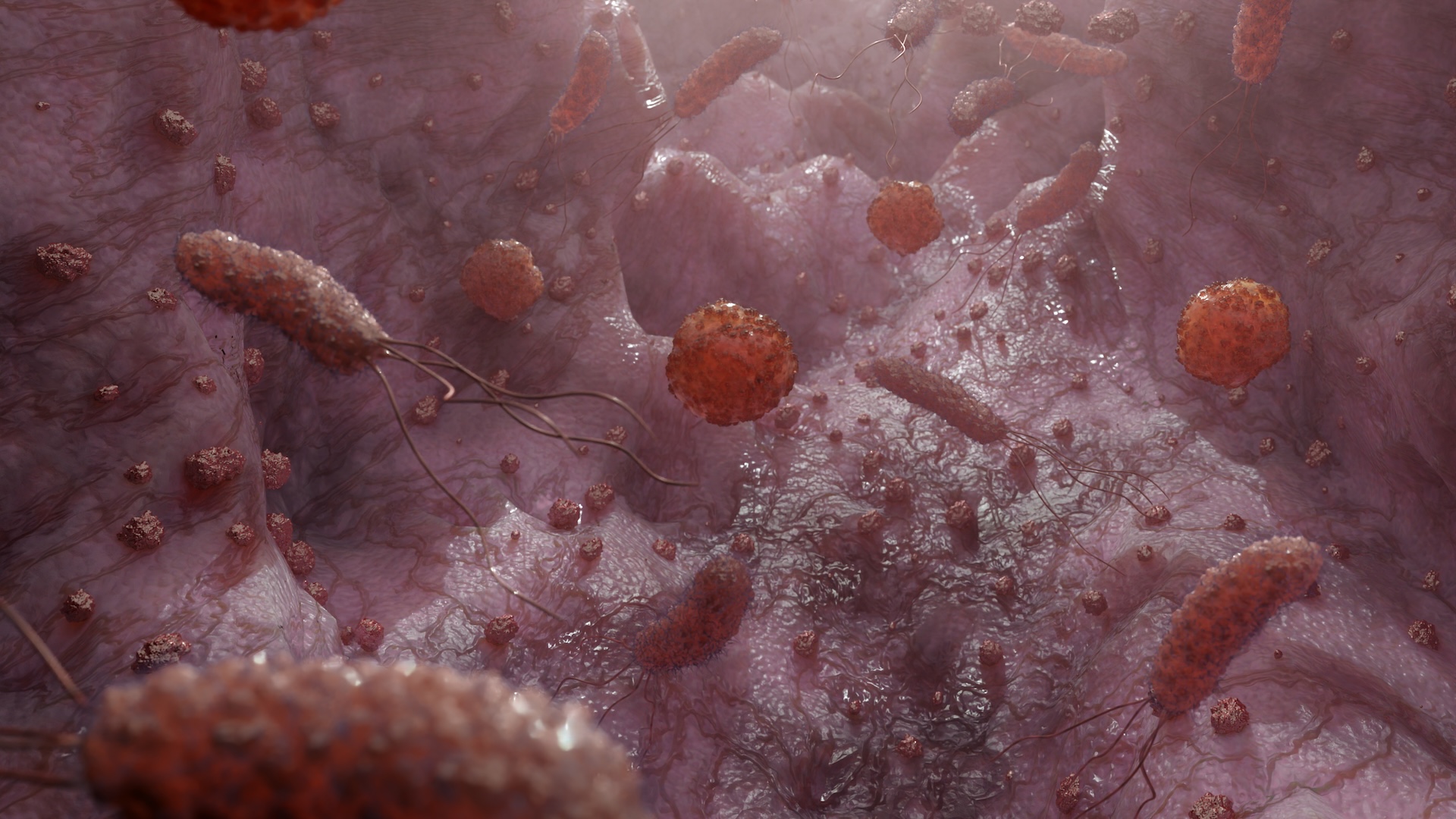
A common gut fungus could lead to new treatments for one of the world’s most common chronic liver disorders, scientists say.
The condition, called severe metabolic-dysfunction-associated fatty liver disease (MAFLD), affects more than 1 in 4 adults worldwide. Once known as nonalcoholic fatty liver disease, it can lead to metabolic dysregulation, inflammation and fibrosis, or scarring, of the liver. This advanced stage of the condition is called metabolic-dysfunction-associated steatohepatitis (MASH).
Despite the condition’s prevalence, only one drug has been approved by the Food and Drug Administration to treat MASH, and it doesn’t work well for everyone. So now, in a new study, scientists are exploring the effects of a fungus called Fusarium foetens and their therapeutic potential.
“The unique effects of F. foetens are truly miraculous,” said Changtao Jiang, a distinguished professor and deputy dean in the School of Basic Medical Sciences at Peking University in China. Jiang is a lead author of a report describing the research, published May 1 in the journal Science.
So far, the fungus has been studied only in lab experiments involving human clinical samples and mice. In the future, the researchers plan to study its effects in the human body.
Related: Scientists discover new type of cell in the liver
Helpful fungi
Prior to the new study, scientists knew the gut and its microbiome influence MASH progression, because the liver is very exposed to byproducts from gut microbes. However, little was known about the specific microorganisms and molecules involved.
In fact, although gut bacteria have been studied more deeply, little is known about gut fungi. That’s partly because gut fungi have diverse and complex nutritional needs, making them hard to grow in the lab, and samples are easily contaminated because the fungal spores are airborne.
“Gut fungi are often termed the ‘dark matter’ of the intestinal microecosystem,” Jiang told Live Science by email. But in their latest work, the researchers not only identified how F. foetens affects MASH but also pinpointed the molecules and metabolites involved.
To identify the fungus, the researchers collected fecal samples from 100 people across five regions of China. They used a special system to grow the fungi within each sample in the lab.
The system aims to mimic a real gut “as much as possible,” Jiang said. It involves immersing small chips in fecal extract. Each chip contains chambers filled with a Jell-O-like substance infused with extracts from the fecal samples. Each chamber is capped with a membrane designed to allow nutrients from poo into the diffusion chamber without letting microbes escape through the same pores.
The system was a “clever cultivation” technique for isolating different species of fungus, according to Kim Lewis, a professor of biology at Northeastern University who specializes in microbiome therapeutics and was not involved in the research.
In addition to analyzing samples from China, the team studied published data from other studies of intestinal fungi that used volunteers in eight other countries. This enabled them to identify the most common fungal strains found in the gut, not only in China but worldwide.
Considering data from around the world helped ensure the samples covered a broad range of diets and environmental exposures, as both factors shape the gut microbiome. “Urban residents typically exhibit lower gut microbiota diversity compared to rural residents,” Jiang noted, “likely due to reduced contact with natural environments and increased antibiotic use.”
Because fungi spread through the air, the researchers compared fungal communities grown from air and from intestinal samples to spot those likely to be contaminants. The team also tested how well the fungal strains withstood the temperature of the gut — around 98.6 degrees Fahrenheit (37 degrees Celsius) — and the lack of oxygen found in the intestines.
Through these experiments, the researchers found that across all of the fecal samples, F. foetens stood out as the most common strain that was likely to thrive in the gut.
Related: Astronauts to grow livers in space, where microgravity might help them thrive
To see whether F. foetens could influence fatty liver disease, the researchers administered the fungus to mice for two weeks. The rodents had been fed a high-fat diet designed to trigger MASH symptoms. Although the weight of the treated mice was comparable to that of the mice not given the fungus, the weight of their livers was less. The treated mice also had less liver inflammation and fibrosis and lower levels of chemicals associated with MASH.
Looking closer, Jiang and his colleagues found that the F. foetens treatment reduced the activity of a key enzyme for making certain types of fats. As the activity of this enzyme — called ceramide synthase (CerS) — fell, so did the levels of those fats. The researchers confirmed these effects through additional experiments on mice that had been genetically altered to either decrease or increase their CerS production, as well as on mice fed ceramide supplements.
The work “holds significant implications for developing clinical therapeutic strategies targeting gut fungi,” Jiang said.
Lewis agreed, adding that the “unexpected discovery” raises the idea that scientists could isolate gut microbes that “we never knew existed to fight human diseases.”
Next, the researchers plan to study the effects of F. foetens in humans. They also want to investigate the molecular pathways involved in the therapeutic effect and the roles other intestinal fungi might play in metabolic diseases.
This article is for informational purposes only and is not meant to offer medical advice.
