Close Menu
  • Home
  • UNSUBSCRIBE
  • News
  • Lifestyle
  • Tech
  • Entertainment
  • Sports
  • Travel
Facebook X (Twitter) WhatsApp
Trending
  • Lemur used in ‘lemur yoga’ session dies of human herpesvirus, study finds
  • ‘A fine line between reducing stigma and trivialising conditions’: Social media, self-diagnosis and the glamorization of ADHD
  • New 2D memory device stores data on just a single electron
  • Before we ban kids from social media completely, here’s what we should try first | Jonathan Bellack and Mariana Olaizola Rosenblat
  • Scientists uncover a better way to beat ‘the bends’ — using deep-diving pigs
  • Mars may have been losing its water more than 4 billion years ago, oldest-known Martian meteorite suggests
  • ‘The lance head was still inside the pelvis’: Mass grave found in Austria may hold casualties of unknown ancient Roman battle
  • ‘Full-on berserker mode’: Archaeologists solve mystery of medieval soldiers with gruesome square holes in their skull
Facebook X (Twitter) WhatsApp
Baynard Media
  • Home
  • UNSUBSCRIBE
  • News
  • Lifestyle
  • Tech
  • Entertainment
  • Sports
  • Travel
Baynard Media
Home»Lifestyle»Total eclipse, shooting stars, and the Milky Way: Why Aug. 12 could be the greatest single day and night for skywatching for years
Lifestyle

Total eclipse, shooting stars, and the Milky Way: Why Aug. 12 could be the greatest single day and night for skywatching for years

EditorBy EditorAugust 1, 2026No Comments3 Mins Read
Share Facebook Twitter Pinterest LinkedIn Tumblr Reddit Telegram Email
Share
Facebook Twitter LinkedIn Pinterest Email

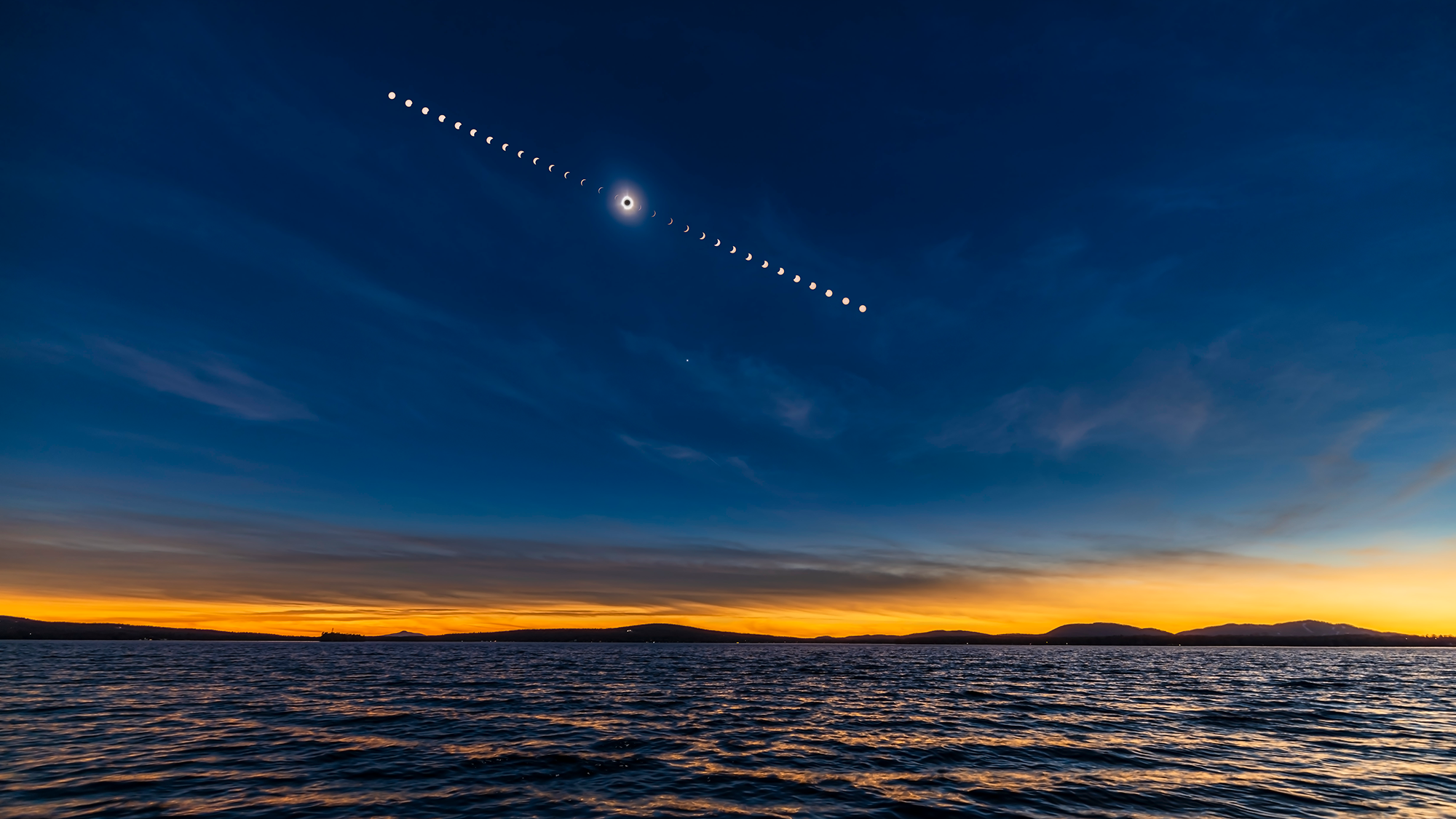
Skywatchers across North America and Europe should mark Wednesday, Aug. 12 on their calendars. From a daytime solar eclipse to the peak of the Perseid meteor shower beneath a moonless sky, the date offers an exceptionally rare combination of celestial events within a 24-hour period. Add brilliant Venus and the glowing band of the Milky Way after sunset, and the result is a full day of astronomy that could become one of the standout skywatching opportunities of the year.

The first spectacle arrives during daylight as the moon partially covers the sun across Alaska, eastern Canada and parts of the northeastern U.S. A dramatic total solar eclipse will be visible along a narrow path stretching across eastern Greenland, western Iceland and northern Spain — and that’s where eclipse chasers will be. However, about 779 million people in North America, Europe and North Africa will see at least a 10% partial eclipse, according to Time and Date.

Northern Canada will experience North America’s deepest partial eclipse, with parts of Nunavut in the Canadian Arctic seeing up to 93% of the sun covered, according to Time And Date; large eastern cities like Toronto, Ottawa and Quebec will see between 8% and 24% coverage. The best views in the U.S. will be from Alaska and the Northeast, with Fairbanks, Alaska, seeing 37% of the sun covered, and Boston seeing 16%.

A 3D image of a globe with various lines across it.

This NASA map shows who will see a total solar eclipse (red line) and who will see a partial eclipse (yellow lines) on Aug. 12.

(Image credit: NASA)

In Europe, London will see a 91% eclipse and Paris will get 92%. No matter your viewing location, it’s important to use ISO 12312-2 certified solar eclipse glasses throughout the entire partial eclipse. Also remember to fit binoculars, telescopes and cameras with solar filters before pointing them at the sun. (Here’s a great selection of gear that will help you safely watch the eclipse from anywhere).

After sunset, the day’s second major event begins. Brilliant Venus will be easy to spot as it reaches dichotomy, the point at which the planet appears half illuminated. Through a small telescope or large stargazing binoculars, skywatchers should see Venus resembling a tiny half-moon as it moves closer to Earth.


You may like

Once darkness falls, the day’s third and fourth major events will begin. The annual Perseid meteor shower will peak during the overnight hours of Aug. 12-13, and this year’s display benefits from one crucial advantage: a new moon. With no moonlight washing out faint meteors, observers under truly dark skies could see between 50 and 75 meteors per hour, while even suburban locations should enjoy frequent “shooting stars,” according to The Planetary Society.

The best time to look is from midnight to 2 a.m. local time, when the sky is darkest and the constellation Perseus is highest in the sky. As a final bonus, those under dark, rural skies will see the Milky Way arch overhead, providing one of the finest views of our home galaxy all year.

Get the world’s most fascinating discoveries delivered straight to your inbox.

A daytime solar eclipse, a moon-free Perseid meteor shower, a dazzling Venus and spectacular views of the Milky Way make Aug. 12 a great opportunity for anyone with an interest in the night sky. If skies are clear, it could be the single greatest day and night for skywatching in years.


See how much you know about the sun with our sun quiz!

Source link

Share. Facebook Twitter Pinterest LinkedIn Tumblr Email
Previous ArticleDementia prevention trial shows promising results, prompting celebration from scientists
Next Article Why do cats have ‘leg whiskers’?
Editor
  • Website

Related Posts

Lifestyle

Lemur used in ‘lemur yoga’ session dies of human herpesvirus, study finds

August 15, 2026
Lifestyle

‘A fine line between reducing stigma and trivialising conditions’: Social media, self-diagnosis and the glamorization of ADHD

August 15, 2026
Lifestyle

New 2D memory device stores data on just a single electron

August 15, 2026
Add A Comment

Comments are closed.

Categories
  • Entertainment
  • Lifestyle
  • News
  • Sports
  • Tech
  • Travel
Recent Posts
  • Lemur used in ‘lemur yoga’ session dies of human herpesvirus, study finds
  • ‘A fine line between reducing stigma and trivialising conditions’: Social media, self-diagnosis and the glamorization of ADHD
  • New 2D memory device stores data on just a single electron
  • Before we ban kids from social media completely, here’s what we should try first | Jonathan Bellack and Mariana Olaizola Rosenblat
  • Scientists uncover a better way to beat ‘the bends’ — using deep-diving pigs
calendar
August 2026
M T W T F S S
 12
3456789
10111213141516
17181920212223
24252627282930
31  
« Jul    
Recent Posts
  • Lemur used in ‘lemur yoga’ session dies of human herpesvirus, study finds
  • ‘A fine line between reducing stigma and trivialising conditions’: Social media, self-diagnosis and the glamorization of ADHD
  • New 2D memory device stores data on just a single electron
About

Welcome to Baynard Media, your trusted source for a diverse range of news and insights. We are committed to delivering timely, reliable, and thought-provoking content that keeps you informed
and inspired

Categories
  • Entertainment
  • Lifestyle
  • News
  • Sports
  • Tech
  • Travel
Facebook X (Twitter) Pinterest WhatsApp
  • Contact Us
  • About Us
  • Privacy Policy
  • Disclaimer
  • UNSUBSCRIBE
© 2026 copyrights reserved

Type above and press Enter to search. Press Esc to cancel.