Close Menu
  • Home
  • UNSUBSCRIBE
  • News
  • Lifestyle
  • Tech
  • Entertainment
  • Sports
  • Travel
Facebook X (Twitter) WhatsApp
Trending
  • The Milky Way returns: How to take breathtaking photos of our galaxy this summer
  • Intestinal parasite transformed into antitoxin factory that can live in the body in early study
  • Complete skin of an adult horse found with 10th-century woman and newborn in rare Siberian burial
  • ‘Geminid Symphony’ and ‘Galactic Gandalf’: See the breathtaking views of our home galaxy from the 2026 Milky Way Photographer of the Year contest
  • Japan’s ‘crawling’ moon robot LEV-2 passed its historic first lunar mission with flying colors
  • Artificial turf contains 400 chemicals tied to cancer and hormone disruption. But is it unsafe?
  • ‘Just defies belief’: 5 million-year-old whale graveyard stretches for 750 miles in the Indian Ocean
  • New blood tests look for many cancers, aiming to catch them early. But do they actually work?
Facebook X (Twitter) WhatsApp
Baynard Media
  • Home
  • UNSUBSCRIBE
  • News
  • Lifestyle
  • Tech
  • Entertainment
  • Sports
  • Travel
Baynard Media
Home»Lifestyle»The Milky Way returns: How to take breathtaking photos of our galaxy this summer
Lifestyle

The Milky Way returns: How to take breathtaking photos of our galaxy this summer

EditorBy EditorJune 11, 2026No Comments3 Mins Read
Share Facebook Twitter Pinterest LinkedIn Tumblr Reddit Telegram Email
Share
Facebook Twitter LinkedIn Pinterest Email

With the arrival of the summer solstice on June 21, stargazing becomes a late-night hobby. But June is one of the best months of the year to photograph the Milky Way from the Northern Hemisphere. As summer arrives, the brightest region of our galaxy — the galactic core — begins to climb into view in the southeastern sky. However, success will depend on timing, darkness and preparation.

The Milky Way is visible throughout the year, but its brightest and most photogenic section is best seen between May and September. In June, at midlatitudes, it becomes visible in the southeastern sky around 11:30 p.m. local time as true astronomical darkness begins, opening a roughly three-hour viewing window before the sky begins to lighten. Even so, you’ll need a dark sky, which can be found using a light-pollution map or searching for a nearby Dark Sky Place, Dark-Sky Preserve (Canada) or Dark Sky Discovery site (U.K.).

A good way to find the Milky Way is to identify the three bright stars — Vega, Deneb and Altair — that make up the Summer Triangle, a famous and very large asterism that’s prominent in the southeastern sky in June. The Milky Way will stream from Deneb to Altair and down to the southern horizon.

The best nights occur between the last-quarter moon on June 8 and a few nights after the new moon on June 14, when the moon will be out of the sky. That’s particularly important in June because the moon hangs low in the south — exactly where the Milky Way’s brightest section is.

How to take the best photos of the Milky Way

Once you’re in position, you’ll need a good astrophotography camera ‪—‬ a mirrorless or DSLR camera (preferably full-frame) with manual controls and RAW shooting capability. A sturdy tripod is also vital because exposures typically last between 10 and 25 seconds. Wide-angle lenses between 14 and 24 millimeters work particularly well because they capture more of the sky while allowing longer exposures before stars begin trailing.


You may like

With the camera in manual mode, try an aperture of f/2.8 (or the widest your lens can handle), an ISO of 3200-6400, and a shutter speed between 10 and 25 seconds, Capture the Atlas recommends. However, there are other considerations, such as manually focusing to ensure the stars are sharp (using live view or zooming in on an image to check) and employing a shutter delay to avoid camera shake. Then, you can use Photoshop or other post-processing software to adjust the contrast, highlights, color temperature and clarity to reveal spectacular details hidden within RAW files.

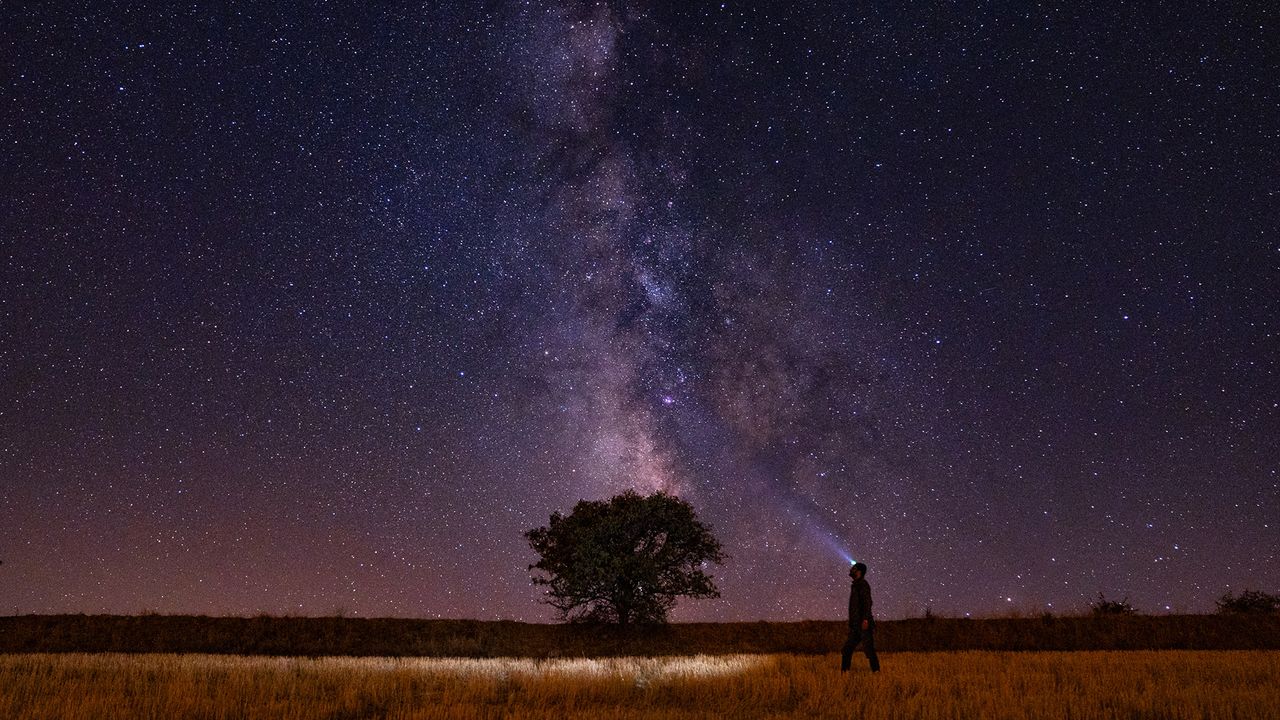
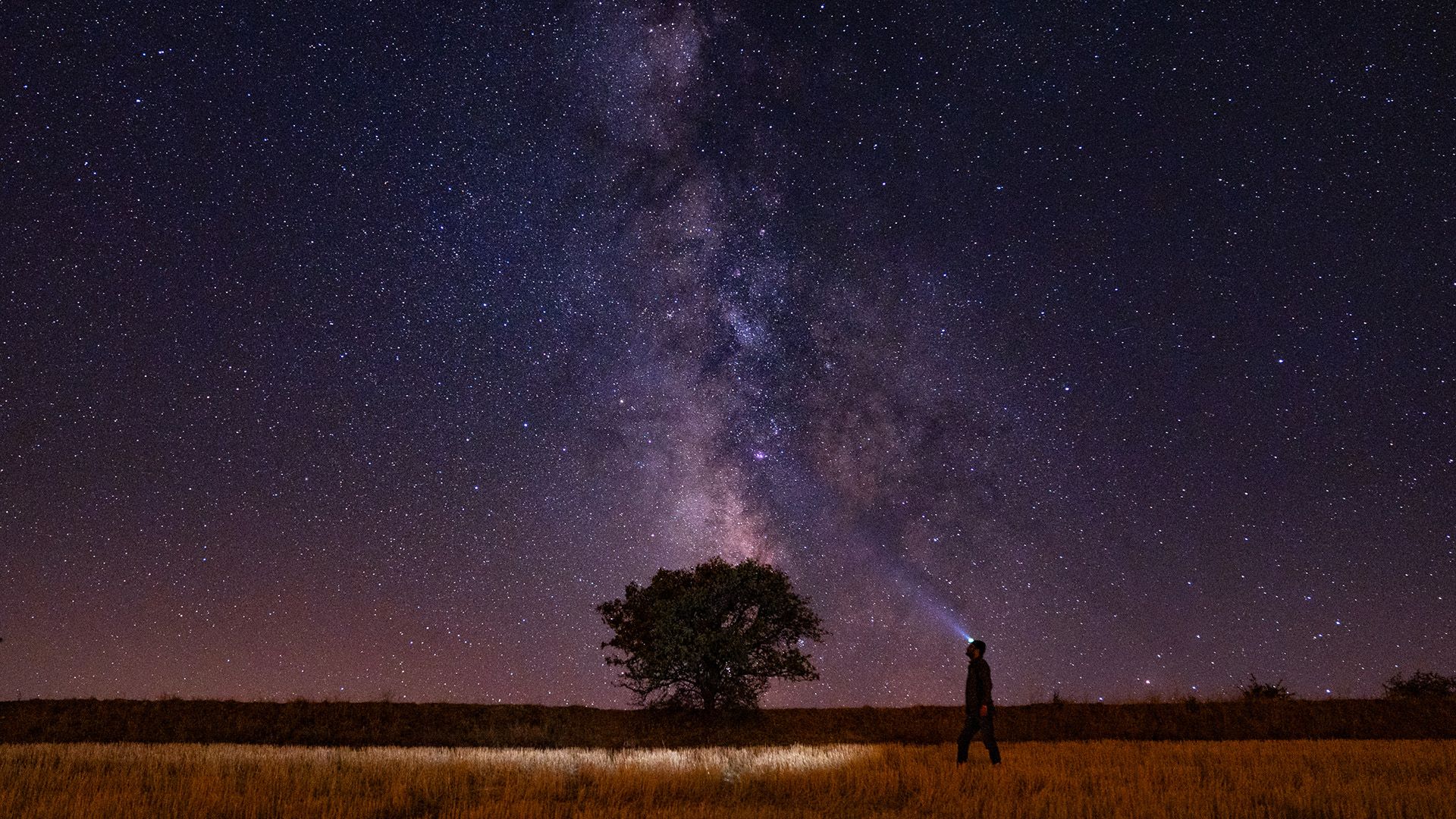
What many beginners ignore is the importance of composition. A close-up of the Milky Way will produce a disappointing image. Instead, think about striking foregrounds, such as coastal cliffs, abandoned buildings, lakes, rock formations, lone trees and people to create depth, scale and interest.

Get the world’s most fascinating discoveries delivered straight to your inbox.

While June is an excellent month to begin Milky Way photography in the Northern Hemisphere, it will get even easier in July, August and September as the galaxy moves into the south and, ultimately, the southwest, before getting lost in the horizon once again around October. During that window, astrophotographers from the Northern Hemisphere often travel to dark-sky destinations farther south — such as the Canary Islands, Namibia, Chile, Australia and New Zealand — where darker skies and lower latitudes reveal more of the galaxy’s bright core.

Our favorite astro cameras

Source link

Share. Facebook Twitter Pinterest LinkedIn Tumblr Email
Previous ArticleIntestinal parasite transformed into antitoxin factory that can live in the body in early study
Editor
  • Website

Related Posts

Lifestyle

Intestinal parasite transformed into antitoxin factory that can live in the body in early study

June 11, 2026
Lifestyle

Complete skin of an adult horse found with 10th-century woman and newborn in rare Siberian burial

June 11, 2026
Lifestyle

‘Geminid Symphony’ and ‘Galactic Gandalf’: See the breathtaking views of our home galaxy from the 2026 Milky Way Photographer of the Year contest

June 11, 2026
Add A Comment

Comments are closed.

Categories
  • Entertainment
  • Lifestyle
  • News
  • Sports
  • Tech
  • Travel
Recent Posts
  • The Milky Way returns: How to take breathtaking photos of our galaxy this summer
  • Intestinal parasite transformed into antitoxin factory that can live in the body in early study
  • Complete skin of an adult horse found with 10th-century woman and newborn in rare Siberian burial
  • ‘Geminid Symphony’ and ‘Galactic Gandalf’: See the breathtaking views of our home galaxy from the 2026 Milky Way Photographer of the Year contest
  • Japan’s ‘crawling’ moon robot LEV-2 passed its historic first lunar mission with flying colors
calendar
June 2026
M T W T F S S
1234567
891011121314
15161718192021
22232425262728
2930  
« May    
Recent Posts
  • The Milky Way returns: How to take breathtaking photos of our galaxy this summer
  • Intestinal parasite transformed into antitoxin factory that can live in the body in early study
  • Complete skin of an adult horse found with 10th-century woman and newborn in rare Siberian burial
About

Welcome to Baynard Media, your trusted source for a diverse range of news and insights. We are committed to delivering timely, reliable, and thought-provoking content that keeps you informed
and inspired

Categories
  • Entertainment
  • Lifestyle
  • News
  • Sports
  • Tech
  • Travel
Facebook X (Twitter) Pinterest WhatsApp
  • Contact Us
  • About Us
  • Privacy Policy
  • Disclaimer
  • UNSUBSCRIBE
© 2026 copyrights reserved

Type above and press Enter to search. Press Esc to cancel.