

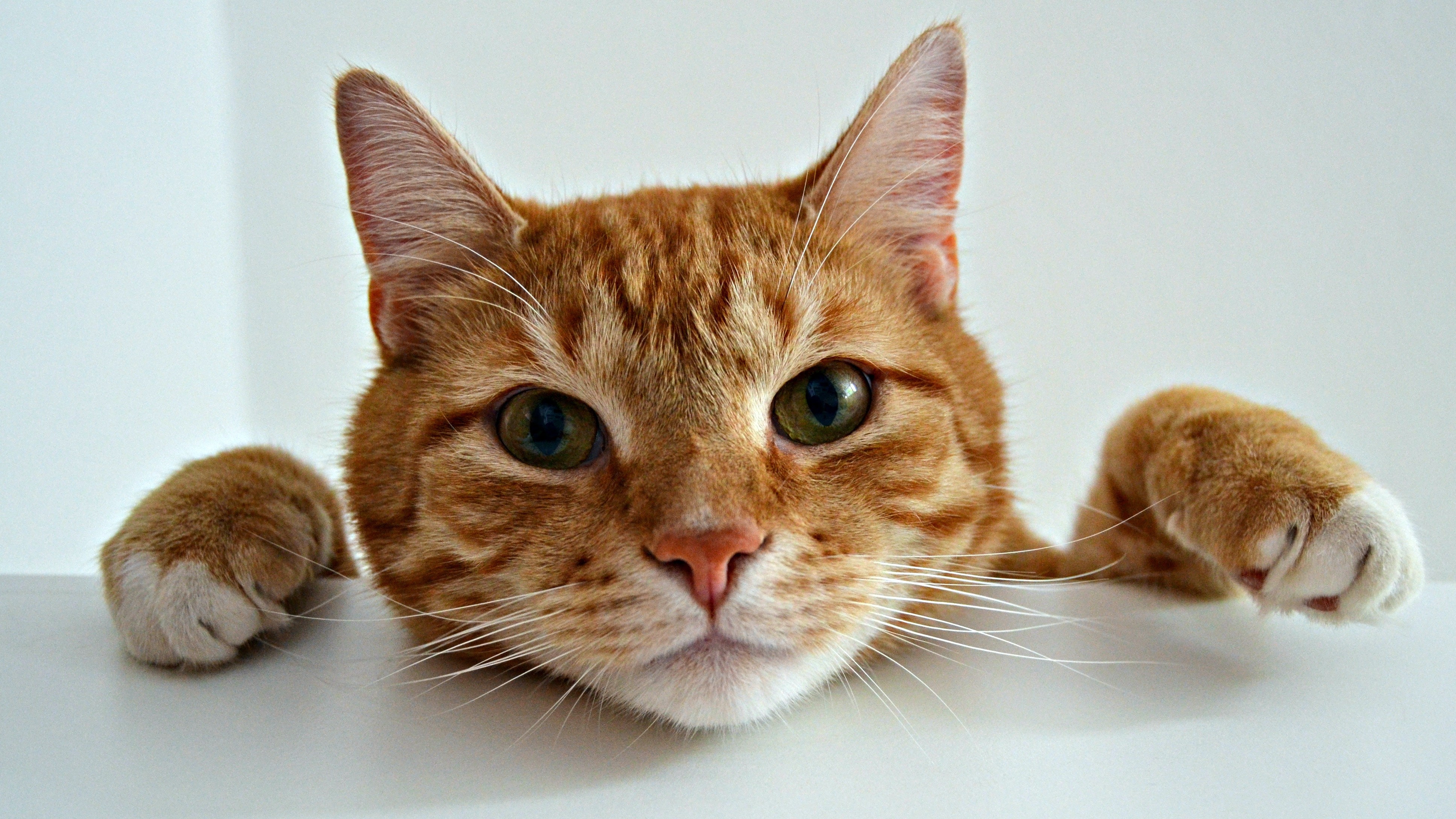
Orange cats have a unique genetic mutation that gives them their special coats — and this mutation also explains why so many of them are male, two new studies find.
Many animals have orange hair, including some humans, but only in domestic cats are males more likely to be orange than females. Researchers have long known there must be something special about ginger cat genetics, and with this newly identified mutation, they’ve finally solved the mystery.
The mutation deletes a section of the cat’s DNA, and increases the activity of a gene in X chromosomes — thread-like structures of DNA that carry hereditary information passed on from parent to offspring.
In humans and cats, males typically have one X chromosome and one Y chromosome, while females have two X chromosomes. So if male cats have an X chromosome that carries the mutation, then they’ll become orange. Female cats, on the other hand, need to inherit the mutation on both of their Xs to be completely orange.
Researchers had previously assumed that the mutation would be on the X chromosome because of the skewed sex ratio — it also explains why calico and tortoiseshell cats, which have patches of orange mixed in with black and white, are usually female. In these cases, the cats have inherited one mutated X chromosome.
Two research teams, one led by Christopher Kaelin at Stanford University in the U.S. and the other led by Hiroyuki Sasaki at Kyushu University in Japan, independently discovered that the mutation affects a gene called ARHGAP36. The teams shared their findings in separate studies published Thursday (May 15) in the journal Current Biology.
“Identifying the gene has been a longtime dream, so it’s a joy to have finally cracked it,” Sasaki, a geneticist at Kyushu University and self-proclaimed cat-lover, said in a statement released by the university.
Related: Cats are better at word association than human babies are, study finds
Researchers have been studying cat coat genetics since the beginning of the 20th century, and yet the orange mutation, which the Stanford team called “sex-linked orange,” has remained elusive until now.
“It’s a genetic exception that was noticed over a hundred years ago,” Kaelin, a senior scientist in genetics at Stanford University, said in a statement released by the university. “It’s really that comparative genetic puzzle that motivated our interest in sex-linked orange.”
Both research teams discovered the mutation by looking at the DNA of different cats. The Japanese team, which crowdfunded more than $70,000 to conduct the research, found that all of the orange cats they studied shared a mutation, or “meow-tation,” that deleted a section of DNA in the ARHGAP36 gene, according to the Kyushu statement. They then examined calico cat tissues and found that ARHGAP36 was more active in the cats’ orange patches than in their black or white patches.
“This suggests that when present, this section of DNA normally suppresses ARHGAP36 activity,” Sasaki said. “When missing, ARHGAP36 stays active.”
Mammals get their colors from a pigment-producing substance called melanin. Two types of melanin affect coat color: eumelanin, responsible for dark brown and black, and pheomelanin, responsible for yellow, red or orange. In orange fur, the more active ARHGAP36 may drive pigment production towards higher levels of pheomelanin, and ginger fur, according to the Kyushu statement.
Orange cat behavior
ARHGAP36 is active throughout the body, including in the brain and hormonal glands, so it’s possible the sex-linked orange mutation affects orange cats in other ways, too. Some pet owners swear that orange cats are sillier than other cats, but the Stanford researchers looked at gene expression in the brain and didn’t find differences between orange and non-orange cats.
Kaelin thinks that their chaotic reputation is more likely due to most orange cats being males — suggesting males are more chaotic — but couldn’t rule out ARHGAP36 being a factor, possibly by affecting other tissue in the body.
Origins of orange
The new study doesn’t reveal when the mutation first emerged. However, Kaelin thinks it probably arose early on in the domestication process.
“We know that because there are paintings that date to the 12th century where you see clear images of calico cats,” Kaelin said. “So, the mutation is quite old.”
Humans first domesticated cats thousands of years ago. To find out whether the mutation goes back millennia, researchers will have to find ancient evidence of orange cats. Sasaki is keen to explore the mutation’s origins.
“One idea is to study ancient Egyptian cat paintings—or even to test DNA from mummified cats—to see if any cats back then were orange,” Sasaki said. “It’s ambitious, but I’m excited to try.”
