Close Menu
  • Home
  • UNSUBSCRIBE
  • News
  • Lifestyle
  • Tech
  • Entertainment
  • Sports
  • Travel
Facebook X (Twitter) WhatsApp
Trending
  • Do you really have to wash rice before you cook it?
  • Neuroscientists are searching for the ‘cellular substrate of loneliness’
  • Bow-Wow, Ding-Dong, Pooh-Pooh: Expert explains early theories of how human language evolved — and their silly names
  • Famous child mummies in Andes may belong to kids who were sacrificed to ‘ritually anchor’ the Inca’s presence as their empire expanded
  • Artemis II crew captures rare double auroras on the dark side of Earth as they zoom toward the moon — Space photo of the week
  • Has all the water on Earth been peed before?
  • ‘This might be the point of no return’: Experts on the current measles outbreak and where we go from here
  • NASA’s experimental X-59 jet breaks sound barrier for 1st time in step toward ‘quiet supersonic’ technology
Facebook X (Twitter) WhatsApp
Baynard Media
  • Home
  • UNSUBSCRIBE
  • News
  • Lifestyle
  • Tech
  • Entertainment
  • Sports
  • Travel
Baynard Media
Home»Tech»NVIDIA CEO Jensen Huang’s definition of AGI is telling
Tech

NVIDIA CEO Jensen Huang’s definition of AGI is telling

EditorBy EditorMarch 24, 2026No Comments3 Mins Read
Share Facebook Twitter Pinterest LinkedIn Tumblr Reddit Telegram Email
Share
Facebook Twitter LinkedIn Pinterest Email

Artificial General Intelligence, or AGI, has spent the last year or so as the AI industry’s favorite buzzword. As the sector’s leading companies burn through capital at historic rates, racking up energy costs and investor expectations that grow harder to meet by the quarter, the promise of imminent human-level machine intelligence has become a useful thing to have in your back pocket.

Whether we’re actually close to that milestone depends almost entirely on how you define it. That definitional flexibility, it turns out, is doing a lot of work.

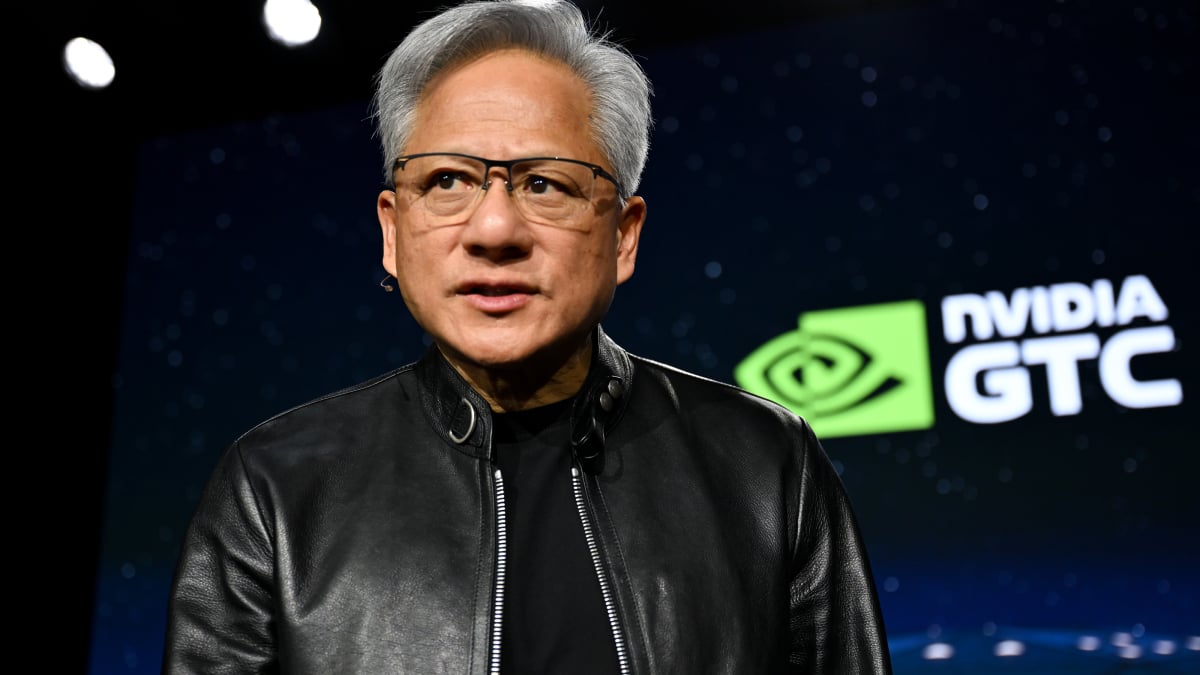
Take, for example, Jensen Huang, the CEO of NVIDIA — a company currently valued at roughly $4 trillion, built largely on the GPU hardware that powers the AI boom — who recently sat down with podcaster Lex Fridman for a wide-ranging conversation covering data centers, geopolitics, and the question of whether AGI has already arrived. Huang thinks it has. The reasoning behind that claim, however, is fairly dubious.

As Fridman points out, Huang has previously said the timeline for AGI depends on what defines it. At the 2023 New York Times DealBook Summit, Huang defined AGI as software capable of passing tests that approximate normal human intelligence at a reasonably competitive level. He expected AI to clear that bar within five years.

For his part, Fridman offered Huang a generous definition to work with: true AGI, in Fridman’s framing, would look like an AI capable of starting, growing, and running a technology company worth more than a billion dollars. He asked whether that was achievable in the next five to 20 years, given the recent proliferation of agentic AI tools like OpenClaw.

Mashable Light Speed

Huang didn’t need five to 20 years. “I think it’s now. I think we’ve achieved AGI,” he replied to Fridman.

That, however, is based on a narrow interpretation of what Fridman asked. The way Huang sees it, the AI doesn’t need to build anything lasting. It doesn’t need to manage people, navigate a board, or sustain a business. It just needs to hit a billion dollars once.

SEE ALSO:

Microsoft dumps $1 billion into ‘artificial general intelligence’ project

“You said a billion,” Huang told Fridman, “and you didn’t say forever.”

The through-line in both cases isn’t a consistent theory of machine intelligence. It’s a consistent pattern of defining the threshold in whatever way makes “yes, we’re there” the easiest possible answer. His illustration of what that might look like is telling.

After his initial answer, Huang lays out his thoughts, describing a scenario in which an AI creates a simple web service — some app that goes viral, gets used by a few billion people at 50 cents a pop, and then quietly folds. He then points to the dot-com era as precedent, arguing that most of those websites were no more sophisticated than what an AI agent could generate today.

Huang was also candid about the ceiling of that vision. “The odds of 100,000 of those agents building NVIDIA,” he said plainly, “is zero percent.” That’s not a small caveat. It’s the whole ballgame.

What Huang is actually describing — a viral app that monetizes briefly and dies — is a far cry from the transformative, economy-reshaping AGI that dominates the public conversation. So, by his own admission, the kind of compound institutional intelligence required to build something like NVIDIA is nowhere in the picture yet.

Topics
Artificial Intelligence
Nvidia

Source link

Share. Facebook Twitter Pinterest LinkedIn Tumblr Email
Previous ArticleReformation Dress Deals: Nordstrom Spring Sale 2026
Next Article Channing Tatum Writing Romance Novel With Roxane Gay
Editor
  • Website

Related Posts

Tech

iPhone exploit DarkSword has been released in the wild

March 24, 2026
Tech

The U.S. router ban: Everything you need to know

March 24, 2026
Tech

Underage sexual content, self-harm info targeted by OpenAI’s new open-source prompts

March 24, 2026
Add A Comment

Comments are closed.

Categories
  • Entertainment
  • Lifestyle
  • News
  • Sports
  • Tech
  • Travel
Recent Posts
  • Do you really have to wash rice before you cook it?
  • Neuroscientists are searching for the ‘cellular substrate of loneliness’
  • Bow-Wow, Ding-Dong, Pooh-Pooh: Expert explains early theories of how human language evolved — and their silly names
  • Famous child mummies in Andes may belong to kids who were sacrificed to ‘ritually anchor’ the Inca’s presence as their empire expanded
  • Artemis II crew captures rare double auroras on the dark side of Earth as they zoom toward the moon — Space photo of the week
calendar
June 2026
M T W T F S S
1234567
891011121314
15161718192021
22232425262728
2930  
« May    
Recent Posts
  • Do you really have to wash rice before you cook it?
  • Neuroscientists are searching for the ‘cellular substrate of loneliness’
  • Bow-Wow, Ding-Dong, Pooh-Pooh: Expert explains early theories of how human language evolved — and their silly names
About

Welcome to Baynard Media, your trusted source for a diverse range of news and insights. We are committed to delivering timely, reliable, and thought-provoking content that keeps you informed
and inspired

Categories
  • Entertainment
  • Lifestyle
  • News
  • Sports
  • Tech
  • Travel
Facebook X (Twitter) Pinterest WhatsApp
  • Contact Us
  • About Us
  • Privacy Policy
  • Disclaimer
  • UNSUBSCRIBE
© 2026 copyrights reserved

Type above and press Enter to search. Press Esc to cancel.