This week’s science news was filled with unearthed mysteries from ancient tombs, including the discovery of the possible true purpose of hundreds of stone jars scattered across Laos’ highlands.
The Plain of Jars, which consists of 2,000 hollowed-out stone urns dotted across the Xieng Khouang Plateau, has puzzled archaeologists for almost a century. Now, researchers have found the remains of at least 37 people inside one of these jars, suggesting that the site was a vast burial complex where ancestors were worshipped for generations.
This week, we also got an answer to a long-standing mystery of why the Giza pyramids have survived for more than 4,600 years.
Global warming moves 5,000 times faster than rice can evolve
Climate change is creating environments where humans have never successfully cultivated rice before.
(Image credit: Kevin Frayer / Stringer via Getty Images)
The rapid warming of Earth could be pushing rice-growing regions to their “thermal limit,” according to a troubling new study we covered this week.
That means the staple crop could be facing serious disruption that affects a billion people who depend on rice cultivation for their livelihoods. It also puts farmers and rice itself “closer to the limits of what we can reasonably adapt to in that time frame,” study first author Nicolas Gauthier, an anthropologist and geographer at the Florida Museum of Natural History, told Live Science.
By analyzing 9,000 years’ worth of data, Gauthier and his colleagues found a hard upper temperature limit that could soon be breached.
Get the world’s most fascinating discoveries delivered straight to your inbox.
Discover more planet Earth news:
—A transition may be looming for a massive Italian volcano
—The Appalachian Mountains hold enough lithium to make 500 billion cellphones, researchers discover
—Complex animals evolved up to 10 million years earlier than previously thought, fossil discovery shows
Life’s Little Mysteries
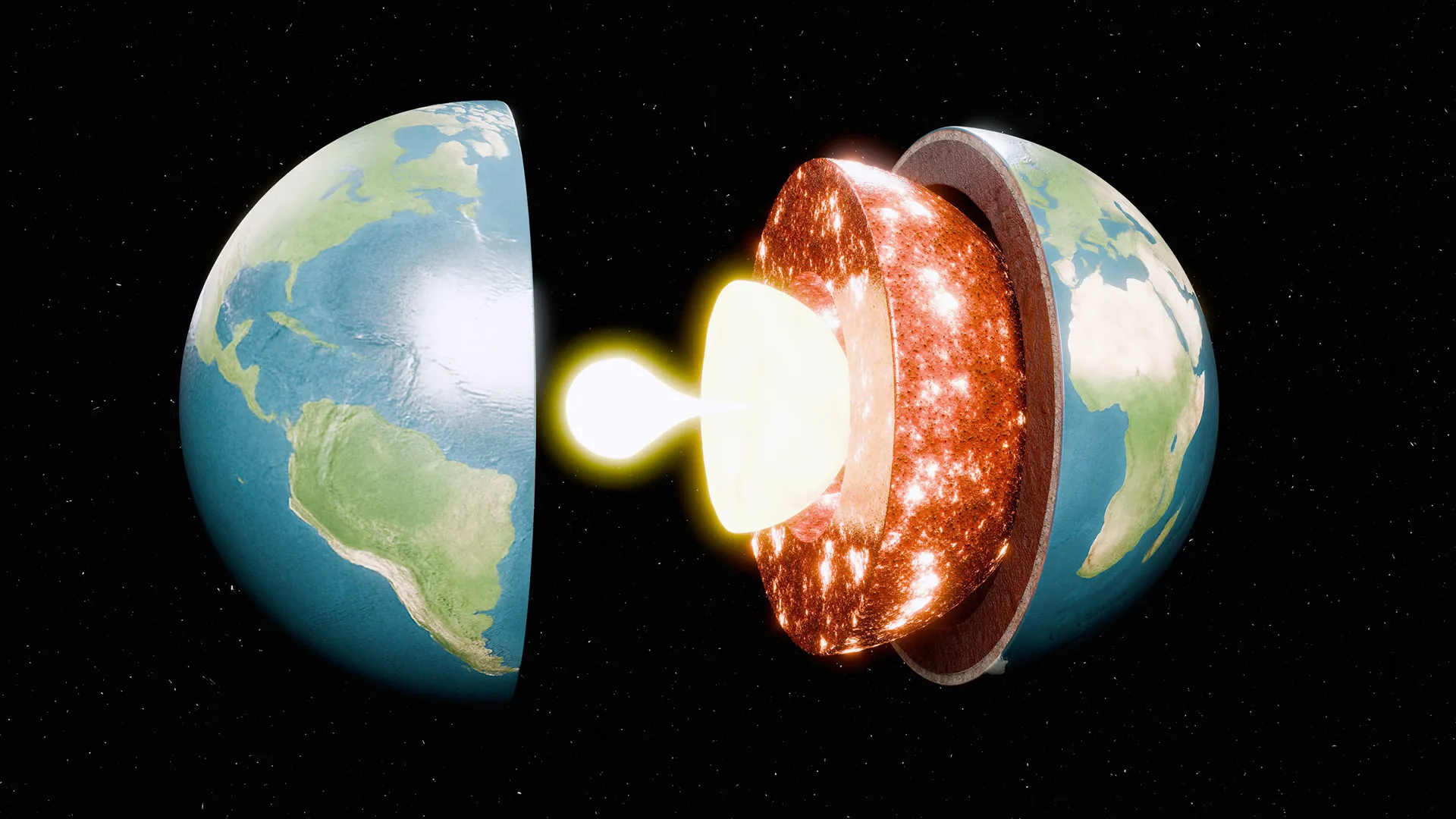
Earth’s core is a molten remnant from our planet’s birth. But just how hot is it?
(Image credit: bpawesome via Getty Images)
Earth started out as a ball of molten rock floating in space, with the heavier elements slowly sinking to form its planetary core. That core is still scorching. But how hot is it? And how did scientists even figure out its temperature?
—If you enjoyed this, sign up for our Life’s Little Mysteries newsletter
Common asthma drug fights hard-to-treat cancers
Scientists found that blocking a protein best known for its role in asthma enhances cancer immunotherapy in preclinical models.
(Image credit: koto_feja via Getty Images)
Montelukast, a common drug used to treat asthma and allergies, could soon be repurposed to tackle hard-to-treat cancers, such as triple-negative breast cancer.
Early lab studies found that the drug could reverse the hijacking of key immune cells by tumors, thereby reversing the cancers’ resistance to common immunotherapies. With this finding in hand, scientists now hope to launch a clinical trial with cancer patients.
Discover more health news
—Loneliness may contribute to memory issues, but not dementia — they are ‘not the same thing’
—Why aren’t brain transplants possible?
—Deadly Ebola outbreak is a public health emergency of international concern, WHO declares
—China installs world’s largest floating wind turbine in deep water test — it generates enough energy to power 4,200 homes annually
—Deadly, highly venomous box jellyfish discovered in Singapore is a newfound species
—‘Last titan’ of Thailand discovered, and it’s the longest-necked dinosaur on record from Southeast Asia
—China’s real-life ‘transformer’ mech is a giant humanoid robot that can switch from bounding on 4 legs to walking on 2
—How can we prevent AI models from cannibalizing themselves when human-generated data runs out? Scientists say they’ve found the answer.
Science long read
The world’s oldest rock art may not be quite so old, a new study argues.
(Image credit: David Madison via Getty Images)
A controversy is rocking the prehistoric art world, as a technique that once rewrote the timeline of prehistoric paintings has been called into serious doubt.
The method, called uranium-thorium dating, used the radioactive decay of uranium into thorium to generate all sorts of eye-popping headlines showcasing the artistic talents of our ancient ancestors.
However, a new paper casts doubt on the validity of this method and, therefore, the dates it finds. But are the new study’s findings rock solid? Live Science contributor Sandee Oster investigated.
Something for the weekend
If you’re looking for things to keep you busy over the weekend, here are some of the best news analyses, crosswords, book excerpts and polls published this week.
—Ebola outbreak in Central Africa will be a nightmare to contain, experts warn [News analysis]
—Live Science crossword puzzle #44: Founder and first ruler of the Mongol Empire — 8 across[Crossword]
—‘I have no doubt that life is out there’: Why radio astronomers are convinced alien contact is only a matter of time[Book excerpt]
—Poll: What do you think of PMOS, the new name for PCOS?[Poll]
Science news in pictures
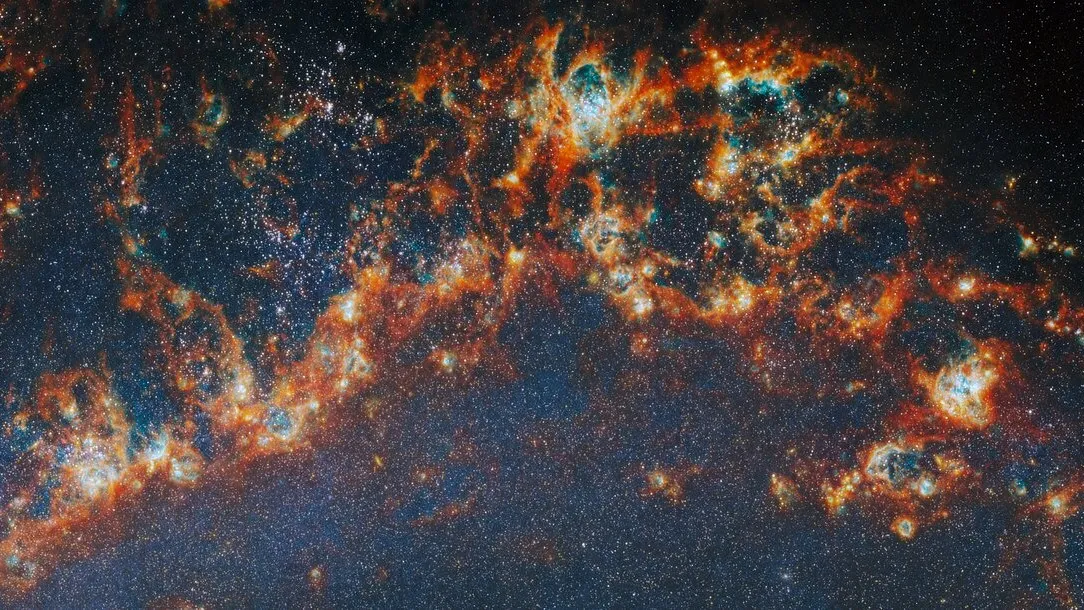
This stunning photo of the Whirlpool Galaxy could reveal clues to how stars form.
(Image credit: ESA/Webb, NASA & CSA, A. Pedrini, A. Adamo (Stockholm University) and the FEAST JWST team)
This image, showing the spiral arms in the Whirlpool Galaxy (Messier 51), could help astronomers to solve a big cosmic mystery: how stars are birthed from their gaseous cocoons.
The image combines observations from the James Webb Space Telescope and the Hubble Space Telescope, and shows gaps in colorful gas that was blasted away by the formation of bright-white stars.
The image reveals a pattern showing that larger groups of stars clear their swaddling gas more quickly than smaller ones do, suggesting that our universe’s current shape has been heavily influenced by early eruptions of gigantic stellar furnaces.