Close Menu
  • Home
  • UNSUBSCRIBE
  • News
  • Lifestyle
  • Tech
  • Entertainment
  • Sports
  • Travel
Facebook X (Twitter) WhatsApp
Trending
  • Lemur used in ‘lemur yoga’ session dies of human herpesvirus, study finds
  • ‘A fine line between reducing stigma and trivialising conditions’: Social media, self-diagnosis and the glamorization of ADHD
  • New 2D memory device stores data on just a single electron
  • Before we ban kids from social media completely, here’s what we should try first | Jonathan Bellack and Mariana Olaizola Rosenblat
  • Scientists uncover a better way to beat ‘the bends’ — using deep-diving pigs
  • Mars may have been losing its water more than 4 billion years ago, oldest-known Martian meteorite suggests
  • ‘The lance head was still inside the pelvis’: Mass grave found in Austria may hold casualties of unknown ancient Roman battle
  • ‘Full-on berserker mode’: Archaeologists solve mystery of medieval soldiers with gruesome square holes in their skull
Facebook X (Twitter) WhatsApp
Baynard Media
  • Home
  • UNSUBSCRIBE
  • News
  • Lifestyle
  • Tech
  • Entertainment
  • Sports
  • Travel
Baynard Media
Home»Lifestyle»Northern lights may be visible from several US states Friday and Saturday as giant hole opens up in sun’s atmosphere
Lifestyle

Northern lights may be visible from several US states Friday and Saturday as giant hole opens up in sun’s atmosphere

EditorBy EditorApril 16, 2026No Comments3 Mins Read
Share Facebook Twitter Pinterest LinkedIn Tumblr Reddit Telegram Email
Share
Facebook Twitter LinkedIn Pinterest Email

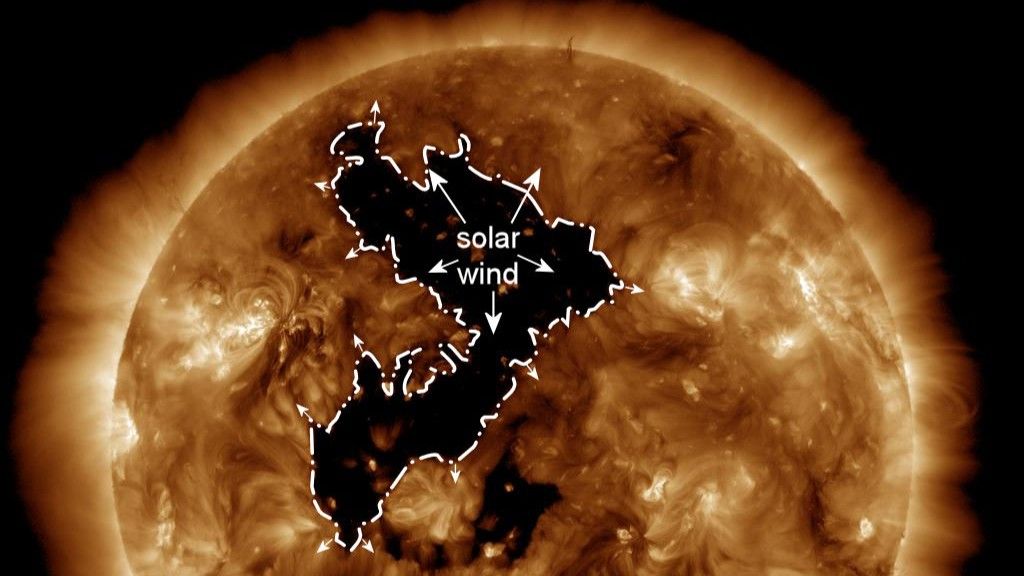
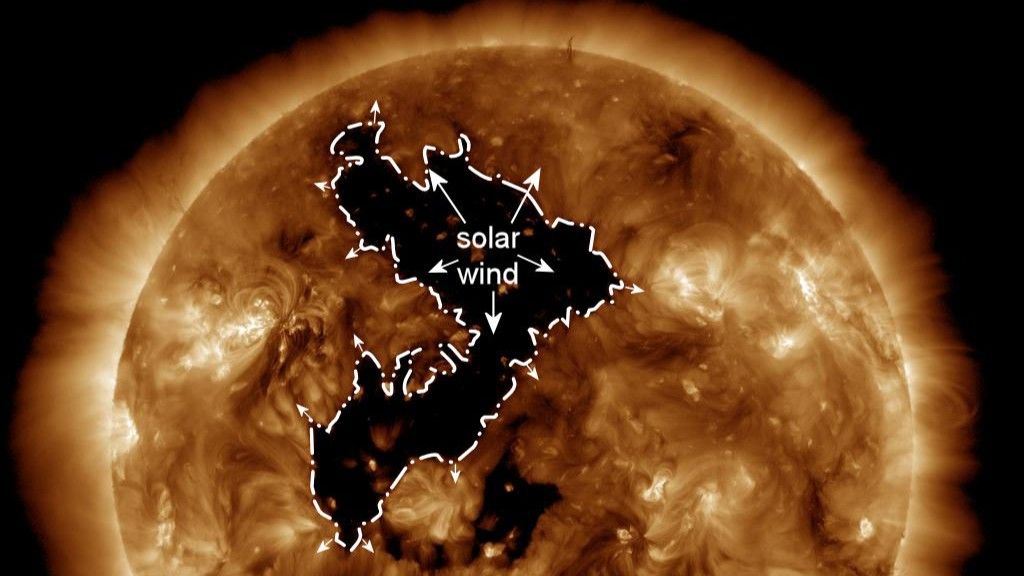
Skywatchers are in for a treat this week as the northern lights are predicted to grace skies across several northern U.S. states ‪—‬ and it’s all thanks to a large hole that has opened up in the sun’s atmosphere.

Auroras may be visible as far south as Idaho and New York Friday night (April 17) and early Saturday morning (April 18), the National Oceanic and Atmospheric Administration’s (NOAA) Space Weather Prediction Center shared in a Facebook post.

Also known as the aurora borealis, the northern lights are an atmospheric phenomenon caused by the knotting of magnetic-field lines on the surface of the sun. When these lines snap, they send huge clouds of electrically-charged particles, called solar wind, into space. Some of these particles eventually reach Earth, the Royal Observatory Greenwich explains.


You may like

Most of the particles are deflected by the geomagnetic shield that surrounds our planet. However, some get swept into Earth’s magnetic field before traveling down toward the North and South poles.

Once there, the particles collide with atoms and molecules in the atmosphere, causing them to heat up and fluoresce to create the colorful light displays we know as the northern lights.

This week, a large hole appeared in the sun’s corona, the outermost part of its atmosphere. “Coronal holes” such as this are regions where the sun’s magnetic fields open up, enabling fast-moving solar wind to escape into space, according to Spaceweather.com.

The resulting high-speed winds also may interact with slower solar winds ahead of them, causing these clouds of charged particles to pile up. This creates a shock zone called a corotating interaction region (CIR) that can have a more dramatic impact on the particles in Earth’s atmosphere.

Get the world’s most fascinating discoveries delivered straight to your inbox.

This week’s high-speed solar winds and the accompanying CIR are expected to reach Earth on April 17 and 18, after which they will likely cause a temporary disturbance in the planet’s magnetic field, known as a geomagnetic storm, according to NOAA’s three-day forecast released April 16. Moderate (G2) storm conditions are expected from 5 p.m. EDT (9 p.m. GMT) Friday until roughly 2 a.m. EDT (6 a.m. GMT) Saturday and could trigger minor to moderate radio blackouts and strong auroras.

Auroras resulting from this class of geomagnetic storm are often visible from Alaska, Idaho, Maine, Michigan, Minnesota, Montana, North and South Dakota, Washington and Wisconsin, according to NOAA. Skywatchers in Illinois, Indiana, Iowa, Nebraska, New Hampshire, New York, Ohio, Oregon, Vermont and Wyoming also have a chance of seeing one of nature’s best light shows.

A new moon Friday will also allow for better viewing conditions amid darker skies.

If you’re on the hunt for auroras, make sure to check NOAA’s n aurora dashboard for live updates, as space weather forecasts are subject to change.

Source link

Share. Facebook Twitter Pinterest LinkedIn Tumblr Email
Previous ArticleJustice Ketanji Brown Jackson warns shadow docket risks public trust
Next Article Brea Carves Out Disability And Veteran Exemptions in Street Sweeping Law
Editor
  • Website

Related Posts

Lifestyle

Lemur used in ‘lemur yoga’ session dies of human herpesvirus, study finds

August 15, 2026
Lifestyle

‘A fine line between reducing stigma and trivialising conditions’: Social media, self-diagnosis and the glamorization of ADHD

August 15, 2026
Lifestyle

New 2D memory device stores data on just a single electron

August 15, 2026
Add A Comment

Comments are closed.

Categories
  • Entertainment
  • Lifestyle
  • News
  • Sports
  • Tech
  • Travel
Recent Posts
  • Lemur used in ‘lemur yoga’ session dies of human herpesvirus, study finds
  • ‘A fine line between reducing stigma and trivialising conditions’: Social media, self-diagnosis and the glamorization of ADHD
  • New 2D memory device stores data on just a single electron
  • Before we ban kids from social media completely, here’s what we should try first | Jonathan Bellack and Mariana Olaizola Rosenblat
  • Scientists uncover a better way to beat ‘the bends’ — using deep-diving pigs
calendar
August 2026
M T W T F S S
 12
3456789
10111213141516
17181920212223
24252627282930
31  
« Jul    
Recent Posts
  • Lemur used in ‘lemur yoga’ session dies of human herpesvirus, study finds
  • ‘A fine line between reducing stigma and trivialising conditions’: Social media, self-diagnosis and the glamorization of ADHD
  • New 2D memory device stores data on just a single electron
About

Welcome to Baynard Media, your trusted source for a diverse range of news and insights. We are committed to delivering timely, reliable, and thought-provoking content that keeps you informed
and inspired

Categories
  • Entertainment
  • Lifestyle
  • News
  • Sports
  • Tech
  • Travel
Facebook X (Twitter) Pinterest WhatsApp
  • Contact Us
  • About Us
  • Privacy Policy
  • Disclaimer
  • UNSUBSCRIBE
© 2026 copyrights reserved

Type above and press Enter to search. Press Esc to cancel.