Close Menu
  • Home
  • UNSUBSCRIBE
  • News
  • Lifestyle
  • Tech
  • Entertainment
  • Sports
  • Travel
Facebook X (Twitter) WhatsApp
Trending
  • What will the Amazon rainforest look like in 100 years?
  • The US just approved bemotrizinol, a sunscreen ingredient long used in Asia and Europe. Here’s how it works.
  • James Webb telescope finds a cosmic cloud of creation buried in the Sword of Orion — Space photo of the week
  • Why does it take our eyes so long to adjust to the dark?
  • ‘You kill the bacteria and heal the wound at the same time’: Emerging nanotech could be the future of wound healing
  • Diagnostic dilemma: A fish stabs a man through the throat and the base of the skull
  • Outdoor cats can be exposed to dangerous germs — here’s how to protect you and your pets, according to more than 400 studies
  • Science news this week: Goblin shark filmed for first time, California close to a major quake, physicists split photon, and inside China’s plans to ‘tame nature’
Facebook X (Twitter) WhatsApp
Baynard Media
  • Home
  • UNSUBSCRIBE
  • News
  • Lifestyle
  • Tech
  • Entertainment
  • Sports
  • Travel
Baynard Media
Home»Lifestyle»Fingal’s Cave: Scotland’s ‘cave of melody’ where eerie echoes bounce off pillars of solidified lava
Lifestyle

Fingal’s Cave: Scotland’s ‘cave of melody’ where eerie echoes bounce off pillars of solidified lava

EditorBy EditorMay 29, 2026No Comments3 Mins Read
Share Facebook Twitter Pinterest LinkedIn Tumblr Reddit Telegram Email
Share
Facebook Twitter LinkedIn Pinterest Email

QUICK FACTS

Name: Fingal’s Cave

Location: Staffa, Scotland

Coordinates: 56.4314, -6.3412

Why it’s incredible: The cave is formed entirely of hexagonal volcanic rock columns.

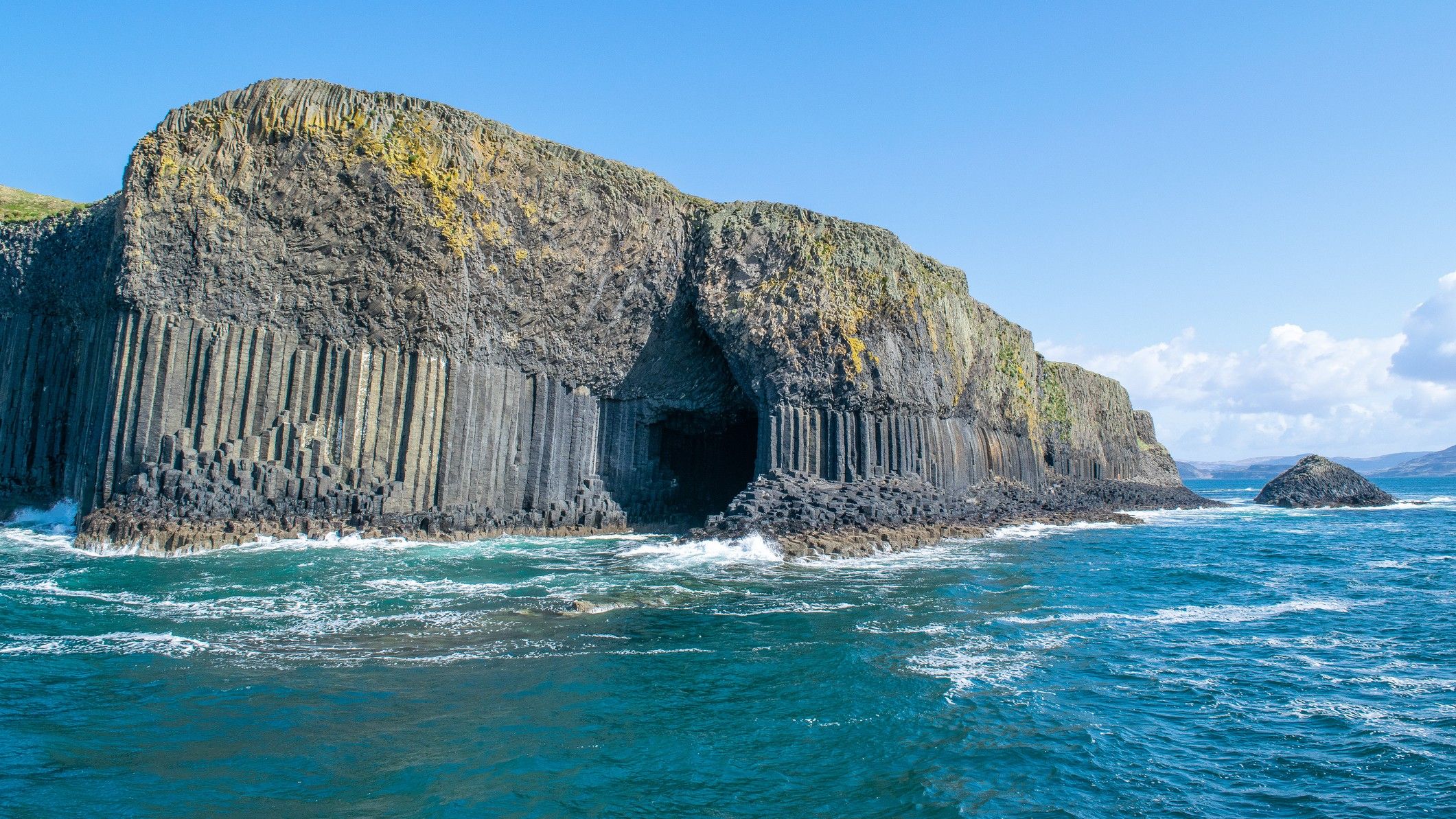
Fingal’s Cave is a sea cave in Scotland whose walls are made of hexagonally joined basalt columns. These structures may have formed within the same lava flow that shaped the Giant’s Causeway, a geological formation in Northern Ireland composed of more than 40,000 interlocking basalt pillars.

Fingal’s Cave extends 230 feet (70 meters) deep and 60 feet (18 m) high inside the small, uninhabited island of Staffa, located in Scotland’s Inner Hebrides. It was carved by a volcanic eruption sometime during the Paleocene epoch (66 million to 56 million years ago).

As giant lava flows from this eruption began to cool and solidify, their top and bottom parts contracted and fractured into hexagonal shapes similar to those formed by desiccation cracks in muddy sediments. Eventually, these fractures extended and combined in the center of the flow, forming hexagonal pillars whose sides were later revealed by waves eroding the margins of the flow, according to the National Trust for Scotland.

You may like

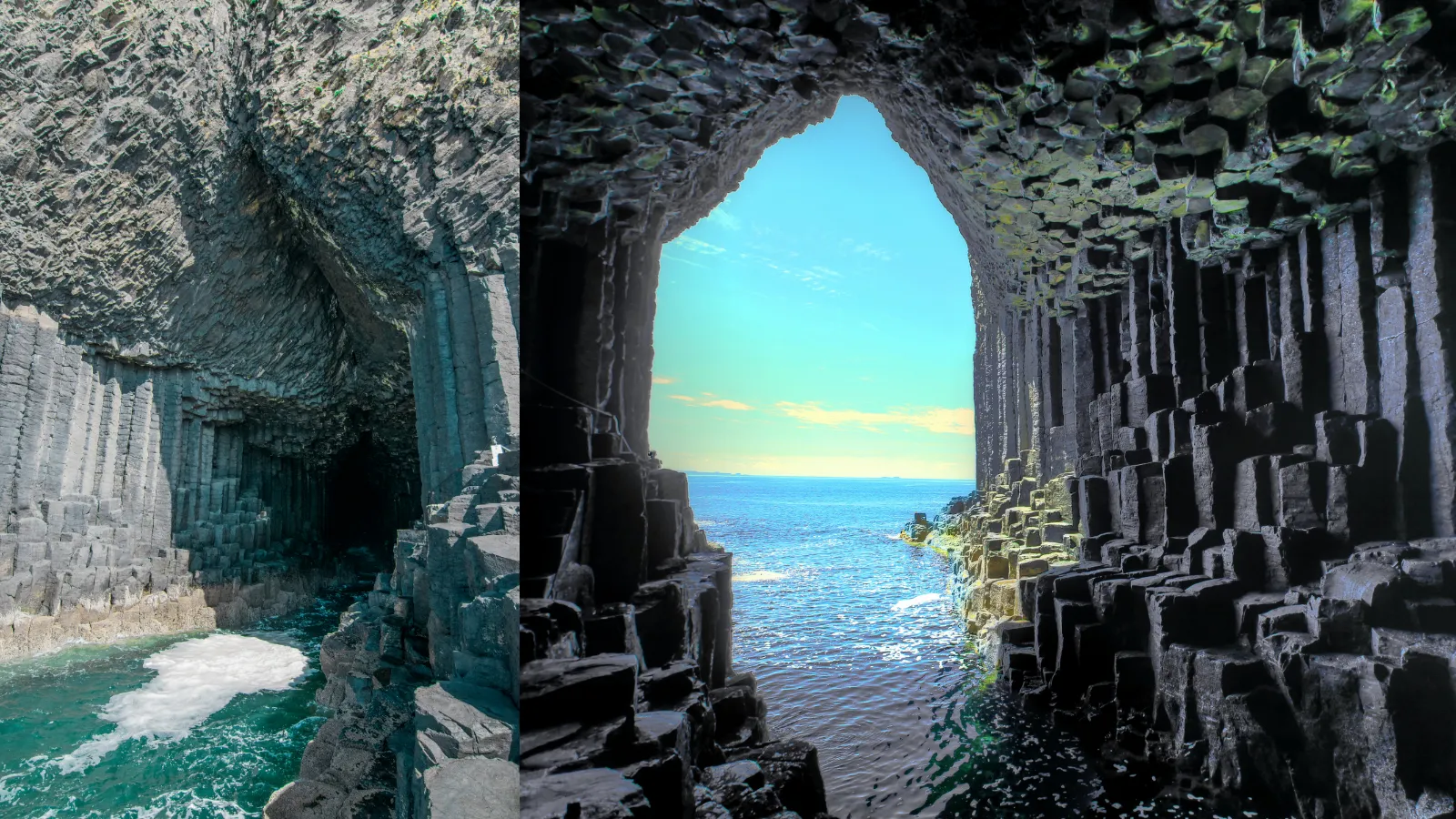
A view of the inside of Fingal's Cave from the outside and a view from inside the cave toward the sea.

Fingal’s Cave formed inside Staffa due to pressure and erosion that opened cracks in the rock.

(Image credit: Paulien Dam (left) and Totajla (right) via Getty Images)

The cave gets its name from an Irish myth about a warrior called Fionn Mac Cumhaill. According to the legend, Fionn — whose full name was shortened to Fingal, meaning “white stranger” — built the Giant’s Causeway across the sea to Scotland to fight a rival called Benandonner, and Fingal’s Cave is what remains of Fionn’s path over the ocean on the Scottish side.

The 18th-century Scottish writer James Macpherson popularized the name Fingal’s Cave with a book titled “Fingal, an Ancient Epic Poem in Six Books” that was published in 1762. Then, after visiting the cave in 1829, the Romantic composer Felix Mendelssohn wrote an overture — a musical introduction to a ballet or opera — known as the “Hebrides Overture” or “Fingal’s Cave Overture.”

Mendelssohn was inspired by the natural acoustics and eerie echoes inside Fingal’s Cave, according to the National Trust for Scotland. A nod to these unique sounds is also found in the cave’s Gaelic name, “Uamh-Binn,” meaning “cave of melody” or “musical cave.” Mendelssohn’s overture established Fingal’s Cave as a tourist destination, and other famous visitors include the authors Jules Verne and Robert Louis Stevenson, the poets John Keats and Lord Alfred Tennyson, and Queen Victoria.

The cave can still be visited today through organized sightseeing cruises that take tourists inside the cathedral-like cavern when ocean conditions are calm enough.

Get the world’s most fascinating discoveries delivered straight to your inbox.

The National Trust for Scotland owns Fingal’s Cave as part of a nature reserve that was established in 2001. The cave and its surroundings host several types of birds and marine animals, including puffins, fulmars, basking sharks, dolphins, gray seals, minke whales and pilot whales.

Discover more incredible places, where we highlight the fantastic history and science behind some of the most dramatic landscapes on Earth.

Source link

Share. Facebook Twitter Pinterest LinkedIn Tumblr Email
Previous ArticleControversial ‘JuMBO’ planets discovered by James Webb telescope may not be an illusion after all
Next Article War has brought Iran’s water crisis to a breaking point: ‘Things will collapse unless there is meaningful structural change’
Editor
  • Website

Related Posts

Lifestyle

What will the Amazon rainforest look like in 100 years?

June 21, 2026
Lifestyle

The US just approved bemotrizinol, a sunscreen ingredient long used in Asia and Europe. Here’s how it works.

June 21, 2026
Lifestyle

James Webb telescope finds a cosmic cloud of creation buried in the Sword of Orion — Space photo of the week

June 21, 2026
Add A Comment

Comments are closed.

Categories
  • Entertainment
  • Lifestyle
  • News
  • Sports
  • Tech
  • Travel
Recent Posts
  • What will the Amazon rainforest look like in 100 years?
  • The US just approved bemotrizinol, a sunscreen ingredient long used in Asia and Europe. Here’s how it works.
  • James Webb telescope finds a cosmic cloud of creation buried in the Sword of Orion — Space photo of the week
  • Why does it take our eyes so long to adjust to the dark?
  • ‘You kill the bacteria and heal the wound at the same time’: Emerging nanotech could be the future of wound healing
calendar
June 2026
M T W T F S S
1234567
891011121314
15161718192021
22232425262728
2930  
« May    
Recent Posts
  • What will the Amazon rainforest look like in 100 years?
  • The US just approved bemotrizinol, a sunscreen ingredient long used in Asia and Europe. Here’s how it works.
  • James Webb telescope finds a cosmic cloud of creation buried in the Sword of Orion — Space photo of the week
About

Welcome to Baynard Media, your trusted source for a diverse range of news and insights. We are committed to delivering timely, reliable, and thought-provoking content that keeps you informed
and inspired

Categories
  • Entertainment
  • Lifestyle
  • News
  • Sports
  • Tech
  • Travel
Facebook X (Twitter) Pinterest WhatsApp
  • Contact Us
  • About Us
  • Privacy Policy
  • Disclaimer
  • UNSUBSCRIBE
© 2026 copyrights reserved

Type above and press Enter to search. Press Esc to cancel.