Close Menu
  • Home
  • UNSUBSCRIBE
  • News
  • Lifestyle
  • Tech
  • Entertainment
  • Sports
  • Travel
Facebook X (Twitter) WhatsApp
Trending
  • Faster ‘biological aging’ in young adults may help explain rise in early-onset cancers, study hints
  • Computer scientists are rushing to tame tame AI’s voracious appetite for energy
  • Our brains aren’t wired to handle this much bad news. But ‘looking away is not the fix,’ expert says.
  • ‘The fate of Earth depends on a delicate balance’: Our planet may survive the death of the sun after all, new models hint
  • Bullseye! Enormous ‘bow and arrow’ galaxy is unlike anything radio astronomers have ever seen — Space photo of the week
  • IBM creates first sub-1nm computer chip — cramming 100 billion transistors into a tiny fingernail-sized space
  • New chip harnesses quantum computing’s biggest weakness — and tries to turn it into a strength
  • How did the Romans build such straight roads?
Facebook X (Twitter) WhatsApp
Baynard Media
  • Home
  • UNSUBSCRIBE
  • News
  • Lifestyle
  • Tech
  • Entertainment
  • Sports
  • Travel
Baynard Media
Home»Lifestyle»Moroccan fly maggot uses fake face on its butt to infiltrate termite colony
Lifestyle

Moroccan fly maggot uses fake face on its butt to infiltrate termite colony

EditorBy EditorFebruary 12, 2025No Comments3 Mins Read
Share Facebook Twitter Pinterest LinkedIn Tumblr Reddit Telegram Email
Share
Facebook Twitter LinkedIn Pinterest Email

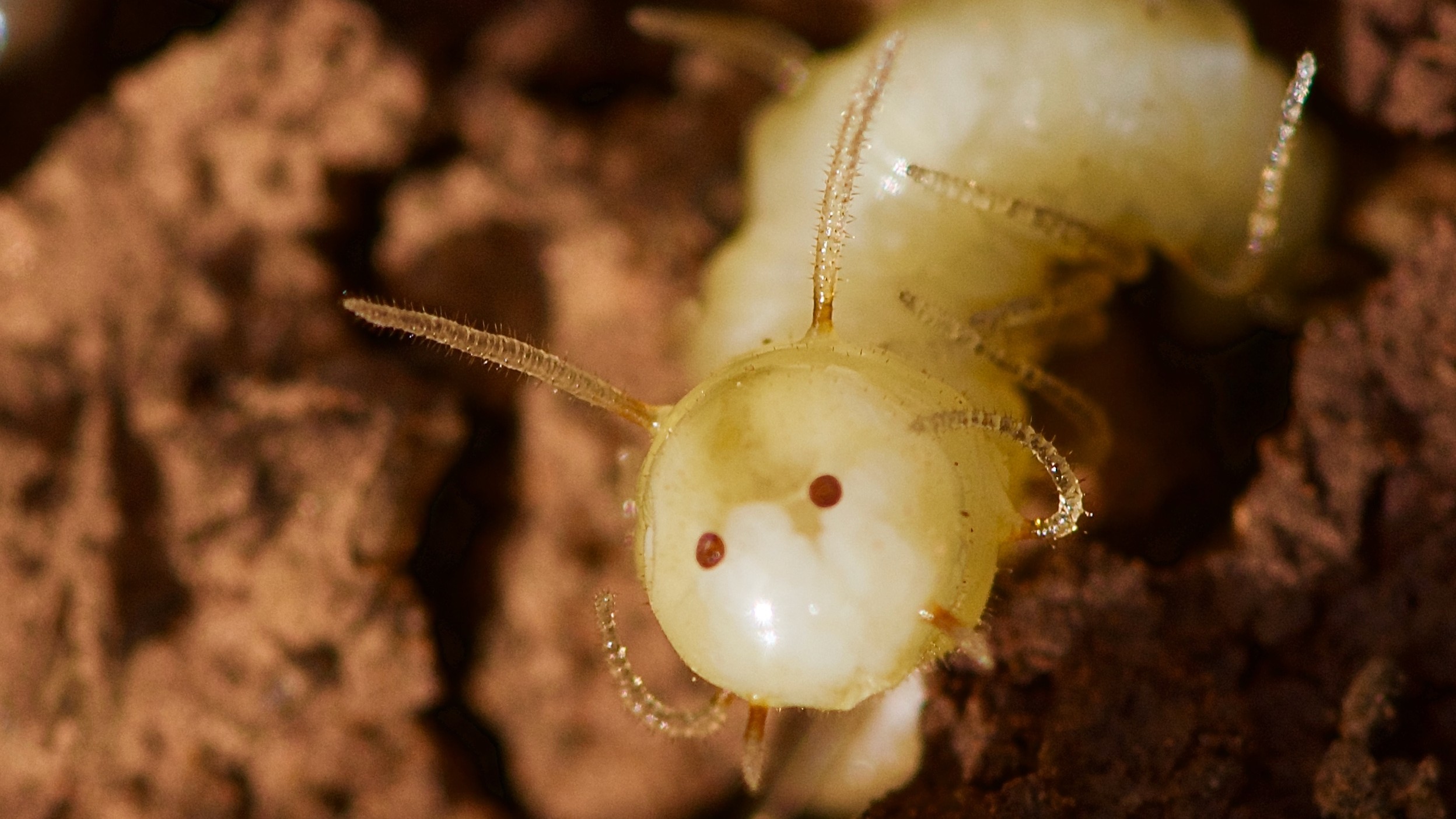
Mountain fly maggots have evolved fake faces on their butts as a cunning disguise to infiltrate termite colonies, a new study has found.

Researchers spotted the fake faces, which resemble termite heads, on the rear of a previously unknown blow fly larva living in the mountains of Morocco. These faces are part of an extreme mimicking strategy that trick harvester termites (Anacanthotermes ochraceus) into thinking the fly larvae are part of their colony.

Soldier termites typically kill colony intruders on site, but disguised larvae live among the soldiers without any problems and are granted full access to the termite mound’s food chamber. The disguise is so good that the termites even appear to groom the guileful grubs, according to the study published Monday (Feb. 10) in the journal Current Biology.

Researchers discovered the two-faced larvae by chance while looking for ants in the Anti-Atlas mountain range in southern Morocco. The team lifted a stone and found a termite mound with three of the never-before-seen fly larvae inside, study lead author Roger Vila, a scientist at the Institute of Evolutionary Biology in Spain, explained in a statement.

“It must be an extremely rare species, because we have made three more expeditions in that area and, despite lifting hundreds of stones, we found only two more flies, together, in another termite mound,” Vila said.

Related: Kamikaze termites blow themselves up with ‘explosive’ backpacks — and scientists just figured out how

Termite nests are protected, food-rich habitats for any species cunning enough to get inside. The fly’s strategy is one of social integration, which requires extreme morphological, behavioral and physiological adaptations to pull off, according to the study.

Get the world’s most fascinating discoveries delivered straight to your inbox.

Researchers collected the disguised fly larvae and termites and took them back to the lab for further study, and found a number of extreme adaptations. For example, the larvae had modified breathing holes to act as fake termite eyes and modified sensory organs called papillae that resembled termite antennae.

Chemical disguise

The larvae have also evolved scent chemicals to match the termites’ unique odor. Vila noted that the team studied the chemical composition of the larvae and found they were indistinguishable from the termites in the colonies where they lived.

“They smell exactly the same,” Vila said. “In addition, the larvae and termites in a particular colony have slight differences in their chemical profile that differentiate them from other termite mounds. This odour is key to interacting with the termites and benefiting from their communal life. It is a chemical disguise.”

The researchers found that the larvae were part of the fly genus Rhyncomya. No other member of this group is known to do this kind of mimicry, so the team suspects the larvae are a newfound species. However, the team was unable to raise the larvae to adulthood to be sure as they all died in the lab before they were able to mature.

Villa noted that there may be elements of the termite nest and the relationship between the two species that they were unable to transfer to the lab.

“Their diet is currently unknown, and their adult form remains a mystery,” Vila added.

Source link

Share. Facebook Twitter Pinterest LinkedIn Tumblr Email
Previous ArticleAmazon February devices event: When is it, what to expect
Next Article Stephen A. Smith Responds to Backlash Over Serena Williams Comments
Editor
  • Website

Related Posts

Lifestyle

Faster ‘biological aging’ in young adults may help explain rise in early-onset cancers, study hints

June 29, 2026
Lifestyle

Computer scientists are rushing to tame tame AI’s voracious appetite for energy

June 28, 2026
Lifestyle

Our brains aren’t wired to handle this much bad news. But ‘looking away is not the fix,’ expert says.

June 28, 2026
Add A Comment

Comments are closed.

Categories
  • Entertainment
  • Lifestyle
  • News
  • Sports
  • Tech
  • Travel
Recent Posts
  • Faster ‘biological aging’ in young adults may help explain rise in early-onset cancers, study hints
  • Computer scientists are rushing to tame tame AI’s voracious appetite for energy
  • Our brains aren’t wired to handle this much bad news. But ‘looking away is not the fix,’ expert says.
  • ‘The fate of Earth depends on a delicate balance’: Our planet may survive the death of the sun after all, new models hint
  • Bullseye! Enormous ‘bow and arrow’ galaxy is unlike anything radio astronomers have ever seen — Space photo of the week
calendar
June 2026
M T W T F S S
1234567
891011121314
15161718192021
22232425262728
2930  
« May    
Recent Posts
  • Faster ‘biological aging’ in young adults may help explain rise in early-onset cancers, study hints
  • Computer scientists are rushing to tame tame AI’s voracious appetite for energy
  • Our brains aren’t wired to handle this much bad news. But ‘looking away is not the fix,’ expert says.
About

Welcome to Baynard Media, your trusted source for a diverse range of news and insights. We are committed to delivering timely, reliable, and thought-provoking content that keeps you informed
and inspired

Categories
  • Entertainment
  • Lifestyle
  • News
  • Sports
  • Tech
  • Travel
Facebook X (Twitter) Pinterest WhatsApp
  • Contact Us
  • About Us
  • Privacy Policy
  • Disclaimer
  • UNSUBSCRIBE
© 2026 copyrights reserved

Type above and press Enter to search. Press Esc to cancel.