
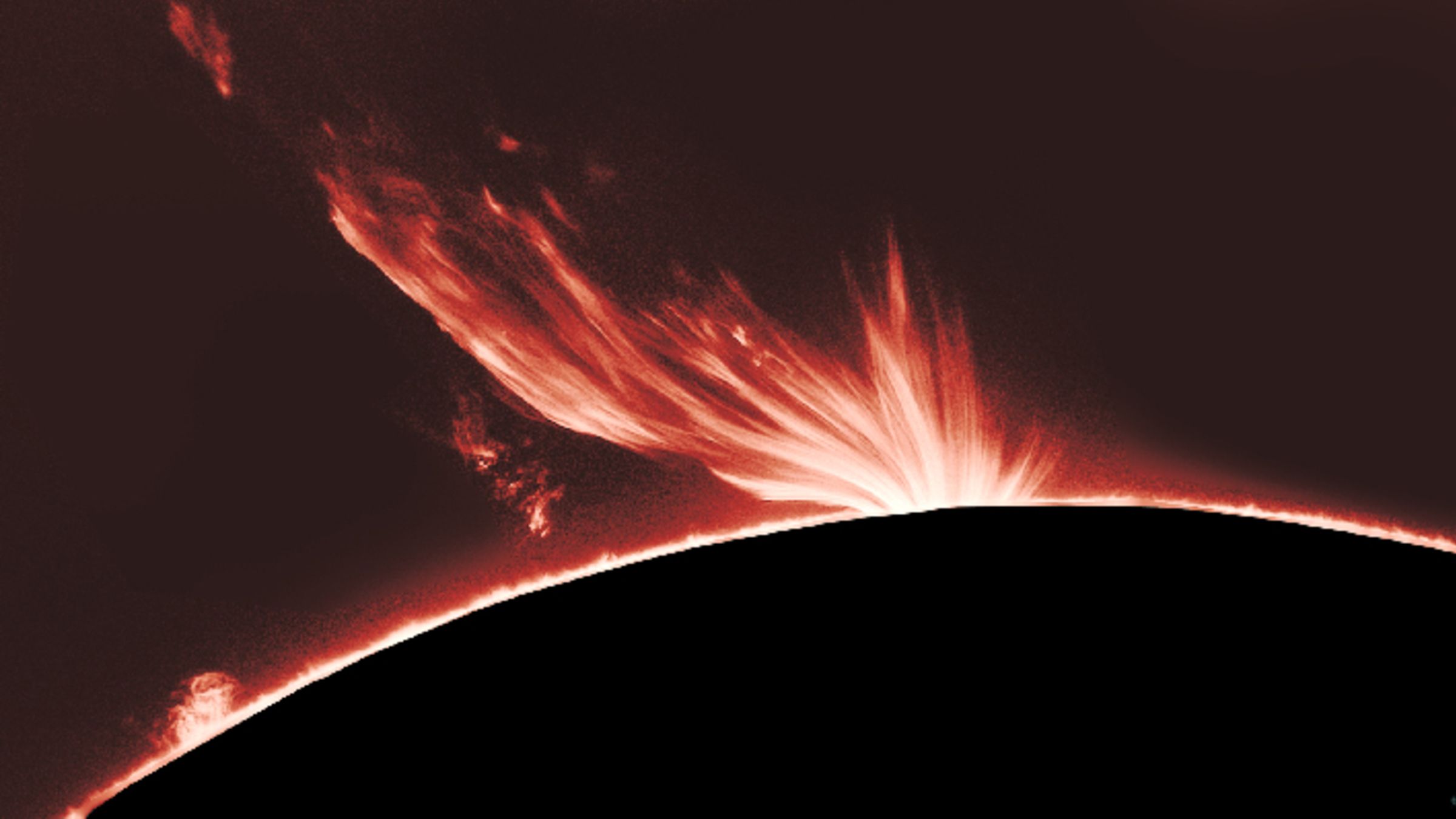
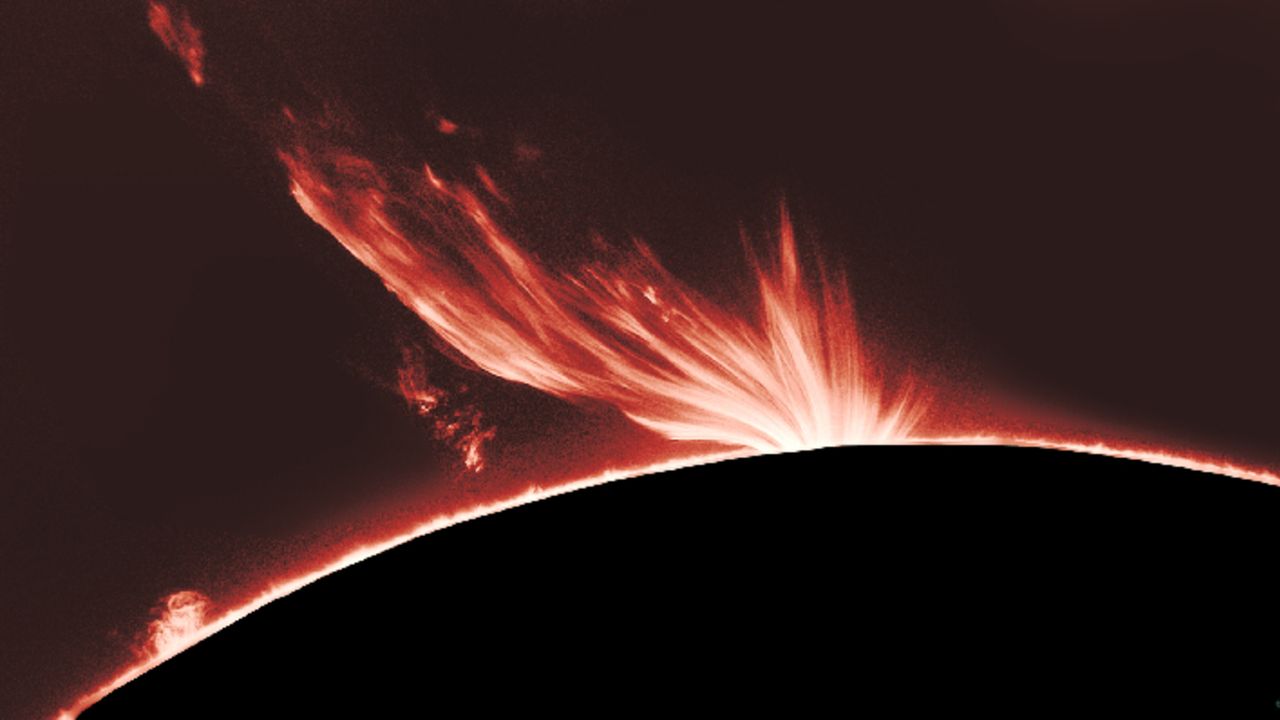
Fourth of July celebrations across the United States this weekend could be accompanied by light shows in the night skies, as a string of powerful solar eruptions appear set to strike Earth.
The sun has been especially hyperactive over the past few days — firing off 10 M-class solar flares over 24 hours that have been accompanied by multiple coronal mass ejections (CMEs), which are set to slam into Earth on July 3 and July 5.
CMEs are large, fast-moving clouds of magnetized plasma and solar radiation that occasionally get flung into space with solar flares when kinks in the sun’s magnetic field snap. If CMEs smash into Earth, they cause disturbances in Earth’s magnetic field, called geomagnetic storms, that can trigger partial radio blackouts and produce vibrant aurora displays farther away from Earth’s magnetic poles than usual.
“Machine-Gun Sun! More than 5 storms on their way to Earth and 3 of them offer good chances for aurora views,” Tamitha Skov, a space weather physicist at Millersville University of Pennsylvania, wrote in a July 2 post on the social platform X. “NOAA and NASA model predictions do not show all the storms yet (it’s hard to keep up with the rapid-fire storm launches!) but the first should hit before noon July 3 UTC.”
The CMEs are expected to give a glancing blow to our planet, creating conditions for a moderate (G2) geomagnetic storm, according to the National Oceanic and Atmospheric Administration’s (NOAA) Space Weather Prediction Center. It’s also possible that these storms will strengthen to become strong (G3), depending on how they interact with Earth’s magnetic field.
Auroras resulting from G3-class geomagnetic storms are often visible in northern parts of Washington, Idaho, Montana, Wyoming, North Dakota, South Dakota, Minnesota, Wisconsin, Michigan, New York and Maine, according to NOAA. Skywatchers farther south in Oregon, Nebraska, Iowa, Illinois, Indiana, Ohio, Pennsylvania, Massachusetts, Connecticut, Rhode Island, Vermont and New Hampshire will also have a chance of catching the light show. In any case, skywatchers interested in seeing or photographing the auroras will need to get as far from artificial light sources as possible.
The weekend storms might not be the last activity we see from the sun in the coming days, as two gigantic sunspots currently pimpling its face are displaying “beta-gamma-delta” magnetic fields — the most tangled and unstable type. This means these sunspots harbor the potential to launch powerful X-class flares, according to spaceweather.com.
Get the world’s most fascinating discoveries delivered straight to your inbox.
The last few years have seen a record number of powerful X-class flares explode from the sun’s surface, hitting Earth with several major solar storms, including 2024’s Mother’s Day storm. This record comes partly from improvements to scientists’ solar monitoring technologies, but also due to the sun reaching its 11-year peak in sunspot production, or solar maximum, in 2024.
Following this peak, the sun has now entered a period known as the “battle zone,” a relatively understudied solar phase where instabilities across our star’s newly flipped magnetic field ramp up the production of solar holes, gigantic, highly-tangled sunspots and subsequent geomagnetic storms.
The worst-case scenario for a solar storm is a superstorm like the 1859 Carrington Event, which released roughly the same energy as 10 billion 1-megaton atomic bombs. After slamming into Earth, the powerful stream of solar particles set telegraph systems around the world on fire and caused auroras brighter than the light of the full moon to appear as far south as the Caribbean.
The Carrington Event unleashed a roughly X45 magnitude solar flare that remains a record, yet it’s likely far from the worst the sun can muster — with ancient tree rings harboring evidence of even more powerful blasts that occurred long before humans existed.
