
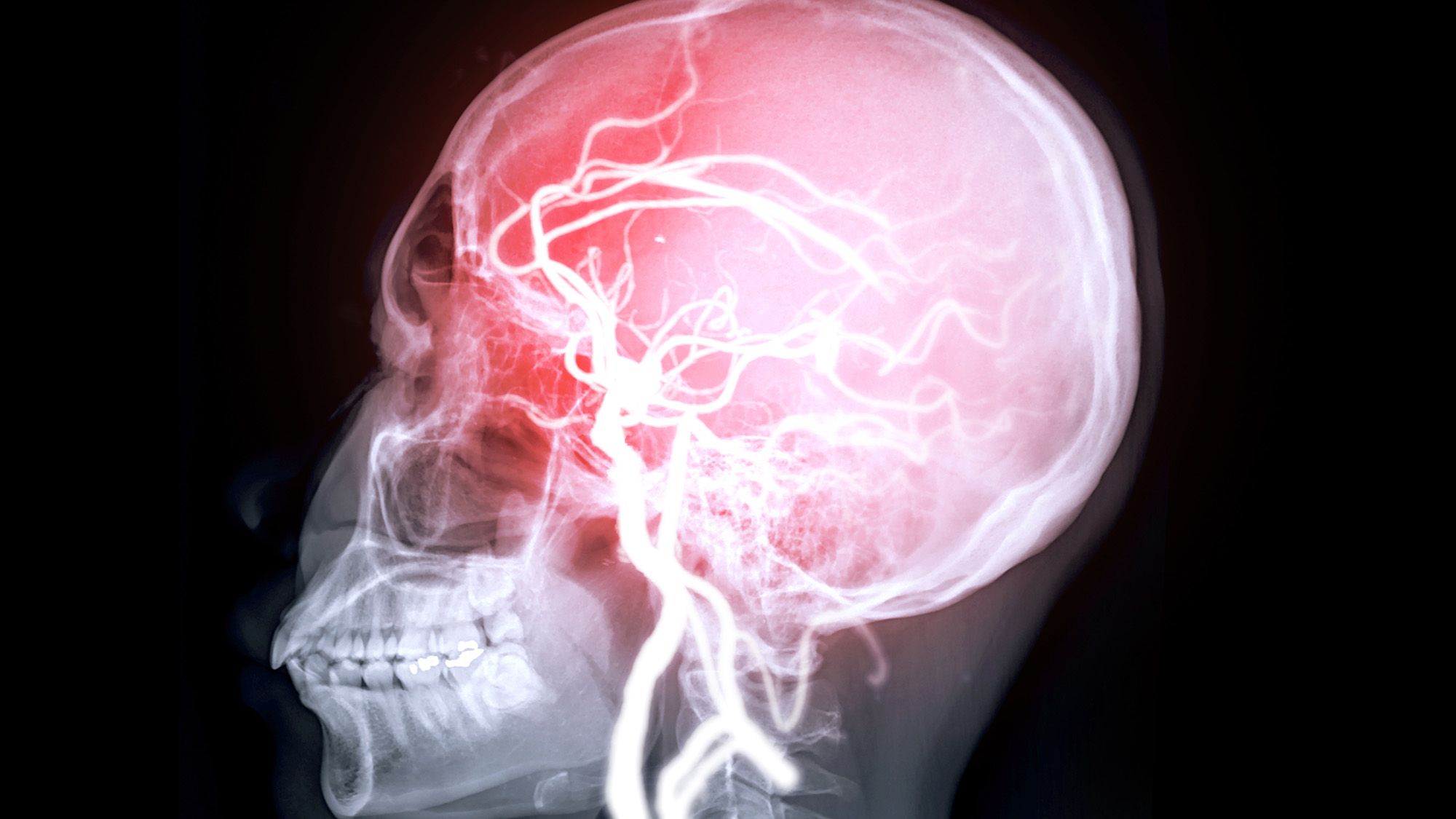
Scientists uncovered a link between mild heart trouble and microscopic signs of brain damage that may raise the risk of memory problems down the line.
The new study, published Monday (July 6) in The Journal of Neuroscience, did not prove that the heart issues directly caused memory problems. But it “adds to the overall picture that preserving healthy brain-heart communication is key for healthy aging,” said Dr. Jan Scheitz, a consultant stroke neurologist and head of the Brain-Heart Lab at the Charité University Hospital in Germany, who was not involved in the study.
“A healthy lifestyle that protects the cardiovascular system will not only benefit the heart but also the brain,” he told Live Science in an email.
The work could one day help doctors identify patients at risk of memory problems early on through routine heart-function tests, said study co-author Dr. Xia Zhang, a doctoral researcher at the Max Planck Institute for Human Cognitive and Brain Sciences in Germany.
“The broader implication is that the brain may show subtle tissue-level changes related to cardiac dysfunction before we see obvious brain shrinkage or clinical dementia,” Zhang told Live Science in an email.
Early warning signs
Researchers already knew that heart and brain function are closely interconnected. Heart diseases such as heart failure, atrial fibrillation and heart attack impair communication between the heart and the brain. This can contribute to thinking problems and dementia by restricting blood flow to the brain and causing chronic inflammation.
So far, though, scientists have only studied changes in the brain in people already diagnosed with heart conditions. They haven’t necessarily assessed the changes that take place earlier on.
Get the world’s most fascinating discoveries delivered straight to your inbox.
In the new study, researchers followed 73 patients who had sought care for heart-related symptoms at the Heart Center Leipzig in Germany, some of whom had confirmed coronary artery disease and/or heart failure. They also assessed 95 people without any heart-related symptoms. The researchers measured heart function at the start of the study. Then, about 3.5 years later, they performed cognitive testing and an MRI scan of the brain to take a snapshot of its structure.
Among all 168 study participants, those whose hearts pumped blood less efficiently at the start of the study showed greater signs of tissue damage in their gray matter years later. This was true regardless of whether or not they had diagnosed heart failure.
The cognitive tests were given only to the heart-disease patients, and they assessed attention, executive function, learning and memory. Only memory showed a link to weaker heart pumping. The participants with weaker heart pumping showed more microscopic damage in memory-related brain regions, and those brain changes correlated with worse memory scores.
The degree of brain damage also correlated with the levels of stress hormones released by the heart, but this link was only seen in patients who already had heart failure.
“What surprised us most” was that subtle reductions in the heart’s ability to pump were tied to later brain changes, even in patients who did not meet clinical criteria for heart failure, Zhang said.
One limitation of the study is that the researchers didn’t take MRI scans at the start. That means “we do not know whether some changes were already present at the beginning of the study period,” Scheitz noted. This is something that Zhang and her colleagues plan to test in future studies.
“The next step for the field is replication in larger cohorts with multiple time points, so that cardiac function, brain microstructure, and cognition can be followed more precisely over time,” she said.
The brain damage flagged in the 73 patients happened in parts of the brain that are important for memory and are vulnerable in Alzheimer’s disease. “These regions helped identify a possible brain pathway through which poorer cardiac function may contribute to later memory problems,” Zhang said.
However, until this idea is tested directly in future studies, it is too soon to say if the heart function-related brain changes seen on the MRI scans point to a higher risk of Alzheimer’s, Zhang cautioned. The team did not measure proteins related to Alzheimer’s, so they cannot conclude that the patients with measurable brain changes are developing Alzheimer’s disease.
The study also did not directly test the effect of exercise on heart and brain health, but the findings may help explain why regular exercise is often linked to better brain health and cognitive aging, Zhang said.
“Regular exercise supports cardiovascular function, vascular health, and cerebral blood-flow regulation,” she said, “all of which may help protect brain tissue over time.”
This article is for informational purposes only and is not meant to offer medical advice.
What do you know about the body’s hardest-working muscle? Find out with our heart quiz!
