Close Menu
  • Home
  • UNSUBSCRIBE
  • News
  • Lifestyle
  • Tech
  • Entertainment
  • Sports
  • Travel
Facebook X (Twitter) WhatsApp
Trending
  • 2 rivers merged to form the Euphrates 3.6 million years ago, eventually leading to the Fertile Crescent
  • NASA confirms fireball meteor exploded over northeastern US with force of 230 tons of TNT
  • Astronauts could use lightning-like plasma jets to kill germs on the moon and Mars, demo hints
  • First whole-genome sequence of a Greenland shark holds clues to their extreme longevity
  • Heading a soccer ball just once is enough to raise levels of proteins associated with brain damage
  • OpenAI’s internal AI model just solved an 80-year-old math problem ‪—‬ and mathematicians verified it
  • Skeletal remains of Queen Elisenda, one of the most powerful rulers in medieval Europe, unearthed in Barcelona — along with several others who bore unexplained stab wounds
  • Tests that measure ‘biological age’ aren’t helpful for tracking your health, scientists say
Facebook X (Twitter) WhatsApp
Baynard Media
  • Home
  • UNSUBSCRIBE
  • News
  • Lifestyle
  • Tech
  • Entertainment
  • Sports
  • Travel
Baynard Media
Home»Lifestyle»Harvest Moon 2025: Watch a rare October supermoon rise amid shooting stars
Lifestyle

Harvest Moon 2025: Watch a rare October supermoon rise amid shooting stars

EditorBy EditorOctober 3, 2025No Comments3 Mins Read
Share Facebook Twitter Pinterest LinkedIn Tumblr Reddit Telegram Email
Share
Facebook Twitter LinkedIn Pinterest Email

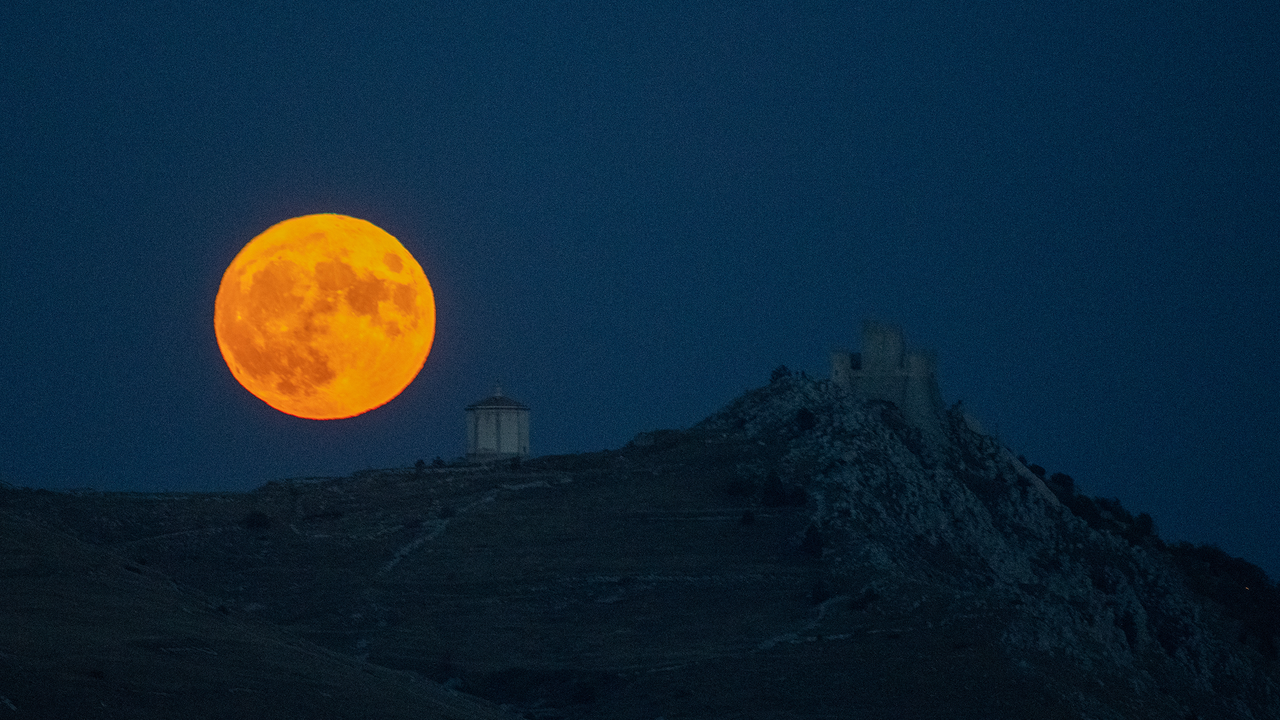
On Monday (Oct. 6) the first supermoon of 2025 will rise big and bright into the autumn sky. Dubbed the Harvest Moon — one of the most famous full moons of the year — it is the first full moon of autumn in the Northern Hemisphere, traditionally used to mark the end of the harvest season.

The moon will officially turn full at 11:47 p.m. EST on Monday (3:47 p.m. UTC on Tuesday, October 7) and will appear bright and full on the nights immediately before and after the peak. Dusk on Tuesday will be the best time to see the full moon appear on the eastern horizon, but it’s also worth looking east at dusk on Sunday (Oct. 5) to see the almost-full moon shine just above Saturn, which is about as close to Earth as it ever gets.

According to Almanac, the Harvest Moon is the name given to the full moon closest to the September equinox, which falls on September 22 this year. Its nickname comes from farming folklore about how the full moon’s light enables farmers to gather crops late into the night, not only on the night of the full moon, but also on the nights surrounding it. While September often hosts the Harvest Moon, the lunar calendar designates October as the host in 2025.


You may like

Related: Best telescopes 2025: Explore planets, galaxies and beyond

For the best views of the Harvest Moon on Tuesday, choose an elevated spot with an unobstructed eastern horizon. The moon’s golden-orange glow will be most striking during the 15-20 minutes after local moonrise wherever you are. Your naked eyes are all you need, but a good pair of stargazing binoculars will get you a great view of lunar craters and our natural satellite’s dark lava plains, called mare.

This year’s harvest moon also doubles as a supermoon, appearing slightly larger and brighter than average. The moon will sit just 224,599 miles (361,457 kilometers) from Earth, about 10% closer than usual (238,855 miles, or 384,400 km, according to NASA. A supermoon occurs because the orbit of the moon around Earth is slightly elliptical, so each month there’s a closest point (perigee) and a farthest point (apogee).

A supermoon is the colloquial term for a perigee full moon. This month, the moon is at perigee 1.3 days after it turns full — so the Harvest Moon will actually be at its closest and largest-looking late at night on Wednesday (Oct. 8). That’s also when “shooting stars are possible” as the peak of the annual Draconid meteor shower takes place. While up to 10 meteors per hour are expected, the moon’s brightness may make them harder to spot.

Get the world’s most fascinating discoveries delivered straight to your inbox.

There’s much more to come in October, with two closest approaches to Earth of two comets — Lemmon (C/2025 A6) and SWAN R2 (C/2025 R2) — set to coincide with the peak of the Orionid meteor shower overnight on Oct. 21-22 under the dark skies of a new moon.

The next full moon, the Beaver Moon, will rise on November 5 as the largest supermoon since 2019.

Source link

Share. Facebook Twitter Pinterest LinkedIn Tumblr Email
Previous ArticleTaylor Swift shares Travis Kelce engagement details on ‘The Graham Norton Show’
Next Article Trump says Hamas has until Sunday evening to accept Gaza peace proposal or ‘all hell’ will ‘break out’
Editor
  • Website

Related Posts

Lifestyle

2 rivers merged to form the Euphrates 3.6 million years ago, eventually leading to the Fertile Crescent

June 2, 2026
Lifestyle

NASA confirms fireball meteor exploded over northeastern US with force of 230 tons of TNT

June 2, 2026
Lifestyle

Astronauts could use lightning-like plasma jets to kill germs on the moon and Mars, demo hints

June 1, 2026
Add A Comment

Comments are closed.

Categories
  • Entertainment
  • Lifestyle
  • News
  • Sports
  • Tech
  • Travel
Recent Posts
  • 2 rivers merged to form the Euphrates 3.6 million years ago, eventually leading to the Fertile Crescent
  • NASA confirms fireball meteor exploded over northeastern US with force of 230 tons of TNT
  • Astronauts could use lightning-like plasma jets to kill germs on the moon and Mars, demo hints
  • First whole-genome sequence of a Greenland shark holds clues to their extreme longevity
  • Heading a soccer ball just once is enough to raise levels of proteins associated with brain damage
calendar
June 2026
M T W T F S S
1234567
891011121314
15161718192021
22232425262728
2930  
« May    
Recent Posts
  • 2 rivers merged to form the Euphrates 3.6 million years ago, eventually leading to the Fertile Crescent
  • NASA confirms fireball meteor exploded over northeastern US with force of 230 tons of TNT
  • Astronauts could use lightning-like plasma jets to kill germs on the moon and Mars, demo hints
About

Welcome to Baynard Media, your trusted source for a diverse range of news and insights. We are committed to delivering timely, reliable, and thought-provoking content that keeps you informed
and inspired

Categories
  • Entertainment
  • Lifestyle
  • News
  • Sports
  • Tech
  • Travel
Facebook X (Twitter) Pinterest WhatsApp
  • Contact Us
  • About Us
  • Privacy Policy
  • Disclaimer
  • UNSUBSCRIBE
© 2026 copyrights reserved

Type above and press Enter to search. Press Esc to cancel.