
Refresh
What is hantavirus, and how risky is this outbreak?

(Image credit: ROGER HARRIS/SCIENCE PHOTO LIBRARY via Getty Images)
Hantaviruses are a family of viruses carried by rodents. Hantavirus infections in humans are relatively uncommon, but when they do occur, they can be dangerous, with fatality rates ranging between 1% and 50% depending on the type of hantavirus. No specific treatment exists to cure infections, but prompt medical care can improve patients’ chances of survival.
While most hantaviruses cannot pass between people, one specific type, known as the Andes virus, can. The Andes virus is the type of hantavirus that laboratory tests point to being behind this cluster. Health authorities are now working to analyze the virus’s DNA to compare its sequence to that of Andes viruses involved in past outbreaks.
The World Health Organization and the U.S. Centers for Disease Control and Prevention have said the risk posed to the public from this cluster remains low, although they continue to monitor the situation.
For more on the Andes virus, you can read health editor Nicoletta’s story here. And for more background information on hantaviruses, broadly, you can read this story.

Ben Turner
World Health Organization says risk to the public is “low”
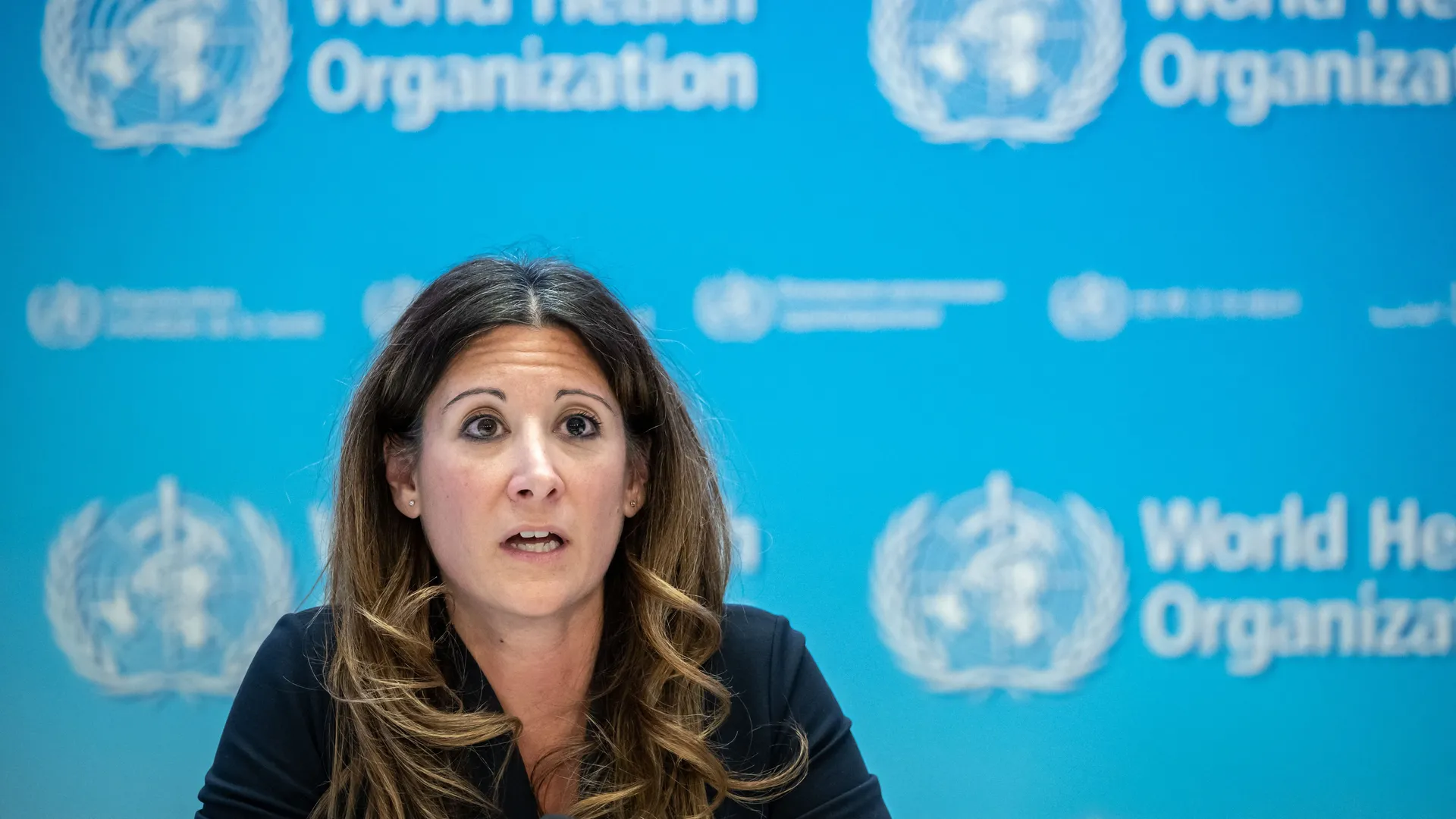
Maria Van Kerkhove at a WHO news conference.
(Image credit: Fabrice Coffrini/AFP via Getty Images)
The World Health Organization (WHO) just held a news conference to discuss the hantavirus cases.
The WHO has been working with collaborating centers to identify the type of virus behind the outbreak, as well as investigate suspected and confirmed cases and perform contact tracing. The agency has also been quick to quash fears that the outbreak could spark a global pandemic.
“This is not SARS-CoV-2 [the virus that causes COVID-19]. This is not the start of a COVID pandemic. This is an outbreak that we see on a ship,” Maria Van Kerkhove, the WHO’s interim director of epidemic and pandemic preparedness and prevention, said at the news conference.
“This is not the same situation we were in six years ago,” she continued. “It [the Andes virus] doesn’t spread the same way like coronaviruses do. It’s very different. It’s that close, intimate contact that we’ve seen, and most hantaviruses don’t transmit between people at all.”
“The Andes virus, which has been identified here — we’ve seen some human-to-human transmission,” she added. “I want to reiterate [that] the actions that are being taken on board are precautionary to prevent any onward spread, and so there’s a lot that is being done right now to be able to try to minimize the risk even further.”
“Viruses don’t care about politics”

(Image credit: FABRICE COFFRINI/POOL/AFP via Getty Images)
Both Argentina and the U.S. recently withdrew from the World Health Organization (WHO). In the face of this outbreak, “I think they will reconsider their positions,” said Tedros Adhanom Ghebreyesus, the WHO’s director-general. “Viruses don’t care about our politics, they don’t care about our borders, and they don’t care about all the excuses that we may have.”
When asked whether U.S. health authorities are participating in the ongoing investigation, several WHO representatives confirmed that the U.S. Centers for Disease Control and Prevention is providing helpful technical support and expertise and communicating with WHO leaders daily.

Nicoletta Lanese
Where did the infection come from?
The Andes virus is transmitted to humans mainly through contact with the long-tailed pygmy rice rat (Oligoryzomys longicaudatus). People may pick up the virus through exposure to the rat’s urine, feces or saliva. For instance, they may accidentally touch the rat’s feces and then touch their face, or breathe in viral particles that get released into the air when rodent droppings get disturbed in the environment.
Ben Turner
The WHO recommends that contacts be monitored for six weeks, as the incubation period — the time between when someone is exposed to the virus and when symptoms begin — of hantavirus infections can be that long. Known cases that are symptomatic are being isolated and cared for in hospitals.
Nicoletta Lanese
Genetic sequencing underway
As of yet, there’s “no indication” that there’s anything particularly unusual about the hantaviruses themselves, but it is notable that the outbreak is taking place on a cruise ship, said Anaïs Legand, the WHO’s technical officer of viral hemorrhagic fevers. A ship is a unique environment where people from many places are in close quarters.
Deceased passenger remains on board
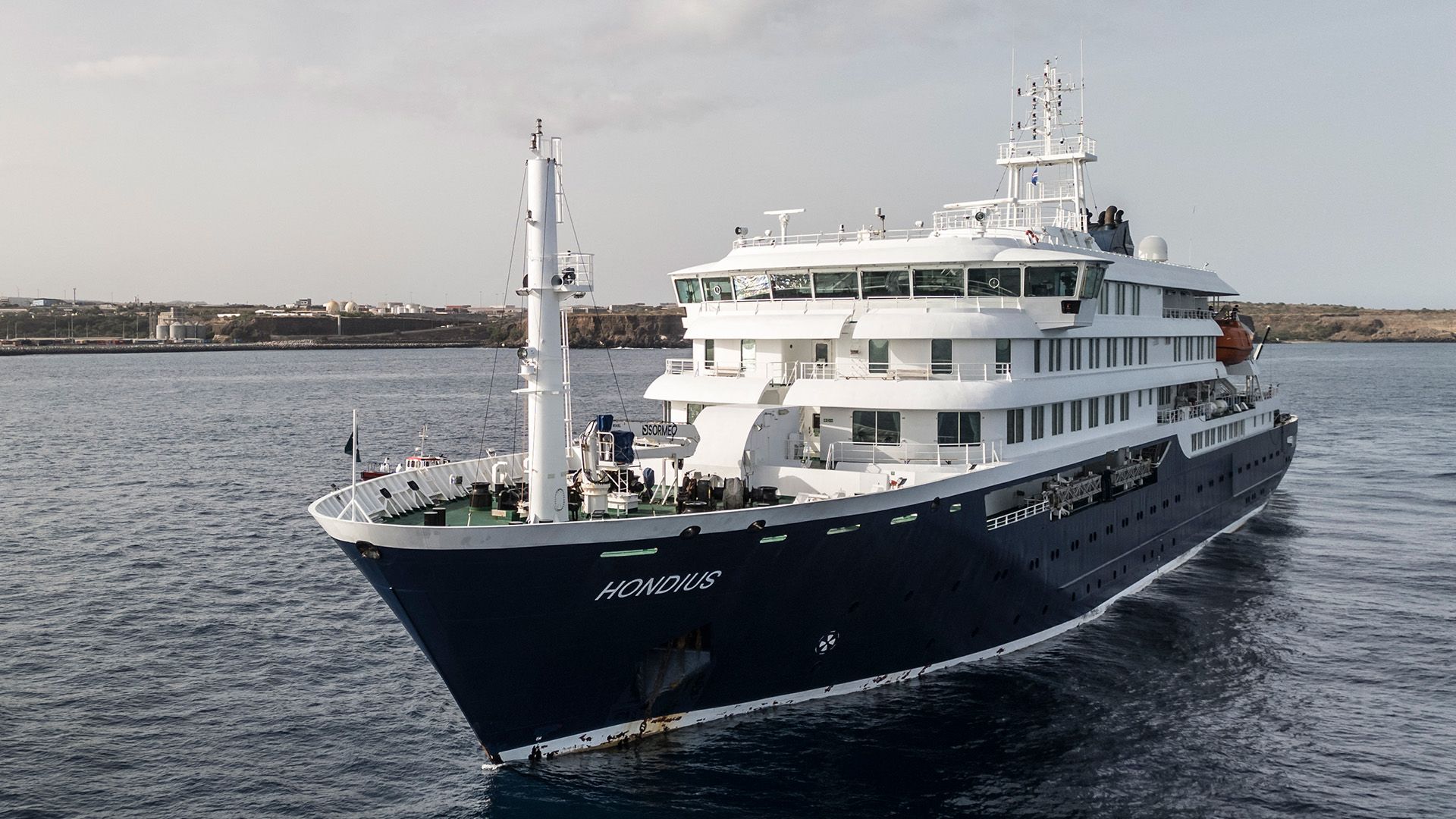
The body of the third person to die in the outbreak — a woman who passed away on board May 2 after developing pneumonia — is still being stored on the MV Hondius. WHO officials are in contact with the cruise operators about safe storage and eventual transport of the remains.
Viral videos of distressed passengers
Additionally, once the medical status of everyone on board is assessed, the WHO will also coordinate with each person’s home country to safely repatriate them.
Clarity on cruise itinerary
(Image credit: Getty Images)
Various social media posts and videos have been casting suspicion on when the MV Hondius actually departed Ushuaia, Argentina. The WHO’s website notes April 1 as the departure date, while the Africa CDC website states March 20. So I reached out to the cruise operator, Oceanwide Expeditions, about the discrepancy.
A spokesperson shared that, from March 20 to March 30, the ship traveled from Ushuaia to Antarctica and back. Then, from April 1 to April 24, it traveled from Ushuaia to the island of St. Helena. Then, between April 24 and May 4, it traveled from St. Helena to Cape Verde.
When asked if any potential hantavirus cases were associated with that first leg of the trip, the spokesperson directed me to the WHO’s official statements. The earliest known symptomatic case was on April 6 and involved a man who had boarded the ship April 1.
Both the man and his wife — the second passenger to get sick — had traveled in Argentina, Chile and Uruguay prior to boarding, and officials currently suspect that that’s when they got exposed. Both individuals have since died.
Catching a killer — how to trace a rare and deadly virus

(Image credit: CDC)
Andes virus outbreaks are rare, with only a handful documented since the 1990s. This makes investigations into clusters of cases like those associated with the MV Hondius tricky. However, one outbreak that hit southern Argentina’s village of Epuyen in 2018 may prove to be informative.
The Epuyen outbreak infected 34 people and led to 11 deaths due to hantavirus pulmonary syndrome, in which a hantavirus attacks the lungs.
According to a 2020 study published in The New England Journal of Medicine, the Epuyen cases stemmed from three separate superspreader events. The first occurred when the first infected person, or index patient, attended a birthday party with around 100 others.
The 68-year-old man, who was feverish and feeling poorly at the time, attended for about 90 minutes and passed the infection to several people who had been sitting near him. Additional cases followed as several of these individuals or their close contacts attended other events while sick.
In many cases, infected people passed on the virus on the first day they began feeling feverish, the study authors determined. That hints that the infection might be at its most contagious when those early symptoms emerge — meaning the close confines of a ship could be an ideal location for the virus to spread in that time window.
Ben Turner
Airline crewmember being tested for hantavirus
The infected person — the woman whose husband was the first to die on board — had felt ill when she disembarked on the island of St. Helena. Her condition worsened during a flight from St. Helena to Johannesburg, South Africa. She then attempted to board a flight from Johannesburg to Amsterdam, but “due to the passenger’s health condition at the time, the crew decided not to allow the passenger to board the flight,” KLM has said.
The woman subsequently died and her case was later confirmed to be a hantavirus infection.
During her brief time on the Amsterdam-bound plane, the sick passenger interacted with the flight attendant who is now at Amsterdam UMC with mild symptoms of illness. Doctors are expecting to receive the attendant’s test results later today, which will reveal if she has a hantavirus infection, CNN reported.
(For background, sustained close contact is typically required for Andes virus infections to transmit between people, so it’s unclear whether this brief encounter would be particularly risky.)
Nicoletta Lanese
Trump admin axed Andes virus research
In the long run, the goal of CREID’s many projects was to better understand germs capable of jumping from animals to people in order to respond quickly and effectively to future outbreaks. While the Andes virus pilot program likely wouldn’t have stopped this cruise ship outbreak, its loss could very well undermine scientists’ broader efforts to understand hantaviruses and the threat they might pose in the future.
As always: Vet your sources
With that in mind, be wary of bad actors, particularly on social media, who take advantage of uncertainty to sow doubt or stir up conspiracies. I understand the impulse to seek out more information and to pose questions when something is unclear or underexplained — but that is distinct from spreading misinformation and disinformation.
In short, if a given social media user’s main goal is to gain views and monetization, rather than to provide clarity and well-sourced expertise, their input is unlikely to serve you.
Arizona Department of Health Services gives a hantavirus update
The person is currently asymptomatic, and based on the information available, it doesn’t seem likely that they had much, if any, close contact with the infected individuals on the ship, officials said. The local health department will determine if the person requires testing, and likely, that wouldn’t happen unless they develop symptoms, said Kenneth Komatsu, a state epidemiologist with Arizona Department of Health Services. That’s in part because an asymptomatic person could very well come back negative on a test, he noted.
If the individual were to eventually develop symptoms, testing, contact tracing and quarantining would follow, along with monitoring of household contacts, Komatsu and other spokespeople suggested.
I asked whether the U.S. Centers for Disease Control and Prevention (CDC) had provided guidance on how the department should handle the situation.
“As CDC is currently working at a fast pace to put out some recommendations and guidance, most jurisdictions that have any individuals potentially exposed, they’ve been in contact with CDC sometimes two, three times a day to answer our questions,” said Dr. Joel Terriquez, medical director of the Bureau of Infectious Disease Services and the Bureau of Immunization Services with the Arizona Department of Health Services.
“Guidance is currently being developed and an official recommendation will be coming out soon,” he added. Komatsu also confirmed that public-facing CDC guidance was forthcoming. When asked which CDC department was heading the effort, he pointed to the Division of Global Migration Health within the National Center for Emerging and Zoonotic Infectious Diseases.
The health department emphasized that the risk to Arizonans remains low. “We just want to make sure that the message is clear,” Terriquez said. “This situation is very low risk to the general public.”
Other cruise passengers in the U.S.

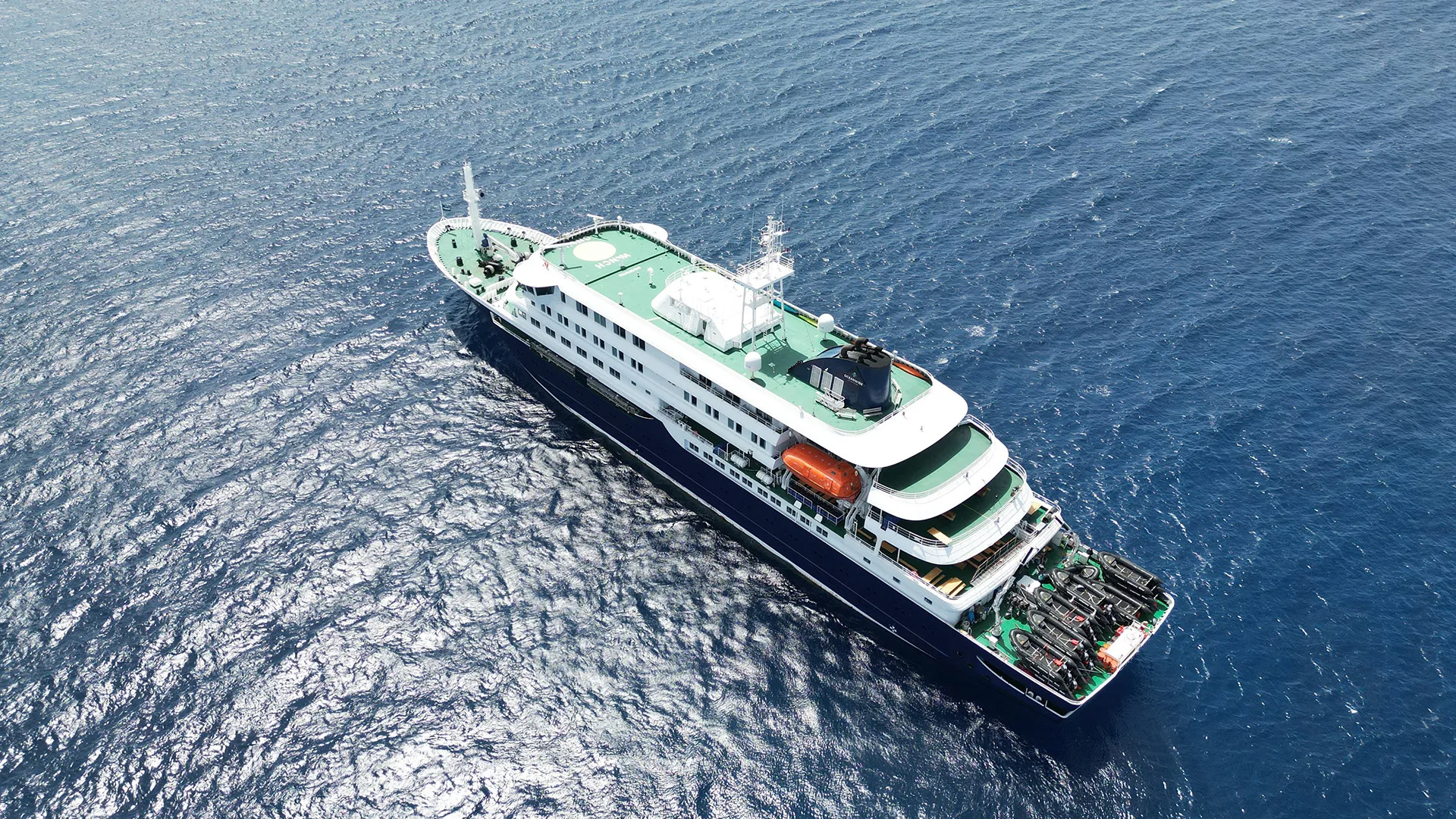
An aerial view of the cruise ship MV Hondius stationary off the port of Praia, the capital of Cape Verde, on May 5, 2026.
(Image credit: Getty Images)
In addition to the person in Arizona who recently returned from a cruise on the MV Hondius, several people in Georgia and California are facing the same situation.
On May 7, the Georgia Department of Public Health told Live Science via email that it is “monitoring two Georgia residents who returned home after disembarking from the MV Hondius, the cruise ship at the center of a hantavirus outbreak. The individuals are currently in good health and show no signs of infection. They are following current recommendations from CDC.”
Also on May 7, the California Department of Public Health told Live Science via email that the department is coordinating with local health officials to monitor returning travelers, as needed.
“There is no information that the California residents are ill or infected. In order to protect patient privacy, CDPH cannot disclose the travelers’ residences or other information. At this time, the risk to public health in California is low,” the statement concluded.
Seventeen Americans remain on the MV Hondius, The New York Times reported.
Dutch flight attendant tests negative for hantavirus infection
“As you know, the incubation period is long and although she is negative for now, she might turn positive in the future,” Tedros Adhanom Ghebreyesus, the WHO’s director-general, told Inside Medicine via a text message.
Ben Turner
“It’s very much, we hope, under control”: U.S. sets lowest emergency level response to the virus

President Donald Trump spoke to reporters about the Andes virus cluster as he inspected the painting of the Lincoln Memorial Reflecting Pool basin with Homeland Security Secretary Markwayne Mullin.
(Image credit: Anna Moneymaker/Getty Images)
Those were the words of President Donald Trump when asked if he’d been briefed on the virus.
“I think we’re going to make a full report about it tomorrow,” he continued. “We have a lot of people — a lot of great people are studying it. It should be fine, we hope.”
The U.S. Centers for Disease Control and Prevention (CDC) has classified the situation as “Level 3,” its lowest level of emergency response, ABC News reported Thursday (May 7). That grade of emergency response is typical for this stage of a disease cluster, and it means the agency is actively monitoring the situation.
U.S.’ slow hantavirus response offers a troubling glimpse into future pandemic preparedness, experts say
“We should be able to deal collectively with a hantavirus outbreak much more quickly and effectively than this is happening,” Stephanie Psaki, a public health expert at Brown University and former coordinator for global health security in the Biden administration, told the NYT. “It can get much harder than this.”
President Donald Trump signed an executive order to withdraw the U.S. from the World Health Organization (WHO) on Jan. 20, 2025, and officially withdrew Jan. 22, 2026. Consequently, the CDC is not immediately notified of updates from the WHO relating to emerging health threats, Dr. Daniel Jernigan, former director of the CDC’s National Center for Emerging and Zoonotic Infection Diseases, told the NYT. Jernigan resigned from his post in August 2025.
The U.S.’ decision to leave the WHO “makes both the United States and the world less safe,” WHO officials wrote in a statement published Jan. 24, 2026.
When asked at yesterday’s (May 7) news conference on the hantavirus cluster whether U.S. health authorities are taking part in the ongoing investigation, WHO representatives confirmed that the U.S. CDC was working with the WHO daily.
“Viruses don’t care about our politics, they don’t care about our borders, and they don’t care about all the excuses that we may have,” said Tedros Adhanom Ghebreyesus, the WHO’s director-general.

Sophie Berdugo
What will happen when the ship arrives in Spain?
“They will arrive at a completely isolated, cordoned-off area,” Virginia Barcones, Spain’s head of emergency services, said at a May 7 news conference. “They will board vehicles that are isolated and under guard and will proceed to a section of the airport that will be completely cordoned off. They will board the aircraft and depart.”
“I am saying this so that the people of the Canary Islands, the men and women living there, can rest assured that there will be absolutely no possibility of contact at any time,” she concluded.
Sophie Berdugo
British authorities identify new suspected case

(Image credit: Getty Images)
U.K. authorities have identified a new suspected case of hantavirus on the South Atlantic island of Tristan da Cunha, according to a May 8 statement by the U.K. Health Security Agency.
The individual, a British man, likely disembarked from the MV Hondius when it made a stop there on April 15. He is currently in the hospital while his spouse is isolating, U.K. officials said. The island’s population is a little over 200 people.
Ben Turner
“We shouldn’t be alarmist; we should be realistic,” hantavirus expert says
This is what Gustavo Palacios, a hantavirus expert and professor of microbiology at the Icahn School of Medicine at Mount Sinai in New York who documented a previous outbreak of the disease, told El País in a story published today.
Palacios led a study of the November 2018 to February 2019 Andes virus outbreak in the village of Epuyén, in Argentina’s Chubut province. There were 34 confirmed cases and 11 deaths during that outbreak, with human-to-human transmission occurring during a “superspreader” birthday party that resulted in four generations of infections.
Palacios told El País that these findings were met with skepticism. “It’s been a David versus Goliath story, trying to convince the global virology community” that there can be chain infections from the Andes virus, he said in a translated interview.
However, Palacios noted that the conditions of the 2018 Argentine outbreak are “quite different” from the currently unfolding situation.
“We must keep in mind that we know little about the Andes virus because it hasn’t been studied much,” he said. “We’ve never seen how it behaves on a ship.”
Despite the lack of data, the conditions on the ship are theoretically worse than the 2018 outbreak in Argentina. “A ship is inherently a place that facilitates contagion,” Palacios said.
Sophie Berdugo
Woman self-isolating in Alicante
A woman is self-isolating in the Spanish city of Alicante after traveling on a flight “close to” a woman who died with a hantavirus infection, Spain’s health minister, Mónica García, wrote in a translated statement on X.
The woman “has reported mild symptoms compatible [with the disease] and is being preventively isolated while the National Microbiology Center analyzes the diagnostic samples that will be taken from her,” García wrote.
“We reiterate that the risk for the general population remains very low,” she concluded.
Ben Turner
2 Singapore residents test negative for hantavirus
The agency conducted tests “with multiple samples collected from the individuals, and confirmed that hantavirus, including the Andes virus, was not detected,” officials wrote.
However, due to the long incubation period of hantaviruses, those who test negative now can turn positive later. This means that the pair will remain in isolation.
“As a precaution, the two individuals will be quarantined for 30 days from the date of last exposure, and testing will be conducted again before release from quarantine,” they continued. “They will then undergo phone surveillance for the remaining monitoring period of 45 days from the date of last exposure, which is the maximum incubation period for hantavirus exposure.”
The agency says the risk to the general public in Singapore is low.
Where did the cruise stop?
An aerial view of the MV Hondius.
(Image credit: Getty Images)
Since leaving Ushuaia, Argentina, April 1, MV Hondius has visited numerous islands.
The ship first visited South Georgia and Tristan da Cunha, before sailing on to St. Helena. They stopped at St. Helena April 24, with this being the final destination for some passengers on board.
The ship then continued on to Ascension Island, leaving April 27. The vessel arrived in Cape Verde waters, off the west coast of Africa, on May 3 but was denied plans to dock.
MV Hondius is now sailing to the Canary Islands, a Spanish archipelago off the west coast of Africa, where it is due to arrive by early Sunday.
Sophie Berdugo
Is hantavirus on the rise?
“Argentina has become more tropical because of climate change, and that has brought disruptions, like dengue and yellow fever, but also new tropical plants that produce seeds for mice to proliferate,” Dr. Hugo Pizzi, an infectious-disease specialist and epidemiologist at the National University of Córdoba in Argentina, told the AP. “There is no doubt that as time goes by, the hantavirus is spreading more and more.”
The joint PAHO and WHO report found that Argentina and Brazil experienced “an increase in [hantavirus disease] lethality” in 2025, compared with recent averages. Bolivia and Paraguay have seen substantial increases in hantavirus infections compared with historical averages.
Between 1993 and 2023, there have been 890 cases of hantavirus disease in the U.S., of which 35% of cases were fatal. (The U.S. first started surveilling hantavirus infections in 1993.) It is unclear whether the incidence is increasing in the U.S., as data covering 2024 and 2025 is currently unavailable, according to the PAHO and the WHO.
The European Center for Disease Prevention and Control reported 1,885 confirmed cases of hantavirus infection across 28 European Union/European Economic Area counties in 2023. Along with 2020, 2023 marked the lowest case rate for the 2019-to-2023 period.
Hantavirus disease cases in East Asia, particularly in China and the Republic of Korea (South Korea), have declined in recent decades, according to the WHO.
Hantavirus evacuation has a short time window due to weather conditions
“Otherwise, the ship must leave and no operation could be carried out again in theory … until the end of May,” Cabello added, citing adverse weather conditions such as wind and swell.
If all goes well, the passengers will be flown back to their home countries under quarantine conditions soon after the vessel arrives Sunday (May 10).
Ben Turner
US citizens on board will receive repatriation flight
“The Department of State is closely tracking the hantavirus outbreak on a Dutch cruise ship in the Atlantic Ocean and maintaining close contact with the cruise ship staff, Americans on board, and U.S. and international health authorities,” the spokesperson said in a statement.
The Department of State is in contact with the Americans on the ship and will provide consular assistance as soon as it docks at Tenerife, Spain, according to the spokesperson.
There is no vaccine for hantavirus, but research is promising
Scientists at the U.S. Army Medical Research Institute of Infectious Diseases have been working on hantavirus vaccines since the 1980s, virologist Jay Hooper told Nature News. Hooper’s team has already completed Phase I clinical trials of a vaccine that protects against the Andes virus — the only hantavirus type that has been shown to spread between humans — that has been linked to the MV Hondius cluster. But the team has not identified a region with enough cases to run the full clinical trial that would allow them to meet licensing requirements for a vaccine.
“Right now, we are pushing from the research side, but there is no strong external pull, so progress is slower than it could be. It is frustrating — like pushing a rock up a hill for years,” Hooper said.
Scientists at the University of Bath in the U.K. are also working on a vaccine that targets the hantaan hantavirus, which is found primarily in East Asia. To date, they have tested their vaccine in laboratory and animal models, but they have yet to advance to Phase I trials in humans. And scientists at the University of Guelph in Canada are working to develop vaccines that prevent hantavirus cardiopulmonary syndrome caused by the Andes virus and other “New World” types.
But experts told NBC News that hantavirus vaccine research has repeatedly stalled, in part because outbreaks tend to affect impoverished countries where pharmaceutical companies aren’t investing their resources.
“Our funding agencies don’t put a lot of money into this, because it’s likely not to cause the next epidemic or pandemic,” Sabra Klein, a molecular microbiologist at the Johns Hopkins Bloomberg School of Public Health, told NBC News.

Kristina Killgrove
CDC will escort Americans on MV Hondius to quarantine in Nebraska
Other countries are scrambling to contain the outbreak as concerns grow about what will happen when the MV Hondius docks in Tenerife, part of Spain’s Canary Islands. The ship is predicted to dock at the port city of Granadilla Sunday (May 10), but Oceanwide Expeditions, the ship’s operator, has said this is subject to change. The company also stated that no symptomatic individuals are currently on board and that it has “preparations regarding our point of arrival, quarantine and screening procedures for all guests, and the onward travel plans for all guests and affected crew are being led by organizations from a number of countries.”

Kenna Hughes-Castleberry
Spain finds South African exposed to woman who died of hantavirus
In a translated X post, Spain’s health minister, Mónica García, announced, “We confirmed that the second person who traveled on the plane at the same time as the Dutch woman from the MV Hondius cruise ship, who later died from hantavirus in Johannesburg, has been located.”
According to García, the South African woman is currently asymptomatic in South Africa, after having stayed a week in Barcelona.
“According to the epidemiological investigation carried out, during her stay she stayed alone in a hotel and did not have close contacts,” García posted.
Weekend updates
Live Science is signing off for the weekend, but our reporters and editors will continue to track the outbreak as it evolves. If anything major changes, we’ll pop on here to let you know — but barring that, we’ll be back to blogging at a regular clip on Monday (May 11).
Nicoletta Lanese
